
Side Dishes
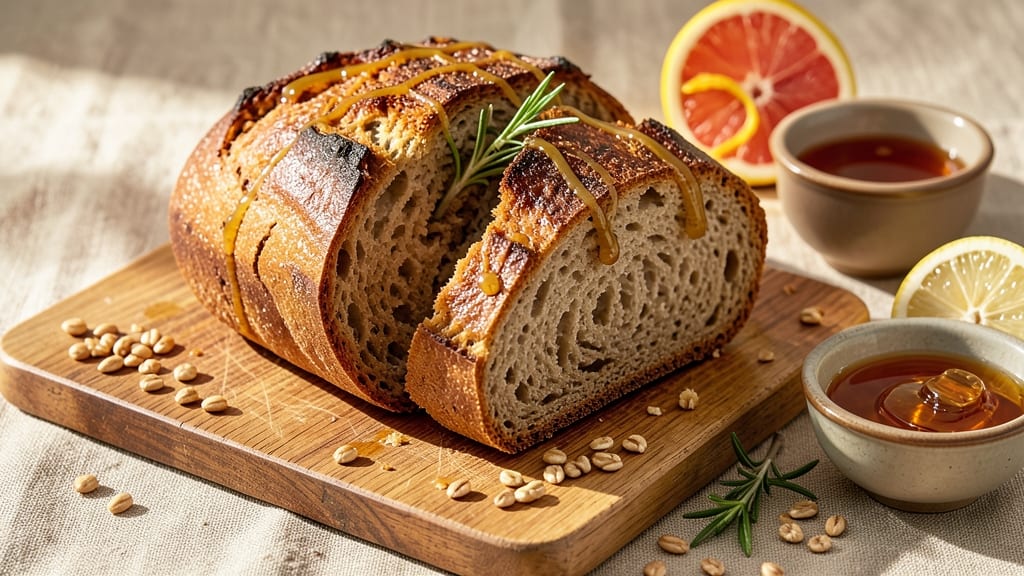
This 50 whole wheat bread recipe delivers an artisan-quality loaf with a crispy crust and nutty, sweet interior—perfect for sandwiches or toast. 🌾 The secret lies in balancing whole wheat flour with vital wheat gluten for structure, while honey and eggs add richness without sacrificing nutrition.
I’ve baked this loaf countless times, and it never disappoints, whether you prefer a rustic crust or a softer texture.
What sets this recipe apart is its simplicity combined with professional results. You’ll need just five core ingredients—whole wheat flour, yeast, honey, eggs, and water—plus optional add-ins like seeds or herbs for extra flavor.
The kneading process is straightforward, and proofing at room temperature ensures even rising. With 45 minutes of active time and 30 minutes of baking, this loaf fits seamlessly into a weekend baking project.
The bread develops a golden, crackly crust with a tender, slightly dense crumb that’s ideal for slicing thin. The honey infuses subtle sweetness, while the eggs bind the dough for a lighter texture than traditional whole wheat bread.
Whether you’re serving it fresh from the oven or toasted the next morning, this recipe transforms simple ingredients into something truly special.
For dietary flexibility, this recipe is vegetarian-friendly and can be adapted to gluten-free flours if needed. Try adding sunflower seeds or rosemary for extra depth of flavor. The key to success? Patience during proofing and baking—don’t rush it. Let’s get started on your perfect loaf.
Ingredients for 50 whole wheat bread
Five core ingredients transform into an artisan-quality whole wheat loaf with crispy crust and nutty sweetness inside.
| Ingredient | Amount | Notes |
|---|---|---|
| Whole Wheat Flour 🌾 | 4 cups | King Arthur or Bob's Red Mill preferred |
| Vital Wheat Gluten 🌾 | ½ cup | For improved structure and texture |
| Active Dry Yeast 🍞 | 2 ¼ tsp | Fresh yeast doubles the amount |
| Large Eggs 🥚 | 2 whole | Room temperature for even mixing |
| Honey 🍯 | ¼ cup | Wildflower or clover variety preferred |
| Warm Water 💧 | 1 ¼ cups | 110°F for optimal yeast activation |
| Kosher Salt 🧂 | 1 ½ tsp | Diamond Crystal preferred |
| Olive Oil 🫒 | 1 tbsp | Extra-virgin for richness |
| Sunflower Seeds 🌻 | ¼ cup | Optional for added texture |
| Fresh Rosemary 🌿 | 1 tbsp | Chopped, optional for aroma |
| Cornmeal 🌽 | ¼ cup | For dusting baking sheet |
The whole wheat flour is the foundation—King Arthur or Bob's Red Mill brands yield the best texture. Vital wheat gluten is non-negotiable for structure; skip it, and your bread will crumble. Fresh yeast doubles the amount if using, but active dry yeast is more reliable for home baking. For honey, local wildflower adds complexity, while store-brand clover works in a pinch. The olive oil should be extra-virgin—anything less tastes flat. Sunflower seeds and rosemary are optional but elevate the loaf to restaurant-quality with minimal effort.
No sunflower seeds? Pumpkin seeds or flaxseeds work equally well. Fresh rosemary unavailable? Dried rosemary at one-third the amount preserves the aroma. For a sweeter loaf, add 1 tbsp maple syrup to the honey. The water must be 110°F—too hot kills yeast, too cold slows activation. If your kitchen runs cold, microwave water for 30 seconds to reach the perfect temp. For a lighter crumb, add 1 tbsp baking soda to the flour mixture, but omit the salt in that case to balance acidity.
Store-bought whole wheat bread pales in comparison—this loaf keeps 3-4 days at room temperature, wrapped in a clean kitchen towel. For longer storage, freeze up to 3 months by wrapping tightly in plastic. Reheat slices in a 350°F oven for 5 minutes to restore crispiness. The crust develops best when baked in a preheated Dutch oven, but a baking stone works too. Proofing is critical—don't rush it. Patience here yields that golden, crackly crust you're after.
Why You'll Love This Recipe
- No-Knead Magic: Mixing takes five minutes—just flour, gluten, yeast, and honey. The dough rests while you do anything else, and by the time you slice, you’ve got golden, pillowy loaves with zero fuss. (Yes, even if you burn the toast.)
- Honey-Kissed Richness: That touch of honey isn’t just for sweetness—it deepens the flavor, giving the bread a subtle caramel note that makes it taste premium, not healthified. The eggs bind it just right, so every bite has structure and soul.
- Weeknight Swiss Army: Freeze half the batch for sandwiches later, toast thick slices for breakfast, or use it as a base for grilled cheese when the kids are begging. It’s the one loaf that does double duty without compromise.
- Budget Bread Wins: Whole wheat and hearty? Check. Uses pantry staples you already own. A single batch feeds a family for days, and the gluten boost means no sad, dense crumb—just reliable, satisfying bread that costs next to nothing.
Step-by-step instructions for artisan whole wheat bread
Master this recipe and you'll achieve a bread with a crisp artisan crust and sweet, nutty interior every time.
👨🍳 Step 1: Activate the Yeast and Prepare the Dough
In a small bowl, combine the 1.25 cups warm water (should feel like bathwater, 110°F), 2.25 tsp active dry yeast, and 2 tbsp honey. Let sit for 5-10 minutes until frothy—this confirms the yeast is active. If it doesn't bubble, your yeast may be dead and you'll need to start over.
In a large bowl, whisk together the 4 cups whole wheat flour, 0.5 cup vital wheat gluten, and 1.5 tsp kosher salt. The gluten creates that perfect chewy texture we're after. Make a well in the center and pour in the yeast mixture along with the 2 whole eggs and 1 tbsp olive oil. Mix with a wooden spoon until a shaggy dough forms.
🍳 Step 2: Knead Until Elastic and Smooth
Turn the dough onto a lightly floured surface and knead for 8-10 minutes until smooth and elastic. I press down hard with the heel of my hand and fold the dough over itself—this develops the gluten strands that give bread its structure. The dough should spring back slowly when poked and feel slightly tacky but not sticky.
If the dough feels too dry, add 1 tsp warm water at a time until it reaches the right consistency. Too sticky? Add 1 tbsp flour. The ideal dough should be soft but not wet, and should leave a light film on your fingers when you touch it.
⏰ Step 3: First Rise and Optional Add-Ins
Place the dough in a lightly oiled bowl, cover with a damp towel, and let rise in a warm place for 1-1.5 hours or until doubled in size. I like to use my oven with the light on for consistent warmth—this creates the perfect environment for fermentation without overproofing.
Once risen, gently fold in the 0.25 cup sunflower seeds and 1 tbsp chopped fresh rosemary (if using) by pressing them lightly into the surface. This adds texture and aroma without overworking the dough. Shape the dough into a round loaf and place it seam-side up in a bowl.
🔥 Step 4: Shape and Proof for Final Rise
Preheat your oven to 375°F and line a baking sheet with parchment paper. Dust the surface with 0.25 cup cornmeal—this prevents sticking and adds a nice crunch to the bottom crust. Shape the dough into an oval loaf about 10 inches long and place it on the prepared baking sheet.
Cover loosely with plastic wrap and let proof for another 45-60 minutes until the dough has risen noticeably and feels springy when pressed. The surface should have small bubbles forming. Bake immediately after proofing for best results.
🔥 Step 5: Bake for Crisp Crust and Perfect Interior
Bake for 35-40 minutes until the bread is golden brown and sounds hollow when tapped on the bottom. I like to rotate the pan halfway through for even browning. The internal temperature should reach 190-200°F—this ensures a fully baked interior without drying out the bread.
Remove from the oven and let cool on a wire rack for at least 30 minutes before slicing. The bread will continue to firm up as it cools, and this resting period prevents a gummy texture. Store wrapped at room temperature for up to 3 days or freeze for longer storage.
Pro Tips For Making 50 Whole Wheat Bread
- MEASURE GLUTEN PRECISELY: I learned this the hard way—using too much vital wheat gluten makes bread dense and gummy. Weigh it out (about 10% of your flour by weight) instead of eyeballing, or your loaf will turn into a brick. A kitchen scale is worth its weight in gold here.
- LET THE DOUGH RISE UNTIL IT DOUBLES: Yes, it’s tempting to rush, but stop when the dough hits the top of the bowl—no more, no less. Whole wheat dough takes longer than white flour; give it 1.5–2 hours in a warm spot (like a turned-off oven with a bowl of hot water inside). Patience here guarantees a lighter crumb.
- HYDRATE THE FLOUR FIRST: Whole wheat flour absorbs liquid like a sponge. Mix it with warm water (about 1.5 cups) and let it sit for 10 minutes before adding the rest of the ingredients. This prevents a dry, crumbly dough and makes mixing the eggs and honey easier later.
- USE A LIGHT HAND WHEN SHAPING: Overworking the dough after the first rise collapses the gluten and makes the bread tough. Gently fold the edges toward the center—no punching or aggressive kneading—then let it rest 10 minutes before the final shape. Less force here means a softer loaf.
Dietary considerations for 50 whole wheat bread
Gluten-Free Adaptations
If you need a gluten-free version, replace the whole wheat flour with a 1:1 gluten-free flour blend like Bob's Red Mill 1-to-1 or King Arthur Gluten-Free Measure for Measure. Add 1 extra tablespoon of xanthan gum per cup of blend to mimic the chewiness of gluten.
The vital wheat gluten becomes unnecessary, but you’ll need to adjust the liquid slightly—start with 1.5 cups water and add 1 tablespoon at a time until the dough holds together. Proofing times may extend by 20-30 minutes due to slower fermentation. 🌾
Egg-Free Substitutes
For an egg-free version, replace the 2 whole eggs with 2 tablespoons ground flaxseed mixed with 6 tablespoons warm water (let sit for 5 minutes to thicken). Alternatively, use 2 tablespoons applesauce or 1 ripe mashed banana for natural sweetness and binding.
The dough will be slightly stickier, so reduce the flour by 1 tablespoon and knead for 1-2 extra minutes to strengthen the structure. Bake at 350°F instead of 375°F to prevent over-browning. 🥚
Dairy-Free Options
This recipe is already dairy-free, but you can enhance it further by swapping the olive oil for melted coconut oil (adds subtle sweetness) or avocado oil (neutral flavor). For extra richness, stir in 1 tablespoon tahini during the final knead—it adds a nutty depth without dairy.
The honey can also be replaced with maple syrup or agave nectar for a vegan-friendly option. 🫒
Lower Sugar Adjustments
To reduce sugar content, cut the honey to 1 tablespoon and replace the remaining 1 tablespoon with unsweetened applesauce. For a completely sugar-free version, omit the honey entirely and use 1 extra tablespoon of olive oil to maintain moisture.
The bread will be slightly less sweet but still flavorful. Balance the flavor with 1 extra teaspoon of rosemary or 1 teaspoon of cinnamon for warmth. 🍯
Allergen-Friendly Notes
This recipe is naturally nut-free and soy-free, but always check labels on whole wheat flour and vital wheat gluten for cross-contamination warnings. For sunflower seed allergies, swap them for pumpkin seeds or sesame seeds (toasted for extra flavor).
If rosemary is an issue, try dried thyme or fennel seeds instead. Store all ingredients in airtight containers to prevent cross-contamination with allergens. 🌻
Nutrition facts
Frequently asked questions
Why does this recipe use vital wheat gluten?
Vital wheat gluten adds structure to whole wheat bread, which can be dense on its own. Without it, your loaf might crumble or lack that satisfying chewiness. The gluten proteins create a network that traps gas from the yeast, giving your bread a lighter texture. Think of it as the secret weapon for achieving that perfect artisan-quality crumb.
Can I make this bread without a Dutch oven?
Use a baking stone or even a regular baking sheet lined with parchment paper. For a crispier crust, try this trick: Bake the bread on the stone for 15 minutes, then transfer to a wire rack and broil for 1-2 minutes. This mimics the steam environment of a Dutch oven while still giving you that crackly exterior.
What's the best way to store this bread?
Wrap the cooled loaf in a clean kitchen towel and store at room temperature for up to 3-4 days. For longer storage, freeze the bread (sliced or whole) in an airtight container for up to 3 months. To revive, reheat slices in a 350°F oven for 5 minutes—this restores the crust's crispiness perfectly.
How do I know when the dough is properly kneaded?
The dough is ready when it springs back slowly when poked and feels smooth with no rough spots. Do the "windowpane test": Stretch a small piece of dough—if it thins to translucent without tearing, you've kneaded enough. Over-kneading can make the bread tough, so aim for 8-10 minutes of vigorous kneading.
Can I add other seeds or herbs beyond sunflower seeds and rosemary?
Try pumpkin seeds, flaxseeds, or sesame seeds for extra crunch, or swap rosemary for thyme, oregano, or even garlic powder for different flavor profiles. Just keep the total add-ins to 1/4 cup to maintain the dough's balance. For a sweeter variation, add 1 tbsp cinnamon or chopped dried apricots during the final knead.