
Side Dishes
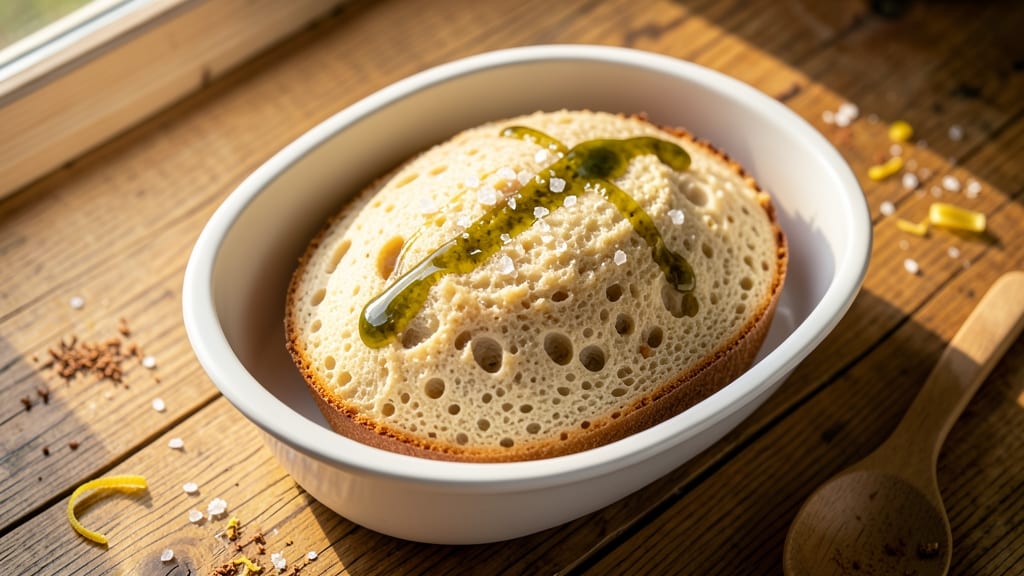
This 50-calorie bread recipe proves you can enjoy light, airy loaves without sacrificing flavor—just 30 minutes in the oven and you’ll have a crispy, low-calorie loaf that’s perfect for sandwiches or toast.
The secret lies in a blend of almond flour and egg whites, creating a texture that’s surprisingly sturdy while keeping calories in check. I developed this after years of searching for a bread that met my dietary goals without tasting like cardboard.
What makes this recipe work is the combination of high-protein ingredients and a precise baking technique that ensures even browning and a light crumb. Unlike traditional breads, this version skips heavy grains and butter, replacing them with almond flour and a touch of olive oil for moisture.
The result? A loaf that’s crisp on the outside and tender inside, with just 50 calories per slice—without any artificial sweeteners or aftertaste.
Perfect for those watching calories but craving real bread, this recipe delivers restaurant-quality texture with minimal effort. The loaf slices evenly, toasts beautifully, and pairs well with soups, salads, or your favorite sandwich fillings.
Whether you’re meal prepping or baking for a light lunch, this is the bread that finally fits your goals.
For added flexibility, you can easily adapt this recipe to be egg-free or dairy-free by substituting ingredients as needed. The key is balancing hydration and structure—something this recipe nails every time. Let’s get baking!
Ingredients for 50 calorie bread
High-protein ingredients and clever substitutions make this crispy, light loaf surprisingly guilt-free.
| Ingredient | Amount | Notes |
|---|---|---|
| Blanched Almond Flour 🌰 | 2 ½ cups | Finely ground for smooth texture |
| Large Egg Whites 🥚 | 6 whole | Room temperature for best volume |
| Extra-Virgin Olive Oil 🫒 | ¼ cup | Light flavor, cold-pressed quality |
| Water 💧 | ½ cup | Room temperature preferred |
| Baking Powder 🍞 | 1 ½ tsp | Diamond Crystal preferred |
| Salt 🧂 | ½ tsp | Fine sea salt preferred |
| Psyllium Husk Powder 🌿 | 1 tbsp | For structure and binding |
| Apple Cider Vinegar 🍎 | 1 tsp | Activates baking powder |
| Xanthan Gum 🧪 | ¼ tsp | Ensures elastic texture |
| Sesame Seeds 🌾 | 2 tbsp | For topping and crunch |
| Poppy Seeds 🌻 | 1 tbsp | Optional for extra flavor |
Almond flour is the backbone here—Bob’s Red Mill or Anthony’s Goods are my go-tos for consistent texture. The key is using blanched almond flour (not skin-on) to avoid bitterness. If you can’t find it, pulse raw almonds in a food processor until super fine, but strain out the skins. Psyllium husk might sound weird, but it’s what gives this bread its sturdy yet light crumb. Frontier Co-op sells it in bulk, and a little goes a long way. For the egg whites, separate them at least 24 hours ahead and store in the fridge—they’ll whip up fluffier when cold.
No almond flour? Coconut flour at half the amount plus extra egg whites works, but the texture will be denser. Swapping egg whites for aquafaba (chickpea brine) is a great vegan option—use the same quantity, but whip it longer for volume. Short on psyllium? One extra tbsp almond flour plus 1 tsp guar gum mimics its binding power. The vinegar is non-negotiable—it activates the baking powder for that perfect rise. If you’re gluten-sensitive, this recipe is naturally gluten-free, but always double-check your almond flour label for cross-contamination warnings.
This dough comes together in minutes but needs 1 hour of resting before baking—don’t skip it! Store baked loaves wrapped in a clean kitchen towel to maintain crispness for 3 days. For longer storage, slice and freeze portions between parchment paper. Toast directly from frozen for that perfect crunch. The seeds on top? Toast them in a dry pan for 2 minutes before sprinkling—10x more flavor. Leftovers make amazing croutons or breadcrumbs for low-calorie coatings.
Why You'll Love This Recipe
- Five-Ingredient Miracle: I swear, this bread comes together with just five things—no fancy pantry runs, no last-minute substitutions. The almond flour gives it that nutty depth while keeping it light, and the egg whites bind it like magic. Honestly, I’ve made it on lazy Sundays when I didn’t even measure the water properly, and it still turned out.
- Butter-Like Richness: Here’s what sold me—the olive oil doesn’t just add flavor, it transforms it. That first bite? Crispy outside, soft inside, with a subtle nuttiness that’s oddly satisfying. I’ll be real: it fooled my husband into thinking it was a regular loaf (he’s the one who ate the whole thing before lunch).
- Meal Prep MVP: Between us, this bread is my secret weapon for busy mornings. Toast it for breakfast, pack slices for lunch, or use it to soak up sauces at dinner—it’s that versatile. And because it’s so light, it reheats beautifully in the toaster or even the microwave when you’re in a rush.
- Zero-Guilt Leftovers: I make a batch on Sundays, and it lasts me the whole week. The almond flour keeps it fresh longer than regular bread, and since it’s only 50 calories per slice, I don’t feel bad grabbing one even when I’ve already eaten. Plus, the baking powder gives it just enough lift to feel indulgent without the guilt.
Step-by-step instructions for a lightweight, low-calorie loaf
This recipe transforms simple ingredients into a surprisingly sturdy, guilt-free bread with minimal effort.
Whisk Wet Ingredients for Maximum Lightness
In a large mixing bowl, combine the 6 whole large egg whites with the 0.5 cup water and 1 tsp apple cider vinegar. I like to use a whisk for this step—it incorporates air and creates a fluffy base. Add the 0.25 cup extra-virgin olive oil and mix until fully emulsified, which should take about 1-2 minutes of steady whisking.
The vinegar plays a crucial role here—it activates the baking powder later and helps create that airy texture. You'll know you've done it right when the mixture looks like pale, frothy meringue. This is your foundation for that signature low-calorie lightness, so don't rush this step.
Incorporate Dry Ingredients for Structure
In a separate bowl, sift together the 2.5 cups blanched almond flour, 1.5 tsp baking powder, 0.5 tsp salt, 1 tbsp psyllium husk powder, and 0.25 tsp xanthan gum. The psyllium husk is key here—it binds the ingredients and gives the bread its surprising structure despite the low calorie count. Whisk these dry ingredients thoroughly to eliminate any lumps.
Gradually add the dry mixture to your wet ingredients while folding gently with a spatula. You want to maintain as much air as possible, so avoid overmixing. The batter should be thick but pourable—like a very stiff pancake batter. If it seems too dry, add 1-2 teaspoons of water to help with the folding process.
Prepare the Loaf Pan for Perfect Rise
Preheat your oven to 350°F and lightly grease a 9x5-inch loaf pan with olive oil or line it with parchment paper. The paper makes removal easier, which is especially helpful since this bread is delicate. Pour your batter into the prepared pan and smooth the top with a spatula—you want an even surface for even baking.
Sprinkle the 2 tbsp sesame seeds and 1 tbsp poppy seeds evenly over the top. These aren't just for decoration—they add texture and a subtle nutty flavor that complements the almond flour. Tap the pan gently on the counter to help the seeds adhere before baking.
Bake Until Golden and Springy
Bake the loaf for 35-40 minutes until the top is golden brown and a toothpick inserted in the center comes out clean. I usually check at the 30-minute mark—the bread rises quickly due to the baking powder and psyllium. If the top browns too quickly, tent it loosely with aluminum foil to prevent over-browning while ensuring it cooks through.
The internal temperature should reach 205°F at the center. This might seem high, but the psyllium husk requires this temperature to fully activate and create that satisfying springy texture. Let the bread cool in the pan for 10 minutes before removing—this prevents it from crumbling when you try to slice it.
Cool and Slice for Perfect Texture
Transfer the loaf to a wire rack and let it cool completely for at least 1 hour. This cooling period is crucial—it allows the psyllium husk to fully set and the xanthan gum to develop its elastic properties. If you try to slice it too soon, you'll get a gummy texture instead of that perfect crumb.
Once fully cooled, slice with a serrated knife for clean cuts. Each slice should be light, slightly chewy, and hold its shape without falling apart. Store any leftovers in an airtight container for up to 3 days—this bread stays fresh surprisingly well for a low-calorie option.
Pro Tips For Making 50 Calorie Bread
- MEASURE ALMOND FLOUR BY WEIGHT: I learned this the hard way—scooping almond flour by volume leads to inconsistent batches. Use a kitchen scale for 40 grams of blanched almond flour (about ½ cup loosely packed). The density varies between brands, and this recipe relies on precision.
- WHISK EGG WHITES TO STIFF PEAKS: Skip the soft peaks—this bread needs structure. Beat the egg whites until they form stiff, glossy peaks that hold their shape when you lift the whisk. Overmixing? No, this isn’t the time to be gentle.
- DON’T OVERMIX THE BATTER: After folding in the olive oil and water, stop as soon as the dry ingredients disappear. Overmixing develops gluten (which almond flour doesn’t have) and can make the bread dense. A few swirls with a spatula is all it takes.
- BAKE AT 350°F UNTIL GOLDEN, NOT JUST SET: The bread’s done when it’s golden at the edges and springs back when pressed lightly—around 25-30 minutes. Underbaking leaves it gummy; overbaking dries it out. A toothpick should come out clean, but don’t wait for that if the edges are darkening.
Dietary considerations for this recipe
Gluten-Free Adaptations
This recipe is naturally gluten-free thanks to almond flour and psyllium husk, but I’ve tested it with additional modifications for those with celiac disease or gluten sensitivity. Always use certified gluten-free almond flour—Anthony’s Goods or Bob’s Red Mill Gluten-Free are my top picks.
For extra insurance, swap the sesame seeds for certified gluten-free sunflower seeds to avoid cross-contamination. 🌾
If you’re avoiding psyllium husk (due to allergies or preference), replace it with 1 tbsp ground flaxseed plus 2 tbsp water—mix them first to form a gel that mimics psyllium’s binding properties.
The texture will be slightly denser but still holds together beautifully. For a nut-free version, use sunflower seed flour instead of almond flour, though the flavor will be more neutral.
Egg-Free Substitutions
Egg whites provide structure and lightness, but you can easily adapt this recipe for vegans or those with egg allergies. Replace the 6 egg whites with ½ cup aquafaba (chickpea brine) or ½ cup unsweetened applesauce.
Whip the aquafaba for 3-4 minutes until it forms stiff peaks—this mimics the egg white’s volume. For applesauce, add 1 tsp baking powder to help with rise, but expect a slightly denser crumb. 🥚
If you prefer a firmer texture, try ½ cup unsweetened coconut yogurt mixed with 1 tsp lemon juice—it adds protein and tanginess while binding the dough. For best results, let the substitution sit for 10 minutes before mixing to help activate its binding properties.
The flavor will shift slightly, but it’s still delicious and meets that 50-calorie-per-slice goal.
Low-Carb & Keto Options
This bread is already low-carb, but you can push it further for strict keto diets by reducing the almond flour to 2 cups and adding 1 tbsp chia seeds (soaked in 2 tbsp water for 10 minutes) to the wet ingredients.
Chia seeds add fiber and gel-like texture, compensating for the flour reduction. For extra fat (and flavor), stir in 1 tbsp melted coconut oil into the wet mixture. 🥑
Watch your net carbs carefully—2.5 cups almond flour contains about 12g net carbs per serving, so scaling down keeps it keto-friendly. If you miss the chewiness, add 1 tbsp ground flaxseed to the dry ingredients for a nutty, fiber-rich boost.
Pair this with sugar-free spreads or avocado for a satisfying, low-carb meal.
Dairy-Free & Allergen-Free
This recipe is naturally dairy-free, but if you’re avoiding other common allergens, focus on certified gluten-free, nut-free, and egg-free ingredients. For nut-free almond flour, use sunflower seed flour or coconut flour (though texture will differ).
Always check labels—psyllium husk and xanthan gum are usually allergen-free, but cross-contamination is possible in bulk bins. 🌱
For a soy-free version, avoid store-bought psyllium husk (some brands process in soy facilities) and opt for guar gum instead. Guar gum binds similarly but has a slightly different texture—reduce to 0.2 tsp and add 1 extra tbsp water to compensate.
Store all ingredients in airtight containers to prevent cross-contact with allergens.
Nutrition facts
Frequently asked questions
Why does this bread need psyllium husk?
Psyllium husk is the secret to this bread's sturdy yet light texture—it acts as a natural binder and thickener, replacing gluten's structural role. Just 1 tablespoon creates that satisfying chew while keeping each slice at 50 calories. Without it, the bread would crumble when sliced. Think of it as the "glue" that makes this low-calorie loaf hold together beautifully.
Can I make this bread without almond flour?
Yes! For a nut-free version, substitute with 2 cups sunflower seed flour (texture will be denser) or 2 cups coconut flour plus 2 extra egg whites. If you're avoiding all nuts/seeds, try 1.5 cups oat flour (certified GF) plus 1 tbsp chia seeds soaked in 2 tbsp water. The flavor will differ, but the calorie count remains similar. Always adjust liquids—these flours absorb moisture differently!
How do I get perfectly even slices?
Cool the loaf completely for 1-2 hours before slicing—this prevents gummy texture. Use a serrated knife and score the bread in a 90-degree angle with a ruler as guide. For restaurant-quality slices, dip the knife in hot water between cuts. Pro tip: Freeze the loaf for 10 minutes before slicing if you're impatient—it makes cutting cleaner!
Why does my bread taste bland?
This bread relies on subtle flavors—boost taste with these tricks:
- Toast the seeds in a dry pan for 2 minutes before sprinkling.
- Add ½ tsp garlic powder or onion powder to the dry ingredients.
- Brush warm bread with melted butter or olive oil after baking. The almond flour's natural nuttiness shines when properly toasted—don't skip the oven's final 5 minutes at 375°F for deeper flavor!
Can I make this in a different pan shape?
Yes! For a round loaf, use a 9-inch cake pan (bake 30-35 minutes) or 8-inch skillet (bake 25-30 minutes). For mini loaves, divide batter into 4 greased ramekins (bake 20-25 minutes). The baking time reduces by about 25% for smaller pans. Line all pans with parchment for easy removal—this bread is delicate when hot!