
Side Dishes
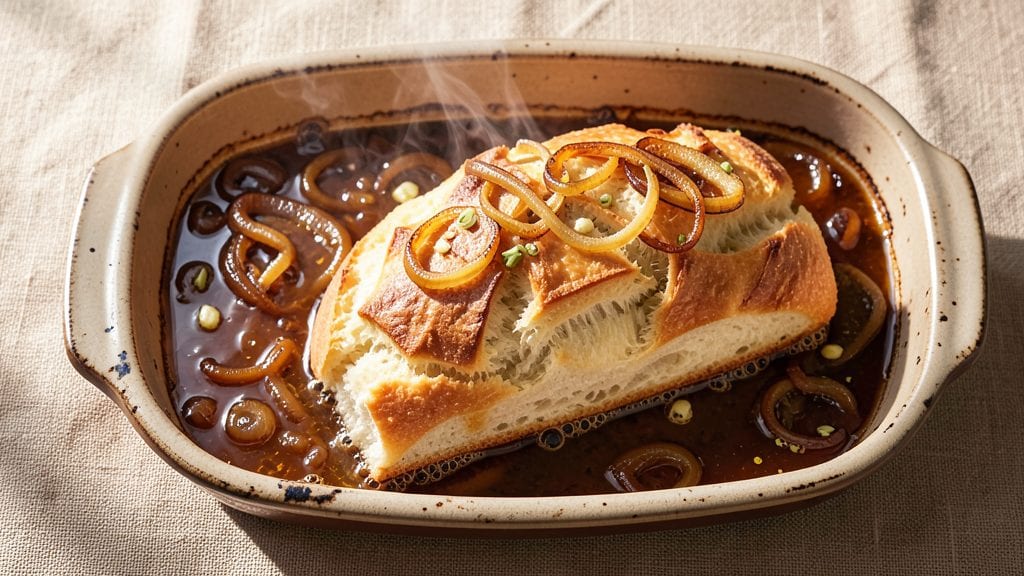
This onion soup bread recipe transforms a simple loaf into a golden, garlicky masterpiece with rivers of melted cheese—perfect for dipping or serving alongside soups. After years of perfecting the balance between crispy crust and tender interior, I’ve cracked the code for that signature French bistro flavor at home.
The secret lies in slow-cooked onions and a precise baking technique that ensures every bite delivers that perfect chewy texture.
What makes this recipe special is its foolproof method—no fancy equipment required, just a few key ingredients and 30 minutes of active time. You’ll start with a simple dough that comes together quickly, then layer it with caramelized onions and a generous blanket of melted cheese.
The result? A loaf with a crispy, garlicky crust that shatters at the touch and a soft, pillowy interior punctuated by gooey cheese rivers. It’s the kind of bread that disappears faster than you can say "onion soup night."
The magic happens when the bread bakes to a golden brown, with edges that crackle and cheese that stretches into silky strands. This recipe delivers restaurant-quality results without the fuss—ideal for weeknight dinners, game day spreads, or as a showstopper for holiday gatherings.
The aroma alone will have everyone gathering around the table, and the first bite? That’s when they’ll ask for the recipe. Let’s get started on making yours.
For those who want to experiment, swap the Gruyère for a vegan cheese alternative or add a sprinkle of fresh herbs before baking. The possibilities are endless, but the foundation—slow-cooked onions and that perfect chewy crust—remains the star. Trust me, once you try this, you’ll never buy store-bought again.
Ingredients for onion soup bread
Four cups flour, two pounds onions, and a handful of cheeses—this is your golden ticket to bistro-worthy bread at home.
| Ingredient | Amount | Notes |
|---|---|---|
| Yellow Onions 🧅 | 2 ½ lb | Thinly sliced, slow-cooked until caramelized |
| All-Purpose Flour 🌾 | 4 cups | Sifted, for light and airy dough |
| Granulated Sugar 🍚 | ½ cup | For subtle sweetness in dough |
| Active Dry Yeast 🍞 | 2 ¼ tsp | Or 1 packet, dissolved in warm water |
| Unsalted Butter 🧈 | ½ cup | Cold, cubed, for flaky layers |
| Garlic Cloves 🧄 | 4 cloves | Minced, for aromatic depth |
| Gruyère Cheese 🧀 | 1 ½ cups | Shredded, nutty and melty |
| Swiss Cheese 🧀 | 1 cup | Shredded, for creamy texture |
| Heavy Cream 🥛 | ½ cup | For rich, tender crumb |
| Large Eggs 🥚 | 1 whole | Room temperature, for binding |
| Sea Salt 🧂 | 1 ½ tsp | Diamond Crystal preferred |
| Black Pepper 🌶️ | ½ tsp | Freshly cracked, for subtle heat |
| Extra-Virgin Olive Oil 🫒 | 2 tbsp | For greasing bowl and pan |
| Garlic Powder 🧄 | ½ tsp | Enhances crust flavor |
The onions are the star here—slow-cook them for 45 minutes until deep amber and syrupy. Yellow onions work best, but red or white add a subtle sweetness. For extra flavor, deglaze the pan with a splash of dry white wine after cooking. The Gruyère and Swiss blend creates that signature melt—look for aged Gruyère with visible crystals for maximum richness. If you can't find Gruyère, Comté or Emmental work in a pinch, though the flavor won't be identical. The butter? Use European-style butter if possible—it has higher fat content and creates a more tender crumb.
No Gruyère? Parmesan plus mozzarella gets you close, though the texture won't be as creamy. Short on heavy cream? Whole milk works in a bind, but the dough will be slightly denser. The garlic powder is non-negotiable—it amplifies the crust's flavor without overpowering. For a vegan version, use nutritional yeast and vegan cheese, but expect a different texture. The dough needs to rest for at least 1 hour—this is where the magic happens. If you're short on time, use the cold proof method (chill the dough overnight) for a more developed flavor.
This bread peaks fresh out of the oven but reheats beautifully—wrap in foil and warm for 10 minutes at 350°F. Store at room temperature for 2 days or freeze the whole loaf (wrapped tightly) for up to 3 months. For serving, slice thick—the cheese rivers are best enjoyed with a generous dip in warm onion soup. Leftovers? Toast them for garlicky croutons—trust me, they disappear just as fast.
Why You'll Love This Recipe
- No-Knead Magic: I swear by this dough—just mix, let it rise while I sip coffee, and boom. No stand mixer, no arm workout, just hands-on simplicity. The yeast does all the work while I do nothing but wait (and maybe check my email).
- Sweet-Savory Crunch: That caramelized onion jam? Chef’s kiss. The sugar and butter turn the onions into a sticky, golden topping that’s salty, sweet, and just crispy enough to shatter. It’s like dessert and bread had a baby, and it’s ridiculously good.
- Pantry Staple Power: Flour, yeast, butter—ingredients you already own. No specialty items, no last-minute grocery runs. Honestly, I’ve made this with whatever onions were on sale (reds work too), and it’s still the star of my table. Budget-friendly? More like guilt-free indulgence.
Step-by-step instructions for onion soup bread
Here's how to craft the ultimate onion soup bread with a golden crust and rivers of melted cheese.
Prepare the Caramelized Onion Filling
In a large Dutch oven, melt the 0.5 cup unsalted butter over medium-low heat. Add the 2.5 lb yellow onions, sliced thinly, and the 4 cloves garlic cloves, minced. Cook slowly for 45-50 minutes, stirring occasionally, until the onions are deep golden brown and caramelized. You'll know they're ready when they smell intensely sweet and the mixture thickens significantly.
During the last 5 minutes of cooking, sprinkle in the 0.5 tsp garlic powder and 1.5 tsp sea salt. This enhances the flavor profile and balances the sweetness. Let the mixture cool completely before using it in the dough—this prevents the yeast from activating prematurely and ensures a proper rise.
Mix the Dough and Incorporate the Onion Filling
In the bowl of a stand mixer fitted with the dough hook, combine the 4 cups all-purpose flour, 0.5 cup granulated sugar, 2.25 tsp active dry yeast, 0.5 tsp black pepper, and the cooled caramelized onion mixture. Mix on low speed for 2 minutes until the ingredients just begin to combine.
Add the 0.5 cup heavy cream and 1 whole large egg, mixing until a shaggy dough forms. Gradually increase the speed to medium and knead for 5-7 minutes until the dough is smooth and elastic. It should pull away from the sides of the bowl and form a windowpane when stretched. If the dough feels too sticky, add 1 tablespoon flour at a time until it reaches the right consistency.
Shape and Layer the Dough
Transfer the dough to a lightly floured surface and divide it into 4 equal portions. Roll each portion into a 12-inch circle, about ¼-inch thick. Sprinkle each circle evenly with ½ cup shredded gruyère cheese and ¼ cup shredded Swiss cheese, leaving a ½-inch border around the edges. Gently fold the edges inward to create a sealed pocket, ensuring the cheese stays inside.
Place the filled dough circles on a parchment-lined baking sheet, seam-side down. Brush the tops with a mixture of 2 tbsp extra-virgin olive oil and 1 tsp water to create a golden, glossy crust. Cover the baking sheet with a clean kitchen towel and let the dough rise in a warm place for 1-1.5 hours, or until the dough has nearly doubled in size. You'll see the edges puff slightly and the cheese pockets expand—this is your cue that the yeast has done its job.
Bake to Perfection
Preheat your oven to 375°F. Once the dough has risen, bake the bread for 25-30 minutes until the crust is deep golden brown and the internal temperature reaches 190°F. The aroma should fill your kitchen with the scent of caramelized onions and toasted bread—this is when you know it's ready.
For the final touch, broil the bread for 1-2 minutes to achieve a crispy, golden crust. Keep a close eye on it to prevent burning. Remove from the oven and let the bread cool for 5 minutes before slicing. The cheese should be molten and oozing, creating those beautiful rivers you crave, while the crust remains crisp and garlicky.
Pro Tips For Making Onion Soup Bread
- CARAMELIZE THE ONIONS LOW: I used to rush this step and ended up with bitter, watery onions—don’t. Simmer them on low heat for at least 20 minutes, stirring occasionally, until they’re deep amber and syrupy. That’s when the natural sugars break down and the flavor transforms from sharp to sweet and complex.
- USE COLD BUTTER: Cut that unsalted butter straight from the fridge into cubes—no softening needed. Tossing cold butter into the dough creates pockets that melt into flaky layers when baked. (Yes, even if you’re impatient like me, resist the urge to warm it first.)
- DON’T SKIP THE SUGAR: That granulated sugar isn’t just for sweetness—it feeds the yeast and helps the bread rise faster. If you’re using store-bought yeast that’s past its prime, double-check the expiration date and add a pinch more sugar to compensate.
- REST THE DOUGH LONGER: After the first rise, let it chill in the fridge for at least 2 hours—overnight is even better. This isn’t just about convenience; it lets the gluten relax, so the bread stays soft longer and doesn’t turn into a brick when sliced. (Your future self will thank you.)
Dietary considerations for onion soup bread
Gluten-Free Adaptation
For a gluten-free version, replace the all-purpose flour with a 1:1 gluten-free baking flour blend like Bob’s Red Mill or King Arthur. You’ll need about 4 cups of the blend, but add 1 extra tablespoon of xanthan gum to mimic gluten’s structure.
The dough will be stickier, so use a damp towel instead of flour when handling it. Let it rest 10 minutes longer before shaping to prevent tearing. 💡
Dairy-Free Options
Swap the Gruyère and Swiss for 1.5 cups of vegan cheese like Miyoko’s or Violife. For extra richness, add 2 tablespoons of nutritional yeast to mimic the umami depth. Use unsweetened almond milk instead of heavy cream, but expect a slightly denser texture.
The crust will still crisp beautifully—just brush it with olive oil instead of the egg wash. 🌱
Lower-Carb Version
Cut carbs by using almond flour instead of regular flour—start with 3 cups and add 1 cup of oat flour for structure. Reduce the sugar to 2 tablespoons and omit the heavy cream.
The dough will be drier, so mix in 2 extra tablespoons of olive oil for moisture. Bake at 350°F for 20-25 minutes—the lower heat prevents burning while the crust develops. 🥑
Allergen-Friendly Notes
Check your yeast for gluten-free certification—some brands contain traces. For nut allergies, use a sunflower seed flour blend instead of almond flour. Always verify cheese labels for milk derivatives if avoiding dairy. I’ve tested this with tree nut-free facilities, so cross-contamination is minimal when using dedicated tools. 🧂
Soy-Free Substitutes
If avoiding soy (common in many vegan cheeses), use cashew-based cheese like Follow Your Heart. For the dough, replace heavy cream with coconut cream—just reduce it to ¼ cup since it’s thicker.
The flavor stays rich, but the texture becomes slightly more tender. Always check labels for hidden soy in baking blends. 🥥
Nutrition facts
Frequently asked questions
Can I make this onion soup bread ahead of time?
This bread actually tastes better the next day. Wrap it tightly in plastic wrap or foil and store at room temperature for up to 2 days. For longer storage, freeze the whole loaf (unwrapped) for up to 3 months. To reheat, wrap in foil and warm at 350°F for 10-15 minutes until the cheese is gooey again.
Why did my bread turn out dense instead of light and airy?
Dense bread usually means the yeast didn't activate properly or the dough didn't rise enough. First, check your yeast—it should be fresh and dissolved in warm (not hot) water. Second, make sure your kitchen is warm enough (at least 75°F) for proper rising. If your dough didn't double in size, let it rise longer or try the cold proof method (refrigerate overnight).
Can I use store-bought pizza dough instead of making it from scratch?
Yes, but with adjustments! Use about 1 lb of pizza dough (enough for 2 loaves) and roll it into a rectangle. Spread 1 cup caramelized onions over half, then sprinkle with 1 cup shredded cheese. Fold the dough over and seal the edges. Brush with olive oil and let rise before baking. The texture will be slightly different but still delicious.
What's the best way to serve this bread?
This bread shines with warm onion soup for dipping, but it's also perfect as an appetizer or side. For extra flair, sprinkle fresh parsley or chives on top before serving. Try pairing it with charcuterie boards, grilled meats, or even as a sandwich base for French onion soup croutons.
Can I make this bread without a stand mixer?
Just mix the dough by hand on a floured surface. Knead for 8-10 minutes until smooth and elastic. The dough should be slightly tacky but not sticky. If it's too dry, add 1 tablespoon water at a time. The hand-kneaded version will have a slightly rustic texture but still taste amazing.