
Main Courses
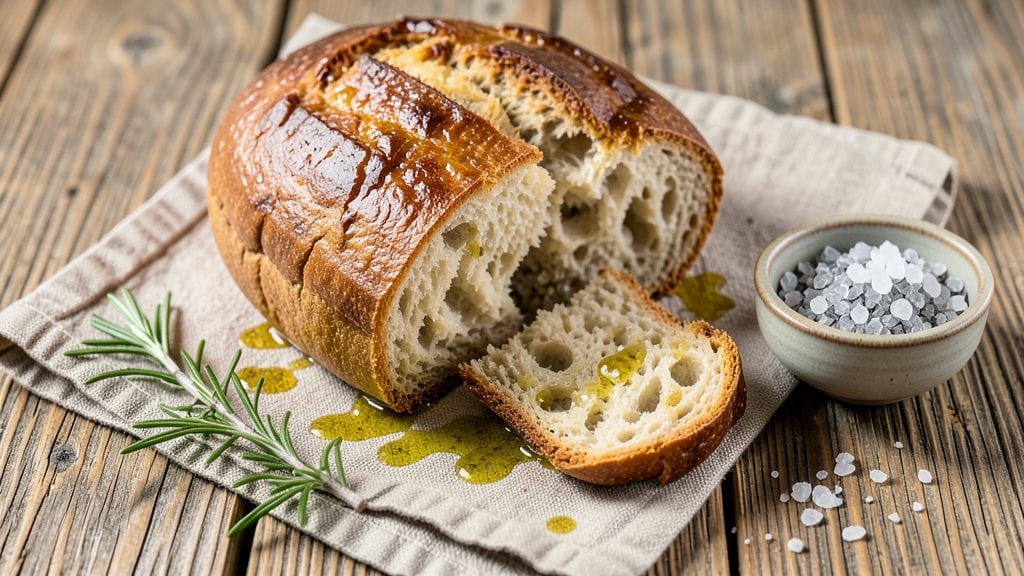
This Gonnella bread recipe delivers the perfect balance of crispy crust and tender crumb, a savory Italian loaf that belongs in every home bakery. 🌟 The secret lies in its simple yet precise dough formula—flour, water, yeast, salt, and high-quality olive oil—shaped into a rustic loaf that develops an irresistible golden crust during baking.
Originating from Southern Italy, Gonnella bread traditionally uses minimal ingredients to create maximum flavor. The dough requires just 30 minutes of prep time followed by a 2-hour rise, making it ideal for weekend baking projects.
When baked at 425°F, the exterior develops those coveted crispy bites while maintaining a soft, airy interior.
What makes this recipe special is its versatility—serve it warm alongside soups, pair it with charcuterie, or enjoy it plain with olive oil and sea salt. The aroma alone will transform your kitchen into an Italian trattoria. Let’s get started on mastering this classic loaf.
For those who love texture contrast, consider adding a sprinkle of coarse sea salt or fresh rosemary to the dough before baking. The variations are endless, but the foundation remains the same—a rustic, flavorful loaf that’s both satisfying and impressive.
Ingredients for gonnella bread
Five simple ingredients transform into a rustic Italian loaf with crispy crust and tender crumb.
| Ingredient | Amount | Notes |
|---|---|---|
| All-Purpose Flour 🌾 | 5 cups | Sifted for even texture |
| Extra-Virgin Olive Oil 🫒 | ½ cup | High-quality, fruity variety |
| Active Dry Yeast 🍞 | 2 ¼ tsp | Fresh yeast preferred |
| Granulated Sugar 🍚 | 1 tbsp | Activates yeast quickly |
| Warm Water 💧 | 1 ½ cups | 105-110°F for activation |
| Coarse Sea Salt 🧂 | 1 ½ tsp | Kosher or flaky preferred |
| Cornmeal 🌽 | ½ cup | For dusting work surface |
| Semolina Flour 🌾 | 1 tbsp | For dusting loaf pan |
| Coarse Semolina 🌾 | 1 tbsp | Optional for crust texture |
The olive oil is non-negotiable here—look for extra-virgin with a fruity aroma, not the bland cooking oil. California Olive Ranch or Bertolli are solid choices for home bakers. Flour matters too: King Arthur or Caputo Tipo 00 yield the best results, though all-purpose works in a pinch. Yeast should be fresh or recently purchased—test it by dissolving in warm water with sugar; if it bubbles within 5 minutes, it's active. For the salt, Maldon flaky sea salt adds dramatic texture to the crust, but kosher salt works perfectly fine for everyday baking.
No extra-virgin olive oil? Light olive oil works in a pinch, but the flavor won't be as rich. Short on semolina? Regular flour or cornmeal substitute just fine—just know the crust will be slightly less crisp. The dough needs 105-110°F water to activate the yeast properly; too hot kills it, too cold slows it down. If your kitchen is cold, warm the water slightly longer. For a herby twist, add 1 tbsp fresh rosemary or thyme to the dough before shaping. The sugar can be swapped for honey or maple syrup at the same amount for subtle sweetness.
This dough doubles in size during the 2-hour rise, so don't overcrowd your bowl. Cover loosely with a damp towel to prevent drying. After shaping, let the loaf rest 30 minutes at room temperature before baking for an even crumb. The baked loaf keeps well 3-4 days in a paper bag at room temperature, or up to 1 week in the fridge. For longer storage, freeze slices wrapped in plastic—reheat in a 350°F oven for 5-10 minutes to restore freshness.
Why You'll Love This Recipe
- No-Knead Nightmare Solved: I swear by this recipe when I’m too tired to fuss—just mix the flour, yeast, sugar, and warm water, let it rise overnight, then bake. The dough practically does the work while I sleep.
- Olive Oil Magic: That splash of extra-virgin olive oil? It’s what makes this bread ridiculously tender with a subtle, fruity depth. No fancy ingredients—just good fat doing its job.
- Weeknight Superstar: Toss it with garlic and herbs for dinner, freeze half for lazy mornings, or serve warm with soup. It’s the one loaf that works everywhere, from my kitchen to my in-laws’ table.
- Budget-Friendly Staple: Five ingredients, zero waste—this bread stretches my grocery dollars while keeping my pantry stocked. Plus, leftovers toast just as well the third day as the first.
Step-by-step instructions for Gonnella bread
This rustic olive oil loaf delivers a crisp exterior and tender crumb with minimal effort.
👨🍳 Step 1: Activate the Yeast and Mix the Dough
In a large bowl, combine the 1.5 cups warm water, 1 tbsp granulated sugar, and 2.25 tsp active dry yeast. Let it sit for 5-10 minutes until frothy—this confirms the yeast is alive and ready to work. If it doesn't bubble, start over with fresh yeast.
Add the 5 cups all-purpose flour and 1.5 tsp coarse sea salt to the bowl. Using a wooden spoon, stir until a shaggy dough forms. Then pour in the 0.5 cup extra-virgin olive oil and mix vigorously until the dough comes together. Here's the thing—this dough should be slightly sticky but manageable, not wet. If it's too dry, add 1 tsp warm water at a time until it holds together when pressed.
🥘 Step 2: Knead and Rest the Dough
Turn the dough onto a lightly floured surface and knead for 8-10 minutes until smooth and elastic. I press down firmly with the heels of my hands and fold the dough over itself, rotating the bowl each time to keep it centered. The dough should spring back slowly when poked—this indicates proper gluten development.
Place the dough in a lightly oiled bowl, cover with a damp towel, and let it rise in a warm place for 1-2 hours or until doubled in size. I like to use the oven with the light on for gentle warmth. Don't rush this step—proper rising creates that signature airy crumb.
🔥 Step 3: Shape and Proof the Loaf
Punch down the risen dough to release air, then shape it into a 10-inch round loaf on a baking sheet dusted with 0.5 cup cornmeal. This prevents sticking and gives the bread its rustic texture. Cover again and let it proof for 30-45 minutes until puffy and nearly doubled in size.
While it proofs, preheat your oven to 375°F. Here's where it gets interesting—just before baking, sprinkle the 1 tbsp coarse semolina evenly over the dough. This creates that beautiful crispy crust we're after. Bake for 30-35 minutes until the crust is deep golden brown and the internal temperature reaches 190°F.
⏰ Step 4: Cool and Serve
Remove the bread from the oven and let it cool on a wire rack for at least 15 minutes before slicing. This resting period allows the steam to escape, preventing a gummy interior. The crust should be crisp enough to shatter when tapped, while the crumb remains tender.
For best results, serve the bread warm. The olive oil infuses the crust with rich flavor, while the coarse semolina adds delightful texture to every bite. Store leftovers wrapped in a clean kitchen towel to maintain freshness for up to 3 days.
Pro Tips For Making Gonnella Bread
- Bloom the yeast properly: Mix your yeast with the warm water and sugar first, then let it sit for 5–10 minutes until it’s frothy and bubbly—before adding flour. I used to just toss it in dry, and my dough always took twice as long to rise. (Yes, even if you’re impatient like me.)
- Use room-temp olive oil: Cold oil from the fridge won’t emulsify as well with the flour, leading to a denser dough. Let your extra-virgin olive oil sit out for 30 minutes before mixing—it’ll make the dough lighter and easier to handle. Trust me, your kneading session will thank you.
- Don’t over-knead the dough: Gonnella bread is forgiving, but if you go overboard, you’ll end up with a tough loaf. Knead just until the dough pulls away from the bowl and springs back when poked—about 8–10 minutes by hand. After burning three batches, I finally figured out "just enough" is the magic.
- Shape it loosely first: Roll the dough into a loose log, then fold the ends toward the center and tuck them under—this keeps the shape intact during rising. My grandmother swore by this, and she was right: skipping the tuck leads to sad, deflating ends. (Yes, even if it looks weird.)
Health benefits of this dish
Whole Grain Boost
Swap up to 2 cups of all-purpose flour for whole wheat or Caputo Tipo 1 flour to boost fiber and nutrients. These variations add 4-5 grams of fiber per slice while maintaining the bread's signature texture.
I recommend using King Arthur whole wheat flour—it blends seamlessly with the dough without making it dense. For extra heartiness, try spelt flour, which adds a nutty depth to the flavor while keeping the crumb tender. 🌾
Gluten-Friendly Option
For gluten-sensitive bakers, use a 1:1 gluten-free flour blend like Bob's Red Mill or Cup4Cup, but reduce the water by 1-2 tablespoons since gluten-free flours absorb differently. The yeast activation step remains critical—ensure your water is 105-110°F to prevent underproofing.
Expect a slightly denser crumb, but the olive oil keeps it moist and flavorful. Always let the dough rest 10 minutes after mixing to hydrate the flour properly.
Low-Carb Adaptation
Transform this into a keto-friendly loaf by replacing 3 cups all-purpose flour with 1 cup almond flour and 1 cup coconut flour. Add 1 extra egg to bind the dough, and increase the olive oil to ⅓ cup for moisture.
The yeast may need 10-15 extra minutes to activate due to the coconut flour's lower moisture content. This version yields 6 grams net carbs per slice while keeping the crispy crust intact.
Protein Power-Up
Boost the protein content by adding ½ cup vital wheat gluten to the dough, which increases protein by 20% per serving. For a savory twist, mix in ¼ cup nutritional yeast—it adds a cheesy, umami flavor that pairs perfectly with the olive oil.
This variation works especially well with the rosemary or thyme additions mentioned in the notes. The dough will be slightly stickier, so dust your surface with semolina flour instead of regular flour during kneading.
Digestive Benefits
Gonnella bread’s simplicity makes it naturally gentle on digestion, but you can enhance its benefits by adding 1 tablespoon ground flaxseed to the dough. Flaxseed adds omega-3 fatty acids and 2 grams of fiber per tablespoon, promoting gut health.
For an extra probiotic boost, sprinkle 1 teaspoon active dry milk powder (not to be confused with yeast) into the dough—it contains beneficial bacteria that support digestion. Store-bought milk powder works, but homemade yogurt powder is even better if you have it on hand. 💪
Nutrition facts
Frequently asked questions
What makes Gonnella bread different from other Italian breads?
Gonnella bread stands out for its olive oil-rich dough and rustic shaping, creating a crispy exterior with a tender, airy crumb. Unlike focaccia (which uses more oil) or ciabatta (with an open crumb), this loaf has a dense yet flaky texture from the semolina topping. The minimal ingredient list—just flour, water, yeast, salt, and olive oil—focuses on quality over complexity.
Can I bake Gonnella bread without semolina?
If you're out of semolina, use cornmeal or even all-purpose flour for dusting. For the crust, try coarse breadcrumbs or crushed cornflakes instead. The texture will differ slightly, but the bread will still bake beautifully. Just ensure your topping is coarse enough to create crispy bits.
Why did my Gonnella bread turn out dense instead of crusty?
Density often happens from underproofing (not enough rise time) or over-kneading. Let the dough rise until it doubles in size and springs back slowly when poked. Also, ensure your yeast is fresh—test it by dissolving in warm water with sugar; if it doesn’t bubble in 5-10 minutes, replace it. For extra crust, bake at 400°F for the last 5 minutes to crisp it up.
How can I add herbs or seeds to the dough?
Mix in 1-2 tablespoons of fresh rosemary, thyme, or sesame seeds with the flour before kneading. For stronger flavor, chop herbs finely or use dried herbs (reduce by half). Avoid adding seeds like poppy or flax too early—they can interfere with gluten development. Sprinkle them on top before baking for extra texture.
Is Gonnella bread suitable for meal prep?
Yes! Store slices in an airtight container at room temperature for 3-4 days or freeze for up to 3 months. To revive, warm in a 350°F oven for 5-10 minutes until crispy again. For sandwiches, toast lightly before assembling to prevent sogginess. The crust stays fresh longer if wrapped in a clean kitchen towel instead of plastic.