
Side Dishes
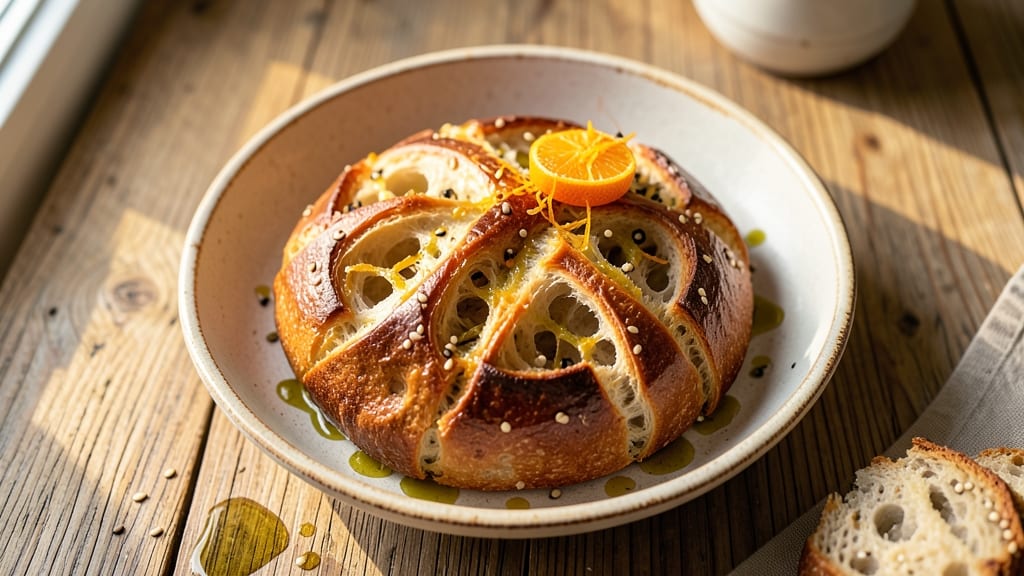
This Asphodel Bread recipe brings ancient Greek tradition to your kitchen with its simple, no-yeast preparation and rich olive oil flavor. 💛 Rooted in religious feasts and Easter celebrations, this dense, moist loaf was traditionally made with just flour, olive oil, and water—a testament to resourcefulness and tradition.
The bread's unique texture and deep flavor make it a staple in Greek households, often served alongside coffee or as a sweet dessert with honey.
The beauty of Asphodel Bread lies in its simplicity and cultural significance. Unlike traditional yeast-based breads, this recipe relies on a natural rise achieved through careful mixing and baking techniques, resulting in a loaf that's tender yet sturdy.
The key ingredients—flour, olive oil, and water—are combined in precise ratios to create a bread that's both humble and extraordinary, reflecting the essence of Greek culinary heritage.
By following this recipe, you'll create a loaf that's perfect for special occasions or everyday enjoyment. The bread's rich, olive oil-infused flavor pairs beautifully with a variety of accompaniments, from sweet honey to strong Greek coffee.
Its dense texture makes it ideal for soaking up sauces or serving as a hearty side dish, ensuring every bite is a taste of tradition.
Whether you're celebrating a religious feast or simply craving a taste of ancient Greece, this Asphodel Bread recipe delivers a piece of history with every slice. The process is straightforward, yet the result is undeniably special—a bread that carries the weight of tradition and the warmth of home.
Let's get started on creating this timeless loaf.
Ingredients for asphodel bread
Ancient Greek simplicity meets modern baking with these nine essential ingredients for Asphodel Bread.
| Ingredient | Amount | Notes |
|---|---|---|
| All-Purpose Flour 🌾 | 3 ½ cups | Unbleached, high-protein preferred |
| Extra-Virgin Olive Oil 🫒 | 1 cup | Cold-pressed, fruity variety |
| Warm Water 💧 | ½ cup | 85°F for optimal hydration |
| Diamond Crystal Kosher Salt 🧂 | 1 ½ tsp | Fine grain preferred |
| Orange Zest 🍊 | 1 tbsp | Freshly grated for brightness |
| Vanilla Extract 🌸 | 1 tsp | Pure, high-quality preferred |
| Ground Cinnamon 🌿 | ½ tsp | Freshly ground for warmth |
| Honey 🍯 | 2 tbsp | Thyme or wildflower preferred |
| Active Dry Yeast 🍞 | ¼ tsp | Optional for slight rise boost |
The flour forms the bread's signature dense yet tender crumb, so King Arthur or Caputo are ideal choices—both yield excellent results. For the olive oil, prioritize Greek extra-virgin like Kalamata or Cretan, which carry authentic Mediterranean notes. The water temperature matters—85°F ensures proper gluten development without activating yeast prematurely. If you're in a pinch, room-temperature water works, but the bread may rise slightly slower. For the orange zest, organic Navel oranges from Whole Foods or local markets provide the most vibrant flavor.
No vanilla extract? Almond extract at half the amount works well, though the flavor profile shifts slightly. Substituting honey? Maple syrup or agave maintain sweetness, but the bread's texture may become slightly denser. The optional yeast can be omitted entirely for a purer traditional experience, but if using, ensure it's fresh and active—test it in warm water first. For the cinnamon, Ceylon cinnamon offers a more delicate flavor, while regular cassia provides stronger warmth. If you're baking for a religious occasion, some traditions call for a pinch of ground mahlab (cherry pit powder) instead of cinnamon for added authenticity.
This dough keeps best at room temperature for up to 24 hours before baking, allowing flavors to meld. Once baked, the loaf maintains freshness for 5-7 days wrapped in a clean kitchen towel. For longer storage, slice and freeze portions—3 months in an airtight container. The bread's dense texture makes it perfect for toasting or serving with honey; avoid over-slicing as it can dry out. For a restaurant-quality finish, brush warm slices with melted butter before serving.
Why You'll Love This Recipe
- No-Fuss Dough: I swear, this bread takes less effort than waiting for toast to pop up. Just mix flour, olive oil, warm water, and a pinch of salt—no yeast, no kneading, no stress.
- Citrus-Kissed Crust: That bright orange zest? It’s the secret weapon. The crust gets a subtle, sunlit tang that pairs perfectly with soups, dips, or just butter.
- Weeknight Hero: Between us, this is my go-to when I’m too tired to bake. Toss it in the oven while I chop veggies—it’s ready before the timer goes off.
- Budget Baking Win: Four ingredients, no frills, and it stretches further than store-bought. Honestly, I make a batch every Sunday and still have slices by Thursday.
Step-by-step instructions for ancient Greek olive oil loaf
This traditional technique creates a tender, fragrant loaf without relying on yeast.
👨🍳 Step 1: Create the Olive Oil Dough Base
In a large mixing bowl, combine the 3.5 cups all-purpose flour and 1.5 tsp Diamond Crystal kosher salt. Make a well in the center and add 1 cup extra-virgin olive oil, 2 tbsp honey, and 0.25 tsp active dry yeast (if using). The yeast is optional but adds subtle lift.
Gradually pour in the 0.5 cup warm water (about 85°F) while stirring with a wooden spoon. Mix until a shaggy dough forms—it should be sticky but manageable. If the dough feels too dry, add 1 tsp more warm water. The texture should resemble thick pancake batter rather than traditional bread dough.
🍳 Step 2: Incorporate Aromatics and Rest
Add the 1 tbsp orange zest, 1 tsp vanilla extract, and 0.5 tsp ground cinnamon to the dough. Mix thoroughly until evenly distributed. The vibrant citrus and warm spices will infuse the loaf with authentic Mediterranean character.
Cover the bowl with a damp kitchen towel and let the dough rest at room temperature for 1 hour. This resting period allows the flour to fully hydrate and the flavors to meld. The dough won't rise significantly—this isn't traditional bread—but it will become more cohesive and easier to shape.
🥘 Step 3: Shape and Prepare for Baking
Lightly grease a 9x5-inch loaf pan with olive oil. Transfer the dough to the pan and shape it gently with oiled hands, pressing it into the corners to eliminate air pockets. The dough will be soft and sticky, so work quickly but carefully to avoid tearing.
Cover the pan with the damp towel again and let it rest for an additional 30 minutes. This final rest ensures the loaf holds its shape during baking. Preheat your oven to 350°F while the dough rests—this ensures even heat distribution when you're ready to bake.
🔥 Step 4: Bake to Golden Perfection
Bake the loaf for 45-50 minutes until the top is golden brown and a toothpick inserted into the center comes out clean. The loaf should have a slightly crisp exterior with a tender, moist crumb inside. If the top browns too quickly, tent the pan with aluminum foil to prevent over-browning while ensuring even cooking.
Here's the thing—this bread relies on the olive oil for moisture and flavor, so don't be tempted to overbake. The internal temperature should reach 190-195°F for perfect texture. Remove from the oven and let cool in the pan for 10 minutes before transferring to a wire rack.
Pro Tips For Making Asphodel Bread
- STIR LIKE A MADMAN: This isn’t a delicate dough—aggressively mix the flour, olive oil, and water for at least 5 minutes by hand (or until it looks like wet sand). I learned this the hard way: skipping this step gives you a dense, gummy loaf instead of that signature crumbly, cake-like texture. Your arms will thank you later.
- ZEST NOW, NOT LATER: Grate the orange zest fresh right before mixing—none of that pre-measured powder nonsense. The oils degrade fast, and pre-ground zest tastes like sad, bitter dust. Plus, the fine, bright flecks distribute better when added wet to the dough. (Yes, even if you’re impatient like me.)
- SALT THE WATER: Dissolve the kosher salt directly in the warm water before mixing—don’t sprinkle it on top. The salt needs to fully integrate, or you’ll end up with uneven flavor pockets. Diamond Crystal runs coarser, so use ½ teaspoon more than you think.
- LET IT REST (OR REGRET IT): Walk away for at least 30 minutes after mixing—no exceptions. The dough needs time to hydrate fully, or it’ll crumble apart when shaping. I was skeptical until I tried it: a rested dough holds together like a dream, even when baked in a rustic shape. (Your future self will curse you if you skip this.)
Best sauces and condiments for this asphodel bread
Olive Oil Drizzle
Start with a simple yet transformative drizzle of extra-virgin olive oil—the same high-quality oil used in the dough. After baking, let the loaf cool slightly, then brush the top generously with 2 tablespoons of Greek Kalamata olive oil.
This adds a luxurious sheen and enhances the bread's natural richness, making every bite feel like a taste of the Mediterranean. 🫒
Honey-Glaze Finish
For a sweet, golden finish, warm 2 tablespoons of thyme honey in a small saucepan over low heat until it becomes slightly runny. Drizzle this fragrant honey over the warm loaf just before serving.
The honey's floral notes complement the bread's cinnamon and orange zest beautifully, creating a perfect balance of sweet and savory. 🍯
Citrus Syrup
Simmer ½ cup orange juice with 2 tablespoons sugar and 1 cinnamon stick for 10 minutes until slightly reduced. Strain and drizzle this aromatic syrup over slices of Asphodel Bread.
The bright citrus and warm spice create a refreshing contrast to the bread's dense texture, making it ideal for breakfast or dessert. 🍊
Yogurt Dip
Whisk together ½ cup Greek yogurt, 1 tablespoon honey, and ½ teaspoon ground cinnamon for a creamy, tangy dip. This pairing is a Greek classic—serve the bread warm with the yogurt dip on the side.
The cool yogurt cuts through the bread's richness, while the honey and cinnamon tie back to the loaf's flavors. 🥛
Spiced Butter
Mix ½ cup softened butter with 1 tablespoon honey, ½ teaspoon cinnamon, and a pinch of orange zest. Spread this fragrant butter on warm slices of Asphodel Bread for a decadent treat.
The butter's richness pairs perfectly with the bread's olive oil base, creating a luxurious texture and flavor combination. 🧈
Coffee Infusion
For a bold pairing, serve slices of Asphodel Bread with a strong cup of Greek coffee. The bread's dense texture soaks up the coffee beautifully, while the olive oil and honey add a sweet contrast.
This combination is a staple in Greek cafes and makes for a comforting afternoon treat. ☕
Nutrition facts
Frequently asked questions about asphodel bread
Why does traditional Asphodel Bread not use yeast?
This ancient recipe relies on a natural rise through careful mixing and baking techniques rather than yeast. The olive oil and warm water create a tender crumb without the need for fermentation, preserving the bread's dense yet moist texture that's been cherished in Greek tradition for centuries.
Can I make Asphodel Bread without orange zest?
The zest adds brightness, but you can substitute with 1 tsp lemon zest or ½ tsp ground cardamom for warmth. If omitting citrus entirely, increase cinnamon to 1 tsp to maintain depth of flavor. The bread will still taste delicious—just slightly less vibrant.
How do I store leftover Asphodel Bread?
Wrap the cooled loaf tightly in a clean kitchen towel and store at room temperature for 3-4 days. For longer storage, slice and freeze portions in an airtight container for up to 3 months. The olive oil keeps it moist, but avoid refrigerating as it can dry out the bread.
What makes this bread different from regular olive oil bread?
The key differences are the honey and spices that create a sweet-savory balance, plus the traditional shaping and baking method. While regular olive oil bread uses yeast, Asphodel Bread achieves its signature texture through a no-yeast rise and longer baking time, resulting in a denser, more aromatic loaf.
Can I use this bread for Easter celebrations?
Yes! Asphodel Bread is traditionally served during Easter and religious feasts in Greece. For extra authenticity, add a pinch of mahlab (cherry pit powder) to the dough or serve with a drizzle of rosewater honey for a special touch.