
Sauces & Condiments
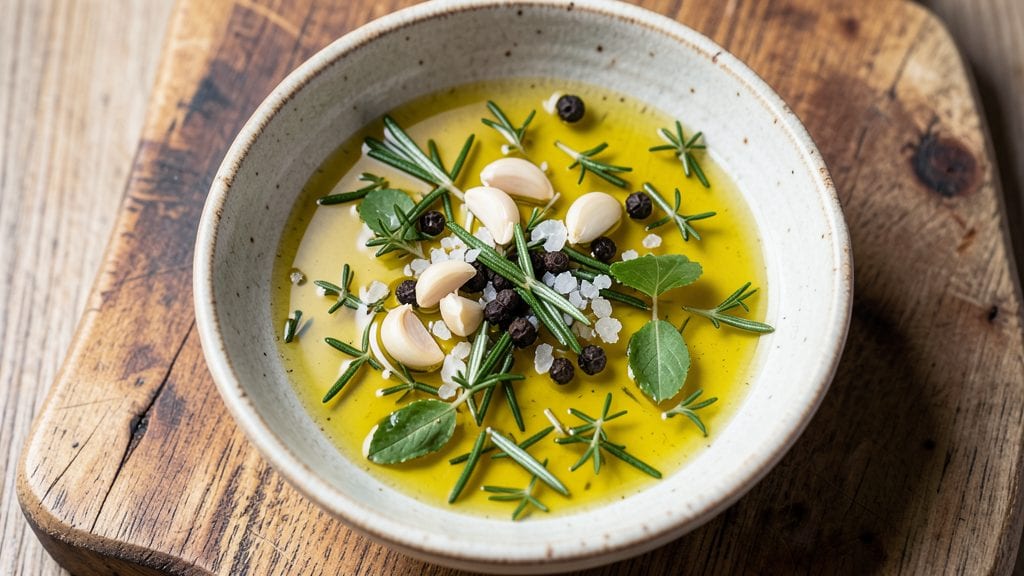
Transforming simple olive oil into this herbed garlic bread dipping oil takes just minutes—no fancy techniques required. I developed this recipe after realizing how much richer store-bought oils could taste with a few fresh ingredients and a little patience.
The secret lies in infusing high-quality olive oil with aromatic garlic and fragrant herbs, creating a versatile condiment that elevates every bite of bread.
This recipe delivers professional-quality results with just five ingredients and a single step: simmering. The garlic softens into sweet, mellow notes while the herbs release their bright flavors, all suspended in rich olive oil.
Unlike store-bought versions, this infusion stays fresh for weeks in the refrigerator, ready to transform crusty bread, pita chips, or even grilled vegetables into an unforgettable experience.
What makes this especially impressive is how effortlessly it works with any bread type—crusty baguettes, soft ciabatta, or even garlic bread leftovers. The oil's velvety texture coats every bite perfectly, while the balanced garlic-herb profile ensures it never overpowers. Once you try this, you'll never reach for plain oil again.
Perfect for holiday gatherings, game day snacks, or everyday dipping needs, this recipe scales easily to serve crowds or small gatherings. The best part? You'll have it ready in under 15 minutes—just enough time to warm the bread while the oil infuses. Let's create this simple yet sophisticated condiment together.
Ingredients for easy bread dipping oil
Five simple ingredients elevate basic olive oil into restaurant-worthy bread dipping oil.
| Ingredient | Amount | Notes |
|---|---|---|
| Extra-Virgin Olive Oil 🫒 | 1 ½ cups | High-quality, fruity variety preferred |
| Garlic Cloves 🧄 | 8 cloves | Fresh, peeled, thinly sliced |
| Fresh Rosemary Sprigs 🌿 | ¼ cup | Finely chopped, stems removed |
| Fresh Thyme Leaves 🌿 | ¼ cup | Finely chopped, stems removed |
| Sea Salt 🧂 | 1 tsp | Diamond Crystal preferred |
| Black Peppercorns 🌶️ | ½ tsp | Freshly cracked, coarse grind |
| Red Bell Pepper 🍅 | ½ whole | Seeded, finely diced (optional) |
The extra-virgin olive oil is non-negotiable—look for bottles labeled with a harvest date, not just 'best by.' Whole Foods or Trader Joe's carry excellent options under $15. Avoid 'light' or 'pure' olive oils; they lack the fruity depth needed for infusion. Fresh garlic is essential—pre-minced garlic lacks the aromatic complexity. For rosemary and thyme, farmers markets often have fresher herbs than grocery stores, but the dried versions work in a pinch (use half the amount). The red bell pepper adds subtle sweetness and color—skip it if you prefer classic herbed oil.
No fresh rosemary? Dried rosemary at one-third the amount works, but toast it in the oil first for 30 seconds to deepen flavor. Short on thyme? Fresh parsley or basil can substitute, though the flavor profile shifts slightly. Want extra richness? Add 1 tbsp of butter to the oil during infusion. For a spicier kick, include 1/4 tsp of red pepper flakes with the garlic. The sea salt should be Diamond Crystal or Maldon—coarse grains dissolve better and add texture. If you can't find them, kosher salt works, but taste as you go.
Store the infused oil in an amber glass jar (or any dark glass) in the refrigerator for up to 3 weeks. The flavors intensify over time, so it tastes even better the next day. For longer storage, freeze in 1/4-cup portions—thaw at room temperature before use. This oil pairs perfectly with crusty baguettes, pita chips, or grilled vegetables. To reheat, simply warm gently in a saucepan over low heat for 1-2 minutes. Leftovers make excellent marinades or salad dressings.
Why You'll Love This Recipe
- Five-Minute Infusion: I swear by this trick—just toss the whole garlic cloves, rosemary sprigs, and thyme into warm olive oil for a quick soak. No mincing, no straining, just pure, fragrant oil that tastes like you spent hours in the kitchen.
- Garlic-Thyme Magic: That first dip when the oil’s still warm? The garlic softens just enough to melt into the bread while the thyme adds this bright, herby punch. It’s the kind of flavor that makes you reach for another piece without thinking.
- Weeknight Superhero: I keep a jar of this in the fridge for lazy nights—drizzled over toast, tossed with roasted veggies, or even slathered on grilled cheese. No fancy plating, no last-minute shopping. Just open the jar and boom, instant upgrade.
- Budget-Friendly Luxury: Honestly, the ingredients cost next to nothing, but it tastes like a fancy tapenade from a $20 bottle. A little goes a long way, and since it keeps for weeks, I’m always covered—no more last-minute olive oil runs for bread dipping emergencies.
Step-by-step instructions for herbed garlic bread dipping oil
This simple method delivers vibrant, aromatic oil in minutes—perfect for dipping crusty bread.
Prepare the Herbs and Aromatics
In a small mixing bowl, combine the 0.25 cup fresh rosemary sprigs and 0.25 cup fresh thyme leaves. Use a sharp chef's knife to finely chop both herbs, removing any woody stems as you go. The rosemary should be minced into small pieces, while the thyme leaves can remain whole or slightly torn—this ensures maximum surface area for infusion without overpowering the oil.
Next, peel and thinly slice the 8 cloves garlic cloves into paper-thin sheets. For the 0.5 whole red bell pepper, remove seeds and membranes, then finely dice the flesh. If using, the bell pepper adds a subtle sweetness that balances the bold garlic and herbs. Set all prepared ingredients aside in separate bowls for the next step.
Infuse the Olive Oil with Herbs and Garlic
Place the 1.5 cups extra-virgin olive oil in a small saucepan over low heat. Gently add the chopped rosemary, thyme, garlic slices, and diced red bell pepper. Stir once to distribute the ingredients evenly, then reduce heat to the lowest setting possible—just enough to maintain a gentle simmer.
Let the mixture infuse for 10-12 minutes, stirring occasionally with a wooden spoon. You'll notice the oil develop a fragrant aroma and a golden hue as the herbs release their oils. The garlic should soften slightly but not brown—this ensures a delicate flavor rather than a bitter one. If you see any pieces beginning to darken, immediately remove the pan from heat and let it cool slightly before proceeding.
Season and Strain for Smooth Texture
Remove the saucepan from heat and let the oil cool for 5 minutes. This brief resting period allows the flavors to meld fully. While the oil cools, combine the 1 tsp sea salt and 0.5 tsp black peppercorns in a small mortar and pestle. Crush the peppercorns into coarse grains—this ensures a balanced seasoning without overwhelming the delicate herb infusion.
Strain the infused oil through a fine-mesh sieve lined with a cheesecloth or coffee filter into a clean glass jar or bowl. Discard the solid ingredients. Sprinkle the crushed peppercorns and sea salt directly into the jar, then stir gently to distribute evenly. The oil should now have a vibrant greenish-gold color and an intoxicating aroma of garlic, rosemary, and thyme.
Rest and Serve
Allow the oil to rest at room temperature for at least 30 minutes before serving. This resting period enhances the flavor profile, allowing the herbs to fully release their oils into the olive oil. For best results, store any unused oil in an airtight container in the refrigerator for up to 2 weeks. The flavors will continue to develop slightly over time, making it even more aromatic.
Serve the herbed garlic oil warm or at room temperature, drizzled generously over crusty bread, grilled vegetables, or as a finishing touch for pasta dishes. The oil's rich, aromatic depth will elevate any dish it touches, making it a versatile staple for any kitchen.
Pro Tips For Making Easy Bread Dipping Oil
- Infuse Low and Slow: DESCRIPTION: Heat that oil barely—just until you see the first tiny bubbles around the garlic. Too much heat and you’ll burn the garlic into bitter sludge (been there). Let it simmer on the lowest possible flame for 8-10 minutes, stirring occasionally. Patience here means flavor that actually sticks to your bread, not a sad, acrid mess.
- Smash That Garlic: DESCRIPTION: Skip the mincing—crush those cloves with the flat side of your knife first. You want the cell walls broken so the flavor infuses faster. I used to peel and chop them, but smashed cloves release more aroma and perfume the oil in half the time. (Pro move: Toss the smashed cloves into the oil whole—they’ll soften and release flavor without turning to dust.)
- Salt the Oil: DESCRIPTION: Don’t wait until the end—sprinkle that sea salt into the warm oil while the garlic is infusing. It dissolves better this way and seasons the oil itself, not just the herbs. I learned this after making a batch where the bread tasted bland until I dipped it in—turns out, the salt needed to mingle with the oil first. (Yes, even if your bread is already salted.)
- Strain or Don’t: DESCRIPTION: If you’re serving this immediately, strain out the garlic and herbs—clean oil looks better and tastes purer. But if you’re making it ahead, leave the solids in. They’ll keep the oil infused longer, and the texture becomes a fun, herby crunch when you drizzle it back over the bread later. (I do both: strain for first use, then toss the solids back in for leftovers.)
Essential equipment for this recipe
Must-Have Equipment
You don’t need a fancy kitchen to make this oil—just a few essential tools that most home cooks already own. A small saucepan (8-10 inches) is critical for gentle, even heating.
I use my stainless steel Mauviel pan because it heats evenly and won’t react with acidic ingredients, but any quality pan works. A fine-mesh sieve lined with cheesecloth or a coffee filter ensures a silky-smooth finish—no gritty bits in your oil! 🧂
Optional Upgrades
For a more professional touch, invest in a mortar and pestle to crush peppercorns—this gives a better texture than pre-ground pepper. I love my copper mortar from Williams Sonoma, but a simple ceramic one works too.
A digital thermometer (like the Thermoworks Thermapen) helps monitor oil temperature—ideal heat for infusion is 180-200°F. This prevents burning while ensuring proper flavor extraction.
Storage Essentials
Store your infused oil in an amber glass jar to block light, which preserves freshness. I use Le Parfait jars because they’re airtight and stackable. For longer storage, freeze in 1/4-cup portions—thaw at room temperature before use.
A small funnel makes transferring oil into jars mess-free. Label your jar with the date to track freshness—this oil tastes best within 2-3 weeks.
Budget-Friendly Swaps
No fancy tools? No problem! Use a clean glass jar with a tight lid for storage. A wooden spoon works perfectly for stirring—just avoid metal if you’re worried about heat transfer. For straining, a clean kitchen towel folded into a pouch works in a pinch.
The key is patience: let the oil infuse slowly over low heat to avoid scorching. My Nonna always said, "Good things take time—even in the kitchen."
Cleanup Made Easy
Infused oil leaves minimal cleanup. I keep a small bowl of hot, soapy water nearby to quickly rinse the pan and tools. A spatula helps scrape every last drop of oil into the jar—waste not, want not! For stubborn herb residue, a wooden spoon works better than metal.
Store your equipment in a drying rack to prevent rust. Pro tip: Save the infused garlic and herbs for homemade crostini or pasta garnishes—they’re packed with flavor! ✨
Nutrition facts
Frequently asked questions
Can I make this bread dipping oil without fresh herbs?
Use 1/3 cup dried rosemary and 1/3 cup dried thyme, but toast them in the oil for 30 seconds first to deepen their flavor. For a different twist, try 1 tbsp dried oregano or 1 tsp smoked paprika instead. The key is adjusting the quantity—dried herbs are more concentrated than fresh.
How long does this infused oil last in the fridge?
This herbed garlic oil stays fresh for up to 3 weeks when stored in an amber glass jar in the refrigerator. The flavors actually improve over time, becoming more complex. For longer storage, freeze in 1/4-cup portions—thaw at room temperature before using to preserve texture.
What if my oil smells burnt during infusion?
Remove the pan immediately if you see smoke or a burnt aroma—this happens when heat gets too high. Let the oil cool slightly, then strain out any darkened garlic or herbs. The remaining oil should still be usable, though the flavor may be slightly bitter. Next time, keep the heat at the lowest setting possible and stir frequently.
Can I use this oil for cooking instead of just dipping?
Yes! This infused oil works beautifully for light sautéing, drizzling over roasted vegetables, or finishing pasta. Just remember it has low smoke point from the herbs—use it for low-heat cooking only. For frying, reserve a small portion and avoid high temperatures to prevent burning.
What's the best bread to pair with this dipping oil?
Crusty baguettes, warm ciabatta, or toasted sourdough work perfectly. For extra flavor, try garlic bread or focaccia—the oil's garlic and herbs complement these textures beautifully. Even pita chips or naan become irresistible with this infusion!