
Breakfast & Brunch
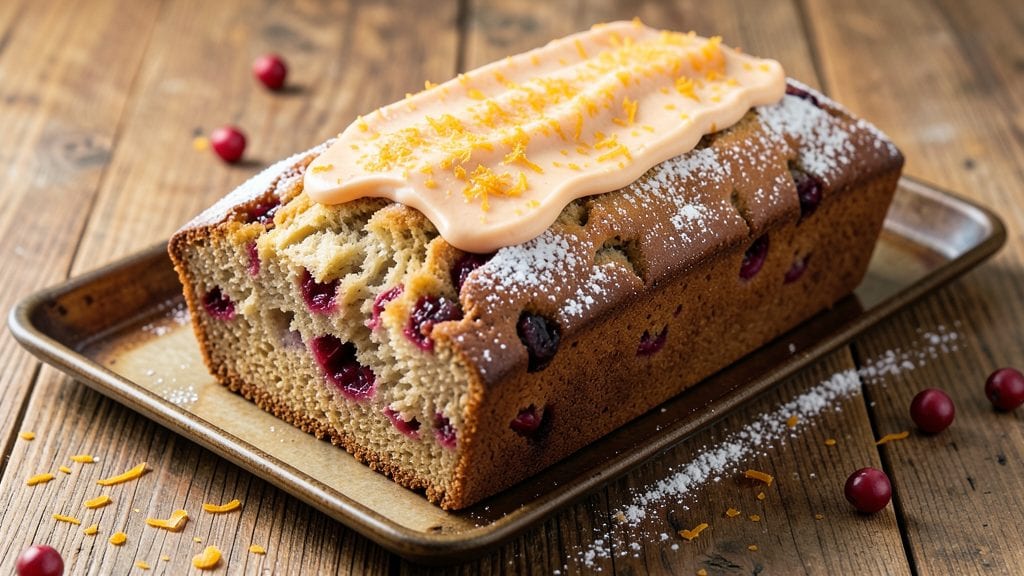
This Barefoot Contessa cranberry orange bread brings the perfect balance of sweet-tart flavors that make every morning feel like a celebration. 💛 I first baked this recipe during a Boston winter when my kitchen smelled like citrus and spices, and it became an instant family favorite.
The secret lies in the zesty orange zest and tart cranberries swirled into a tender, golden loaf that's moist without being heavy.
The beauty of this recipe is its simplicity—just a handful of pantry staples and about 45 minutes of active time, including baking. The dough comes together quickly, and the orange glaze adds that restaurant-quality shine that makes it look as good as it tastes.
It's the kind of bread that disappears fast, whether you're serving it with coffee or packing slices for lunches.
What you'll end up with is a loaf that's perfectly sweet but not cloying, with bursts of cranberry and citrus in every bite. The glaze gives it a professional finish, and the texture is just right—tender crumb with a crispy crust.
This is the kind of recipe that makes you want to bake again and again, especially when you see how it brightens up any breakfast table.
Perfect for holiday mornings, brunch gatherings, or even as a gift with a jar of jam. Let's get started on making this crowd-pleaser that tastes like a little piece of sunshine in every slice.
Ingredients for barefoot contessa cranberry orange bread
Eight simple ingredients transform into a loaf that tastes like sunshine every morning.
| Ingredient | Amount | Notes |
|---|---|---|
| All-Purpose Flour 🌾 | 4 cups | Sifted for light texture |
| Granulated Sugar 🍚 | 1 ½ cups | White or light brown |
| Orange Zest 🍊 | 2 tbsp | From 2 large oranges |
| Fresh Orange Juice 🍊 | ¾ cup | From 2 large oranges |
| Unsalted Butter 🧈 | 1 cup | Cold, cubed for dough |
| Large Eggs 🥚 | 2 whole | Room temperature |
| Baking Powder 🍞 | 2 tsp | Aluminum-free preferred |
| Salt 🧂 | ½ tsp | Fine sea salt |
| Dried Cranberries 🍇 | 1 cup | Chopped, not sweetened |
| Vanilla Extract 🍯 | 1 tsp | Pure vanilla preferred |
| Powdered Sugar 🍚 | ½ cup | For orange glaze |
| Milk 🥛 | ¼ cup | For glaze consistency |
| Orange Juice 🍊 | 1 tbsp | Extra for glaze |
The orange zest is where the magic happens—get it from two vibrant oranges (Navel or Valencia work best). Trader Joe's and Whole Foods often have organic options that pack extra flavor. If your zest smells faint, toss those oranges—they're past their prime. The cranberries should be dried but plump, not shriveled. Ocean Spray unsweetened is my go-to, but any unsweetened variety works. For the butter, grab unsalted—salted can throw off the balance, and you're already adding salt separately. Use European-style butter if you can find it; it's richer and makes this bread extra tender.
No fresh oranges? Bottled orange juice works in a pinch, but it lacks the bright zest. For the cranberries, dried cherries at half the amount add a nice twist. The powdered sugar for the glaze should be fine and smooth—if it's clumpy, sift it first. Want more orange flavor? Add 1 extra teaspoon of zest to the dough. The vanilla extract is non-negotiable here—imitation vanilla tastes like perfume, not dessert. And if you're feeling fancy, swap the dried cranberries for fresh cranberries tossed in 1 tbsp orange juice (just don't forget to drain them well).
This bread keeps beautifully—3 days at room temperature wrapped in foil, or up to 1 week in the fridge. For longer storage, freeze slices wrapped individually—they thaw in 10 minutes in the microwave. The glaze hardens when chilled, so bring it to room temp before serving. I always make a double batch—one for breakfast, one for gifts. The dough can be prepped 1 day ahead and refrigerated overnight for even better flavor. And trust me, leftovers taste just as good as day-old—if there are any.
Why You'll Love This Recipe
- No-Fuss Mix-In: I swear by this dough—just fold in dried cranberries and orange zest, then let the butter and sugar do the work. No kneading, no fuss, and the citrus brightens everything up in minutes.
- Taste Like Holiday Morning: That first slice? Warm, buttery layers with bursts of cranberry and a zing from the fresh orange juice—it’s the kind of bread that makes you pause mid-bite. Honestly, it’s the only thing keeping my pantry from feeling bare in winter.
- Breakfast or Snack Hero: Toast it for a quick breakfast with jam, or pack slices for lunch—it holds up perfectly. My kids grab it straight from the fridge, and I’ve even used it to top yogurt when I’m lazy.
- Leftovers That Last: A single loaf feeds my family for days. The crust stays crisp, the crumb stays moist, and the orange flavor lingers—so you won’t regret baking two. (Yes, I’ve done it.)
Step-by-step instructions for cranberry orange bread
Here's how to make this bright, citrusy loaf with perfect swirls and moist crumb.
👨🍳 Step 1: Mix the Dough for Light, Fluffy Texture
Preheat your oven to 350°F and grease a 9x5-inch loaf pan. In a large mixing bowl, combine the 4 cups all-purpose flour, 1.5 cups granulated sugar, 2 tsp baking powder, and 0.5 tsp salt. Whisk until evenly distributed—this ensures your bread rises properly.
Cut the 1 cup unsalted butter into small cubes and let it sit at room temperature for 10 minutes to soften. Add the butter to the dry ingredients and use a pastry cutter or your fingers to work it into the flour until the mixture resembles coarse crumbs with pea-sized butter pieces remaining.
In a separate bowl, whisk together the 2 whole large eggs, 0.75 cup fresh orange juice, 1 tsp vanilla extract, and 2 tbsp orange zest. Slowly pour this wet mixture into the dry ingredients while stirring gently with a wooden spoon. Mix just until combined—overmixing develops gluten, which makes the bread dense instead of tender.
🥘 Step 2: Fold in Cranberries and Shape the Loaf
Gently fold in the 1 cup chopped dried cranberries using a spatula, being careful not to break them up. The cranberries should be evenly distributed throughout the dough. Transfer the dough to the prepared loaf pan and spread it evenly with a spatula, pressing down lightly to eliminate air pockets.
Here's the thing—don't overpack the pan. You want the dough to be level but not compressed. The bread will rise beautifully in the oven, so give it room to expand. Smooth the top with the back of a spoon and sprinkle any remaining cranberries on top for extra bursts of flavor.
🔥 Step 3: Bake Until Golden and Springy
Bake the bread in the preheated oven for 50-60 minutes, or until a toothpick inserted in the center comes out clean. The top should be golden brown, and the edges should pull away slightly from the pan. If the top browns too quickly, tent the pan loosely with aluminum foil to prevent over-browning while allowing the bread to continue baking.
I know it seems early, but start checking at the 45-minute mark—your oven might run hot. The bread is done when it springs back gently when pressed in the center. If you press too hard and leave an indentation, it needs more time. Remove from the oven and let it cool in the pan for 10 minutes before transferring to a wire rack.
🍳 Step 4: Make the Orange Glaze
While the bread cools, make the glaze by whisking together the 0.5 cup powdered sugar, 0.25 cup milk, and 1 tbsp orange juice in a small bowl. The mixture should be smooth and pourable—if it's too thick, add a splash more milk. If it's too thin, add a pinch more powdered sugar. You want a consistency like heavy cream.
Here's where it gets fun—toss in the 2 tbsp orange zest you set aside earlier and mix well. This adds an extra layer of citrus flavor that ties the whole loaf together. The glaze should be vibrant orange and smell intensely citrusy—this is your signal it's ready to use.
🍽️ Step 5: Glaze and Serve Warm
Once the bread has cooled for 10 minutes (it should be warm but not hot), carefully invert it onto a serving plate. Using a spoon or small pitcher, drizzle the glaze evenly over the top, letting it drip down the sides. The bread will absorb the glaze quickly, so work fast to get an even coating.
Let the glaze set for 5 minutes before slicing. Each slice should have that perfect balance of moist crumb, sweet citrus flavor, and bursts of tart cranberry. Serve warm with a cup of coffee or tea—it's the perfect way to start your day. The bread keeps well wrapped at room temperature for 2 days or can be frozen for up to 3 months.
Pro Tips For Making Barefoot Contessa Cranberry Orange Bread
- Chill the Dough: DESCRIPTION: After mixing, let the dough rest overnight in the fridge—yes, even if you’re eager to bake. I used to skip this and ended up with a dense, uneven loaf that crumbled when sliced. Cold dough rises slower and develops deeper flavor, plus the citrus notes shine brighter.
- Zest Fresh, Use Fast: DESCRIPTION: Grate the orange zest right before mixing—it loses potency fast, and stale zest tastes bitter. Store-bought zest is fine, but if you’re peeling your own, keep it in the freezer for up to 2 weeks if you’re not using it all at once. Trust me, the difference is noticeable.
- Measure Butter Cold: DESCRIPTION: Scoop the unsalted butter straight from the fridge and pack it into your measuring cup—don’t soften it first. This ensures the right fat-to-flour ratio, and the bread stays tender instead of turning greasy or dry. I learned this after a batch turned out like a brick.
- Steam the Pan: DESCRIPTION: Pour a little hot water into the loaf pan before baking—just enough to coat the bottom. The steam helps the crust brown evenly and keeps the bread from drying out. I skip this sometimes, and the edges always end up tougher. (Pro move: Use a spray bottle for easy cleanup.)
Essential equipment for this recipe
Mixing Essentials
You don't need fancy gadgets for this bread, but a few basics make life easier. A large mixing bowl (I use my 12-cup Pyrex) keeps everything contained, and a wooden spoon prevents overmixing.
For the butter, I swear by a sharp chef's knife to cube it evenly—uneven pieces can lead to uneven texture. A microplane for zesting is worth the investment if you bake often, but a grater works in a pinch. 🧅
Baking Tools
Your oven is the star here, but a 9x5-inch loaf pan (I prefer Wilton nonstick) is non-negotiable. Grease it well with butter or baking spray—I use Baker's Joy for easy release.
A toothpick for testing doneness is essential, and a wire cooling rack saves your countertops from sticky bread residue. For the glaze, a small whisk bowl keeps things tidy, and a measuring spoon set ensures precise powdered sugar amounts.
Optional Upgrades
Want to take it pro? A stand mixer with paddle attachment saves your arm when combining wet and dry ingredients. I also love a digital kitchen scale for accurate measurements—especially when substituting ingredients.
For presentation, a small offset spatula makes glaze application effortless. And if you're making this often, a cranberry chopper (just a rolling pin works) keeps those dried fruits uniform. 🍊
Budget-Friendly Swaps
No fancy tools? No problem. Use a large bowl and wooden spoon for mixing, and a butter knife for spreading dough. A spoon works for glaze application—just go slow. I've made this bread with store-brand pans and hand graters, and it still turns out delicious.
The key is attention to detail, not expensive equipment. Even a toothpick from your silverware drawer can test doneness.
Storage Solutions
Keep your baked bread fresh with airtight containers (I use Rubbermaid glass containers). For freezing, quart-sized freezer bags with parchment paper between slices prevent freezer burn. A sharp serrated knife (like Mercer Culinary) gives clean slices without crushing the crumb.
And for serving, a wooden cutting board adds rustic charm to your breakfast table. 💛
Nutrition facts
Frequently asked questions
Can I substitute fresh cranberries for dried in this recipe?
Yes, but you'll need to prepare them first! Use 1 cup fresh cranberries tossed in 1 tbsp orange juice and let them sit for 10 minutes to soften. Drain well before folding into the dough. Fresh cranberries add a brighter tartness, but they release more moisture, so your bread may be slightly denser.
Why does my bread turn out dense instead of light and fluffy?
Overmixing the dough is the most common culprit! The moment you combine wet and dry ingredients, stop stirring—just until everything comes together. Also, make sure your baking powder is fresh (test by mixing 1 tsp with 2 tbsp water—it should bubble immediately). Cold butter can also prevent proper rise, so let it soften to room temperature.
How can I make this bread without a loaf pan?
Use a 9-inch round cake pan or even a pie dish lined with parchment paper. For a rustic look, shape the dough into a free-form loaf on a baking sheet lined with parchment. Bake for 40-45 minutes (check at 35 minutes) and brush with melted butter after baking for extra shine.
Can I make this bread ahead of time?
The dough can be mixed and shaped 1 day ahead, covered, and refrigerated. Bake straight from the fridge (no need to bring to room temperature)—just add 5-10 minutes to baking time. For the glaze, make it fresh before serving, or store it separately and brush on warm bread. The flavors actually improve overnight!
What's the best way to reheat stale bread?
Wrap slices in a damp paper towel and microwave for 10-15 seconds—this restores moisture without drying it out. For a crispier texture, toast slices in a 350°F oven for 5 minutes with a sprinkle of powdered sugar. Never microwave uncovered, as it can make the glaze rubbery.