
Side Dishes
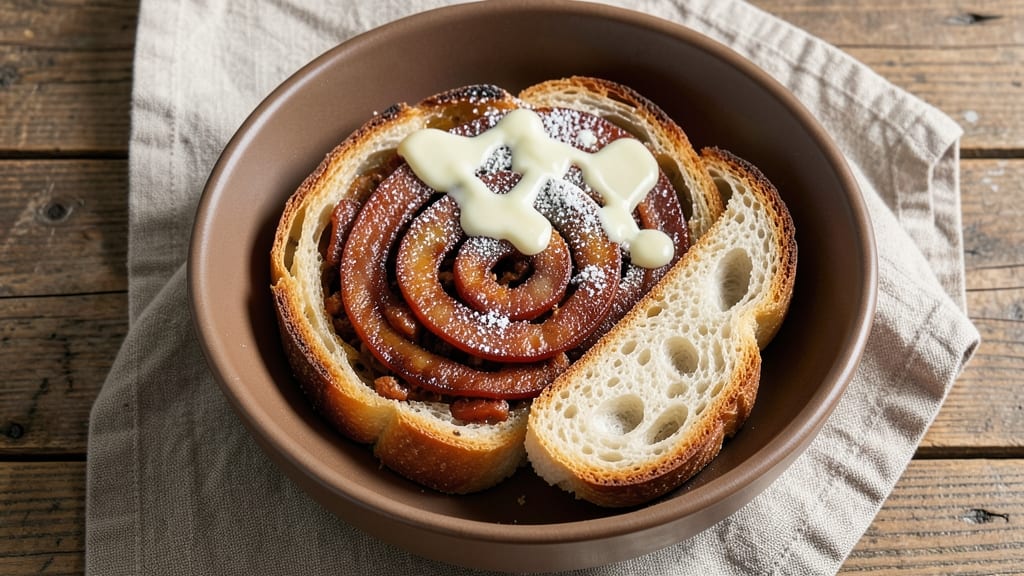
This Filipino-style baco bread recipe transforms simple ingredients into a crispy, caramelized masterpiece that's become a breakfast staple across the Philippines. The secret lies in the perfect balance of sweet glaze and savory sausage filling, creating layers of texture that make every bite irresistible.
What sets this apart is how the edges achieve that signature golden-brown crunch while keeping the inside tender—just like your favorite bakery version, but made at home.
The process starts with homemade longganisa (Filipino sausage), which adds rich, garlicky flavor to the flaky dough. The dough itself is rolled thin and brushed with a sweet glaze that caramelizes beautifully during baking, creating those coveted crispy edges.
This isn't just any bread—it's a showstopper that pairs perfectly with coffee or eggs for a hearty breakfast.
What makes this recipe truly special is its versatility. You can enjoy it warm from the oven, crispy and fresh, or even reheat slices in a pan for that nostalgic tortilla-style crunch.
The combination of sweet and savory flavors, along with the satisfying crunch, makes this more than just bread—it's a cultural experience in every bite.
Ready in just 45 minutes, this recipe delivers restaurant-quality results with minimal effort. Whether you're serving it for breakfast or as a snack, the aroma alone will have everyone asking for seconds. Let's get started on creating your own batch of this beloved Filipino classic.
Ingredients for baco bread
Simple pantry staples meet Filipino flavors for crispy, caramelized baco bread magic.
| Ingredient | Amount | Notes |
|---|---|---|
| Longganisa (Filipino Sausage) 🌭 | 1 ½ lb | Homemade or store-bought, sliced thin |
| All-Purpose Flour 🌾 | 4 cups | Plus 1 tbsp for dusting |
| Unsalted Butter 🧈 | ½ cup | Cold and cubed for flaky layers |
| Granulated Sugar 🍚 | ¼ cup | For sweet glaze |
| Brown Sugar 🍚 | ¼ cup | Packed for caramelization |
| Large Eggs 🥚 | 1 whole | Room temperature |
| Milk 🥛 | ½ cup | Warm for tender dough |
| Baking Powder 🍞 | 1 tsp | Diamond Crystal brand preferred |
| Salt 🧂 | ½ tsp | Kosher or sea salt |
| Garlic Cloves 🧄 | 4 cloves | Minced for sausage seasoning |
| Ground Black Pepper 🌶️ | ½ tsp | Freshly ground preferred |
| Sweetened Condensed Milk 🥛 | ½ cup | For glaze richness |
| Vegetable Oil 🫒 | 2 tbsp | For brushing dough |
| Ground Cinnamon 🌿 | ½ tsp | Optional for glaze warmth |
The longganisa is the heart of this dish—homemade if you're feeling ambitious, or grab a package of Filipino-style sausage from the international aisle at Walmart or Asian markets. Look for the kind with visible fat marbling; it makes the filling richer. If you're making your own, minced garlic and black pepper are non-negotiable for that authentic garlicky kick. For the dough, King Arthur flour works best if you're picky about texture, but any all-purpose brand will do. The butter needs to stay cold—wrap those cubes in plastic wrap before adding to the flour to keep everything flaky.
No longganisa? Italian sausage works in a pinch, but it won't be the same—Filipino sausage has a distinct sweetness and fat content. Short on condensed milk for the glaze? Equal parts brown sugar and water mimics the caramelized sweetness, though it won't be quite as rich. The dough can handle substitutions: whole wheat flour at half the amount adds texture, but expect a denser crumb. For the glaze, melted butter with a pinch of cinnamon gives a similar sweetness if you're out of condensed milk. And if you're worried about the dough being too sticky? Chill it 30 minutes before rolling—trust me on this.
This dough keeps for 2 days wrapped in plastic in the fridge, but it's best used fresh. The glaze sets quickly once brushed, so if you're not baking immediately, cover with parchment paper to prevent drying. Leftover baco bread? Toast slices in a dry pan for that nostalgic tortilla crunch—perfect with coffee. Freezes beautifully too: wrap individual slices in foil and store for up to 3 months. Just thaw at room temp before reheating.
Why You'll Love This Recipe
- No-Fuss Assembly: I swear by this—just slice the longganisa, mix the dough, and fold. No rolling pins, no stress. The butter and sugars melt into the sausage as it bakes, so you’re not stuck kneading or waiting for dough to rise.
- Sweet-Savory Magic: That caramelized brown sugar crust? It’s the star. The longganisa’s garlicky, slightly sweet flavor soaks into the bread, giving every bite a rich, umami punch without tasting like dessert.
- Weeknight Hero: Between us, this is my lazy night go-to. Make a batch on Sunday, and you’ve got breakfast for the whole week—no reheating required. Toasts perfectly, even cold from the fridge.
- Budget Breakfast Win: Longganisa stretches further than you’d think, and the dough uses pantry staples. I’ve fed four people for under $5, and honestly? No one complains when the bread’s still warm.
Step-by-step instructions for Filipino-style baco bread
Here's how to make this crispy, sweet-edged delight with layers of savory longganisa.
Prepare the Longganisa Filling
In a medium skillet over medium heat, cook the 1.5 lb Longganisa (Filipino Sausage) sliced thin until it loses its raw color and turns golden brown—about 5-6 minutes. The sausage should be fully cooked through with no pink remaining.
While the sausage cooks, mince the 4 cloves Garlic Cloves and sprinkle them into the skillet during the last 2 minutes of cooking. Stir well to combine the garlic with the sausage. Remove from heat and let cool completely before using. This step ensures your filling has maximum flavor without overpowering the bread's delicate texture.
Make the Dough and Layer the Filling
In a large mixing bowl, combine the 4 cups All-Purpose Flour, 1 tsp Baking Powder, and 0.5 tsp Salt. Cut in the 0.5 cup Unsalted Butter (cold and cubed) using a pastry cutter or your fingers until the mixture resembles coarse crumbs with pea-sized butter pieces remaining.
Add the 1 whole Large Eggs (room temperature) and 0.5 cup Milk (warm) to the flour mixture. Mix gently with a wooden spoon or dough whisk until just combined—you want a soft, shaggy dough that holds together when pressed. Turn the dough onto a lightly floured surface and knead lightly for 2-3 minutes until smooth. Divide the dough into 6 equal portions (about 6 ounces each) and roll each into a 12-inch circle about ⅛-inch thick.
Place 1 tablespoon of the cooked longganisa filling onto each circle, leaving a 1-inch border around the edges. Fold the dough over the filling to create a half-moon shape, then seal the edges by pinching with your fingers. Brush the sealed edges with a little Milk to help them stick together.
Bake the Baco Bread
Preheat your oven to 375°F. Line a baking sheet with parchment paper and place the assembled baco bread on it, leaving 1 inch of space between each piece. Brush the tops of the baco bread with 2 tbsp Vegetable Oil to create a golden, crispy crust.
Bake for 20-25 minutes until the tops are deep golden brown and the edges are crispy. The filling inside should be hot and bubbly. If the tops brown too quickly, tent with aluminum foil to prevent over-browning while the centers finish cooking.
Make the Sweet Glaze
While the baco bread bakes, prepare the glaze by combining the 0.25 cup Granulated Sugar, 0.25 cup Brown Sugar, 0.5 cup Sweetened Condensed Milk, and 0.5 tsp Ground Cinnamon in a small saucepan. Cook over low heat for 3-4 minutes, stirring constantly until the sugars dissolve and the mixture thickens slightly. Remove from heat and let cool for 2 minutes—it should be pourable but not runny.
Glaze and Serve
Once the baco bread is fully baked, immediately brush the tops with the warm glaze using a pastry brush. The glaze will caramelize slightly and create those beautiful sweet, sticky edges. Let the baco bread cool for 5 minutes before serving to allow the glaze to set.
Serve warm with a cup of strong coffee or tea. The contrast of the crispy, savory sausage filling with the sweet, caramelized glaze makes this a truly special treat. Enjoy each bite of the flaky layers and rich flavors!
Pro Tips For Making Baco Bread
- Slice the Longganisa Thin: I learned this the hard way—thick slices of longganisa take forever to cook through and end up rubbery. Aim for ¼-inch slices, and lay them flat so they crisp evenly. If your knife skills are rusty, freeze the sausage for 10 minutes first—it’ll slice cleaner.
- Use Cold Butter: This isn’t the prettiest method, but it’s the tastiest. Cut the unsalted butter into chunks and fold it into the dough while it’s still cold—this prevents the butter from melting too soon and turning the bread into a sad, greasy mess. (Yes, even if you’re impatient like me.)
- Don’t Overmix the Dough: I was skeptical until I tried it: handle the dough just enough to combine. Overworking it develops gluten, and your baco bread will turn out tough instead of tender. Once the flour and wet ingredients come together, stop. The magic happens when you let it rest, not when you knead it to exhaustion.
- Bake Until Golden, Not Just Brown: Watch the heat—baco bread needs that deep caramel color, not just a pale brown. If your oven runs hot, rotate the pan halfway and bake until the edges are crisp and the top has a rich, golden hue. Underbaking leaves it gummy; overbaking dries it out. Aim for 18-20 minutes total, but trust your eyes, not the timer.
Best sauces and condiments for this baco bread
Sweet Condensed Milk Glaze
The star of this baco bread is the sweetened condensed milk glaze, which caramelizes beautifully for those signature crispy, sticky edges. I use ½ cup sweetened condensed milk mixed with ¼ cup granulated sugar and ¼ cup brown sugar to create a rich, golden finish.
For extra warmth, add ½ tsp ground cinnamon—it pairs perfectly with the sausage's savory notes. 🌟
Pro tip: Warm the glaze slightly before brushing—this helps it adhere better and caramelize faster. If you don’t have condensed milk, a 1:1 mix of brown sugar and water works in a pinch, though it won’t be as velvety.
Brush the glaze immediately after baking while the bread is still hot for that bakery-style shine.
Garlic Butter Drizzle
For a savory twist, swap the sweet glaze for a garlic butter drizzle—melt ¼ cup unsalted butter with 2 minced garlic cloves and a pinch of salt, then brush it over the baked bread.
This adds a herbaceous depth that balances the richness of the longganisa. I love this version for a less-sweet breakfast option that still keeps the crispy edges. 🧄
Spicy Chili Glaze
Crank up the heat with a spicy chili glaze by mixing ¼ cup sweetened condensed milk with 1 tbsp gochujang (Korean chili paste) and 1 tsp honey. Brush this over the baked bread for a sweet-spicy kick that cuts through the fat in the sausage.
For extra heat, add ½ tsp cayenne pepper—this works especially well if you’re serving it with cooling yogurt dips. 🌶️
Caramelized Onion Topping
Elevate your baco bread with caramelized onions—sauté 1 cup thinly sliced onions in 2 tbsp butter over low heat for 20 minutes until deep golden brown. Sprinkle these over the baked bread before glazing for a sweet, jammy contrast to the sausage.
This adds texture and a deep umami richness that pairs beautifully with the crispy edges. 💛
Honey-Lime Glaze
Brighten up your baco bread with a honey-lime glaze—combine ¼ cup honey with 2 tbsp fresh lime juice and 1 tsp grated lime zest. Brush this over the baked bread for a zesty, tangy finish that cuts through the richness.
This version is perfect for summer breakfasts or when you want a lighter sweetness. 🍋
Nutrition facts
Frequently asked questions
Can I make baco bread without longganisa?
Yes, but it won't taste the same! For a close substitute, use Filipino-style hot dogs or even Italian sausage with extra black pepper. If you're avoiding meat entirely, try sautéed mushrooms with garlic or spiced chickpeas for a vegetarian version. The key is keeping the filling flavorful to balance the sweet glaze.
Why is my baco bread dough sticky?
Sticky dough usually means you've overworked it or added too much liquid. Chill the dough for 30 minutes before rolling, and dust your work surface with extra flour. If it's still too sticky, add 1 tablespoon flour at a time until it becomes manageable. Remember, the dough should be soft but not wet.
How do I get those perfect crispy edges?
The secret is in the baking technique! Brush the tops with vegetable oil before baking, then bake at 375°F until golden brown. For extra crunch, place the bread on a preheated baking stone or use a light-colored baking sheet (dark sheets absorb heat). The glaze should be warm when brushed on to help create that caramelized crust.
Can I make baco bread ahead of time?
The dough can be made 1 day ahead and stored in the fridge. Assemble the baco bread and refrigerate for up to 8 hours before baking. For leftovers, reheat slices in a dry skillet over medium heat for 2-3 minutes per side to restore crispiness. The glaze may need reapplying after reheating.
What's the best way to serve baco bread?
Serve warm with a hot cup of coffee or tea for the classic experience. For a full breakfast, pair with scrambled eggs or Filipino silog (rice, meat, and egg). You can also cut into thick slices and serve as a snack with yogurt or cheese for dipping. The sweet-savory contrast makes it perfect for any time of day!