
Side Dishes
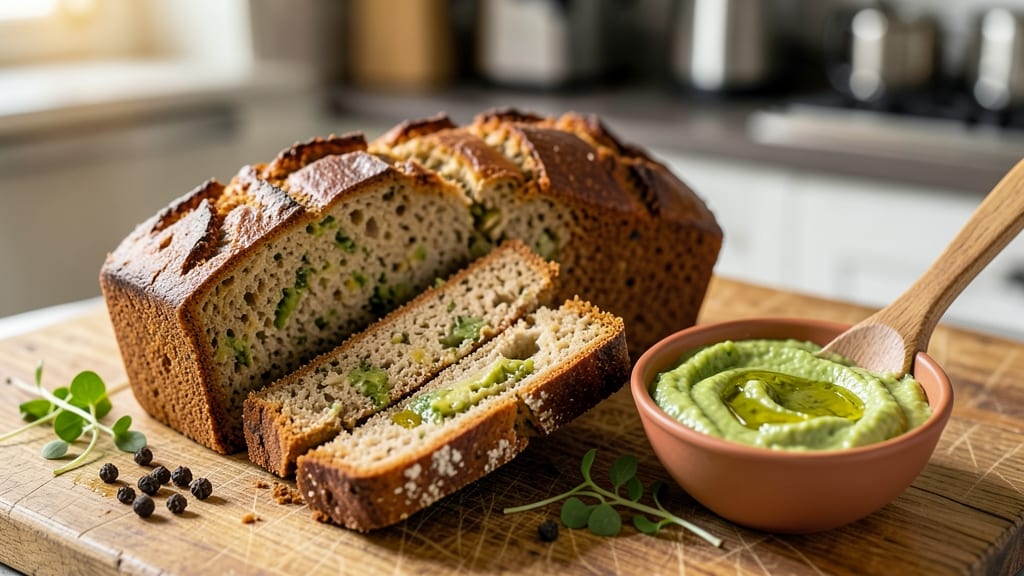
This avocado wheat bread recipe transforms simple ingredients into a moist, nutty-loaf with a crisp crust—no eggs or dairy required. 🌱 The secret lies in blending ripe avocado directly into the dough, creating a tender crumb and rich flavor that rivals traditional breads.
I developed this recipe after years of experimenting with plant-based baking, and it never fails to impress. What sets this apart is the foil-sealing technique during baking, which locks in moisture for a perfectly even rise and golden crust.
The combination of whole wheat flour and avocado creates a hearty texture that's both satisfying and nutritious, while optional toppings like sesame or flaxseeds add extra crunch. This bread is ideal for sandwiches, toast, or serving alongside soups.
The dough comes together in under 10 minutes, then rests while you prepare your baking pan. Proofing is the critical step—patience here ensures a light, airy texture rather than a dense loaf. Baking at a precise temperature guarantees a crisp exterior and soft interior that stays fresh for days.
Store leftovers wrapped in a clean towel to maintain freshness, or freeze slices for quick toast later. Whether you're baking for health-conscious guests or simply love nutty, flavorful bread, this recipe delivers restaurant-quality results at home.
Ingredients for avocado wheat bread
Ripe avocados and whole wheat flour create a vegan bread with rich, nutty flavor and crisp crust.
| Ingredient | Amount | Notes |
|---|---|---|
| Ripe Avocados 🥑 | 2 whole | Pitted, flesh scooped out |
| Whole Wheat Flour 🌾 | 3 ½ cups | Unbleached preferred |
| Active Dry Yeast 🍞 | 1 tbsp | Or 2.25g packet |
| Granulated Sugar 🍚 | ¼ cup | Or coconut sugar |
| Warm Water 💧 | 1 cup | 110°F for yeast activation |
| Extra-Virgin Olive Oil 🫒 | ¼ cup | Plus extra for greasing |
| Salt 🧂 | 1 ½ tsp | Diamond Crystal preferred |
| Apple Cider Vinegar 🍏 | 1 tbsp | For tangy depth |
| Sesame Seeds 🌱 | 2 tbsp | Optional for topping |
| Flaxseeds 🌿 | 1 tbsp | Optional for crunch |
| Almond Milk 🥛 | ¼ cup | Unsweetened, for moisture |
Avocados are the star—pick perfectly ripe ones with no brown spots. Trader Joe's and Whole Foods carry the best quality, but any grocery store avocado works if it's soft to the touch. The yeast should be fresh—check the expiration date, and store it in the fridge until use. For the flour, King Arthur whole wheat is my go-to for consistent texture, but any unbleached whole wheat works. The apple cider vinegar adds subtle tang that balances the avocado's richness—Bragg Organic is a reliable brand if you want to splurge.
No sesame seeds? Sunflower seeds or poppy seeds work just as well for topping. Substituting flaxseeds? Use the same amount—just toast them lightly for extra flavor. Running low on almond milk? Oat milk or soy milk keeps the same moisture level. The olive oil matters here—use extra-virgin for that fruity depth. If your flour is old or smells off, toast it briefly in a dry pan to revive its flavor. And if you're worried about the dough being too wet, add 1-2 tbsp more flour as needed during mixing.
This bread stays fresh for 3-4 days when stored in a clean kitchen towel—wrap it loosely to maintain that bakery-fresh texture. For longer storage, freeze slices in a sealed bag for up to 3 months. To reheat, wrap slices in foil and warm in a 350°F oven for 5 minutes. The foil-sealing technique during baking is key—it locks in moisture for that perfect crust. If you're making multiple loaves, preheat your oven thoroughly to ensure even baking.
Why You'll Love This Recipe
- No Mash Hassle: I just blend the avocado right into the dough—no peeling, pitting, or weird green streaks to hide. The yeast and sugar wake up fast in warm water, so you’re kneading (and smelling that rich bread aroma) in 10 minutes flat.
- Rich Without Guilt: That avocado isn’t just for flavor—it keeps the whole wheat from tasting dense. The sugar caramelizes just enough to give it a subtle sweetness, while the yeast delivers that classic bread tang. Honestly, it’s the kind of loaf that makes you forget it’s “healthy.”
- Brunch or Snack Star: Toast it thick for avocado toast (yes, with more avocado), or slice it for sandwiches that won’t fall apart. I’ve even used it as a base for open-faced charcuterie—crusty outside, soft inside, and always impressive.
- Leftovers That Last: The dough keeps overnight in the fridge, so you can bake fresh the next day. And the loaf? It stays moist for days—perfect for stashing in the freezer. Between us, this is my go-to for lazy mornings and last-minute guests.
Step-by-step instructions for avocado wheat bread
This method transforms humble ingredients into a moist, nutty-crusted loaf with perfect avocado richness.
👨🍳 Step 1: Mash the Avocados and Mix Wet Ingredients
In a large mixing bowl, scoop out the flesh from the 2 whole ripe avocados and mash them thoroughly with a fork until completely smooth. I like to press the back of the fork against the avocado to ensure no lumps remain—this creates a velvety texture that carries through the bread.
Add the 0.25 cup granulated sugar, 0.25 cup extra-virgin olive oil, 1 tbsp apple cider vinegar, and 0.25 cup almond milk to the avocado mixture. Stir vigorously for 2 minutes until fully combined. The vinegar helps balance the avocado's richness while adding subtle tang. This wet mixture should be smooth and slightly thick—like a rich cake batter.
👨🍳 Step 2: Activate the Yeast and Combine with Dry Ingredients
In a separate small bowl, sprinkle the 1 tbsp active dry yeast over the 1 cup warm water (about 110°F). Let it sit for 5-7 minutes until it becomes foamy and bubbly—this confirms the yeast is active. If it doesn't foam, your yeast is dead and you'll need to start over.
To the avocado mixture, add the yeast mixture, 3.5 cups whole wheat flour, and 1.5 tsp salt. Using a wooden spoon or dough whisk, mix until a shaggy dough forms. The dough will be sticky but should pull away from the sides of the bowl. If it's too wet, add 1-2 tablespoons more flour; if too dry, add 1 tablespoon warm water. Whole wheat flour absorbs moisture differently than white flour, so don't be afraid to adjust.
🥘 Step 3: Knead and Shape the Dough
Lightly grease a large surface with olive oil and turn out the dough. Knead for 5-7 minutes by folding the dough over itself and pressing down firmly. You're not looking for smooth elasticity here—whole wheat dough is naturally denser. The dough should be cohesive and slightly tacky but not sticky enough to cling to your hands.
Divide the dough into 4 equal portions (about 12 ounces each) and shape each into a smooth ball. Place them on a parchment-lined baking sheet, cover with a clean kitchen towel, and let rise at room temperature for 1-1.5 hours. The dough should nearly double in size—this is your signal that it's ready for the oven.
🔥 Step 4: Seal and Bake for Rich, Foil-Sealed Perfection
Preheat your oven to 375°F. For each dough ball, place a small piece of aluminum foil on your work surface and press it gently to create a shallow well. Place a dough ball in the center of each foil piece, then fold the foil up around it, sealing it completely. This foil seal creates steam during baking, resulting in that signature moist crumb and nutty crust.
Bake the foil-sealed dough balls for 25-30 minutes, until the crust turns golden brown and a toothpick inserted into the center comes out clean. The bread should smell rich and nutty—like toasted wheat with avocado undertones. If the tops brown too quickly, tent loosely with foil to prevent over-browning while the centers finish baking.
⏰ Step 5: Cool and Top for Maximum Flavor
Remove the bread from the oven and let it cool on the baking sheet for 10 minutes before carefully unfolding the foil. Transfer to a wire rack and let cool completely before slicing. The bread will firm up as it cools, making it easier to slice without crumbling.
While still warm, sprinkle each loaf with 0.5 tbsp sesame seeds and 0.25 tbsp flaxseeds for added crunch and nutty flavor. Serve within 2 days for the best texture, or store wrapped in foil at room temperature. The avocado flavor intensifies slightly as the bread sits, making it even more delicious the next day.
Pro Tips For Making Avocado Wheat Bread
- MASH THE AVOCADO FIRST: Scoop the avocado flesh directly into the dough—no need to blend it into a paste first. The chunks add texture and richness, and skipping the puree saves you from extra cleanup. (Yes, even if it looks lumpy—it’ll still taste amazing.)
- WEIGH THE WHOLE WHEAT FLOUR: Whole wheat flour is dense—measuring by volume leads to dense, heavy bread. Use a kitchen scale for accuracy; aim for about 10% less volume than all-purpose flour would take. I learned this the hard way when my first batch turned out like a brick.
- LET THE YEAST PROOF AT ROOM TEMP: Skip the microwave—activate the yeast in warm (not hot) water (around 105°F/40°C) and let it sit for 5–10 minutes until frothy. Cold water kills it; hot water cooks it. If it’s sluggish, your bread will rise like a sad pancake.
- ADD A LITTLE OIL TO THE DOUGH: Whole wheat flour absorbs moisture like a sponge, so toss in 1–2 teaspoons of neutral oil (like vegetable or avocado) with the water. It keeps the dough from being too stiff and helps the bread stay tender longer. (Trust me, your future toast will thank you.)
Common mistakes when making this dish
Overmixing the Dough
Whole wheat dough is naturally dense, so overmixing develops too much gluten, making your bread tough instead of tender. I’ve ruined loaves by kneading for more than 7 minutes—just until the dough comes together and is slightly tacky.
Use a wooden spoon or dough whisk to fold ingredients gently. If your dough feels too sticky, add 1 tbsp flour at a time until it pulls away from the bowl but still feels soft. 🥖
Skipping the Foil Seal
The foil-sealing technique is what gives this bread its signature moist crumb and crisp crust. Without it, the exterior dries out too quickly, and the interior stays dense. I’ve baked this bread without foil, and the results are disappointing—flat, dry, and lacking that rich avocado flavor.
Preheat your oven to 375°F and seal each dough ball tightly in foil before baking. This creates steam that keeps the bread tender.
Using Underripe Avocados
Underripe avocados are too firm and won’t blend smoothly, leading to a grainy texture in your bread. I once used slightly green avocados and ended up with a bread that tasted bland and had an odd texture.
Always pick avocados that yield slightly to gentle pressure—no brown spots, just soft and creamy. If your avocados are too firm, let them sit at room temperature for 1-2 hours before using.
Ignoring Yeast Activation
If your yeast isn’t active, your bread won’t rise properly, leaving you with a dense, flat loaf. Always test your yeast by sprinkling it in warm (110°F) water and waiting 5-7 minutes for it to foam.
I’ve had to scrap doughs because the yeast didn’t activate—don’t skip this step! If your yeast doesn’t foam, toss it and start over with fresh yeast. Cold water kills yeast, and hot water (>120°F) also deactivates it.
Overbaking or Underbaking
Baking this bread to perfection requires precision. Overbaking dries out the crumb, while underbaking leaves it gummy. Aim for 25-30 minutes at 375°F until the crust is golden brown and a toothpick comes out clean.
I’ve pulled breads out too early, only to have them collapse as they cooled. If the tops brown too quickly, tent loosely with foil to prevent over-browning while the centers finish baking.
Not Letting the Bread Cool
Slicing bread too soon releases steam too quickly, making it crumbly and dry. Always let the bread cool on the baking sheet for 10 minutes before unfolding the foil, then transfer to a wire rack to cool completely.
Patience here ensures clean slices and that perfect texture. I’ve rushed this step and ended up with a sad, crumbly loaf—don’t make the same mistake! 💡
Nutrition facts
Frequently asked questions
Why does this bread need foil sealing during baking?
The foil seal creates steam that locks in moisture, resulting in a perfectly moist crumb and crisp crust. Without it, the exterior dries out too quickly while the interior stays dense. This technique is especially important for whole wheat dough, which can absorb moisture differently than white flour.
Can I make this bread without yeast?
Yes, but the texture will be denser. Replace the yeast with 1 tbsp baking powder and 1 tbsp baking soda for a quick-bread version. The avocado will still provide richness, but you'll lose the light, airy quality. Bake at 350°F for 30-35 minutes instead.
How do I store leftovers to keep them fresh?
Wrap the bread loosely in a clean kitchen towel to maintain freshness for 3-4 days. For longer storage, freeze slices in a sealed bag for up to 3 months. To reheat, wrap slices in foil and warm in a 350°F oven for 5 minutes.
What if my dough is too sticky?
Whole wheat flour absorbs moisture differently, so add 1-2 tbsp more flour gradually until the dough pulls away from the bowl but remains slightly tacky. Avoid overworking it—just mix until combined. If needed, wet your hands slightly to prevent sticking while shaping.
Can I add other fruits to this recipe?
Yes! Try mashing ½ cup banana or ½ cup unsweetened applesauce into the wet ingredients for extra sweetness. For texture, fold in ½ cup diced apple or pear during the final kneading. Just reduce the almond milk by 2 tbsp to balance the additional moisture.