
Side Dishes
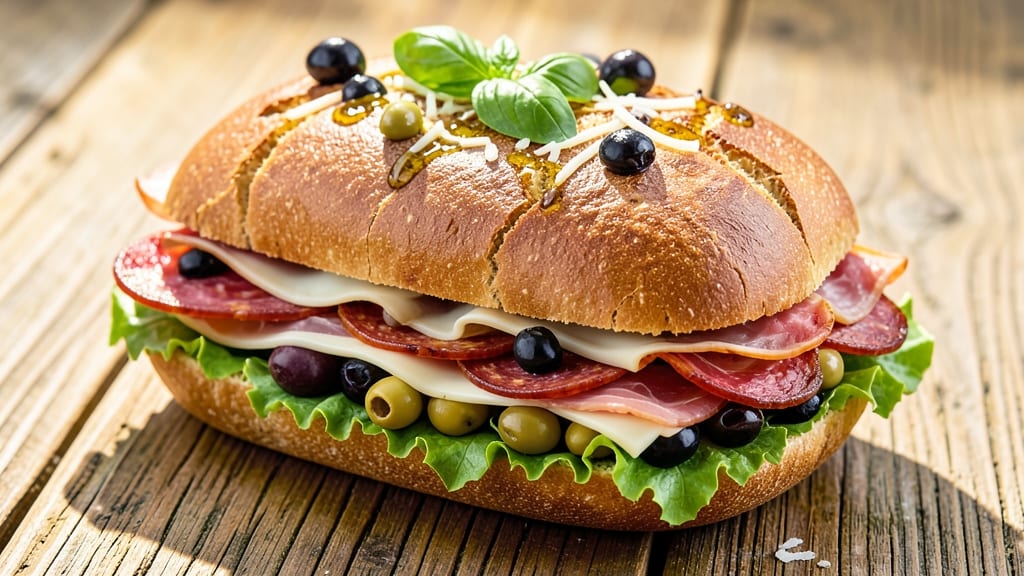
This authentic muffuletta bread recipe brings New Orleans tradition to your kitchen with its signature layers of spiced bread, olive salad, and cured meats. 💛 The key to capturing that iconic Creole flavor lies in balancing the bold olive salad with tender bread and salty cured meats—just like the legendary Central Grocery version that started it all.
What sets this recipe apart is the homemade bread, infused with garlic and herbs that form the perfect vessel for holding all those rich, briny layers.
The olive salad—packed with green olives, capers, and red pepper flakes—needs to be just the right consistency: firm enough to hold its shape but still spreadable. We'll show you how to achieve that perfect balance.
Once assembled, the muffuletta becomes a masterpiece of textures and flavors: crisp bread crusts, tender meat slices, and the briny, tangy olive salad that ties everything together. Each bite delivers a perfect harmony of salty, spicy, and umami notes that define this New Orleans classic.
The beauty of this recipe is its versatility—serve it as a hearty lunch sandwich or cut into slices for a crowd-pleasing appetizer. The traditional way is to slice it diagonally, revealing those glorious layers. Let's bring this iconic dish to life in your kitchen.
Ingredients for authentic muffuletta bread
Fourteen ingredients for the ultimate New Orleans sandwich experience—homemade bread and bold olive salad.
| Ingredient | Amount | Notes |
|---|---|---|
| All-Purpose Flour 🌾 | 4 cups | High-protein for chewy texture |
| Active Dry Yeast 🍞 | ½ tsp | Or 1 packet instant yeast |
| Granulated Sugar 🍚 | 1 tbsp | Feeds yeast for rise |
| Warm Water 💧 | 1 ¼ cups | 110°F for yeast activation |
| Unsalted Butter 🧈 | ½ cup | Cold, cubed for dough |
| Large Eggs 🥚 | 1 whole | Room temperature preferred |
| Garlic Cloves 🧄 | 3 cloves | Minced for garlic flavor |
| Fresh Parsley 🌿 | ¼ cup | Finely chopped, stems okay |
| Dried Oregano 🍃 | 1 tsp | Creole blend preferred |
| Red Pepper Flakes 🌶️ | ½ tsp | Adjust for heat preference |
| Coarse Salt 🧂 | 1 ½ tsp | Diamond Crystal preferred |
| Black Peppercorns 🌶️ | ½ tsp | Freshly cracked preferred |
| Green Olives 🫒 | 1 cup | Pitted, chopped (Castelammare) |
| Red Onion 🧅 | ½ whole | Thinly sliced, pickled |
| Capers 🫒 | ¼ cup | Rinsed, chopped |
| Extra-Virgin Olive Oil 🫒 | ½ cup | For olive salad dressing |
| Lemon Juice 🍋 | 2 tbsp | Freshly squeezed |
| Prosciutto 🥓 | 8 oz | Thinly sliced, deli counter |
| Salami 🥓 | 8 oz | Spicy variety preferred |
The bread's soul lies in the garlic and herbs. Fresh parsley and minced garlic from the grocery store's produce section are non-negotiable—they make all the difference. For the yeast, Trader Joe's has reliable instant yeast packets, but any brand works. The key is using high-protein flour (like King Arthur) for that perfect chewy texture. I always grab Diamond Crystal kosher salt for the dough—it dissolves beautifully and has that perfect grain. The cured meats? Deli counters at Whole Foods or Central Grocery (if you're lucky enough to visit) have the best selection for authentic flavor.
No Castelammare olives? Manzanilla olives at half the amount work in a pinch. Short on capers? Pickle juice and a pinch of salt mimics the tang. The olive salad should be firm but spreadable—pack it in a jar and let it sit for at least 4 hours before assembling. For the bread, if you can't find Creole seasoning, mix 1 tsp dried thyme with the oregano. The cured meats can be swapped for ham and salami if prosciutto isn't available, but the flavor will be different. Fresh parsley wilt fast, so store it in a damp paper towel—use it within 3 days.
The bread dough keeps 2 days in the fridge or 3 months frozen—wrap tightly in plastic. The olive salad stays fresh for 5 days in the fridge, but the flavors meld beautifully after 24 hours. Assemble the muffuletta just before serving—this isn't a dish that waits. For leftovers, slice and toast—it reheats like a dream. Pro tip: Serve with a cold beer to cut through the richness, just like they do in New Orleans.
Why You'll Love This Recipe
- Here’s what sold me: that first bite of crispy crust with a soft, airy center—thanks to the yeast and sugar working their charm. It’s not just bread; it’s a flavor experience that makes store-bought taste sad.
- No-Knead Magic: I swear by this method—just toss the flour, yeast, and butter together, let it rise while I make dinner. That warm water trick? It’s foolproof, even for me on days when I’d rather watch paint dry.
- Yeasty Depth: Here’s what sold me: that first bite of crispy crust with a soft, airy center—thanks to the yeast and sugar working their charm. It’s not just bread; it’s a flavor experience that makes store-bought taste sad.
- Sandwich Star: Between us, this bread is the upgrade for any muffuletta. Slap it on a plate with olives, ham, and cheese, and suddenly? You’ve got a New Orleans classic. (Yes, even on a Tuesday night.)
Step-by-step instructions for authentic muffuletta bread
Let's bring New Orleans flavor to your kitchen with this traditional recipe.
👨🍳 Step 1: Prepare the Olive Salad Dressing
In a medium bowl, combine the 1 cup green olives, 0.5 whole red onion (thinly sliced), 0.25 cup capers, and 0.25 cup fresh parsley. This is the heart of your muffuletta's signature olive salad. The olives should be chopped into small pieces—think Castelammare style, where they're cut into quarters.
In a separate small bowl, whisk together 0.5 cup extra-virgin olive oil, 2 tbsp lemon juice, 1 tsp dried oregano, 0.5 tsp red pepper flakes, 1.5 tsp coarse salt, and 0.5 tsp freshly cracked black peppercorns. Pour this dressing over the olive mixture and toss gently but thoroughly. Let it marinate for 15 minutes at room temperature—this allows all the flavors to meld together beautifully. The dressing should coat the olives evenly, creating that signature briny, tangy flavor that defines a true muffuletta.
🍳 Step 2: Make the Spiced Bread Dough
In the bowl of a stand mixer fitted with the dough hook attachment, combine 4 cups all-purpose flour, 1 tbsp granulated sugar, 1.5 tsp coarse salt, and 1 tsp dried oregano. Mix on low speed for 30 seconds just to combine the dry ingredients. This ensures even distribution of the seasonings throughout the dough.
In a separate small bowl, dissolve the 0.5 tsp active dry yeast in 1.25 cups warm water (about 110°F). Let it sit for 5-10 minutes until it becomes frothy—this confirms your yeast is active. Add the yeast mixture, 1 whole large egg, and 0.5 cup cold cubed unsalted butter to the flour mixture. Mix on medium speed for 5 minutes until the dough comes together and begins to pull away from the sides of the bowl. The dough should be slightly sticky but not wet. If it's too dry, add 1 teaspoon of warm water; if too sticky, add 1 tablespoon of flour. Here's the thing—this dough needs to be soft and pliable for that classic muffuletta texture.
🥘 Step 3: Knead and First Rise
Continue kneading the dough for 5-7 minutes by hand or 3-5 minutes with the mixer until it becomes smooth and elastic. You'll know it's ready when it springs back slowly when poked with your finger. For the first rise, place the dough in a lightly oiled bowl, cover it with a damp kitchen towel, and let it rise in a warm place for 1-2 hours, or until it has doubled in size. I like to place my bowl near the oven with the light on to create a warm, humid environment—this helps the dough rise beautifully without drying out.
While the dough rises, prepare your work surface. Lightly flour a clean countertop and divide the dough into 4 equal portions (about 1 pound each). Shape each portion into a 12-inch round—this is crucial for that classic muffuletta shape. Here's a pro tip: roll from the center outward, applying gentle pressure as you go. This creates that signature dome shape that makes muffuletta bread so distinctive.
🔥 Step 4: Assemble the Muffuletta
Preheat your oven to 375°F. Line two baking sheets with parchment paper. Take one of the shaped dough rounds and place it on a sheet. Spread about ½ cup of the olive salad mixture evenly over the surface, leaving a 1-inch border around the edges. This prevents the filling from oozing out during baking. Top with 4 oz of prosciutto and 4 oz of salami, arranging them in overlapping layers for maximum flavor in every bite.
Repeat with the remaining dough rounds, olive salad, and meats. The key here is to work quickly but carefully. You want the meats to stay in place while the dough rises slightly in the oven. Once all four rounds are assembled, cover them loosely with a clean kitchen towel and let them rest for 15 minutes at room temperature. This brief rest helps the dough relax and prevents the filling from shifting during baking.
🔥 Step 5: Bake to Golden Perfection
Bake the muffuletta rounds for 25-30 minutes until they're golden brown on top and the internal temperature reaches 190°F. The bread should sound hollow when tapped on the bottom—this is your signal that it's fully baked. For that authentic New Orleans touch, I like to brush the tops with a little extra olive oil right before baking. This gives the crust a beautiful sheen and enhances the flavor.
Let the muffuletta bread cool for 10 minutes before slicing. This resting period allows the filling to set slightly, making it easier to slice cleanly. For serving, cut each round into 8 wedges—this gives you the perfect portion size for sharing. The bread should be slightly crisp on the outside with a soft, chewy interior, and that olive salad should be warm and fragrant, infused with all those wonderful Mediterranean flavors. Serve immediately with your favorite cold cuts and cheeses for the ultimate muffuletta experience!
Pro Tips For Making Authentic Muffuletta Bread
- Bloom the Yeast Slowly: Skip the microwave—yeast wakes up best in warm (not hot) water. Test it by sprinkling sugar in first; if it bubbles within 5 minutes, you’re good. I learned this the hard way after killing yeast with boiling water and wondering why my dough never rose.
- Knead Until Silky: This isn’t a quick punch-down—work the dough until it’s smooth and elastic, about 8-10 minutes by hand. Over-kneading? No, under-kneading gives you a dense, chewy loaf. (Yes, even if your arms protest.)
- Use Cold Butter: Cut that butter into cubes and chill the dough before shaping. Cold butter creates those signature pockets of flavor—warm butter just melts into mush. I was skeptical until I tried it; the texture changed completely.
- Proof in a Warm Spot: Skip the oven light—place your dough in a bowl over a warm (not hot) oven with a cup of boiling water underneath. This keeps it cozy without overproofing. I used to rush this, and my muffuletta always came out flat. (Your future self will thank you.)
Essential equipment for perfect results
Bread Shaping Tools
For shaping the signature 12-inch rounds, I recommend a rolling pin with a smooth, sturdy surface—look for one made from hardwood or marble like the OXO Good Grips model. This prevents the dough from sticking and gives you the control to create that perfect dome shape.
A dough scraper (like the West Bend brand) helps divide the dough cleanly into equal portions without tearing. 💫
Olive Salad Mixing
A medium mixing bowl (at least 8-inch diameter) is essential for combining your olive salad ingredients. I prefer stainless steel bowls—they’re durable and won’t absorb flavors like plastic. A wooden spoon (like Lodge’s line) works best for tossing the olives gently without crushing them.
For measuring, a small liquid measuring cup ensures precise amounts of olive oil and lemon juice, which are critical for the right texture. The salad should be firm enough to hold its shape but still spreadable.
Yeast Activation
You’ll need a small bowl (about 4-6 ounces) for activating your yeast in warm water. I use a glass measuring cup with 110°F water—a thermometer (like Thermoworks’ digital one) ensures you don’t overheat the yeast, which kills it.
A whisk (preferably silicon-coated) helps dissolve the yeast evenly. Pro tip: If your kitchen isn’t warm enough, place the bowl near the oven’s lightbulb for a gentle heat source. This creates the ideal environment for yeast activation.
Baking Essentials
For baking, a half-sheet pan (about 18x13 inches) lined with parchment paper prevents sticking and makes cleanup easy. A baking stone (like Lodge’s cast-iron version) mimics a commercial oven’s even heat distribution, giving you a crisp crust.
Preheat your oven to 375°F—an oven thermometer (like Thermoworks’) ensures accuracy, as home ovens often run hot or cold. For brushing the tops with olive oil before baking, a small pastry brush (like Silpat’s) works perfectly. 🔥
Assembly and Resting
After assembling your muffuletta rounds, a clean kitchen towel (preferably linen or cotton) keeps them warm while resting. For slicing, a sharp serrated knife (like Victorinox’s 8-inch model) cuts through the crust cleanly. A cutting board (preferably bamboo or plastic) prevents the knife from dulling.
To portion the bread, a pizza cutter (like OXO’s) makes quick work of slicing into 8 wedges for serving. These tools ensure your muffuletta comes together like a pro—no messy hands or uneven slices!
Nutrition facts
Frequently asked questions
Why does traditional muffuletta bread have that distinctive dome shape?
The signature dome shape comes from shaping the dough rounds by rolling from the center outward while applying gentle pressure. This creates a slightly thicker center that rises beautifully in the oven. The shape isn't just decorative—it helps contain the filling while creating those perfect crispy edges that hold up to slicing. Think of it as a structural solution to keep the olive salad and meats from oozing out during baking.
Can I make muffuletta bread without a stand mixer?
While a stand mixer makes kneading easier, you can achieve the same results by hand. Use a lightly floured surface and knead for about 10-12 minutes until the dough becomes smooth and elastic. The key is to be consistent with your pressure—press down, fold, and turn the dough repeatedly. For the first rise, just give it more time (up to 2.5 hours) since hand-kneaded dough often rises slightly slower.
What's the secret to getting the olive salad texture just right?
The olive salad should be firm enough to hold its shape when spread but still spreadable—neither too wet nor too dry. The trick is in the ratio: use 1 cup chopped olives to 0.5 cup olive oil and let it marinate for at least 4 hours (overnight is even better). The olives should be coated but not swimming in dressing. If it's too wet, add 1 tablespoon more chopped olives; if too dry, add 1 teaspoon olive oil and mix well.
How do I store leftover muffuletta bread?
Store the assembled muffuletta (unbaked) in an airtight container in the fridge for up to 2 days before baking. For baked muffuletta, wrap tightly in plastic wrap and store at room temperature for 1 day or in the fridge for 3 days. To reheat, wrap slices in foil and warm in a 350°F oven for 5-7 minutes—this restores the bread's chewiness without drying it out. For longer storage, freeze baked slices for up to 1 month.
What's the best way to slice muffuletta bread for serving?
Use a sharp serrated knife and cut each round diagonally into 8 equal wedges—this reveals the beautiful layers and creates perfect bite-sized portions. For a more dramatic presentation, slice into 12 wedges (like a pizza). Always slice through the center to maintain balance. Pro tip: Dip your knife in hot water between slices to prevent sticking from the olive oil in the bread.