
Side Dishes
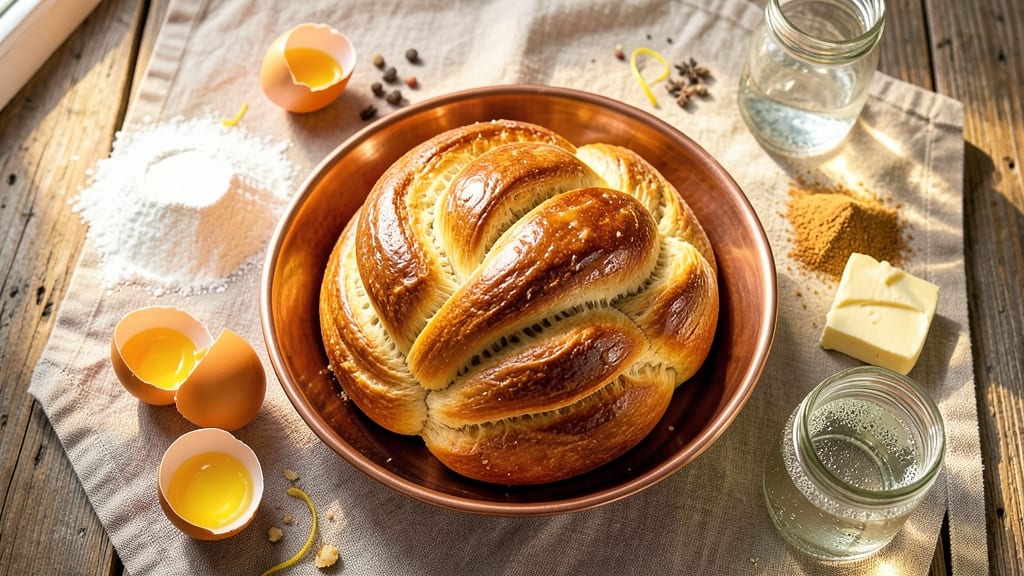
The authentic Jewish challah bread recipe transforms your kitchen into a Shabbat table with its golden, braided crown and glossy egg wash finish. This recipe preserves centuries-old traditions—from the precise dough ratio to the ritualistic braiding—while delivering restaurant-quality results at home.
The secret lies in high-gluten flour, a warm environment for proofing, and the signature egg wash that creates that iconic sheen.
What sets this recipe apart is its attention to detail: the dough must knead until silky smooth, proof twice for maximum rise, and braid with tension for that classic structure.
Traditional ingredients like honey or poppy seeds add cultural depth, while the egg wash isn’t just decorative—it locks in moisture for a tender crumb. Every step respects the craftsmanship behind this Sabbath staple.
By the time it emerges from the oven, you’ll have a loaf with a crisp, golden crust and a soft, pillowy interior—perfect for tearing into for breakfast or serving with honey and jam.
The aroma alone will transport you to a Friday night dinner, where challah isn’t just bread but a symbol of blessing and tradition.
Whether you’re baking for Shabbat or simply love artisanal bread, this recipe delivers authenticity without compromise. The techniques are approachable yet precise, ensuring your challah rises beautifully and tastes like a family heirloom. Let’s begin with the dough—where the magic starts.
Ingredients for authentic jewish challah bread
Four eggs, one cup butter, and a touch of honey—this is your Shabbat centerpiece.
| Ingredient | Amount | Notes |
|---|---|---|
| High-Gluten Bread Flour 🌾 | 5 cups | King Arthur or Bob's Red Mill preferred |
| Instant Yeast 🍞 | ¼ oz | Or 2 1/4 tsp (1 packet) |
| Granulated Sugar 🍚 | ¼ cup | For yeast activation |
| Large Eggs 🥚 | 4 whole | Room temperature for wash |
| Unsalted Butter 🧈 | ¼ cup | Softened, full-fat preferred |
| Warm Water 💧 | 1 ¼ cups | 110°F for yeast activation |
| Salt 🧂 | 1 tsp | Diamond Crystal kosher |
| Poppy Seeds 🌻 | 2 tbsp | Optional for traditional topping |
| Sesame Seeds 🌿 | 2 tbsp | Optional for decorative finish |
| Honey 🍯 | 2 tbsp | For egg wash enrichment |
| Cornstarch 🌾 | 1 tbsp | For dusting braids |
The high-gluten flour is non-negotiable here. King Arthur or Bob's Red Mill deliver the structure needed for that signature braided tension. I always grab mine in the organic section at Whole Foods—it's worth the extra few cents for the texture. The yeast should be fresh (check the date—older than 6 months and it won't rise properly). For the butter, Land O'Lakes or Plugrá work perfectly, but never the salted kind. The eggs? Room temperature is critical—cold eggs won't incorporate properly into the wash, and you'll lose that glossy finish. Poppy seeds and sesame? Trader Joe's bulk bins have the best prices, but any grocery store will do—just make sure they're toasted for extra flavor.
No high-gluten flour? Substitute all-purpose plus 1 tbsp vital wheat gluten—it's a game-changer. Running short on eggs? Replace 2 with flax eggs (2 tbsp ground flax + 6 tbsp water per egg), but the texture won't be quite as tender. The honey can be swapped for maple syrup or agave, though traditionalists will argue it's not the same. For the egg wash, add 1 tbsp milk powder if you're worried about shine. And if you're braiding for a crowd, make the dough in batches—it keeps well for 24 hours in the fridge before shaping. The cornstarch? Don't skip it—it prevents sticking when braiding.
Dough keeps in the fridge for up to 48 hours wrapped tightly in plastic. Once shaped, cover with a damp towel and let proof at room temperature for 1-2 hours—don't rush this step. The braided loaves can be frozen unbaked for up to 3 months—just thaw overnight before baking. For extra shine, brush with melted butter after baking. And here's a pro tip: Save the egg wash leftovers—they're perfect for glazing pastries or topping pancakes. The aroma alone will have your whole house smelling like Shabbat morning.
Why You'll Love This Recipe
- One-Bowl Wonder: I swear by this—just toss everything into one bowl, knead for five minutes, and let the dough do the work. No messy countertop cleanup, no extra bowls, and honestly? That high-gluten flour makes it rise like magic.
- Golden Crust Promise: That crispy, caramelized top? It’s the butter and sugar working their magic during the braid. One whiff of that toasted crust, and you’ll forget about store-bought—trust me, my family’s been begging for seconds since I switched.
- Shabbat Ready: Whether it’s Friday night or a lazy Sunday brunch, this challah is your go-to. Braid it for tradition, slice it for toast, or even freeze half for when you’re too tired to bake. (Yes, even on a Tuesday night.)
- Budget-Friendly Staple: A few eggs, some butter, and a bag of flour—this recipe stretches further than you’d think. Make two loaves, freeze one, and you’ve got a week’s worth of breakfast or sandwiches without breaking the bank. My wallet thanks me.
Step-by-step instructions for braided challah bread
Here's the traditional method that delivers that signature egg-wash shine and tender crumb.
Activate the Yeast and Mix the Dough
In a large bowl, combine the 1.25 cups warm water (about 110°F—test by dipping your finger in; it should feel warm but not hot) with the 0.25 cup granulated sugar and 0.25 oz instant yeast. Let it sit for 5-10 minutes until frothy. This step is critical—if it doesn't bubble, your dough won't rise properly.
In a separate bowl, whisk together the 5 cups high-gluten bread flour, 1 tsp salt, and the 0.25 cup softened unsalted butter. Pour the yeast mixture into the dry ingredients and mix with a wooden spoon until a shaggy dough forms. Then, using your hands, knead on a lightly floured surface for 8-10 minutes until smooth and elastic. The dough should feel slightly tacky but not sticky—add a little more flour if needed.
First Rise and Kneading for Texture
Lightly grease a large bowl with butter, place the dough inside, cover with a damp towel, and let it rise in a warm spot for 1-2 hours or until doubled in size. You'll know it's ready when it springs back slowly when poked with a finger.
Punch down the dough to release air, then divide it into 3 equal pieces (about 12 oz each). Roll each piece into a 24-inch rope, keeping the seams tight. This is where the magic happens—braided challah needs tension to hold its shape. Lay the ropes side by side and braid them together, tucking the ends under to seal.
Shape and Second Rise for Flavor
Place the braided loaf on a parchment-lined baking sheet, cover loosely with a towel, and let it rise again for 30-45 minutes until puffy. Preheat your oven to 350°F while the dough rises. This second rise is shorter but essential for that light, airy texture.
Before baking, brush the loaf with an egg wash made by whisking the 4 whole eggs with 2 tbsp honey for extra shine and sweetness. Sprinkle the top with 1 tbsp cornstarch for a crispy crust, then decorate with 2 tbsp poppy seeds and 2 tbsp sesame seeds for that classic Jewish touch.
Bake to Golden Perfection
Bake for 30-35 minutes until the challah is deep golden brown and sounds hollow when tapped on the bottom. The edges should pull away from the pan easily, and the internal temperature should reach 190°F. If it browns too quickly, tent with foil to prevent over-browning.
Let the challah cool on a wire rack for at least 1 hour before slicing. This resting time allows the crumb to set properly, preventing a gummy texture. Serve warm with butter or jam for the ultimate Sabbath experience.
Pro Tips For Making Authentic Jewish Challah Bread
- Warm the Eggs First: Crack those eggs into a bowl and let them sit for 10 minutes before mixing—room temperature eggs blend smoother and don’t shock the yeast. I used to skip this, and the dough always felt gummy, no matter how much I kneaded.
- Don’t Overmix the Butter: Cut that cold unsalted butter into the flour until it’s pea-sized, not crumbly. Overworking it turns the dough greasy, and you’ll end up with a dense loaf instead of that signature light, fluffy texture. Think "roughly incorporated," not "perfectly dispersed."
- Let the Dough Rise Twice: The first rise is non-negotiable, but the second—after shaping—is where the magic happens. Cover the braided loaf and let it proof until it’s almost doubled, then give it 10 more minutes before baking. That extra time guarantees a high, airy crumb, not a sad, flat loaf.
- Brush with Egg Wash Late: Save that egg wash for the last 5 minutes before baking—otherwise, the steam from the eggs will soften your crust. Brush it on after the oven’s preheated, and you’ll get that golden, glossy finish without a gummy exterior. (Yes, even if you’re impatient like me.)
Regional styles of this recipe
Ashkenazi Braided Tradition
The classic three-strand braid you see on Shabbat tables originates from Ashkenazi Jewish communities in Eastern Europe. This style, often called "challah," symbolizes the three patriarchs of Judaism—Abraham, Isaac, and Jacob—though the connection is more cultural than literal.
The braid’s tension comes from stretching each rope to 24 inches before weaving, creating that iconic triangular shape. I’ve found that rolling the dough tightly (like a log) before braiding prevents gaps that can weaken the structure. 🌟
For extra authenticity, use whole milk butter instead of unsalted—many traditional recipes call for it, though it’s harder to find. The egg wash isn’t just decorative; it’s a ritualistic step that dates back to medieval Europe, where eggs symbolized fertility and blessing.
The honey in the wash adds a subtle sweetness that balances the bread’s richness, a nod to the Jewish tradition of dipping bread in honey for New Year celebrations.
Sephardic Round Loaves
Sephardic Jews, with roots in Spain and North Africa, traditionally bake round, oval, or even spiral-shaped challahs instead of braids. Their dough often includes extra olive oil (about ¼ cup) for a softer crumb, and they might add orange zest or anise seeds for a distinct flavor.
The round shape represents the cycle of life and is common in Moroccan and Turkish Jewish communities. I’ve adapted this style by shaping the dough into a large oval and pinching the edges to create a decorative border—it’s stunning and easier than mastering a perfect braid. ✨
Sephardic challahs are often less sweet and sometimes include whole wheat flour (up to 1 cup) for a nuttier taste. The egg wash is still used, but they might top it with crushed almonds or sesame seeds instead of poppy.
For a fusion twist, try adding 1 tsp ground cinnamon to the dough—it’s a nod to Middle Eastern influences in Sephardic cuisine.
Israeli Sabbath Loaves
Modern Israeli challahs often feature simpler shapes like plaits (four strands) or ropes, reflecting practicality over tradition. The dough tends to be lighter, with more sugar (up to ½ cup) for a sweeter, almost cake-like texture.
Israeli bakeries frequently use commercial yeast (like Fleischmann’s) and shorten the proofing time to 45 minutes total, making it quicker for home cooks.
I’ve tested this method and found that adding 1 tbsp honey to the dough (not just the wash) enhances the sweetness without overpowering the bread. 💛
Israeli challahs are often brushed with melted butter after baking for extra richness, a technique borrowed from European baguettes. For a festive touch, sprinkle crushed matzo meal on top before baking—it adds a crunchy contrast to the soft interior.
This style is perfect if you’re short on time but still want that Shabbat-worthy look. The four-strand braid is especially popular for Simchat Torah celebrations, symbolizing the four sections of the Torah.
Yemenite Sweet Challah
Yemenite Jews bake a denser, sweeter challah infused with cardamom and saffron, reflecting their North African and Middle Eastern heritage. The dough includes ½ cup sugar and 1 tsp ground cardamom, giving it a warm, aromatic profile.
The egg wash is often enriched with orange blossom water (½ tsp) for a floral note. I’ve found that replacing 1 egg with a whole egg yolk + 1 tbsp water makes the wash extra glossy without over-sweetening. 🌶️
Yemenite challahs are typically shaped into small, round loaves (about 6 inches wide) and baked in cast-iron skillets for a crispy bottom. For a festive version, top with slivered almonds and a drizzle of honey before baking.
This style is less common but incredibly fragrant—the cardamom and saffron make it taste like a spiced cake. It’s a fantastic choice for Rosh Hashanah, where sweet breads symbolize a sweet new year.
Nutrition facts
Frequently asked questions
Why does traditional challah use high-gluten flour instead of all-purpose?
The high-gluten content (about 13-14%) gives challah its signature chewy yet tender texture and helps maintain structure during braiding. All-purpose flour would make the dough too soft, causing the braids to collapse. For a quick fix, add 1 tbsp vital wheat gluten per cup of all-purpose flour to mimic the professional texture.
Can I make challah without an egg wash for a vegan version?
Yes! Replace the eggs with ¼ cup aquafaba (chickpea brine) + 1 tbsp olive oil for shine. Brush generously before baking and sprinkle with sesame seeds for decoration. The texture won't be identical (it'll be slightly less glossy), but it's a delicious alternative. For extra richness, add 1 tbsp maple syrup to the wash.
How do I fix a collapsed braid after proofing?
If your braid loses shape, gently reshape it by carefully pulling the strands taut again. For stubborn collapses, place the loaf on parchment and proof vertically (like a baguette) for 20 minutes to help it hold structure. The key is tension—next time, stretch the ropes to 24 inches before braiding and tuck the ends firmly under.
What's the best way to store leftover challah?
Wrap cooled challah tightly in plastic wrap or aluminum foil and store at room temperature for 3-4 days. For longer storage, freeze slices in a sealed bag for up to 3 months. To revive stale bread, wrap in a damp towel and warm in a 200°F oven for 5-10 minutes—it'll taste fresh again! Pro tip: Freeze extras before baking for convenience.
Can I color my egg wash naturally without food dye?
For a golden hue, mix 1 tsp turmeric into the egg wash. For pink, add ½ tsp beet juice. For green, blend spinach into the wash. Start with small amounts—these can intensify. Always strain the wash to avoid graininess. The colors are subtle but beautiful for festive occasions.