
Side Dishes
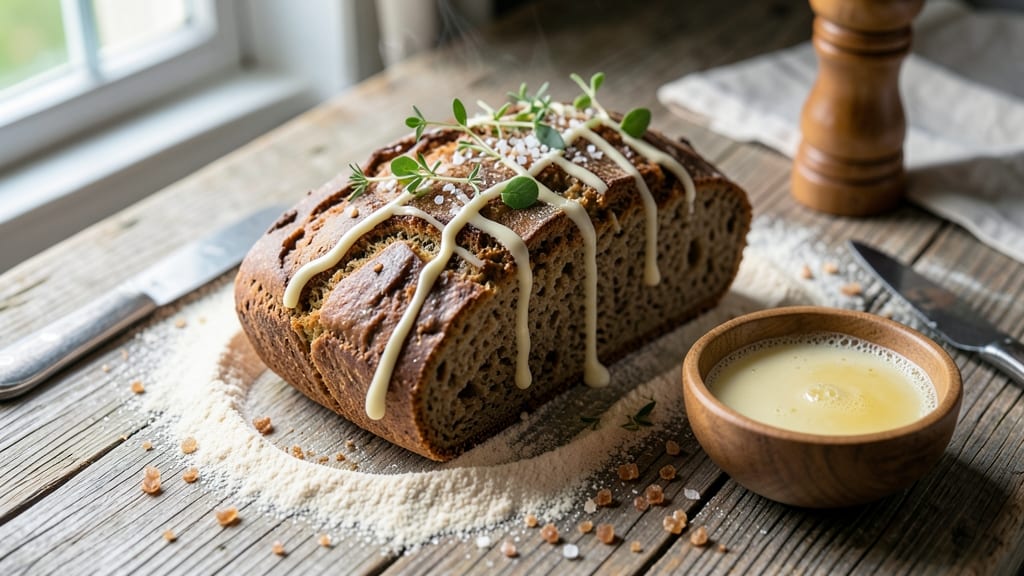
This authentic Irish brown soda bread brings the heart of Ireland to your kitchen table with its rustic crust and tangy buttermilk flavor. 🌾 The secret lies in its simple ingredients—just flour, buttermilk, baking soda, and salt—mixed together without kneading, then baked in a cast-iron skillet for that signature crunchy crust.
I first tasted this bread in a cozy Irish pub, where the warm, dense loaf was passed around with butter melting into every bite.
The beauty of this recipe is its tradition and simplicity. No yeast means no waiting for dough to rise, just a quick mix and bake that delivers a tender crumb with a crisp exterior. The buttermilk adds a subtle tang, while the baking soda creates a light, airy texture.
Irish brown soda bread is more than just bread—it’s a taste of history, often served with butter, jam, or even savory cheeses like Cheddar.
What makes this bread truly special is its versatility. It’s perfect for breakfast with jam, as a side to soups, or even toasted with a sprinkle of sea salt. The crust stays crispy for days, making it ideal for meal prep.
Whether you're celebrating St. Patrick’s Day or just craving a taste of Ireland, this recipe delivers the real deal.
Ready to bake? The process is straightforward, but the results are unforgettable—warm, hearty, and full of Irish charm. Let’s get started on making this classic bread that’s been a staple in Irish homes for generations.
Ingredients for authentic irish brown soda bread
Four simple ingredients create Ireland's iconic rustic bread with its signature tangy crunch.
| Ingredient | Amount | Notes |
|---|---|---|
| All-Purpose Flour 🌾 | 4 cups | Plus 2 tbsp for dusting |
| Buttermilk 🥛 | 1 ½ cups | Room temperature preferred |
| Baking Soda 🧂 | 1 tsp | Pure, not baking powder |
| Sea Salt 🧂 | 1 tsp | Fine grain preferred |
| Whole Milk Buttermilk Substitute 🥛 | 1 ½ cups | Mix 1.5 tbsp vinegar + milk (optional) |
| Brown Sugar 🍯 | ¼ cup | For authentic color and flavor |
| Whole Wheat Flour 🌾 | 1 cup | For rustic texture |
| Freshly Ground Black Pepper 🌶️ | ¼ tsp | Optional for subtle kick |
| Cold Unsalted Butter 🧈 | ½ cup | Cubed for mixing |
| Coarse Sea Salt 🧂 | 1 tbsp | For crust topping |
| Freshly Chopped Rosemary 🌿 | 1 tbsp | Optional herb variation |
The flour is the foundation—King Arthur or Bob's Red Mill work best for that tender crumb. For authentic brown soda bread, King Arthur whole wheat flour adds rustic texture. Buttermilk is non-negotiable; Land O'Lakes or local dairy deliver the best tang. If you can't find buttermilk, the vinegar-milk mix works perfectly. The baking soda must be pure—no baking powder substitutes. For the salt, Maldon flaky sea salt gives that signature crust crunch, but Diamond Crystal works too. I always grab extra flour since it's the only ingredient that might need adjusting based on humidity.
No buttermilk? Plain yogurt thinned with milk works in a pinch, but the flavor won't be identical. Whole wheat flour can be swapped for all-purpose if you prefer a lighter texture—just reduce by 2 tbsp. The brown sugar adds depth; substitute molasses at half the amount for a deeper flavor. For the butter, Earth Balance vegan butter works beautifully if you're avoiding dairy. The rosemary is optional but adds that Irish pub aroma—dried works at one-third the amount. If you're feeling adventurous, try adding 1 tsp caraway seeds for a traditional variation.
Store leftovers wrapped in a clean kitchen towel to maintain that fresh-baked texture. The crust stays crisp for 2-3 days at room temperature, but the interior softens. For longer storage, freeze slices wrapped in parchment—up to 3 months. I always make a double batch and freeze half. The best part? This bread reheats beautifully—5 minutes at 350°F brings back that warm, inviting aroma. Perfect for St. Patrick's Day celebrations or weekend brunches.
Why You'll Love This Recipe
- No-Yeast Hassle: Mix, shape, bake—no waiting for dough to rise. That baking soda works magic while you sip tea, and honestly? No kneading, no stress. Just 20 minutes from start to finish.
- Tangy Crust Magic: The buttermilk’s sharp tang cuts through the bread’s rustic chew, while that sea salt—just a pinch—deepens every bite. Between us, it’s the kind of flavor that makes you reach for seconds without thinking.
- Breakfast to Tea Time: Toast it for breakfast with butter and jam, or serve warm with soup when the weather turns chilly. I’ll be real: my kids grab slices straight from the counter, and it’s just as good cold as it is fresh.
- Budget-Friendly Staple: Flour, buttermilk, salt—these are pantry basics that won’t break the bank. A single loaf feeds the whole family, and leftovers? They keep for days, so you’re never scrambling for bread again.
Step-by-step instructions for authentic Irish brown soda bread
Here's the traditional method that delivers that signature rustic crust and tender crumb.
👨🍳 Step 1: Combine Dry Ingredients for Maximum Flavor
In a large mixing bowl, whisk together the 4 cups all-purpose flour and 1 cup whole wheat flour to break up any lumps. Add the 1 tsp baking soda, 1 tsp sea salt, 0.25 cup brown sugar, and 0.25 tsp freshly ground black pepper. Mix gently with a wooden spoon until just combined—overmixing develops gluten and makes the bread dense.
This dry blend is where the authentic flavor begins. The whole wheat flour adds rustic texture, while the brown sugar contributes to that classic caramelized crust. I like to use my fingers to work the flour mixture through my fingertips, ensuring even distribution of the baking soda and salt.
👨🍳 Step 2: Cut in the Cold Butter for Crumb Texture
Add the 0.5 cup cold unsalted butter to the dry ingredients. Using a pastry cutter or your fingers, work the butter into the flour mixture until you have pea-sized crumbs with some larger butter pieces remaining. This cold butter method creates those signature tender pockets in the finished bread.
Don't worry if it looks messy—this is traditional Irish technique. The butter should be cold enough to hold its shape when pinched between your fingers. If it feels too soft, chill the mixture for 10 minutes before proceeding. The butter pieces will melt during baking, creating steam that opens up the crumb structure.
👨🍳 Step 3: Mix in Wet Ingredients for Perfect Texture
Make a well in the center of your dry mixture and pour in the 1.5 cups buttermilk (or 1.5 cups whole milk buttermilk substitute). Using a wooden spoon, gently fold the mixture until just combined. The dough will be shaggy and sticky—this is normal for soda bread. Add the 1 tbsp freshly chopped rosemary and fold it in.
Here's the thing—don't overmix. You want to preserve as much air as possible in the dough. When you lift the spoon, you should see streaks of flour remaining. The buttermilk's acidity reacts with the baking soda to create carbon dioxide bubbles, which is what gives soda bread its characteristic open crumb.
🥘 Step 4: Shape and Score for Traditional Presentation
Turn the dough out onto a lightly floured surface and gently shape it into a round loaf about 1.5 inches thick. Dust the top with 2 tbsp all-purpose flour for dusting. Using a sharp serrated knife or lame, score the top of the loaf in a cross pattern about ½ inch deep. This allows the bread to expand properly during baking.
Traditional Irish soda bread is baked in a round shape, and the cross scoring serves both practical and decorative purposes. The cuts help control expansion and create that beautiful crust pattern. Press down gently on the dough in the center to create a slight depression—this helps the bread rise more evenly.
🔥 Step 5: Bake for Crisp Crust and Tender Crumb
Preheat your oven to 400°F. Place the shaped loaf on a baking sheet lined with parchment paper. Sprinkle the top with 1 tbsp coarse sea salt for that classic Irish touch. Bake for 40-45 minutes until the bread sounds hollow when tapped on the bottom and has a deep golden brown crust.
Watch for the crust to develop a rich caramel color—this is your indicator of doneness. The internal temperature should reach 190-200°F when measured with an instant-read thermometer. The bread will continue cooking slightly as it cools, so remove it when it's just done at the edges.
Pro Tips For Making Authentic Irish Brown Soda Bread
- STOP MEASURING BY VOLUME: The buttermilk-to-flour ratio in soda bread is non-negotiable—use a kitchen scale for 450g flour (not cups). I learned this the hard way when my loaf turned dense and gummy; weight guarantees consistency every time.
- LET THE DOUGH REST—REALLY: After mixing, let the dough sit for 10 minutes before shaping. This isn’t just "waiting"—it lets the baking soda activate fully and makes the crumb tender. Skip it, and you’ll get a crumbly, uneven texture.
- DON’T OVERKNEAD THE BUTTERMILK: Mix just until the dough comes together—about 30 seconds. Overworking it develops gluten, turning your rustic bread into a dense brick. The beauty of soda bread is its simplicity; handle it like you’re folding a blanket, not punching dough.
- USE COLD BUTTERMILK FOR CRUST: Chill the buttermilk (or milk substitute) in the fridge for 30 minutes before mixing. The cold fat in the buttermilk creates a crispier crust and slower rise—no need for a Dutch oven. (Yes, even if you’re impatient like me.)
Flavor customization for this recipe
Classic Tangy Twist
For the signature Irish flavor, I always add 1 tablespoon freshly chopped rosemary to the dough—it gives that cozy pub aroma. The rosemary pairs beautifully with the buttermilk's tang. If you prefer a sweeter variation, swap the rosemary for 1 teaspoon vanilla extract mixed into the buttermilk.
This creates a vanilla brown soda bread that's perfect for dessert pairings with jam or honey. 🌿
Spiced Variations
For a warm, aromatic twist, add 1 teaspoon ground cinnamon and ½ teaspoon ground nutmeg to the dry ingredients. This creates a spiced version that's fantastic with apple butter or warm cider.
If you love bold flavors, try ½ teaspoon caraway seeds—they're traditional in some Irish recipes and add a unique, slightly peppery note. Always toast spices lightly before adding for maximum flavor.
Herb-Infused Options
Fresh herbs elevate this bread to restaurant-quality. I love adding 2 tablespoons finely chopped chives or 1 tablespoon thyme leaves to the dough. For a Mediterranean-inspired twist, mix in 1 tablespoon dried oregano and ½ teaspoon red pepper flakes.
These herb combinations work beautifully with savory toppings like smoked salmon or sharp cheddar. The herbs should be finely chopped to distribute evenly throughout the bread.
Sweet Enhancements
For a breakfast-friendly version, increase the brown sugar to ½ cup and add ½ cup raisins or currants to the dough. The sweetness balances beautifully with the buttermilk's tang. For a richer flavor, fold in ½ cup chopped walnuts or pecans—they add texture and a buttery depth.
I often make a double batch of this sweet version to serve with my famous Irish coffee in the mornings.
Savory Additions
Transform this bread into a savory loaf by omitting the brown sugar and adding ½ cup grated Parmesan cheese to the dry ingredients. For a heartier version, mix in ½ cup cooked bacon bits or ½ cup shredded sharp cheddar.
These additions create a bread that's perfect for serving with soups or as a side to roasted meats. The cheese adds a wonderful umami depth that complements the buttermilk's acidity beautifully.
Gluten-Free Adaptation
For a gluten-free version, replace the all-purpose and whole wheat flours with a 1:1 gluten-free flour blend like King Arthur Measure for Measure. Add ½ teaspoon xanthan gum to help bind the dough. You may need to adjust the buttermilk by 1-2 tablespoons—gluten-free flours absorb moisture differently.
The texture will be slightly denser, but still delicious when served warm with butter. This version works perfectly for those with gluten sensitivities while keeping the authentic Irish flavor. 💪
Nutrition facts
Frequently asked questions
Why does traditional Irish brown soda bread not use yeast?
This bread relies on baking soda for leavening instead of yeast, which creates a quick-rise dough without waiting for fermentation. The baking soda reacts with buttermilk's acidity to produce carbon dioxide bubbles instantly, giving that signature tender crumb. This method dates back to Irish farmhouses where yeast wasn't always reliable or available. The result is a dense yet airy bread with a crisp crust that develops during baking.
Can I substitute buttermilk if I don't have any?
Yes! Mix 1.5 tablespoons white vinegar or lemon juice with 1.5 cups whole milk and let it sit for 5 minutes until it curdles. This homemade buttermilk works perfectly in the recipe. The acidity is key for activating the baking soda and creating that authentic tang. For best results, use room-temperature milk and vinegar.
How do I prevent my soda bread from turning out too dense?
Overmixing is the #1 cause of dense bread. Stop mixing as soon as the dough comes together—you should see streaks of flour when you lift the spoon. Also, don't press too hard when shaping the loaf, and avoid using a rolling pin. The dough should be gently formed into a round shape. Finally, ensure your baking soda is fresh—old baking soda loses its leavening power.
What's the best way to store leftover Irish brown soda bread?
Wrap the cooled loaf tightly in a clean kitchen towel or beeswax wrap to maintain moisture. Store at room temperature for 2-3 days in a cool, dry place. For longer storage, slice the bread and freeze the pieces wrapped in parchment paper for up to 3 months. To revive frozen slices, warm them in a 350°F oven for 5-7 minutes until crispy again.
Can I make this bread in a Dutch oven for a crustier texture?
Preheat your Dutch oven with the lid on for 30 minutes at 400°F. Place the shaped loaf in the hot Dutch oven (no baking sheet needed) and bake covered for 20 minutes, then remove the lid and bake another 15-20 minutes until golden. This method creates an even crispier crust while keeping the interior tender. Just be sure to score the loaf before baking.