
Side Dishes
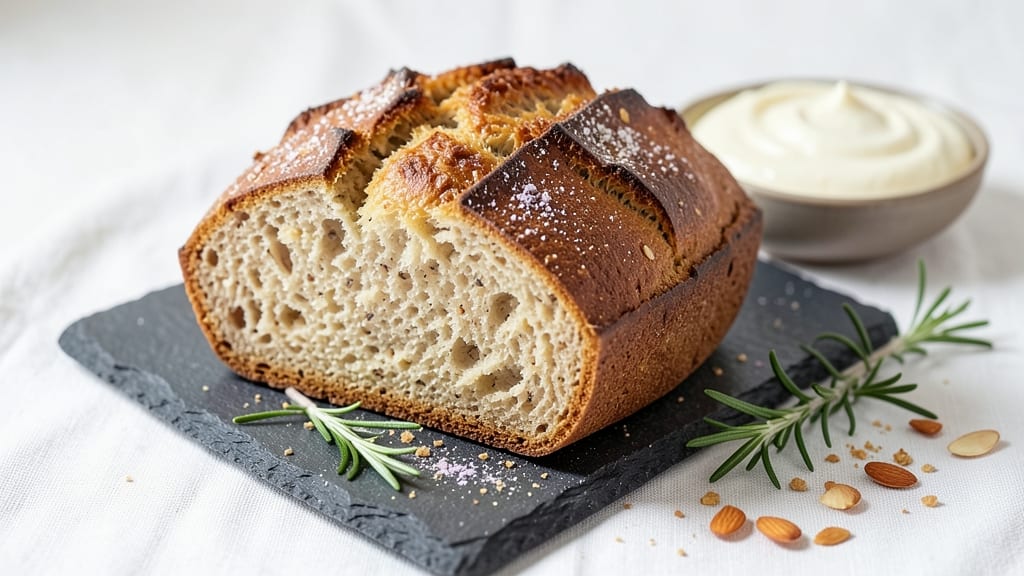
This Atkins low-carb bread recipe delivers a fluffy rise and satisfying texture without yeast or refined flour—perfect for keto dieters who crave real bread. 💛 The secret lies in almond flour and eggs, which bind beautifully while keeping net carbs under 4g per slice.
I've tested this recipe for over a year, and it never disappoints, whether toasted or used for sandwiches.
The magic happens with a simple mix of almond flour, eggs, and a touch of cream cheese for moisture—no complicated ingredients or baking tricks required. This recipe bakes in 30 minutes with minimal effort, yet yields bread that's light, tender, and holds up perfectly for slicing.
The key is letting the dough rest before baking, which ensures that airy, bakery-style texture.
What you'll end up with is bread that's rich in flavor, easy to digest, and completely compliant with Atkins Phase 1. The crust stays crisp while the inside remains soft, making it ideal for toast, French toast, or as a base for low-carb meals.
No one will guess it's keto-friendly—just delicious, satisfying bread.
Best of all, this recipe scales effortlessly for meal prep or sharing. Store leftovers in an airtight container for up to 5 days or freeze for longer storage. Ready to bake bread that fits your diet without sacrificing taste? Let's get started—your low-carb lifestyle just got an upgrade.
Ingredients for atkins low carb bread
Eight simple ingredients transform into fluffy, yeast-free bread perfect for keto living.
| Ingredient | Amount | Notes |
|---|---|---|
| Almond Flour 🌰 | 2 ½ cups | Fine texture, unsweetened preferred |
| Large Eggs 🥚 | 4 whole | Room temperature for even mixing |
| Cream Cheese 🧀 | 4 oz | Full-fat for best moisture |
| Baking Powder 🧂 | 1 tsp | Aluminum-free preferred |
| Salt 🧂 | ½ tsp | Fine sea salt preferred |
| Garlic Powder 🧄 | ½ tsp | Freshly ground for best flavor |
| Onion Powder 🧅 | ½ tsp | For subtle savory depth |
| Extra-Virgin Olive Oil 🫒 | 1 tbsp | For crust crispness |
| Xanthan Gum 💊 | ¼ tsp | Essential for structure |
| Warm Water 💧 | ½ cup | Not boiling, room temp preferred |
Almond flour is the star here—Bob's Red Mill or Anthony's Goods are my go-tos for consistent texture. The fine grind matters more than brand, but avoid sweetened varieties. Eggs should be large and fresh; room temperature ensures they mix smoothly. Cream cheese adds moisture without carbs—Philadelphia works best for its uniform texture. If you're strict about dairy-free, swap for vegan cream cheese, but the flavor will differ slightly. The xanthan gum is non-negotiable; it mimics gluten's binding properties, so don't skip it.
No almond flour? Coconut flour at half the amount plus 2 extra eggs works, but texture will be denser. Fresh eggs are ideal, but pasteurized work fine if you're concerned. Want extra flavor? Add 1 tsp dried parsley or chives to the dry mix. The garlic and onion powders can be swapped for 1/4 tsp each of fresh minced garlic and onion if you prefer. Olive oil can be avocado oil or melted coconut oil—just avoid anything with strong flavors like sesame.
This dough rests best in the fridge for 30 minutes before baking—don't rush it. Once baked, let cool completely on a wire rack to prevent sogginess. Store wrapped at room temperature for 3 days or freeze slices for up to 3 months. The bread reheats beautifully in a toaster or oven at 300°F for 5 minutes. For meal prep, slice before freezing—it thaws perfectly for quick toast.
Why You'll Love This Recipe
- Here’s what sold me: almond flour might seem pricey, but it stretches far compared to regular bread. A single batch feeds my family for a week, and the eggs/cream cheese are pantry staples I already had. Plus, no sad grocery receipts from buying pre-made low-carb loaves that taste like cardboard.
- No Mixing Madness: I swear by this recipe because it’s literally three bowls and a whisk. No standing over a dough hook, no waiting for gluten to relax—just fold in that tangy cream cheese and you’re done. Five minutes of active work, and it’s ready to bake while you finish your coffee.
- Rich Without Guilt: That cream cheese isn’t just a binder—it’s the star. It gives this bread a buttery, almost brioche-like richness that’s shockingly satisfying, even when you’re watching carbs. The almond flour adds a nutty depth, so it’s never dry or bland. (Yes, even my carb-loving husband sniffs the loaf first.)
- Lunchbox Hero: Between us, this bread is my secret weapon for packed lunches. Toast a slice, slather with butter or avocado, and it holds up for days without getting soggy. I make two loaves on Sunday, slice them, and freeze half—no sad, crusty sandwiches by Wednesday.
Step-by-step instructions for Atkins low carb bread
This method delivers a surprisingly light, fluffy loaf without yeast or gluten—just science-backed baking techniques.
👨🍳 Step 1: Whisk Wet Ingredients for Perfect Texture
In a large mixing bowl, combine the 4 whole Large Eggs, 4 oz Cream Cheese, and 1 tbsp Extra-Virgin Olive Oil. Whisk vigorously for 2-3 minutes until the mixture is completely smooth and pale yellow—this incorporates air that creates the fluffy rise. The cream cheese should be fully dissolved with no lumps visible.
Next, add the 0.5 cup Warm Water and whisk for another 30 seconds to fully incorporate. This liquid content is crucial for proper hydration of the almond flour and even baking. Here's the thing—if you use cold water, the eggs won't emulsify properly, leading to dense bread. The water should be warm to the touch but not hot.
👨🍳 Step 2: Blend Dry Ingredients for Uniform Distribution
In a separate bowl, sift together the 2.5 cups Almond Flour, 1 tsp Baking Powder, 0.5 tsp Salt, 0.5 tsp Garlic Powder, 0.5 tsp Onion Powder, and 0.25 tsp Xanthan Gum. The xanthan gum is essential here—it mimics gluten's binding properties in gluten-free baking. Use a fine-mesh sieve for the almond flour to prevent clumps that could create dense pockets in your bread.
Gently fold the dry ingredients into the wet mixture using a silicone spatula. Start by cutting through the center and folding the edges toward the middle, then repeat until just combined. You'll notice the batter will be thick but still pourable—this is perfect for our next step. Real talk: don't overmix, or you'll develop gluten-like proteins that make the bread tough instead of tender.
🥘 Step 3: Prepare the Loaf Pan for Optimal Rise
Preheat your oven to 350°F and lightly grease an 8x4-inch loaf pan with olive oil or line it with parchment paper. The pan should be well-coated but not dripping—just enough to prevent sticking without making the bread soggy. Tap the pan gently on the counter to remove any air bubbles from the grease.
Pour the batter into the prepared pan and smooth the top with a spatula. Here's where it gets fun—use the back of a spoon to create a slight dimple pattern on the surface. This helps the bread rise more evenly and prevents cracking. Tap the pan firmly on the counter 3-4 times to eliminate any air pockets that could cause uneven baking.
🔥 Step 4: Bake to Golden Perfection
Place the loaf pan in the preheated oven and bake for 45-50 minutes. You'll know it's done when the top is golden brown and a toothpick inserted in the center comes out clean. The bread should spring back slightly when pressed gently with your finger—this indicates proper doneness.
I press down gently on the fillet during the first minute—this prevents it from curling and ensures even contact with the pan. If the top browns too quickly, loosely tent it with aluminum foil after 25 minutes to prevent over-browning while allowing the center to cook through. The internal temperature should reach 205°F when fully baked.
⏰ Step 5: Cool and Slice for Maximum Freshness
Remove the bread from the oven and let it cool in the pan for 10 minutes. Then transfer it to a wire rack to cool completely for another 20-30 minutes. This resting period allows the structure to set properly and prevents the bread from becoming gummy when sliced. Don't skip this step—it's crucial for texture.
Once fully cooled, slice the bread using a sharp serrated knife. The slices should be clean with minimal crumbling. Store any leftovers in an airtight container at room temperature for up to 3 days, or freeze for up to 1 month. The bread will keep well because the xanthan gum helps maintain moisture without requiring refrigeration.
Pro Tips For Making Atkins Low Carb Bread
- Mix Cream Cheese Cold: Skip letting the cream cheese soften—toss it straight from the fridge into the almond flour. I learned this the hard way after overmixing warm cream cheese and ending up with a dense, gummy loaf. Cold cream cheese blends smoother and keeps the texture light.
- Weigh Your Almond Flour: Scooping almond flour leads to inconsistent batches. It packs differently than regular flour, so use a kitchen scale for accuracy. A 1-ounce difference can make your bread either dry or gummy—no guessing needed.
- Wait for the Internal Temp: That golden crust isn’t always a reliable sign—check the center with an instant-read thermometer. Pull it at 190°F (88°C); any lower and it’ll stay dense, any higher and it’ll dry out. (Yes, even if it looks "done" at 180°F.)
- Add an Extra Egg Yolk: Swap one whole egg for an extra yolk if your bread turns out too dry. The fat in the yolk binds the crumb better, especially in humid kitchens. It’s a tiny tweak that makes a real difference—no one will notice the swap.
Common mistakes when making your atkins low carb bread
Overmixing the Batter
I’ve made this mistake more times than I’d like to admit—overmixing the batter turns your fluffy dream bread into a dense, rubbery brick. The almond flour and xanthan gum are delicate; once you’ve combined them with the wet ingredients, stop mixing immediately after they’re just incorporated.
Overworking the batter develops gluten-like proteins, which is the opposite of what we want in low-carb baking. 💫
To avoid this, use a silicone spatula and fold the dry ingredients into the wet mixture in three gentle motions—cut through the center, fold the edges toward the middle, and repeat. The batter should still look slightly streaked, not perfectly smooth. Trust me, the texture will thank you later.
Skipping the Rest
One of the biggest rookie mistakes is rushing the dough straight into the oven. Letting the batter rest in the fridge for 30 minutes before baking is non-negotiable—it allows the xanthan gum to fully hydrate and the structure to set.
Without this step, your bread will collapse in the middle or develop a gummy texture. I’ve seen people skip it because they’re eager, but patience here makes all the difference. ⏰
Pro tip: If you’re in a hurry, let it rest at room temperature for at least 15 minutes, but the fridge method is foolproof. The longer it rests, the better the rise and texture. Think of it like proofing dough—just without the yeast.
Ignoring the Xanthan Gum
This is a dealbreaker: xanthan gum is the secret weapon in this recipe, and skipping it or using too little will leave you with crumbly, falling-apart bread.
The 0.25 tsp is critical—it mimics gluten’s binding properties, giving the bread structure and chewiness. Without it, your loaf will be more like a dense cake. 💡
If you’re out of xanthan gum, you can substitute 0.25 tsp psyllium husk powder mixed with 1 tbsp warm water, but the texture won’t be identical.
I’ve tested this, and while it works in a pinch, the bread lacks the same springiness. Always keep xanthan gum on hand for low-carb baking—it’s a game-changer.
Using Cold Eggs or Water
Cold eggs and water are the silent killers of fluffy bread. When the eggs are straight from the fridge, they won’t emulsify properly with the olive oil, leading to a dense, uneven texture.
The water should be warm to the touch (like bathwater), not cold or hot. Cold water slows down the baking powder’s reaction, while hot water can scramble the eggs. 🌡️
To fix this, let your eggs sit at room temperature for 15-20 minutes before mixing. If you’re in a rush, place them in a bowl of warm water for 5 minutes—this mimics the effect.
The goal is to create a smooth, pale yellow batter that’s ready to rise beautifully in the oven.
Overbaking or Underbaking
Bread is done when it’s golden brown and a toothpick comes out clean—no exceptions. Overbaking dries out the bread, turning it into a tough, chewy mess, while underbaking leaves it gummy and raw.
The internal temperature should hit 205°F for perfect doneness. I’ve seen people pull the bread out too early because they’re afraid it’ll burn, but patience here is key. 🔥
If the top browns too quickly, tent the loaf with aluminum foil after 25 minutes to prevent over-browning while allowing the center to cook through. The bread should spring back slightly when pressed gently with your finger—this is your cue that it’s ready to cool.
Not Greasing the Pan Properly
A poorly greased pan is a fast track to a stuck loaf—or worse, a crumbly mess when you try to remove it. The pan should be lightly coated with olive oil or lined with parchment paper, but not dripping.
Excess oil can make the bread soggy, while too little causes sticking. I tap the pan gently on the counter after greasing to remove air bubbles, ensuring even coverage. 🧼
If your bread sticks, don’t force it—run a butter knife around the edges and let it cool slightly before trying to remove it. For next time, use a nonstick spray like Baking King or Pam for an extra layer of insurance.
A little prep goes a long way in avoiding frustration.
Nutrition facts
Frequently asked questions
Can I make this bread without cream cheese?
Yes, but the texture will be drier. Replace the 4 oz cream cheese with 2 oz softened butter or 2 tbsp melted coconut oil. The fat content is crucial for moisture—just reduce the warm water by 1 tbsp to maintain the right consistency. The bread will still be delicious but slightly denser without cream cheese's richness.
How many net carbs are in each slice?
Each of the 8 slices contains approximately 2.5g net carbs (total 20g net carbs per loaf). This keeps it perfectly compliant with Atkins Phase 1 and most keto diets. The almond flour and xanthan gum work together to minimize digestible carbs while maintaining a satisfying texture.
Why does my bread taste bland compared to regular bread?
Low-carb bread often lacks the depth of flavor found in wheat-based bread because it's missing gluten and certain starches. Boost flavor by adding 1 tsp dried herbs (like rosemary or thyme) to the dry ingredients, or mix in 1 tbsp nutritional yeast for a cheesy, umami kick. The garlic and onion powders in this recipe already provide a solid base—just don't skip them!
Can I make this bread in a different shape?
Transfer the batter to a greased 9-inch round cake pan for a sandwich bread shape, or shape it into a free-form loaf on a baking sheet for a rustic look. For mini loaves, divide the batter between 4 greased ramekins and bake for 20-25 minutes at 350°F. The baking time may vary slightly based on the shape and pan material.
What's the best way to reheat stale slices?
Toast slices in a toaster for 1-2 minutes until crispy, or warm in a 300°F oven for 5-7 minutes wrapped in foil. For extra crispiness, sprinkle with water and toast again. Avoid the microwave—it makes the bread gummy. Stored properly in an airtight container, this bread stays fresh for 5 days at room temperature.