
Desserts
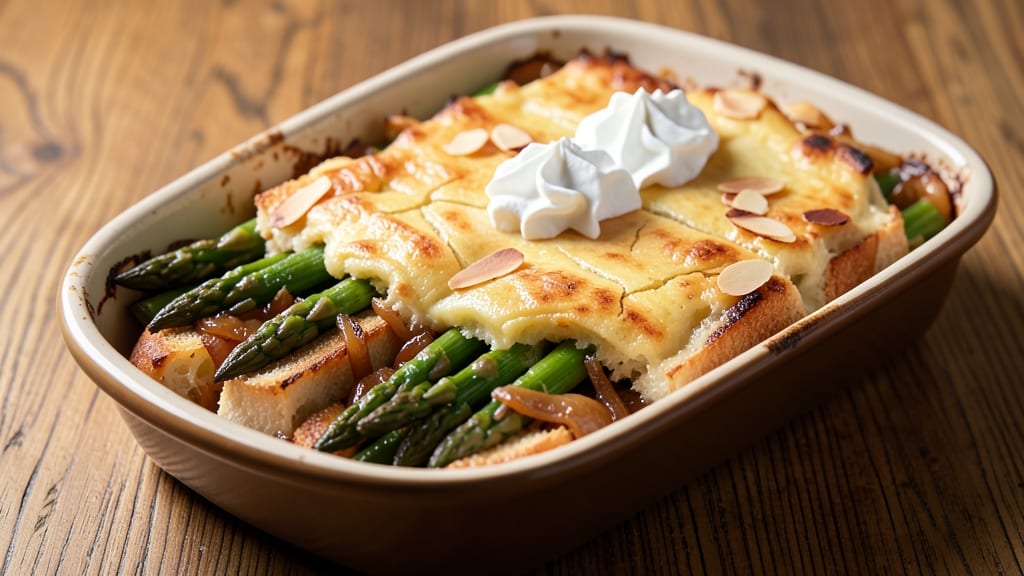
This asparagus bread pudding recipe transforms a classic dessert into a savory masterpiece with tender asparagus and a herbed, crispy top. The secret lies in balancing rich custard with the bright, earthy flavor of roasted asparagus, creating a dish that feels both comforting and sophisticated.
Perfect for brunch or a unique dinner, it’s a vegetarian-friendly twist that still delivers hearty satisfaction.
The recipe begins with a simple bread pudding base—stale bread soaked in a custard mixture—then incorporates roasted asparagus for texture and depth. A sprinkle of herbed cheese on top ensures that crispy golden crust you crave, while a touch of garlic and parsley elevates every bite.
No special equipment is needed, just a few pantry staples and about 45 minutes in the oven.
What makes this dish stand out is its versatility. Serve it warm with a dollop of sour cream or a sprinkle of flaky salt for contrast, or pair it with a crisp green salad for a lighter meal.
The combination of creamy custard, tender asparagus, and crispy topping creates a harmonious balance that’s both unexpected and utterly delicious.
Whether you’re hosting a dinner party or simply craving something different, this asparagus bread pudding delivers restaurant-quality results with minimal effort. The key is patience—letting the asparagus roast until caramelized and the top bake until perfectly golden.
Trust the process, and you’ll have a dish that’s as impressive as it is satisfying.
Ingredients for asparagus bread pudding
Sixteen ingredients transform simple bread and asparagus into a savory masterpiece with golden, crispy contrast.
| Ingredient | Amount | Notes |
|---|---|---|
| Stale Baguette 🍞 | 1 ½ lb | Crusts removed, cubed into 1-inch pieces |
| Fresh Asparagus 🌱 | 1 ½ lb | Trimmed, tough ends removed, cut into 1-inch pieces |
| Large Eggs 🥚 | 6 whole | Room temperature for even baking |
| Whole Milk 🥛 | 2 cups | Full-fat for creamy texture |
| Heavy Cream 🥛 | 1 cup | 36% fat for richness |
| Granulated Sugar 🍚 | ½ cup | Light brown sugar for caramelized depth |
| Unsalted Butter 🧈 | ½ cup | Cold, cubed for even melting |
| Garlic Cloves 🧄 | 4 cloves | Minced, for herbed topping |
| Fresh Parsley 🌿 | ¼ cup | Chopped, for herbed topping |
| Shredded Gruyère Cheese 🧀 | 1 ½ cups | Aged 18 months for nutty flavor |
| Diamond Crystal Kosher Salt 🧂 | 1 ½ tsp | Fine grain for even seasoning |
| Freshly Ground Black Pepper 🌶️ | ½ tsp | Freshly cracked for bright flavor |
| Olive Oil 🫒 | 2 tbsp | Extra-virgin for roasting asparagus |
| Flaky Sea Salt 🧂 | 1 tbsp | For finishing crispy top |
The asparagus makes this dish shine—look for bright green stalks with tight tips at the grocery store, avoiding anything woody or yellowing. Trader Joe's and Whole Foods carry the freshest cuts, but your local farmers market will have the best quality. Roast them until caramelized—this is where the magic happens. For the bread, stale is key: day-old baguettes from the bakery section work best, or toast slices lightly and let them cool. Gruyère is non-negotiable here—its nutty, melty quality can't be replicated with other cheeses. If you can't find it, Comté is a solid backup, but it won't be quite the same.
No Gruyère? Parmesan mixed with a touch of cream cheese gets you close, though it loses that signature depth. Short on parsley? Fresh thyme or chives work beautifully—just halve the amount. The bread can be any crusty variety, but sourdough or ciabatta adds extra texture. For the custard, half-and-half can replace the milk/cream combo if you're in a pinch, though it won't be quite as luscious. And if you're worried about the asparagus drying out during roasting, toss it in a little olive oil and a pinch of salt before roasting—this ensures crispy edges without sacrificing moisture.
This dish tastes even better the next day—make a double batch if you're hosting. Store leftovers covered in the fridge for 4 days, or freeze portions for 3 months. To reheat, cover with foil and warm at 350°F for 15 minutes. For the crispy topping, bake at 375°F until golden—resist the urge to peek! The contrast between the creamy custard and crispy top is what makes this dish unforgettable. Garnish with flaky salt right before serving—it's worth the extra minute for that restaurant-quality finish.
Why You'll Love This Recipe
- One-Pan Magic: I swear by this recipe when I’m too tired to wash dishes—just toss the stale baguette cubes, roasted asparagus, and custard into one dish, bake, and walk away. The asparagus caramelizes right into the bread, so you get that sweet, nutty depth without extra prep.
- Creamy Crisp Contrast: That first bite—warm, custardy center with a golden, almost toasty crust—is what makes this dish ridiculously good. The heavy cream and milk make it rich but not heavy, while the asparagus adds a bright, fresh pop that cuts through the richness.
- Stale Bread Rescue: Honestly, this is my go-to for using up that dried-out baguette sitting in my drawer. No need to buy new bread or waste what you’ve got—the asparagus soaks up the custard like a dream, turning it into something luxurious instead of trash.
- Leftovers? Better Than Ever: Between us, this pudding actually tastes better the next day. The flavors meld even more, and it reheats in minutes—perfect for a quick breakfast or a lazy Sunday brunch. Plus, it’s cheap to make, so you can feed a crowd without breaking the bank.
Step-by-step instructions for asparagus bread pudding
Here's how to transform stale baguette and tender asparagus into a rich, herbed bread pudding with a golden, crispy top.
Roast the Asparagus Until Tender
Preheat your oven to 400°F and line a baking sheet with parchment paper. Toss the 1.5 lb fresh asparagus (cut into 1-inch pieces) with 2 tbsp olive oil, ½ tsp Diamond Crystal kosher salt, and a pinch of freshly ground black pepper. Spread the asparagus in a single layer on the prepared sheet.
Roast for 12-15 minutes until the asparagus is tender with slightly caramelized edges. You'll know it's perfect when it yields slightly to gentle pressure and has developed a rich green color. Remove from the oven and let cool for 5 minutes before chopping roughly into bite-sized pieces. This roasting step intensifies the asparagus flavor and prevents a watery pudding.
Prepare the Bread Pudding Mixture
In a large bowl, whisk together the 6 whole large eggs, 2 cups whole milk, 1 cup heavy cream, ½ cup granulated sugar, 1.5 tsp Diamond Crystal kosher salt, and ½ tsp freshly ground black pepper until completely combined. The mixture should be smooth with no visible streaks of egg.
Gently fold in the 1.5 lb cubed stale baguette (crusts removed), the cooled roasted asparagus pieces, and 1.5 cups shredded Gruyère cheese using a silicone spatula. Be careful not to overmix—just combine until the bread is evenly moistened. The bread should absorb most of the custard mixture, leaving it slightly thick but pourable. If it seems too dry, add 1-2 tbsp milk to loosen it.
Assemble and Bake the Bread Pudding
Generously butter a 9x13-inch baking dish using the ½ cup unsalted butter (melted and cooled slightly). Pour the bread pudding mixture into the prepared dish, spreading it evenly. For extra richness, sprinkle the top with any remaining shredded Gruyère cheese.
Bake at 350°F for 45-50 minutes until the center is just set (it should still have a slight wobble when gently shaken). The edges should be golden brown, and the top should be crispy. If the top browns too quickly, loosely tent the dish with aluminum foil after 30 minutes to prevent over-browning while the center finishes cooking.
Create the Herbed Crispy Topping
While the bread pudding bakes, prepare the herbed topping. In a small bowl, combine the 4 minced garlic cloves, ¼ cup chopped fresh parsley, and 1 tbsp flaky sea salt. Once the bread pudding is removed from the oven, spread this herbed mixture evenly over the top, pressing down gently with the back of a spoon.
Return the bread pudding to the oven and broil for 2-3 minutes until the topping is golden and crispy. Watch it closely—broilers can vary, and you want it crispy but not burned. The contrast between the creamy pudding and crispy herbed top is what makes this dish special. Let the bread pudding rest for 10 minutes before serving to allow the custard to set slightly and the flavors to meld.
Serve Warm with Fresh Herbs
Slice the bread pudding into 6 equal portions and serve immediately while still warm. The interior should be custardy with pockets of melted Gruyère cheese, and the herbed topping should be perfectly crispy. Garnish each serving with an additional sprinkle of chopped parsley and a pinch of flaky sea salt for extra brightness.
This savory bread pudding pairs beautifully with a simple arugula salad dressed with lemon vinaigrette or a glass of crisp white wine. The combination of tender asparagus, rich custard, and crispy herbed topping makes this dish a standout for brunch or a sophisticated dinner.
Pro Tips For Making Asparagus Bread Pudding
- Prep Asparagus in Batches: Trim the asparagus after blanching—don’t waste time peeling every spear before cooking. Drop them in boiling salted water for 2 minutes, then shock in ice water. The skins slide off effortlessly, and you won’t end up with a soggy, overhandled mess in your pudding.
- Soak Bread in Cold Milk: Skip the warm milk—it turns the baguette gummy faster than you can say "overcooked." Use ice-cold whole milk (or a mix of milk and heavy cream) and let the bread soak for at least 30 minutes. This guarantees a tender crumb, not a gluey disaster.
- Whisk Eggs Until Thick: Don’t just crack and stir—whisk the eggs until they’re ribbon-like and pale. This ensures a silky custard, not a lumpy one. If your mixture looks thin, fold in a splash of reserved heavy cream instead of adding more eggs.
- Bake at 325°F, Not Higher: I learned this the hard way—350°F turns the top crust rubbery before the center sets. Stick to 325°F and bake until the edges are golden and the center jiggles just like gelatin. If it’s wobbly, it’s not done. If it’s firm, it’s over.
Flavor customization for this asparagus bread pudding
Herb Variations
Swap out the parsley for fresh thyme or chives to add earthy depth or a mild onion bite. I love using 2 tbsp chopped thyme instead of parsley—it pairs beautifully with Gruyère and adds a subtle piney aroma.
For a brighter twist, try ½ cup chopped chives mixed with 1 tbsp chopped dill for a fresh, almost Scandinavian-inspired flavor profile. 🌿
Cheese Alternatives
If Gruyère is unavailable, Parmesan or Comté work well, though they lack the same creamy melt. For a sharper bite, use ½ cup sharp cheddar mixed with ½ cup cream cheese—this combo adds tanginess while keeping the dish rich.
Vegan cooks can replace cheese with 1 cup nutritional yeast plus ½ cup cashew cream for a nutty, umami-rich alternative.
Spice Infusions
Add ½ tsp smoked paprika or ½ tsp cayenne to the custard for warmth. I often sprinkle 1 tsp lemon zest into the topping for brightness, especially if serving with a citrusy salad.
For a smoky kick, mix 1 tsp chipotle powder into the herbed topping—it’s a game-changer for fall flavors. 🌶️
Asparagus Adjustments
For a sweeter profile, roast asparagus with 1 tsp honey or 1 tbsp balsamic glaze before adding it to the pudding. If you prefer crunch, add ½ cup toasted pine nuts or walnuts to the herbed topping.
For a lighter texture, steam asparagus instead of roasting—it’ll stay brighter green and more tender.
Sweet-Savory Balance
Add 1 tbsp maple syrup or 1 tbsp honey to the custard for subtle sweetness that complements the asparagus. I also love finishing with 1 tsp black pepper and 1 tsp lemon juice over the top—it cuts through the richness and adds a refreshing contrast.
For a dessert-like twist, drizzle with 2 tbsp caramelized honey after baking. 🍯
Global Twists
For an Italian touch, add 1 tsp dried oregano and top with crumbled feta instead of Gruyère. A French-inspired version swaps Gruyère for Brie and adds 1 tsp Dijon mustard to the custard.
For a Middle Eastern flair, mix 1 tbsp za’atar into the herbed topping—it’s bold, aromatic, and pairs surprisingly well with asparagus. 🗺️
Nutrition facts
Frequently asked questions
Can I make this asparagus bread pudding without Gruyère cheese?
Gruyère adds that signature nutty depth, but you can substitute with 1.5 cups shredded Parmesan or Comté for a similar melt. For a sharper flavor, mix ½ cup sharp cheddar with ½ cup cream cheese. Vegan cooks can use 1 cup nutritional yeast plus ½ cup cashew cream for a rich, umami alternative. Just note the texture will differ slightly.
How do I prevent the bread pudding from becoming watery?
Use stale bread (or lightly toasted bread) to absorb excess moisture before baking. For extra insurance, let the bread pudding mixture rest for 15-20 minutes before baking—this helps the bread soak up more custard. Also, ensure your asparagus is fully roasted and drained of excess liquid before mixing it in. Overmixing the batter can also introduce air bubbles that release moisture during baking.
Can I prepare this asparagus bread pudding ahead of time?
Yes! This dish actually tastes even better the next day. Assemble the bread pudding in the baking dish, cover tightly with plastic wrap, and refrigerate for up to 24 hours before baking. For longer storage, freeze the unbaked mixture (without the herbed topping) for 3 months. Thaw overnight in the fridge, then bake as directed. Reheat leftovers at 350°F for 15 minutes covered with foil to restore moisture.
What’s the best way to serve this savory bread pudding?
This dish shines as a hearty brunch or light dinner. Serve warm with a simple arugula salad dressed with lemon vinaigrette, or pair it with roasted cherry tomatoes and crusty bread. For contrast, add a dollop of sour cream or crème fraîche, and finish with fresh parsley and flaky sea salt. A crisp Sauvignon Blanc or Chardonnay complements the herbed flavors beautifully.
Why did my bread pudding top turn out soggy instead of crispy?
A soggy top usually means the pudding wasn’t baked long enough or the oven temperature wasn’t high enough during the broiling step. Ensure you broil for 2-3 minutes at the end—this is critical for crispiness. Also, don’t skip the 10-minute rest after baking; this helps the custard set slightly. If the issue persists, try baking the pudding at 375°F for the final 10 minutes to boost browning and crispiness.