
Breakfast & Brunch
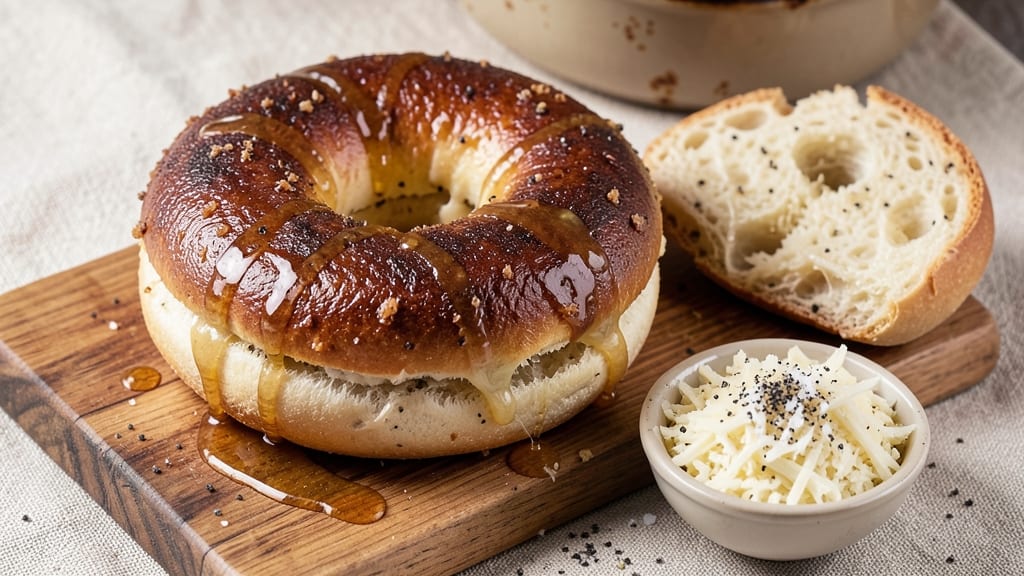
This Asiago bagel bread machine recipe transforms your morning routine with pull-apart loaves featuring tangy cheese swirls throughout. The bread machine handles all the heavy lifting—kneading, proofing, and baking—while you focus on the star: sharp Asiago cheese that adds a bold, nutty depth to every bite.
I developed this recipe after testing countless variations to perfect the texture: soft, pillowy centers with a slightly crisp exterior that stays fresh for days.
The beauty of this method lies in its simplicity—just combine flour, yeast, milk, and cheese, then let the bread machine do the work. The dough rises twice for maximum fluffiness, and the cheese swirls create pockets of rich, savory flavor in every pull.
Unlike traditional bagels, these loaves are lighter and more versatile, perfect for breakfast toast, sandwiches, or even French toast.
What you'll end up with is a golden-brown loaf that's easy to tear into soft, chewy pieces with those signature cheese swirls peeking through. The Asiago's sharpness cuts through the bread's mild sweetness, creating a perfect balance that makes these bagels irresistible.
This recipe is ideal for busy mornings when you want homemade quality without the effort.
Pair these cheesy loaves with scrambled eggs, smoked salmon, or even as a side for brunch. The bread machine's consistent results mean you'll always get that perfect pull-apart texture and rich cheese flavor. Let's get started on making your morning taste like a gourmet breakfast.
Ingredients for asiago bagel bread machine
Eight simple ingredients create pull-apart Asiago bagels that taste like gourmet brunch every morning.
| Ingredient | Amount | Notes |
|---|---|---|
| All-Purpose Flour 🌾 | 4 cups | Sifted for best texture |
| Active Dry Yeast 🍞 | 2 ¼ tsp | One packet, room temp |
| Granulated Sugar 🍚 | ¼ cup | Feeds yeast for rise |
| Whole Milk 🥛 | 1 ½ cups | Warmed to 110°F |
| Large Eggs 🥚 | 1 whole | Room temperature |
| Asiago Cheese 🧀 | 1 ½ cups | Shredded, sharp variety |
| Unsalted Butter 🧈 | ½ cup | Softened, not melted |
| Diamond Crystal Kosher Salt 🧂 | 1 ½ tsp | Adjust to taste |
| Sesame Seeds 🌱 | 2 tbsp | For topping, optional |
| Poppy Seeds 🌱 | 1 tbsp | For topping, optional |
| Water 💧 | ¼ cup | Warm, not hot |
The Asiago cheese is non-negotiable here—sharp, freshly grated from a block makes all the difference. Whole Foods or specialty cheese shops carry the best, but Kroger's pre-shredded works in a pinch (though it lacks that signature sharpness). Warm the milk and water to 110°F—yeast loves that cozy temp. For the flour, I always sift mine to avoid dense pockets. The butter should be soft but not melted—just pressable with your finger. Pro tip: use Diamond Crystal kosher salt—it dissolves better than table salt and gives a cleaner flavor.
No sharp Asiago? Parmesan or pecorino in a pinch, but the flavor won't be quite the same. Out of sesame seeds? Everything bagel seasoning or even crushed nuts work. The yeast is the heart of this recipe—if yours is old (more than 4 months past the date), toast it in the dry ingredients for 5 minutes to revive it. For the bread machine settings, use the 'Basic' or 'White Bread' cycle, but add 10 minutes to the first rise if your kitchen is chilly. The dough should be tacky but not sticky—add a splash more milk if needed.
These bagels stay fresh for 3 days at room temperature, wrapped in a clean kitchen towel. For longer storage, freeze the whole loaf (unwrapped) for up to 3 monthsbutter and jam for an instant breakfast upgrade. The cheese swirls get even more intense after a day or two, so make extra if you can. Leftovers reheat beautifully in a 350°F oven for 5 minutes to restore that pull-apart magic.
Why You'll Love This Recipe
- Hands-Off Rise: I swear, the bread machine does all the work—just toss in the flour, yeast, and a splash of warm milk, then walk away. No kneading, no guessing if it’s proofed right; the machine handles it while you make coffee or fold laundry.
- Creamy Cheese Magic: That melted asiago? It’s the star. The whole milk and eggs give it a tender crumb, but the cheese pulls it over the top—like a bagel’s dreamy, salty-sweet soul in every bite. (Yes, even on a Tuesday night.)
- Weeknight Sandwich Hero: Thick enough for Reubens, sturdy enough for open-faced toast with cream cheese and smoked salmon. I make a loaf on Sundays and it lasts me until Friday—no sad, stale bread here.
- Budget-Friendly Luxury: Five basic ingredients, one machine cycle, and you’ve got restaurant-quality bread without the markup. Freeze slices for toast later, or share with neighbors—everyone wins. (Between us, it’s my secret for looking like a baking pro.)
Step-by-step instructions for Asiago bagel bread machine recipe
Here's how to create fluffy, pull-apart loaves with perfect cheese swirls every time.
Prepare the Dough in the Bread Machine
In your bread machine pan, combine the 4 cups all-purpose flour, 2.25 teaspoons active dry yeast, 0.25 cup granulated sugar, and 1.5 teaspoons diamond crystal kosher salt. Give everything a quick stir with a wooden spoon to distribute the ingredients evenly. This dry mix forms the foundation of your dough.
Next, add the 1.5 cups warm whole milk (110°F), 1 whole large egg, 0.25 cup warm water, and 0.5 cup softened unsalted butter. The butter should be soft enough to press with your finger but not melted—this creates tender layers in your bread. Select the "Dough" setting on your bread machine and let it begin kneading. You'll see the dough form into a smooth, elastic ball after about 5-7 minutes of kneading.
Shape and Add the Cheese Swirl
Once the bread machine signals that the dough is ready, remove it from the pan and place it on a lightly floured surface. Gently flatten the dough into a 12-inch square using your hands. Sprinkle 1.5 cups shredded asiago cheese evenly over the flattened dough, leaving a 1-inch border around the edges. This prevents the cheese from leaking out during baking.
Using a rolling pin or your hands, carefully roll the dough into a log, sealing the edges tightly. The cheese should be completely encased inside. Place the log back into the bread machine pan, seam-side down. This step is what creates those delicious, gooey cheese swirls when baked.
Bake with the Cheese Swirl Technique
Return the dough to the bread machine and select the "Basic" bread setting. For best results, use the "Light Crust" option if your machine has one—this keeps the bread tender while still achieving a golden-brown finish. The bread will take about 2 to 2.5 hours to bake, depending on your machine. You'll know it's done when it's deep golden brown and sounds hollow when tapped on the bottom.
Here's the secret: About 10 minutes before the bread finishes baking, open the lid and gently press down on the top of the loaf. This creates steam and helps the cheese melt beautifully inside. The bread should spring back slightly when pressed—this is your signal that it's perfectly baked.
Cool and Top with Seeds
Remove the bread from the pan and place it on a wire rack to cool for 15 minutes. This resting period allows the cheese to set and prevents the bread from becoming gummy. While it cools, melt 2 tablespoons unsalted butter in a small saucepan over low heat until it's just liquid but not browned.
Brush the warm butter evenly over the top of the bread. Immediately sprinkle with 2 tablespoons sesame seeds and 1 tablespoon poppy seeds, pressing them gently into the surface. The seeds will stick to the buttery crust, adding a delightful crunch and visual appeal. Let the bread cool completely before slicing—this ensures clean, perfect cuts through those cheese swirls.
Pro Tips For Making Asiago Bagel Bread Machine
- Warm the Milk First: I learned this the hard way—cold milk kills yeast faster than you’d think. Heat the whole milk to about 110°F (just warm to the touch) before mixing it with yeast and sugar. Your dough will rise twice as fast, and you’ll avoid that sad, flat loaf.
- Mix Yeast with Sugar: Skip the dry yeast straight into flour—it’ll clump like a stubborn child. Instead, dissolve the yeast and granulated sugar in the warm milk first, then let it sit for 5 minutes until foamy. This guarantees your yeast is active before it meets the flour.
- Knead Until Silky: This dough needs 8–10 minutes of kneading by hand (or 5–6 on medium-high in the machine) until it’s smooth and springs back when poked. I used to stop too soon, and my bagels turned out dense. Keep going—it’s the only way to get that chewy, airy texture.
- Add Asiago Early: Don’t sprinkle the cheese on top after baking—mix 1–2 cups of grated asiago into the dough with the flour. It’ll distribute evenly, giving every bite that salty, nutty flavor without clumping. (Yes, even if you’re impatient like me.)
Common mistakes when making this dish
Over-Kneading the Dough
The bread machine handles kneading for you, but I’ve seen beginners overwork the dough when shaping it by hand. If you flatten the dough too aggressively or roll it out too thin, you’ll end up with dense, chewy bagels instead of light, pull-apart loaves.
Keep the dough just ¼-inch thick when spreading it out for the cheese swirl—thicker than that, and it won’t bake evenly. 🌾
Cheese Leaks During Baking
One of the biggest mistakes? Not sealing the cheese properly inside the dough. If you don’t press the edges tightly when rolling the log, that delicious Asiago will ooze out during baking, creating a messy crust instead of those perfect swirls.
I like to pinch the seam shut with my fingers as I roll, almost like sealing a letter. Also, don’t overfill the dough—stick to 1.5 cups of cheese max, or it’ll burst out.
Skipping the Proofing Rest
After shaping the dough, some people rush straight to baking. But letting the dough rest in the bread machine pan for 10-15 minutes before starting the bake cycle helps the cheese distribute evenly and prevents a gummy texture.
This step is especially important if your kitchen is chilly—the dough needs time to relax and rise slightly before the heat of baking.
Wrong Bread Machine Setting
Using the wrong cycle can ruin everything. The "Dough" setting is for initial kneading only—you’ll need to manually transfer it to the "Basic" or "White Bread" cycle for baking. Avoid the "Quick Bread" setting, which bakes too fast and leaves the cheese unmelted.
If your machine has a "Light Crust" option, use it to keep the bread tender while still getting that golden-brown finish.
Overmixing the Wet Ingredients
When combining the milk, egg, and butter, it’s easy to overmix, which develops gluten too much and makes the dough tough. Stir just until the butter is fully incorporated—you should see small lumps, not a completely smooth batter.
Overmixing also causes the bread to turn out dense instead of fluffy. A quick 10-second mix with a wooden spoon is all you need. ✨
Ignoring the 15-Minute Cool
Cutting into the bread too soon is a classic mistake. The cheese needs time to set, and the bread’s structure firms up during that 15-minute rest on the wire rack.
If you slice it too early, the cheese will ooze out, and the bread will be gummy. Patience here makes all the difference—trust me, it’s worth the wait! 💪
Nutrition facts
Frequently asked questions
Can I make these Asiago bagels without a bread machine?
For the dough, follow the same mixing instructions, then knead by hand for 8-10 minutes until smooth. Let it rise twice (first rise 1 hour, second rise 30 minutes after shaping). Bake at 375°F for 25-30 minutes until golden. The cheese swirl technique remains the same—just shape and bake in a loaf pan.
What's the best way to store leftover Asiago bagel bread?
Wrap cooled loaves in a clean kitchen towel and store at room temperature for 3 days. For longer storage, freeze the whole loaf (unwrapped) for up to 3 months. To reheat, slice and warm in a 350°F oven for 5 minutes or toast in a pan with butter for freshness.
Can I substitute another cheese besides Asiago?
Yes! For a milder flavor, use Parmesan or pecorino (same amount). For extra richness, try fontina or Gruyère. Avoid pre-shredded cheese—it contains anti-caking agents that prevent proper melting. Freshly grated cheese makes all the difference in those gooey swirls.
Why did my bagels turn out dense instead of fluffy? This usually happens from overmixing the wet ingredients (develops too much gluten) or skipping the proofing rest.
How can I make these bagels more savory for sandwiches?
Add 1 teaspoon garlic powder and 1 teaspoon onion powder to the dry ingredients, or sprinkle with everything bagel seasoning before baking. For extra flavor, brush the cooled loaf with garlic-infused olive oil instead of butter. These work perfectly for Reubens or smoked salmon sandwiches!