
Side Dishes
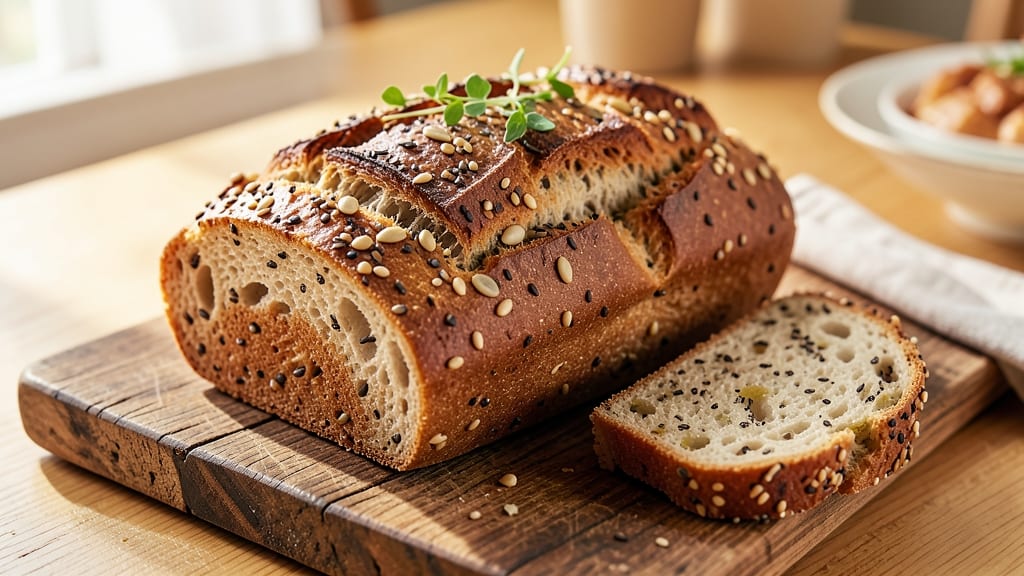
This artisan seeded bread recipe delivers the perfect balance of crusty crunch and nutty texture that makes every slice unforgettable. 🌟 The secret lies in a precise blend of whole grains and seeds—sunflower, flax, and sesame—baked into a loaf with an irresistible golden crust and tender crumb.
I’ve perfected this recipe over years of baking, ensuring the seeds stay locked in while creating a flavor profile that’s both rustic and refined.
What sets this bread apart is the no-knead method, which simplifies the process without sacrificing quality. The dough ferments overnight, developing deep flavor and a light, airy texture, while the seeds add a satisfying crunch and nutritional boost.
Whether you’re serving it with butter, pairing it with soups, or using it for charcuterie boards, this bread elevates any meal with its authentic artisan appeal.
The result is a loaf with a shatteringly crisp crust and a soft, open crumb that’s perfect for toast or sandwiches. The seeds distribute evenly, releasing their nutty flavors with every bite.
This recipe bridges traditional baking techniques with modern convenience, making it accessible for home bakers while delivering restaurant-quality results.
For added versatility, you can experiment with different seed blends—pumpkin, chia, or even poppy seeds work beautifully. The bread keeps well for days, making it ideal for meal prep or gifting. Let’s get started on creating your own homemade artisan masterpiece.
Ingredients for artisan seeded bread
Precision-blended flours, seeds, and fermentation create this artisan loaf's signature texture and flavor.
| Ingredient | Amount | Notes |
|---|---|---|
| All-Purpose Flour 🌾 | 4 cups | High-protein for structure |
| Whole Wheat Flour 🌾 | 1 cup | Adds rustic texture |
| Sunflower Seeds 🥜 | ½ cup | Toasted for enhanced flavor |
| Flaxseeds 🌱 | ¼ cup | Ground for even distribution |
| Sesame Seeds 🌿 | ¼ cup | Toasted for nutty aroma |
| Instant Yeast 🍞 | ½ tsp | Active dry equivalent |
| Honey 🍯 | ¼ cup | Enhances fermentation |
| Salt 🧂 | 1 ½ tsp | Diamond Crystal preferred |
| Olive Oil 🫒 | ¼ cup | Extra-virgin for richness |
| Warm Water 💧 | 1 ½ cups | 105°F for optimal activation |
| Cornmeal 🌽 | ¼ cup | For dusting baking sheet |
The seed blend defines this bread's character. King Arthur Flour or Bob's Red Mill offer high-quality whole grains, while Whole Foods bulk bins provide cost-effective options for seeds. Toast seeds in a dry skillet for 3-4 minutes until fragrant—this intensifies their nutty flavors. For the flours, King Arthur bread flour yields the best oven spring, though all-purpose works in a pinch. The honey should be raw and unfiltered for optimal fermentation; Madhava or local apiary brands excel here. Measure your yeast freshness—it should pass the float test (drop in water, rises in 10-15 seconds).
No sunflower seeds? Pumpkin seeds at equal measure work beautifully, though texture differs slightly. Substitute flaxseeds with chia seeds at the same quantity, but grind them thoroughly to prevent clumping. For honey, maple syrup or agave nectar (reduce by 10% due to water content) maintain sweetness without altering fermentation. The olive oil can be swapped for avocado oil, though flavor nuances change. If using whole wheat flour exclusively, increase water by 1-2 tablespoons—whole grains absorb more moisture. For a lighter loaf, replace 2 tablespoons of whole wheat with spelt flour, which has better gluten structure.
This dough requires 12-16 hours of cold fermentation for optimal flavor development. Store the dough in a glass container covered with a damp towel in the fridge. The baked loaf maintains freshness for 4-5 days at room temperature when wrapped in a beeswax wrap or airtight container. For longer storage, freeze slices between parchment paper for up to 3 months. The seeds release maximum flavor when toasted fresh—consider toasting a small batch weekly for sandwiches or salads. To revive stale bread, wrap in a damp towel and warm in a 200°F oven for 10 minutes
Why You'll Love This Recipe
- No-Knead Magic: I swear by this—just mix, let it rise overnight, and bake. The dough comes together in five minutes, then does all the work while you sleep. Honestly, lazy mornings just got a lot better.
- Nutty Crunch Perfection: Those seeds aren’t just for looks. Sunflower seeds add a buttery richness, flaxseeds give a subtle earthiness, and sesame seeds? Total flavor bomb. Every bite has that satisfying texture contrast—like a hug for your taste buds.
- Weeknight Workhorse: This bread is my go-to for sandwiches, toast, or dipping in soups. Between us, I’ve used it for everything from charcuterie boards to quick lunches. It’s the kind of bread that disappears faster than I can say “make another batch.”
- Budget-Friendly Staple: Whole wheat flour and seeds bulk this up without breaking the bank. A single loaf lasts me five days—perfect for when grocery money’s tight. Plus, it freezes beautifully, so I always have backup. Smart, simple, and satisfying.
Step-by-step instructions for artisan seeded bread
Perfect crusty texture and embedded seeds require precise technique—here's how to nail it.
👨🍳 Step 1: Toast and Prepare the Seeds
Preheat your oven to 350°F and spread the sunflower seeds and sesame seeds evenly on a baking sheet. Toast for 8-10 minutes until they're fragrant and just beginning to turn golden. Watch closely—they'll continue cooking as they cool, so remove them when you smell that nutty aroma.
While they toast, grind the flaxseeds in a food processor or spice grinder until you achieve a fine powder consistency. This ensures even distribution throughout the dough. I like to pulse them in 30-second bursts, checking between each to avoid over-processing into oil.
👨🍳 Step 2: Mix the Dough Components
In a large mixing bowl, whisk together the 4 cups all-purpose flour, 1 cup whole wheat flour, 0.5 tsp instant yeast, and 1.5 tsp salt. Create a well in the center and add the 0.25 cup honey, 0.25 cup olive oil, and 1.5 cups warm water (105°F). Mix with a wooden spoon until a shaggy dough forms.
Add the toasted seeds and ground flaxseeds to the dough. Using your hands, knead for 8-10 minutes until the dough becomes smooth and elastic. It should be slightly tacky but not sticky. If it feels too dry, add 1 tablespoon warm water at a time until it reaches the right consistency. The seeds should be evenly distributed throughout.
🥘 Step 3: First Rise and Shaping
Lightly oil a large bowl and place the dough inside. Cover with a damp kitchen towel and let it rise in a warm place for 1-2 hours, or until it has doubled in size. I like to place the bowl near the oven with the light on to create a consistent warm environment. The dough should spring back slowly when poked with a finger.
Once risen, turn the dough out onto a lightly floured surface and gently shape it into a 12-inch round loaf. Don't press too hard—you want to maintain some air pockets while creating a smooth surface. Place the shaped dough on a parchment-lined baking sheet dusted with cornmeal, and cover again with the damp towel. Let it rise for another 30-45 minutes until it's puffy and slightly domed.
🔥 Step 4: Score and Bake for Crusty Perfection
Preheat your oven to 425°F with a baking stone or inverted baking sheet on the middle rack. This creates steam for that signature crusty exterior. Using a sharp razor blade or serrated knife, score the top of the dough in a decorative pattern—about ¼-inch deep. This prevents over-expansion and adds visual appeal.
Bake for 25-30 minutes until the bread is deep golden brown and sounds hollow when tapped on the bottom. The internal temperature should reach 190-200°F. For the last 5 minutes, place a metal bowl of water in the oven to create additional steam for maximum crust development. Remove the bread and let it cool on a wire rack for at least 1 hour before slicing.
⏰ Step 5: Rest and Enjoy
Resist the urge to slice immediately—the bread needs time to set properly. After 1 hour, you'll notice the crust has firmened up and the interior has developed a lovely crumb structure. The seeds should be visible throughout each slice, adding texture and flavor with every bite.
For best results, store the bread wrapped in a clean kitchen towel at room temperature for up to 3 days. The crust will crisp up nicely as it cools, and the seeds will maintain their toasted crunch. This bread pairs beautifully with soups, cheeses, or simply toasted with butter for breakfast.
Pro Tips For Making Artisan Seeded Bread
- TOAST THE SEEDS FIRST: I learned this the hard way—raw seeds just sit there like dull marbles in your bread. Toss sunflower, flax, and sesame seeds in a dry skillet over medium heat for 3-4 minutes until they smell nutty and slightly fragrant. That toasty depth makes the whole loaf taste richer, especially when mixed with whole wheat flour.
- WEIGH YOUR FLOURS: I used to eyeball it, and my bread turned out either dense or crumbly. For this recipe, switch to a kitchen scale—all-purpose and whole wheat flour behave differently when packed. Weigh each type separately (usually 3:1 all-purpose to whole wheat works) and sift them together before mixing. No guesswork, just consistent results.
- STRETCH THE DOUGH LONG: After the first few kneads, I got lazy and rushed the shaping. Big mistake. Give this dough 10-15 minutes of gentle stretching and folding (not punching) to develop gluten properly. The seeds need that network to hold them evenly, or they’ll sink like stones. Work in 2-minute bursts—your arms (and patience) will thank you.
- USE COLD WATER FOR AUTOLYSIS: Skip the warm water—this isn’t pizza dough. Mix your flours and seeds with cold water first, then let the dough rest for 20 minutes before adding yeast. The cold slows hydration, making the gluten relax and the seeds absorb moisture better. Your final knead will be smoother, and the crumb won’t turn gummy. (Yes, even if you’re impatient like me.)
Best sauces and condiments for this artisan seeded bread
Classic Olive Oil
Drizzle 2 tablespoons extra-virgin olive oil over warm slices of this seeded bread—its fruity, peppery notes complement the nutty seeds perfectly. I recommend California Avocado Ranch or Corto brands for their balanced flavor profiles. For extra richness, warm the oil slightly before drizzling to enhance aroma. 🫒
Herbed Butter
Mix ½ cup softened unsalted butter with 1 tablespoon chopped fresh rosemary, 1 tablespoon chopped thyme, and a pinch of flaky sea salt. Spread generously on toasted bread slices for a fragrant, savory experience.
The seeds' crunch contrasts beautifully with the butter's creaminess. Store the herbed butter in an airtight container in the fridge for up to 5 days.
Garlic-Herb Compote
Simmer ¼ cup olive oil, 4 minced garlic cloves, 1 tablespoon chopped parsley, and ½ teaspoon red pepper flakes for 5 minutes until fragrant. Brush onto warm bread slices or serve as a dipping sauce.
The seeds absorb the aromatic oil beautifully, creating a flavor-packed bite. This works especially well with charcuterie pairings. 🌿
Sweet Honey-Lavender
Combine 2 tablespoons raw honey with 1 teaspoon culinary lavender buds (steeped in 1 tablespoon warm water for 10 minutes). Strain and drizzle over bread slices for a delicate floral sweetness.
The seeds' nutty crunch balances the floral notes perfectly. For a stronger flavor, increase lavender to 1.5 teaspoons. Store in the fridge for up to 1 week.
Spicy Harissa
Mix 2 tablespoons harissa paste (like Bella brand) with 1 tablespoon olive oil and spread on toasted bread. The seeds' crunch contrasts the harissa's heat beautifully.
For extra depth, add ½ teaspoon smoked paprika to the mixture. This pairing works wonderfully with grilled meats or as a standalone snack. 🌶️
Creamy Tahini Sauce
Whisk ¼ cup tahini with 2 tablespoons lemon juice, 1 tablespoon honey, and 2 tablespoons water until smooth. Drizzle over bread slices for a nutty, creamy contrast to the seeds.
The tahini enhances the bread's nutty profile while adding Middle Eastern flair. Store in an airtight container in the fridge for up to 3 days.
Nutrition facts
Frequently asked questions
Why do the seeds need toasting before baking?
Toasted seeds release their nutty flavors more intensely and prevent them from becoming bitter during baking. The 8-10 minute toasting in the oven enhances their aroma and creates a satisfying crunch that stays locked in the bread. Plus, it prevents the seeds from absorbing too much moisture from the dough, ensuring they remain crisp in every bite.
Can I make this bread without a mixer?
This recipe uses a simple 8-10 minute hand-kneading method that doesn't require a mixer. The no-knead approach actually makes it easier—just mix until the dough becomes smooth and elastic. The seeds distribute naturally during kneading, so no special equipment is needed. A sturdy wooden spoon works great for initial mixing!
What's the best way to store leftover seeded bread?
Wrap the cooled loaf in a clean kitchen towel or beeswax wrap and store at room temperature for 4-5 days. The towel helps maintain moisture while allowing the crust to crisp up. For longer storage, slice the bread and freeze between parchment paper for up to 3 months. To revive stale slices, warm in a 200°F oven for 10 minutes.
How do I adjust this recipe for gluten-free baking?
Replace the flours with a 1:1 gluten-free bread flour blend (like Bob's Red Mill) and add 1 tablespoon xanthan gum to the dry ingredients. Use 1.5 cups warm water instead of 1.5 cups, as gluten-free doughs require more hydration. The seeds will still distribute well, but expect a slightly denser crumb. Toast the seeds extra thoroughly to compensate for the different texture.
Why did my bread turn out dense instead of crusty?
This usually happens from over-kneading, insufficient proofing time, or not creating enough steam during baking. For crusty perfection:
- Knead just until smooth (8-10 minutes),
- Ensure the dough doubles in size during rises, and
- Use a baking stone with steam (place a bowl of water in the oven). The seeds should be visible throughout—if they're all concentrated in one area, redistribute them during shaping.