
Side Dishes
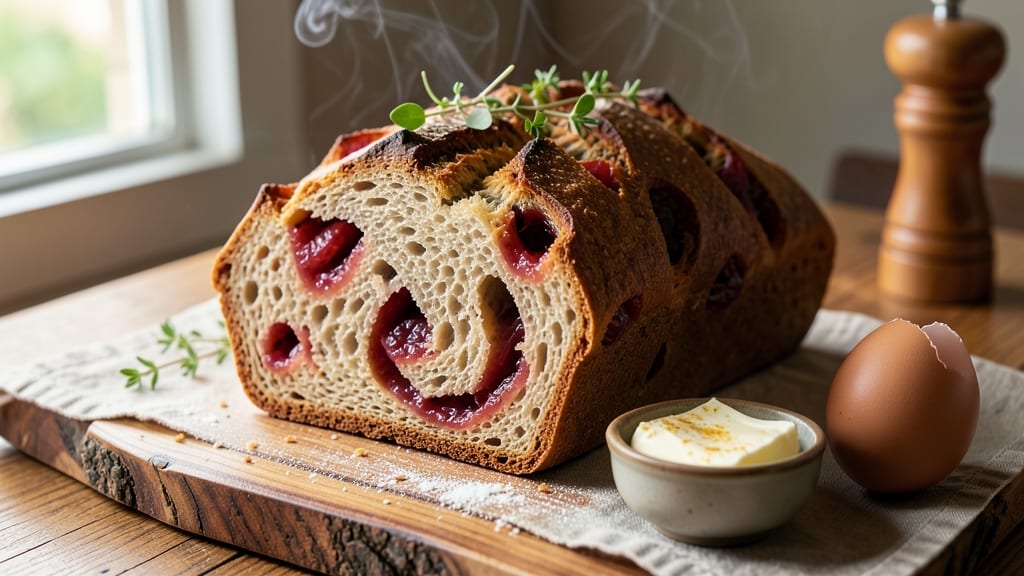
This apricot sourdough bread recipe transforms your kitchen into a rustic bakery with its golden crust and sweet-tart jam swirls—no fancy equipment required. The secret lies in a well-fed sourdough starter and a simple technique that creates a loaf with crispy edges and a tender, airy crumb.
I've baked this recipe countless times, and it never fails to impress, even with beginners.
What sets this recipe apart is the balance of artisan sourdough and apricot jam—the jam swirls add a burst of fruity sweetness that cuts through the bread's natural tang.
The dough comes together in just 15 minutes of mixing, followed by a slow overnight rise in the fridge, which develops deep flavor without requiring constant attention. This method is perfect for modern kitchens where time is limited but quality isn't.
By the time it emerges from the oven, you'll have a loaf with a crispy, crackly crust and a soft, open crumb filled with pockets of jam. The aroma alone will have everyone gathering around the table.
This bread is ideal for breakfast with butter, jam, or as a side for soups and salads. It's the kind of loaf that makes you feel like a baker, even if you're just starting out.
The best part? You can adjust the sweetness by using homemade or store-bought jam, or even dried apricots for a different texture. Let's get started on creating your own artisan loaf with this foolproof recipe.
Ingredients for apricot sourdough bread
Fourteen ingredients, all easy to find, create this rustic apricot sourdough loaf with jam swirls.
| Ingredient | Amount | Notes |
|---|---|---|
| Active Sourdough Starter 🍞 | ½ cup | Well-fed, bubbly starter |
| All-Purpose Flour 🌾 | 4 cups | Plus 1 cup for dusting |
| Granulated Sugar 🍚 | ¼ cup | For dough feeding |
| Unsalted Butter 🧈 | ½ cup | Cold, cubed for flavor |
| Apricot Jam 🍑 | ¾ cup | Sweet-tart variety preferred |
| Large Egg 🥚 | 1 whole | Room temperature |
| Whole Milk 🥛 | ¼ cup | Warmed slightly |
| Salt 🧂 | 1 ½ tsp | Diamond Crystal preferred |
| Instant Yeast 🍞 | ¼ tsp | For extra rise |
| Cornmeal 🌽 | ¼ cup | For dusting loaf pan |
| Water 💧 | ½ cup | Lukewarm for dough |
| Extra-Virgin Olive Oil 🫒 | 1 tbsp | For greasing pan |
The sourdough starter is your secret weapon here—it needs to be active and bubbly (like a jiggly Jell-O). King Arthur or Bob's Red Mill flours work best for this recipe, but any high-protein flour will do. I always grab my jam from Trader Joe's—their apricot preserves have just the right sweet-tart balance. If you're using homemade jam, make sure it's thick enough to hold its shape when swirled. The butter should be cold so it creates little pockets of flavor in the dough (trust me, it makes a difference).
No sourdough starter? Active dry yeast with 1 extra tbsp sugar works in a pinch, but the flavor won't be quite the same. Jam too thick? Warm it gently in a small saucepan for 30 seconds—it'll loosen up for swirling. Swapping apricot? Peach or plum jam works beautifully too. The milk can be any kind, but whole milk gives the best texture. If you're gluten-sensitive, you can substitute 1 cup of gluten-free all-purpose flour for every 2 cups of regular flour (though the texture will differ).
This dough is best made a day ahead—it develops the most incredible flavor after an overnight rise in the fridge. Store any leftovers wrapped tightly at room temp for 2 days, or freeze slices for 3 months. I like to toast the bread and freeze it that way—just reheat in the oven at 350°F for 5 minutes. The jam swirls keep beautifully too, so it's perfect for making ahead for company.
Why You'll Love This Recipe
- No-Knead Magic: I mix the dough in 10 minutes flat—just toss the flour, sugar, and starter, then fold in softened butter. The apricot jam swirls in effortlessly, and the bread rises while I make coffee. Honestly, this is the kind of recipe that makes me feel like a baking genius without the fuss.
- Jam-Packed Sweetness: That first bite of warm, buttery sourdough with the jam oozing out? It’s like a hug for your taste buds. The sugar in the jam caramelizes just enough to give it a subtle depth, and the tang from the starter balances the sweetness perfectly. I’ll be real—it’s the kind of bread I’ll eat straight from the pan.
- Breakfast or Snack Star: This bread is my go-to for lazy mornings (toasted with butter) or afternoon pick-me-ups (sliced with cheese). It’s also the hero of my charcuterie boards—no one can resist a piece of this when paired with sharp cheddar or prosciutto. Between us, it’s the easiest way to make your pantry look impressive.
- Budget-Friendly Batch: A single batch feeds my family for days—leftover slices reheated in the toaster taste just as good as fresh. Apricot jam is cheap in bulk, and using all-purpose flour keeps costs down without sacrificing flavor. Plus, the sourdough starter is free once you’ve got it going. It’s my secret weapon for stretching groceries without sacrificing taste.
Step-by-step instructions for apricot sourdough bread
Here's how to create a golden loaf with jam swirls that'll make your kitchen smell like summer.
Feed and Prepare the Sourdough Starter
First, feed your 0.5 cup active sourdough starter by mixing it with 0.25 cup granulated sugar and 0.5 cup all-purpose flour. Let it sit at room temperature for 4-6 hours until it's bubbly and nearly doubled in size. You'll know it's ready when it passes the float test—drop a spoonful in water and watch it float.
While waiting, prepare your mixing bowl by combining the 4 cups all-purpose flour, 1.5 tsp salt, and 0.25 tsp instant yeast. Mix these dry ingredients together and set aside. I like to use a whisk for this to avoid developing too much gluten right away—we want a tender crumb, not a tough one.
Mix the Wet Ingredients and Combine
In a separate bowl, melt the 0.5 cup unsalted butter in the microwave in 20-second intervals until just melted but not hot. Let it cool for 2 minutes so it doesn't kill the yeast when mixed. Then add the 0.25 cup whole milk, 0.5 cup water, and 1 whole large egg to the melted butter.
Pour this wet mixture into the dry ingredients and stir until just combined. The dough will look shaggy at first—that's normal. Then add the fed starter and mix until everything comes together. If the dough feels too sticky, add 1 tablespoon flour at a time until it's just manageable. You want it soft but not wet.
Create the Jam Swirls and Shape the Dough
Take 0.5 cup apricot jam and spread it evenly over a sheet of plastic wrap. Roll the dough into a rectangle about ½-inch thick and spread the jam evenly over the surface, leaving a ½-inch border around the edges. This prevents the jam from leaking out during baking.
Starting from the long side, tightly roll the dough into a log, pinching the seam to seal. Place the log seam-side down on a floured surface and gently shape it into an oval loaf. The jam will naturally ooze out slightly as you work—don't worry, this is part of the magic. Wrap the dough in the plastic wrap and refrigerate for 12-24 hours to let the flavors meld.
Shape and Proof the Final Loaf
After chilling, turn the dough out onto a lightly floured surface and gently reshape it into a round loaf. Place it seam-side up in a greased 9x5-inch loaf pan that's been coated with 1 tablespoon extra-virgin olive oil. Sprinkle 0.25 cup cornmeal evenly over the top—this creates that beautiful crunchy crust we all love.
Cover the pan with a damp towel and let the dough proof at room temperature for 1-2 hours until it's risen about halfway up the sides of the pan. Then preheat your oven to 375°F with a baking stone or inverted baking sheet on the middle rack. This creates steam for that perfect oven spring.
Bake to Golden Perfection
Bake the bread for 35-40 minutes until the top is deep golden brown and the internal temperature reaches 190°F. You'll know it's done when it sounds hollow when tapped on the bottom. If the top browns too quickly, tent with foil to prevent burning.
Let the bread cool in the pan for 10 minutes before removing it to a wire rack. The jam will be warm and gooey inside—this is when it's most flavorful. Slice while still warm for that perfect jam swirl reveal. Store any leftovers wrapped in plastic at room temperature for 2 days, or freeze for up to 3 months.
Pro Tips For Making Apricot Sourdough Bread
- STRETCH THE DOUGH: I used to eyeball the kneading time, but sourdough with jam needs extra love—push and fold the dough for at least 10 minutes by hand (or 5 minutes on a stand mixer with a dough hook). The jam’s sugar makes the dough stickier, so resist rushing it; you want a smooth, elastic texture that won’t tear when you add the butter later.
- CHILL THE JAM FIRST: Warm apricot jam straight from the jar will melt into a gooey mess in the dough. Pop it in the fridge for 15–20 minutes to firm up slightly—this keeps the filling distinct and prevents a soggy loaf. (Yes, even if you’re impatient like me.)
- DON’T OVERMIX THE BUTTER: When folding in the softened butter, work quickly but gently. Overmixing turns the dough tough, and the butter will separate instead of creating those tender, flaky pockets. Cut it into small cubes first, then pat them into the dough with your fingers—less mess, better texture.
- PROOF AT ROOM TEMP: Skip the warm oven for proofing this jam-infused dough. A cozy 70°F (21°C) kitchen works just fine—no need to preheat anything. Cold slows fermentation, and jam’s acidity can make the dough rise unevenly if it’s too warm. Patience here means a lighter, more even crumb.
Flavor customization for this recipe
Sweet-Tart Jam Swirls
Start with your preferred apricot jam—Trader Joe's or Smucker's work beautifully—but don’t stop there. For extra depth, mix in 1 tsp orange zest or ½ tsp cinnamon into the jam before swirling.
The citrus brightens the fruit, while cinnamon adds warmth that pairs perfectly with the sourdough’s tang. If you love texture, fold in 2 tbsp chopped toasted almonds or walnuts for crunch. 🍑
Dried Fruit Variations
Swap out jam for ½ cup chopped dried apricots tossed with 1 tbsp honey and ½ tsp cardamom. The fruit will soften slightly during baking, creating pockets of chewy sweetness. For a Mediterranean twist, try dried figs or dates with a pinch of sea salt—the contrast is stunning.
Soak dried fruits in warm water for 10 minutes first to plump them up.
Spiced Dough Boost
Infuse the dough itself with flavor by adding 1 tsp vanilla extract or ½ tsp almond extract to the wet ingredients. For warmth, mix ½ tsp ground ginger or ¼ tsp nutmeg into the dry ingredients.
These spices complement the apricot beautifully and elevate the bread’s aroma. I love a vanilla-apricot combo—it feels like a hug in every bite. ✨
Nutty or Seed Add-Ins
For texture and nutrition, fold ¼ cup chopped pecans or pumpkin seeds into the dough before shaping. Toast them first in a dry pan for 3 minutes until fragrant—this enhances their flavor.
If you prefer seeds, sunflower seeds or flaxseeds add a subtle nuttiness. Just be sure to distribute them evenly so every slice gets a taste.
Herb-Infused Jam
Elevate your jam swirls by blending 1 tbsp fresh rosemary or thyme into the apricot jam before using. Simmer the herbs with the jam for 5 minutes to infuse their aroma, then strain out the solids.
The herbal notes add a sophisticated twist that pairs wonderfully with the bread’s crust. I especially love this with rosemary—it’s unexpected but brilliant. 💫
Nutrition facts
Frequently asked questions
Can I make this bread without a sourdough starter?
Yes! Use 2¼ tsp active dry yeast and 1 extra tbsp granulated sugar instead of the sourdough starter. Mix them with ½ cup warm water and let sit for 5-10 minutes until foamy before adding to the dough. The flavor won't be identical, but it'll still be delicious with a sweeter, more yeast-forward taste.
How do I know when my sourdough starter is ready?
Your starter is ready when it's bubbly, jiggly, and doubles in size within 4-6 hours after feeding. For the ultimate test, drop a spoonful into a glass of water—if it floats, it's active and ready to use! A strong starter smells slightly sweet and tangy, not sour or alcoholic.
Why did my bread turn out dense instead of light?
Dense bread usually means the dough didn't rise enough. Check these common issues: underproofed dough (let it rise longer), too much flour (stick to the recipe measurements), or cold oven (preheat for at least 30 minutes). Also ensure your yeast is fresh—old yeast loses potency. For extra lift, try adding ½ tsp baking powder to the dry ingredients.
Can I make this bread in a Dutch oven?
Shape the dough into a round boule instead of a loaf, place it in a floured proofing basket, and transfer to a preheated Dutch oven with the lid on. Bake at 425°F for 30 minutes, then remove the lid and bake 15-20 minutes more until golden. The Dutch oven creates steam for a better oven spring and crispier crust.
How do I store leftovers to keep them fresh?
Wrap cooled slices tightly in plastic wrap or aluminum foil, then store at room temperature for up to 2 days. For longer storage, freeze slices for 3 months. To reheat, toast in a toaster or oven at 350°F for 5 minutes until warm. The jam stays fresh too, so every slice tastes like fresh-baked bread.