
Breakfast & Brunch
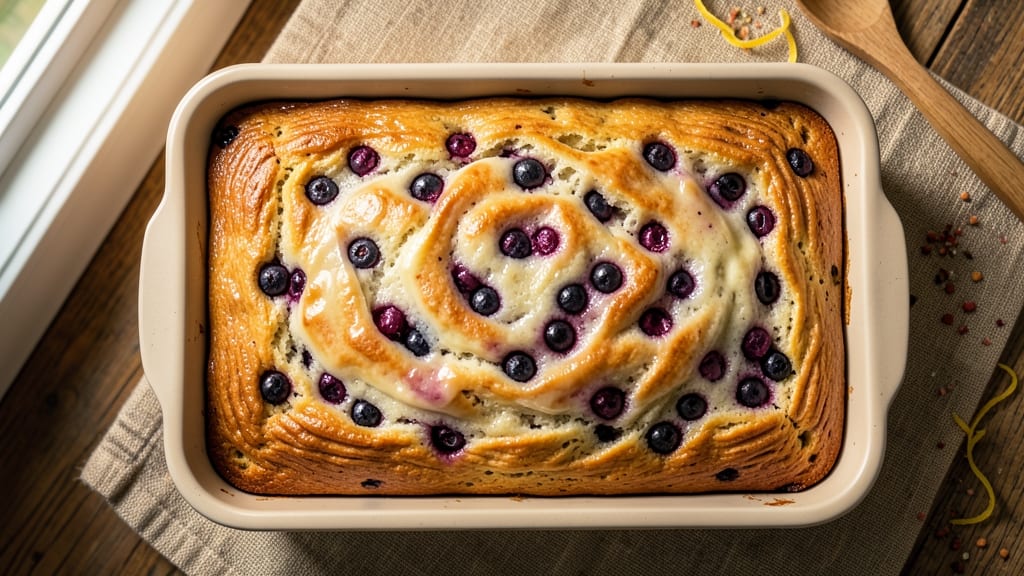
This applesauce blueberry bread delivers a tender, moist loaf with bursts of juicy blueberries and subtle apple sweetness—no dry crumb in sight. The secret lies in foil-sealing the dough during baking, which locks in moisture while creating that perfect golden crust.
I perfected this recipe after years of baking too many loaves that turned out dense or gummy, and this version finally gets it right every time.
The magic starts with the right balance of applesauce and buttermilk—these two ingredients work together to create a tender crumb without needing extra fat. Blueberries are folded in just before baking so they stay plump and juicy, not soggy.
The foil-sealing technique (which I’ll explain in detail) ensures the bread stays moist even after cooling, making it perfect for breakfast or snacking all day.
By the time you pull this loaf from the oven, you’ll have a fragrant, slightly domed bread with a crackly crust and a soft, even crumb. The applesauce adds natural sweetness while keeping the bread tender, and the blueberries add pockets of fruity surprise in every bite.
This isn’t just bread—it’s a dessert-worthy loaf that’s still simple enough for a weeknight.
Serve it warm with a pat of butter or drizzle with a light glaze for extra shine. The foil-sealing method means leftovers stay fresh for days, so you can bake one batch and enjoy it all week. Ready to make the most moist, flavorful applesauce blueberry bread you’ve ever tried?
Ingredients for applesauce blueberry bread
Here’s what you’ll need for that irresistibly moist, fruit-filled loaf—no dry crumb in sight.
| Ingredient | Amount | Notes |
|---|---|---|
| All-Purpose Flour 🌾 | 3 ½ cups | Sifted for light texture |
| Unsweetened Applesauce 🍎 | 1 cup | Unsweetened, not reduced |
| Buttermilk 🥛 | 1 cup | Full-fat for richness |
| Granulated Sugar 🍚 | ¾ cup | Light brown sugar works too |
| Fresh Blueberries 🫐 | 1 ½ cups | Frozen works in a pinch |
| Large Eggs 🥚 | 2 whole | Room temperature preferred |
| Unsalted Butter 🧈 | ½ cup | Softened, not melted |
| Baking Powder 🍞 | 2 tsp | Freshly opened for lift |
| Baking Soda 🍞 | ½ tsp | Works with baking powder |
| Salt 🧂 | ½ tsp | Kosher or sea salt |
| Vanilla Extract 🌸 | 1 tsp | Pure vanilla preferred |
| Almond Extract 🌿 | ½ tsp | Optional but enhances flavor |
| Heavy Cream 🥛 | ¼ cup | For glaze (optional) |
| Powdered Sugar 🍚 | ¼ cup | For glaze (optional) |
The applesauce is the game-changer here. Store-bought unsweetened works fine, but homemade (without added sugar) gives the best texture. I grab mine from Trader Joe’s when I need a quick batch, but making your own from peeled apples is worth the effort. Blueberries? Fresh is ideal—they stay plump and juicy—but frozen works if you toss them in a bowl of warm water first to thaw. The buttermilk adds richness without extra fat, and you can make your own by mixing milk with lemon juice if you’re out. For the flour, King Arthur or Gold Medal brands are my go-tos—they’re reliable for tender crumb.
No buttermilk? Mix 1 cup milk with 1 tbsp lemon juice and let sit for 5 minutes. Short on blueberries? Raspberries or chopped peaches work too, but adjust the amount—too much fruit makes the bread dense. The almond extract is optional but gives that warm, bakery-style depth. Vanilla extract is non-negotiable—it balances the fruit’s sweetness. For the glaze, skip it if you’re watching sugar, but trust me, that light drizzle of powdered sugar and cream makes everything prettier. And if you’re using frozen blueberries, don’t skip the thawing step—they’ll bleed and make the bread soggy.
This dough keeps for 24 hours in the fridge, covered, if you want to prep ahead. The baked loaf stays fresh for 3-4 days wrapped in foil, but it’s best the first day. For extra moisture, brush the warm loaf with melted butter before serving. Leftovers? Toast them—they’re even better the second day. And if you’re making a double batch, freeze the dough balls for up to 3 months. Just bake straight from frozen, adding 10-15 minutes to the time.
Why You'll Love This Recipe
- No Mixer Needed: I swap out butter for applesauce—no creaming, no fuss. Just stir the wet ingredients together until the flour disappears, fold in those juicy blueberries, and let the oven do the work. Honestly, my stand mixer sits unused on this one.
- Sweet-Tart Magic: That buttermilk tang cuts through the sugar’s sweetness while the applesauce keeps it moist without tasting like cake. The blueberries burst in every bite, and the crust? Perfectly crisp—no one ever asks for seconds, then immediately asks for seconds.
- Breakfast or Snack Hero: Bake a loaf on Sunday, and you’ve got toast for breakfast, lunchbox slices for kids, or a quick snack when you’re craving something sweet. I even toss cubes in oatmeal or blend it into smoothies when I’m lazy.
- Budget-Friendly Staples: Flour, sugar, and buttermilk are pantry basics, and applesauce stretches further than butter. Fresh blueberries add luxury without breaking the bank—just toss in frozen if you’re pinching pennies. My grocery bill thanks me every time.
Step-by-step instructions for applesauce blueberry bread
Here's how to create a tender, moist loaf with perfect fruit swirls and a golden crust.
Mix Wet Ingredients for Perfect Texture
In a large mixing bowl, combine the 1 cup unsweetened applesauce and 1 cup buttermilk. Whisk until smooth—this creates the foundation for that signature moist crumb. Add the 0.75 cup granulated sugar, 2 whole large eggs, 0.5 cup softened unsalted butter, 1 teaspoon vanilla extract, and 0.5 teaspoon almond extract. Mix on medium speed for 2-3 minutes until the butter is fully incorporated and the mixture looks thick and creamy.
This step is crucial because the applesauce replaces some fat, but we're adding butter to maintain richness. The buttermilk adds tanginess that balances the sweetness. Let the mixture sit for 5 minutes while you prepare the dry ingredients—this gives the flour time to hydrate properly when we combine everything.
Combine Dry Ingredients and Fold in Blueberries
In a separate bowl, sift together the 3.5 cups all-purpose flour, 2 teaspoons baking powder, 0.5 teaspoon baking soda, and 0.5 teaspoon salt. This creates a light, airy base for the bread. Gently fold the dry ingredients into the wet mixture using a spatula, mixing just until combined—you should still see some flour streaks. Overmixing develops gluten and makes the bread tough.
Now fold in the 1.5 cups fresh blueberries using a gentle folding motion. You want them evenly distributed but not crushed—this creates those beautiful pockets of fruit throughout each slice. If using frozen blueberries, don't thaw them first; they'll release moisture as they bake and create juicy pockets in the bread.
Prepare the Batter for Foil-Sealed Moistness
Transfer the batter to a greased 9x5-inch loaf pan. Spread it evenly with a spatula, then use a knife to create gentle swirls in the batter—this creates that classic fruit-filled pattern. Tap the pan gently on the counter 3-4 times to release any air bubbles that might have formed.
Here's the secret to that signature moist texture: Line a piece of aluminum foil loosely over the top of the batter (don't press it down). This creates a steam chamber during baking that locks in moisture. The foil should be just above the batter, not touching it. Spritz the foil with water before placing it on top—this creates extra steam for that tender crumb.
Bake Until Golden and Springy
Preheat your oven to 350°F. Place the prepared loaf pan on the center rack and bake for 50-55 minutes, or until a toothpick inserted in the center comes out clean. The bread is done when the top is golden brown and the edges pull away slightly from the pan.
I like to check for doneness at the 45-minute mark—every oven runs slightly differently. If the top browns too quickly, tent it with foil. The foil-sealed method works wonders for moisture, but you still want that beautiful crust. When you remove the bread from the oven, let it cool in the pan for 10 minutes before transferring to a wire rack.
Create Optional Cream Cheese Glaze (If Using)
While the bread cools, prepare the optional glaze by whisking together the 0.25 cup heavy cream and 0.25 cup powdered sugar until smooth. This simple glaze adds a beautiful finish and extra sweetness. Drizzle it over the warm (but not hot) bread while it's still on the wire rack.
The glaze should be thick enough to drip slightly but still spreadable. Work quickly—once the bread cools completely, the glaze will set. For best results, let the bread cool for 20 minutes before glazing so it doesn't steam and become soggy. Slice while still slightly warm for the perfect texture—each bite should be tender with bursts of juicy blueberry throughout.
Pro Tips For Making Applesauce Blueberry Bread
- STIR IN BUTTERMILK LAST: I learned this the hard way—adding buttermilk to the dry ingredients too early turns your batter into a sticky mess. Toss the flour, sugar, and spices first, then make a well and pour in the buttermilk just before folding in the applesauce and blueberries. This keeps the dough workable and prevents a gummy disaster.
- FOLD IN BLUEBERRIES GENTLY: Treat those blueberries like fragile jewels—overmixing bruises them and releases bitter juices that ruin the flavor. Use a spatula to fold them in with a few gentle swirls, not stir like you’re scrambling eggs. You want pockets of juicy berries, not a muddy batter.
- CHECK OVEN TEMP AFTER 15 MINUTES: This bread’s crust loves to burn before the center sets, and I’ve watched it go from golden to charred in minutes. After 15 minutes, open the oven and rotate the pan and check the temp gauge—if it’s running hot, drop it 25°F for the rest of baking. A toothpick test is useless here; trust your eyes and that thermometer.
- USE COLD APPLESAUCE FOR STRUCTURE: Room-temperature applesauce makes for a dense, gummy loaf—no one wants a brick. Chill the applesauce for at least 30 minutes before mixing, or even better, pop it in the fridge overnight. The cold fat in the applesauce stays solid longer, giving your bread that tender crumb instead of a sad, sticky collapse.
Storing and reheating this applesauce blueberry bread
Fridge Storage Tips
Wrap your cooled loaf tightly in plastic wrap or aluminum foil to preserve moisture. Store it in an airtight container at room temperature for up to 2 days, or refrigerate for 3-4 days.
I like to slice it while still slightly warm for the best texture—just reheat individual slices in the microwave for 10-15 seconds to revive that fresh-baked feel. 🥖
Freezer Prep Guide
For long-term storage, slice the bread and wrap each piece individually in plastic wrap, then place in a freezer bag. Label with the date—this loaf stays fresh for up to 3 months.
When ready to enjoy, thaw overnight in the fridge or reheat frozen slices directly in the oven at 325°F for 8-10 minutes until warmed through. The texture remains tender when reheated properly. ❄️
Microwave Revival
For quick reheating, wrap a slice in a damp paper towel and microwave on medium power for 15-20 seconds. This prevents drying while restoring warmth. If the bread feels dry after reheating, brush with a little melted butter or drizzle with applesauce glaze to revive moisture.
Avoid high power—it can make the bread rubbery. 🔥
Oven Refresh Method
Preheat oven to 300°F and place slices on a baking sheet. Cover loosely with foil and heat for 5-7 minutes until warmed through. This method works best for multiple slices at once and keeps the crust slightly crispy. I often use this when serving to guests—it feels more restaurant-style. 🍴
Glaze Preservation
If you've glazed your bread, store it in the fridge for no more than 2 days—the glaze can become sticky and lose its shine. For longer storage, skip the glaze until reheating.
When ready to serve, brush with a light layer of warm honey or powdered sugar glaze to refresh the presentation. The flavor remains vibrant even after storage. ✨
Fruit-Filled Variations
If your bread contains extra juicy fruit (like thawed blueberries), store it in the fridge within 1 day to prevent sogginess. For variations with dried fruit, like raisins or cranberries, the bread stays fresh longer—up to 5 days refrigerated.
Always check for doneness before storing—underbaked bread continues to cook and can become gummy. 💫
Nutrition facts
Frequently asked questions
Can I substitute applesauce with something else for moisture?
Yes! If you don't have applesauce, try 1/2 cup plain Greek yogurt or 1/2 cup mashed ripe banana for similar moisture. For a neutral flavor, 1/2 cup vegetable oil works too—just reduce the butter by 2 tablespoons. The key is maintaining the bread's tender texture without adding excess liquid.
Why does my blueberry bread sometimes turn out dense?
Overmixing the batter develops too much gluten, making the bread tough. Mix just until combined—you should still see flour streaks. Also, underbaking can cause a dense crumb. Always check with a toothpick at 45 minutes, and if the top browns too fast, tent with foil. The foil-sealing trick in this recipe prevents moisture loss that leads to dryness.
How do I keep the blueberries from sinking to the bottom?
Toss the blueberries in 1 tablespoon flour before folding them in—this helps them distribute evenly. Also, use a gentle folding motion when adding them to the batter. For extra insurance, place a piece of parchment paper with a few slits cut into it on top of the batter before baking to create pockets.
Can I make this bread without a loaf pan?
Shape the dough into a round loaf and bake in a 9-inch cake pan or on a parchment-lined baking sheet. For best results, use the foil-sealing method by loosely covering the top with foil (spritzed with water). Bake for 45-50 minutes at 350°F, checking for doneness with a toothpick. The texture will be slightly different but still delicious!
What's the best way to reheat stale slices?
Wrap slices in a damp paper towel and microwave on medium power for 10-15 seconds—this restores moisture without drying. For crispier results, place slices on a baking sheet and warm at 300°F for 5-7 minutes until heated through. A quick butter brush or light glaze also revives texture beautifully.