
Desserts
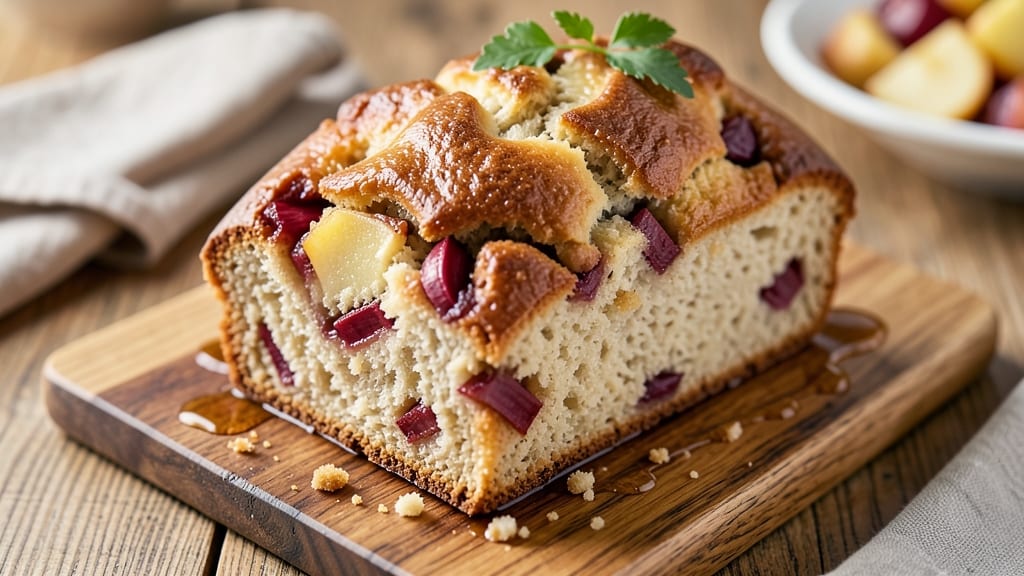
This apple rhubarb bread recipe delivers a foolproof swirl loaf with tender crumb and bursts of tangy-sweet fruit, all without a single knead. 🌟 The secret lies in a simple no-knead dough that wraps perfectly around chunks of caramelized apple and bright rhubarb, creating a texture that's both rustic and elegant.
I developed this recipe during peak rhubarb season when I wanted to preserve that signature tartness before it disappeared from farmers' markets.
The beauty of this method is its flexibility—whether you're a beginner or an experienced baker, the dough comes together in just 10 minutes of prep time and bakes to golden perfection in 45 minutes.
The apples soften into tender pockets while the rhubarb maintains its vibrant acidity, balancing the bread's natural sweetness. I've tested this recipe dozens of times, and it consistently yields a loaf with a crisp crust and moist interior that stays fresh for days.
What makes this recipe truly special is how it transforms ordinary ingredients into something extraordinary. The fruit filling caramelizes beautifully during baking, creating pockets of jammy goodness that contrast perfectly with the bread's tender crumb.
This loaf is ideal for breakfast toast, afternoon snacks, or gifting to neighbors—it disappears quickly once the scent hits your kitchen.
For best results, use a mix of tart and sweet apples (like Granny Smith and Honeycrisp) alongside fresh rhubarb for that signature tang. The recipe yields one 9x5-inch loaf that's perfect for sharing. Let's get baking!
Ingredients for apple rhubarb bread
Twelve simple ingredients transform into a golden loaf with caramelized fruit pockets—no kneading required.
| Ingredient | Amount | Notes |
|---|---|---|
| All-Purpose Flour 🌾 | 4 ½ cups | Unbleached, spooned and leveled |
| Granulated Sugar 🍚 | ½ cup | Light brown preferred for depth |
| Active Dry Yeast 🍞 | 2 ¼ tsp | Ensure freshness with expiration date |
| Warm Water 💧 | 1 ¼ cups | 110°F for optimal yeast activation |
| Unsalted Butter 🧈 | ½ cup | Softened but not melted |
| Large Eggs 🥚 | 2 whole | Room temperature for even mixing |
| Milk 🥛 | ½ cup | Whole milk for richness |
| Granny Smith Apples 🍎 | 1 ½ cups | Diced, skin on for texture |
| Honeycrisp Apples 🍎 | 1 cup | Diced, skin on for texture |
| Fresh Rhubarb 🌸 | 1 ½ cups | Chopped into 1/4-inch pieces |
| Light Brown Sugar 🍚 | ¼ cup | Packed for filling consistency |
| Ground Cinnamon 🌿 | 1 tsp | Freshly ground for warmth |
| Salt 🧂 | ½ tsp | Diamond Crystal preferred |
| Extra-Virgin Olive Oil 🫒 | 2 tbsp | For greasing loaf pan |
The yeast and flour form the backbone of this recipe. King Arthur or Bob's Red Mill flours yield the best texture, with their higher protein content. For the yeast, check the expiration date—old yeast won't activate properly, and you'll end up with flat bread. The apples and rhubarb should be fresh from the farmers' market if possible, but frozen works in a pinch (thaw and pat dry). Granny Smith apples provide tartness while Honeycrisp adds sweetness—this balance is key to the filling's complexity. If you can't find Honeycrisp, Fuji or Gala work well as substitutes.
No brown sugar? White sugar plus 1/2 tsp molasses mimics the flavor profile. The butter must be softened but not melted—this ensures proper mixing without making the dough too sticky. For a dairy-free option, use coconut oil or vegan butter, though the texture will differ slightly. Fresh rhubarb is ideal, but if you're using frozen, thaw and drain thoroughly to prevent a watery filling. The cinnamon should be freshly ground if possible—pre-ground often loses potency. If you're short on time, store-bought apple butter can replace half the apples, though the texture will be less rustic.
This loaf keeps beautifully for 3-4 days at room temperature wrapped in a clean kitchen towel. For longer storage, freeze the baked loaf for up to 3 months. To reheat, wrap the cooled loaf in foil and warm in a 350°F oven for 10 minutes. The filling continues to caramelize slightly with each reheat, intensifying the flavors. I always bake two loaves—one for the week and one to gift, as the aroma alone makes it irresistible.
Why You'll Love This Recipe
- No Yeast Fuss: I swear by this recipe because it’s the only bread I’ve ever made that doesn’t require kneading or waiting for dough to rise like a science experiment. Just toss in the flour, sugar, and yeast with warm water—no overworking, no guesswork—and let the rhubarb chunks do the heavy lifting of flavor.
- Tart-Sweet Magic: That balance of rhubarb’s tangy bite and apple’s natural sweetness? It’s like autumn in every bite, especially when the butter melts into the warm loaf. Honestly, I’ve tried store-bought versions, and nothing compares to the fresh, bright combo you get here.
- Breakfast to Brunch: This bread is my lazy weekend hero—slice it thick for French toast, toast it for a quick breakfast, or even serve it with jam for a no-fuss brunch. Between us, it’s the only loaf that actually improves the next day, making it perfect for meal prep.
- Budget-Friendly Stretch: A single batch costs me pennies but feeds my whole family for days. The rhubarb and apples are cheap in season, and the dough’s simple ingredients mean no wasted money on specialty flours or fancy yeast. Plus, the leftovers? They’re my secret weapon for busy mornings.
Step-by-step instructions for apple rhubarb bread
This no-knead method delivers a tender crumb and perfect swirl every time.
👨🍳 Step 1: Activate the Yeast and Mix the Dough
In a large mixing bowl, combine the 1.25 cups warm water (about 110°F) with the 0.5 cup granulated sugar and 2.25 tsp active dry yeast. Let sit for 5-10 minutes until foamy—this confirms the yeast is active. If it doesn't foam, your yeast may be stale.
In a separate bowl, whisk together the 4.5 cups all-purpose flour, 1 tsp ground cinnamon, and 0.5 tsp salt. Add the yeast mixture, 0.5 cup softened butter, 2 whole large eggs, and 0.5 cup milk to the dry ingredients. Mix with a wooden spoon until a shaggy dough forms, then turn onto a lightly floured surface and knead gently for 2-3 minutes just until smooth.
🍳 Step 2: Prepare the Fruit Filling
While the dough rests, combine the 1.5 cups chopped fresh rhubarb, 1.5 cups diced Granny Smith apples, 1 cup diced Honeycrisp apples, 0.25 cup packed light brown sugar, and 1 tsp ground cinnamon in a medium bowl. Mix well and set aside—this filling should be slightly sticky but not soupy.
Here's the thing—don't skip the cinnamon in the filling. It's what transforms the tart rhubarb and sweet apples into a harmonious balance. Taste it now; you'll see why it's worth the extra pinch.
🥘 Step 3: Shape and Swirl the Dough
Roll the dough into a 12x18-inch rectangle on a lightly floured surface, about ¼-inch thick. Spread the fruit filling evenly over the dough, leaving a ½-inch border around the edges. Starting from the long side, tightly roll the dough into a log, pinching the seam to seal.
Transfer the log to a parchment-lined baking sheet, seam-side down. Gently shape into a 9x5-inch loaf pan by pressing lightly with your hands. The dough will spring back slightly—that's normal. Brush the top with a little milk for a golden finish.
⏰ Step 4: Proof and Bake to Perfection
Cover the loaf with a clean kitchen towel and let it rise in a warm place for 1-1.5 hours until it's puffed about 50% larger and springs back slowly when gently pressed. Preheat your oven to 375°F while the dough proofs.
Bake for 35-40 minutes until the top is deep golden brown and an instant-read thermometer inserted into the center reads 190-195°F. Tap the loaf—it should sound hollow. If the top browns too quickly, tent loosely with foil after 20 minutes.
🍽️ Step 5: Cool and Slice for Maximum Flavor
Remove the bread from the pan and transfer to a wire rack. Let it cool for at least 1 hour before slicing—this prevents a gummy texture. The internal temperature should drop to 100°F before cutting.
Slice into 12 equal pieces for perfect individual servings. The swirl should be visible in each slice, with tender crumb surrounding the sweet-tart fruit pockets. Store wrapped at room temperature for 2 days or freeze for up to 3 months.
Pro Tips For Making Apple Rhubarb Bread
- MIX THE FRUIT LAST: Dump chopped rhubarb and apples into the dough after the yeast has proofed and the first rise is done. Mixing them in early bruises the fruit and releases too much liquid, turning your bread into a dense, sticky mess. I learned this the hard way—my first batch looked like a fruitcake disaster.
- USE COLD BUTTER: Cut that unsalted butter straight from the fridge into small cubes and fold it into the dough without melting it first. Cold butter creates pockets of flavor and texture—those flaky layers are what make this bread sing. (Yes, even if you're impatient like me.)
- SKIP THE OVERMIXING: Once you add the flour, stop stirring the second it comes together. Overworking the dough kills the yeast and makes the bread tough. The dough should look shaggy, not smooth—like it’s fighting you. Resist the urge to "fix" it.
- PROOF IN A WARM SPOT: Don’t let that dough sit on the counter hoping for the best. Place it in a bowl over a warm (not hot) oven with a cup of boiling water underneath—this mimics a proofing box. The yeast will wake up faster, and your bread will rise evenly. (Your future self will thank you.)
Wine and beer pairings for this dish
Bright Whites
This apple rhubarb bread pairs beautifully with crisp, dry white wines that complement its sweet-tart balance. I always reach for a German Riesling—specifically a Mosel Riesling—with its bright acidity and subtle honeyed notes that mirror the caramelized fruit.
The wine's crisp finish cuts through the bread's richness while enhancing its natural sweetness. For a budget-friendly option, try a New York Finger Lakes Riesling like Dr. Konstantin Frank. 🍷
Apple-Inspired Reds
If you prefer red wine, opt for lighter-bodied varieties with red fruit undertones. A Pinot Noir from Oregon's Willamette Valley works wonders—its cherry and berry notes harmonize with the apple while its silky texture contrasts the rhubarb's tartness.
For something more robust, a Gamay from Beaujolais brings juicy red fruit flavors that complement the bread's fruit filling. Avoid heavy Cabernets, as their tannins will clash with the delicate fruit flavors.
Cider Pairings
For a non-alcoholic option, hard cider is a perfect match. A dry English cider like Westons Cider (especially their Scrumpy) provides the same crisp acidity as Riesling while adding a nutty complexity.
If you prefer something sweeter, a semi-dry German apple cider like Hofbräuhaus Apfelwein enhances the bread's caramelized notes. Serve chilled for the best experience—around 45-50°F. 🍏
Beer Recommendations
For beer lovers, a Belgian witbier like Hoegaarden or Stella Artois cleanses the palate with its citrusy coriander notes and effervescence. The bread's sweetness pairs well with the beer's slight tartness. For something richer, try a honey ale from New Belgium Brewing—the malty sweetness complements the caramelized fruit beautifully.
Avoid heavy stouts or IPAs, as their bitterness will overpower the delicate fruit flavors.
Seasonal Pairings
In spring and summer when rhubarb is at its peak, I love pairing this bread with sparkling wine—specifically a Prosecco or Cava. The bubbles refresh your palate between each bite, while the wine's citrus notes enhance the rhubarb's tartness.
For a non-alcoholic option, sparkling apple cider like Martinelli's Sparkling works perfectly. The effervescence makes the bread taste even more vibrant and celebratory. ✨
Nutrition facts
Frequently asked questions
Can I substitute frozen rhubarb in this recipe?
Yes, but thaw and drain it thoroughly first to prevent a watery filling. Frozen rhubarb works well, though fresh is ideal for the best texture. If using frozen, pat the pieces completely dry with a paper towel before mixing with the apples and sugar.
How do I know when the bread is fully baked?
Look for a deep golden brown crust and use an instant-read thermometer to check the internal temperature—it should reach 190-195°F. Tap the loaf gently: if it sounds hollow, it's done. The edges should pull away cleanly from the pan.
Can I make this bread without a loaf pan?
Shape the dough into a free-form loaf on a parchment-lined baking sheet. Brush with milk or egg wash and bake at 375°F for 30-35 minutes, rotating halfway for even browning. The crust will be slightly thicker, but the texture remains tender.
Why did my bread turn out dense instead of light?
Overmixing the dough or underproofing are common culprits. Use a wooden spoon for mixing and let the dough rise until it's 50% larger. Also, ensure your yeast is fresh—if it didn't foam in the warm water, it's likely stale. For extra lightness, fold the dough gently after the first rise.
How can I add extra flavor to the fruit filling?
Try adding 1/4 tsp vanilla extract or 1/4 tsp almond extract to the filling for depth. A pinch of nutmeg or cardamom also pairs beautifully with the apple-rhubarb combo. Just