
Side Dishes
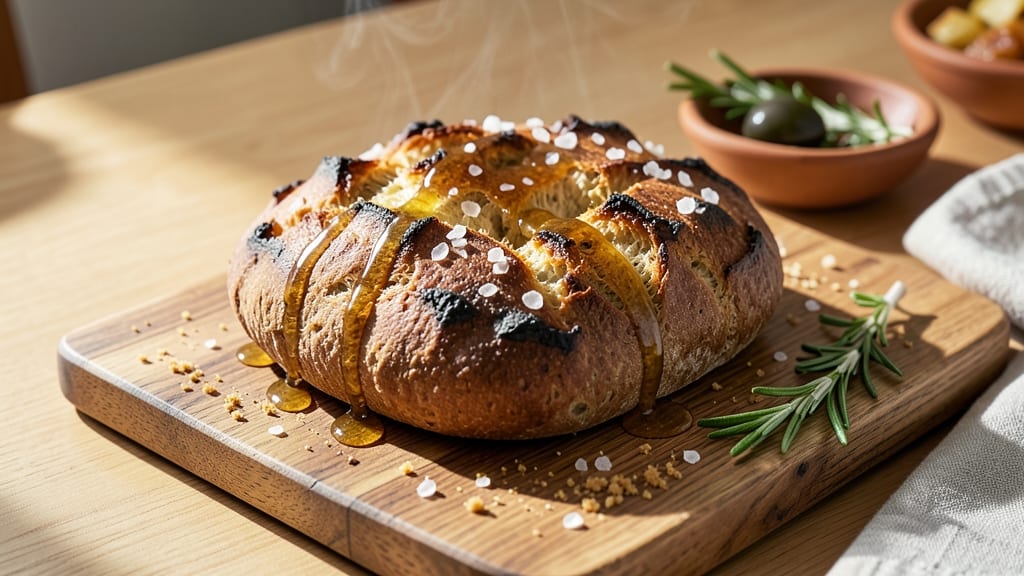
This ancient Greek barley bread recipe brings the flavors of antiquity to your kitchen with its nutty, hearty texture and rustic charm. 🌾 The secret lies in using barley flour—a staple grain in ancient Greece—paired with simple ingredients like olive oil and water, just as they did over 2,500 years ago.
Unlike modern breads, this loaf develops a crispy crust and tender crumb when baked in a hot oven, just like the artos served in ancient Greek households.
The beauty of this recipe is its authenticity—no yeast, no shortcuts, just the pure essence of ancient baking. You’ll mix barley flour with warm water and olive oil, then knead and shape the dough into a round loaf before baking it until golden brown.
The result? A crusty, nutty loaf with a depth of flavor that transports you back to the streets of Athens or Sparta.
Perfect for pairing with olive oil, cheese, or olives, this bread is as versatile as it is historic. Whether you’re serving it alongside a Greek feast or enjoying it with a simple spread, its rich, earthy taste will leave everyone asking for seconds.
Let’s bring a piece of ancient Greece to your table.
For those without a clay oven, don’t worry—a modern oven can still deliver impressive results. The key is baking at high heat to mimic the traditional method. Ready to bake like the ancients? Here’s how to make it.
Ingredients for ancient greek barley bread
Simple ancient grains and pantry staples recreate history in your oven.
| Ingredient | Amount | Notes |
|---|---|---|
| Barley Flour 🌾 | 3 cups | Fine-ground, organic preferred |
| Extra-Virgin Olive Oil 🫒 | ¼ cup | High-quality, fruity variety |
| Warm Water 💧 | 1 ½ cups | Filtered or spring water |
| Sea Salt 🧂 | 1 ½ tsp | Fine grain, kosher preferred |
| Honey 🍯 | 1 tbsp | Raw, unprocessed honey |
| Instant Yeast 🍞 | ½ tsp | Optional for slight rise |
| Ground Fennel Seeds 🌿 | 1 tsp | For ancient Greek flavor |
| Sesame Seeds 🌰 | 1 tbsp | For topping, toasted |
| Poppy Seeds 🌱 | 1 tsp | Optional garnish |
| Semolina Flour 🌾 | 2 tbsp | For dusting and crust |
| Cornmeal 🌽 | 1 tbsp | For bread pan coating |
Barley flour is the heart of this recipe—Bob’s Red Mill or King Arthur brands work best for that authentic texture. If you can’t find barley flour, whole wheat flour in a pinch gives a similar heartiness, though the flavor won’t be identical. For the olive oil, California extra-virgin brands like Corto or Kirkland add that fruity depth. The honey should be raw—Manuka or thyme honey adds extra complexity if you’re feeling fancy. Fennel seeds? Bulk spice sections at Whole Foods or Trader Joe’s usually carry them. Toast them lightly before grinding for maximum flavor.
No barley flour? Rye flour mixed with whole wheat works in a bind, though the crumb will be denser. Running out of honey? Maple syrup at half the amount keeps things sweet. The yeast is truly optional—this is an ancient recipe, after all—but if you add it, proof it in warm water for 5 minutes max to avoid over-fermenting. For the seeds, sesame and poppy are traditional, but toasted cumin or coriander add a nice twist. The semolina and cornmeal? Bob’s Red Mill again for the best texture. If you’re feeling extra, mix a pinch of ground cinnamon into the dough for warmth.
This dough keeps for 2 days in the fridge, wrapped tightly in plastic. For longer storage, freeze shaped loaves for up to 3 months—thaw at room temp before baking. The bread tastes best fresh from the oven, but leftovers reheat beautifully in a 350°F oven for 5 minutes. I like to slice it thin and toast it the next day—crispy crust, tender crumb every time. Store in a bread bag or wrapped in a towel to keep it soft. Perfect with olive oil and feta or as a side to any Greek feast.
Why You'll Love This Recipe
- Five-Ingredient Magic: I swear by this—just barley flour, olive oil, water, salt, and a drizzle of honey. No yeast, no kneading, no waiting around. Honestly, the simplicity makes it my go-to when I’m too tired to fuss.
- Honey-Salt Crunch: That first bite? Warm, slightly chewy, with a crisp edge and a whisper of caramelized honey. The sea salt cuts through the sweetness just enough to make it ridiculously addictive—no fancy toppings needed.
- No-Waste Pantry Staple: Barley flour sits in my cupboard forever, but this recipe finally gives it purpose. Between us, I’ve used up half a bag in a week because it’s perfect for breakfast, snacks, or even a side for stews—no leftovers go to waste.
- Budget-Friendly Feast: Olive oil and honey are cheap, but they make this feel like a treat. I’ve fed six people with one batch, and the cost per serving is laughable. Plus, it travels well—pack it for picnics or lunchboxes without a second thought.
Step-by-step instructions for ancient Greek barley bread
Here's how to craft that nutty, crusty loaf inspired by ancient Greek baking traditions.
👨🍳 Step 1: Mix the Wet Ingredients for Perfect Texture
In a large mixing bowl, combine the 1.5 cups warm water (about 105°F) with the 0.25 cup extra-virgin olive oil and 1 tbsp honey. Stir until the honey dissolves completely—this sweetness will balance the earthy barley flavor while adding subtle moisture. The mixture should look like a pale golden syrup.
Next, sprinkle in the 1.5 tsp sea salt and 0.5 tsp instant yeast, whisking until fully dissolved. The yeast will activate immediately in the warm water, which is why we use instant yeast instead of active dry. This step creates the foundation for your dough's structure and flavor.
👨🍳 Step 2: Combine Dry Ingredients for Ancient Grain Depth
In a separate bowl, whisk together the 3 cups barley flour, 1 tsp ground fennel seeds, and 2 tbsp semolina flour. The fennel seeds add that authentic ancient Greek touch—think of it as the secret ingredient that transports you to ancient Athens. The semolina flour will give your bread that signature crisp crust.
Make a well in the center of the dry mixture and pour in the wet ingredients. Using a wooden spoon or your hands, gently mix until just combined—you should still see some dry flour clinging to the sides. Overmixing develops gluten and can make the bread dense. The dough will be thick and sticky, but that's exactly what we want for that rustic texture.
🥘 Step 3: Shape and Prepare for Rising
Lightly dust your work surface with the remaining 2 tbsp semolina flour (or just a pinch if you've used it all). Transfer the dough to the floured surface and gently shape it into a round loaf about 8 inches in diameter. Don't worry if it's not perfect—this bread is meant to look rustic.
Place the shaped dough in a lightly oiled bowl, seam-side up. Cover with a damp towel and let it rise at room temperature for 1-2 hours until it's puffed about 50% larger. The dough should feel slightly springy when pressed gently with your finger. If using yeast, you'll see visible bubbles forming on the surface.
🔥 Step 4: Create the Crust and Bake to Golden Perfection
Preheat your oven to 375°F and place a baking sheet on the middle rack. Lightly coat a small baking dish or pizza stone with olive oil, then dust with 1 tbsp cornmeal. Transfer the risen dough to this prepared surface, gently pressing down to flatten slightly.
In a small bowl, mix the 1 tbsp sesame seeds and 1 tsp poppy seeds. Sprinkle this seed mixture evenly over the top of the dough, pressing lightly so they adhere. Bake for 35-40 minutes until the bread is deep golden brown and sounds hollow when tapped on the bottom.
⏰ Step 5: Rest and Serve for Maximum Flavor
Remove the bread from the oven and let it cool on a wire rack for at least 10 minutes before slicing. This resting period allows the crumb to set and prevents a gummy texture. The crust should be crisp and nutty, while the interior should be tender with a subtle sweetness from the honey.
Slice the bread while still warm for the best texture—each bite should deliver that ancient grain depth with a satisfying crunch from the crust. Serve with olive oil and balsamic vinegar for dipping, or pair with Mediterranean dishes for an authentic experience.
Pro Tips For Making Ancient Greek Barley Bread
- Mix the Dough Dry First: Barley flour is thirsty—start by combining it with salt and honey before adding water. This prevents clumping and makes the dough easier to handle later. I learned this the hard way after wrestling with a sticky mess that refused to come together.
- Use Warm, Not Boiling Water: Warm water (just off the boil, around 160°F/70°C) activates the flour without killing the texture. Cold water makes the dough dense; boiling water can turn it gummy. Sounds picky, but it’s the thing that matters most for that light, airy crumb.
- Skip the Over-Kneading: Barley dough doesn’t need much love—just mix until it holds together, then let it rest. Overworking it turns the bread tough, and this isn’t sourdough; it’s meant to be simple. I was skeptical until I tried it—less effort, better result.
- Toast the Barley Flour: Dry-toast the flour in a pan for 2-3 minutes until fragrant. This deepens the nutty flavor and cuts the raw taste. Does it look weird? Yes. Does it work? Every single time—especially if you’re using store-bought flour.
Best sauces and condiments for these flavors
Olive Oil Drizzle
The simplest yet most authentic pairing is extra-virgin olive oil—just drizzle it over warm slices of your barley bread. I recommend Kalamata olive oil for its rich, fruity depth that complements the nutty barley.
Add a pinch of sea salt and a sprinkle of fresh oregano for a classic Greek touch. 🫒
Whole Garlic Spread
Crush 4 cloves roasted garlic with 2 tbsp olive oil, 1 tsp lemon juice, and a pinch of red pepper flakes for a bold, aromatic spread.
This works beautifully with the earthy barley flavor, adding a savory-sweet contrast. Store leftovers in an airtight container for up to 5 days.
Tzatziki Twist
Serve your bread with a tzatziki variation made with Greek yogurt, grated cucumber, minced garlic, and a splash of lemon juice. Add 1 tsp dried dill and 1 tsp ground coriander for an ancient-inspired twist. The cool yogurt balances the bread’s warmth perfectly.
Spicy Honey Dip
Combine 2 tbsp raw honey, 1 tsp crushed red pepper flakes, and 1 tsp olive oil for a sweet-spicy dip. This pairing highlights the barley’s nuttiness while adding a fiery kick. I love this with feta cheese crumbles on the side for extra texture. 🌶️
Herbed Olive Tapenade
Blend 1 cup pitted Kalamata olives, 2 tbsp capers, 1 garlic clove, 2 tbsp olive oil, and 1 tsp fresh thyme for a briny, herby spread. This Mediterranean classic elevates the bread’s rustic charm with its bold flavors.
Wine Pairing Tips
Pair your barley bread with a crisp Assyrtiko white wine from Santorini or a light Agiorgitiko red for a traditional Greek match. The wine’s acidity cuts through the bread’s richness, while its fruitiness enhances the barley’s nutty notes.
For a non-alcoholic option, try sparkling pomegranate juice with a squeeze of lime. 🍷
Nutrition facts
Frequently asked questions
Why does this barley bread recipe use honey instead of just water?
The honey serves two ancient purposes: it adds subtle sweetness to balance the earthy barley flavor, and it acts as a natural preservative—just as the Greeks used it over 2,500 years ago. A small amount (1 tbsp) enhances the bread's depth without overpowering its rustic character.
Can I make this bread without yeast for a truly ancient approach?
Omit the yeast entirely and reduce the warm water to 1.25 cups for a denser, flatter loaf that mimics ancient flatbreads. The dough will rise naturally from the gluten in the barley flour, though it won't puff as dramatically. Bake at 400°F for 25-30 minutes for a crispy, chewy texture.
What's the best way to replicate an ancient clay oven at home?
Preheat your oven to 450°F for 30 minutes, then place a pizza stone or baking sheet inside. For extra crispiness, bake the bread directly on the stone for 10 minutes before transferring to a baking sheet. The high heat mimics the intense heat of a clay oven, creating that signature crust.
How do I store leftovers to keep them fresh?
Wrap cooled slices tightly in plastic wrap or store in an airtight container at room temperature for 2-3 days. For longer storage, freeze individual slices for up to 3 months. To revive, toast in a 350°F oven for 5 minutes—the crust will crisp up beautifully.
What if my dough feels too sticky to handle?
This is normal with barley flour! Wet your hands slightly and work quickly. If it's unbearable, dust your work surface with extra semolina flour (up to 1 additional tablespoon). The dough should remain cohesive but manageable. Overworking it will make it tough, so keep your touches gentle.