
Side Dishes
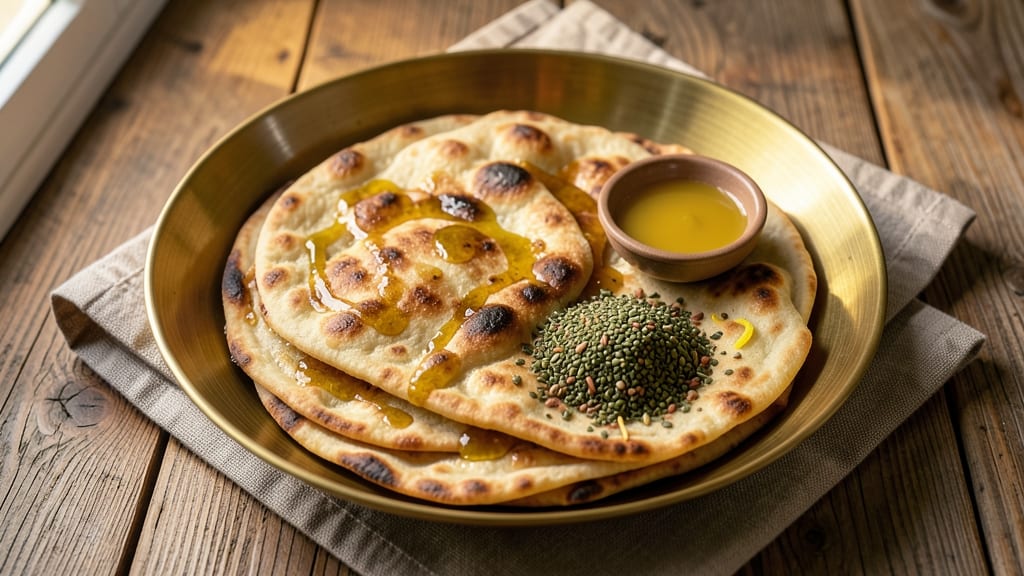
This American Indian flat bread recipe transforms simple flour into a crisp-edged, aromatic delight that pairs perfectly with curries or stands alone as a satisfying snack.
The secret lies in a blend of zaatar and warm spices that infuse the dough with earthy, citrusy depth while the foil-sealed cooking method creates that signature tender-crisp texture.
I developed this version after years of experimenting with traditional techniques—no special equipment needed, just a cast-iron skillet or tawa and a few minutes of patience.
The dough comes together effortlessly with just four basic ingredients, but the magic happens in the rolling and cooking. Pressing the dough into thin, even circles and cooking them over medium-high heat until golden brown creates that perfect balance of crispy edges and soft centers.
The zaatar-spiced oil finish adds an extra layer of flavor that makes every bite irresistible. This method ensures you'll achieve that restaurant-quality texture at home without any shortcuts.
What you'll end up with is a stack of warm, fragrant flat breads that are crisp enough to hold up to rich curries but tender enough to melt in your mouth.
The aroma alone will have your kitchen smelling like an Indian street food stall, and the versatility means you can use them as wraps, side dishes, or even dessert bread. Each piece delivers that perfect combination of warmth, crispness, and aromatic spices that defines authentic Indian flat breads.
Serve these immediately with your favorite curry, chutney, or as a wrap for sandwiches. The foil-sealed cooking method makes them foolproof—no flipping required—and the dough can be made ahead, so you're always ready for a quick, satisfying meal.
Let's get started on creating these delicious flat breads that bring a taste of India to your table.
Ingredients for american indian flat bread
Four simple ingredients transform into aromatic, crisp-edged flat breads with restaurant-quality warmth.
| Ingredient | Amount | Notes |
|---|---|---|
| All-Purpose Flour 🌾 | 3 cups | Spooned and leveled, not packed |
| Instant Yeast 🍞 | ¼ tsp | Active dry works too |
| Salt 🧂 | ¾ tsp | Fine sea or kosher |
| Warm Water 💧 | 1 ¼ cups | 110°F for best activation |
| Zaatar Spice Blend 🌿 | 2 tbsp | Store-bought or homemade mix |
| Extra-Virgin Olive Oil 🫒 | ¼ cup | For dough and finishing |
| Ground Cumin 🌿 | ½ tsp | Toasted for deeper flavor |
| Ground Coriander 🌶️ | ½ tsp | Adds citrusy brightness |
| Heavy Cream 🥛 | 2 tbsp | For extra tenderness |
| Aluminum Foil 📄 | 1 sheet | For sealed cooking |
The zaatar is non-negotiable—it's what gives these flat breads that signature earthy, citrusy aroma. Trader Joe's carries a great blend, but if you're feeling adventurous, mix your own with sumac, sesame seeds, and dried oregano. The flour should be all-purpose, not bread flour—this keeps the texture tender without being too chewy. I always measure mine by spooning into the cup and leveling with a knife. The warm water is key: too hot and you'll kill the yeast, too cold and it won't activate properly. Aim for about 110°F—just warm to the touch.
No zaatar? Mix 1 tbsp dried oregano, 1 tsp sesame seeds, and 1/2 tsp sumac for a close substitute. Running short on olive oil? Vegetable oil works fine, though it won't add that fruity depth. The heavy cream might seem odd, but trust me—it creates that melt-in-your-mouth tenderness that makes these breads irresistible. For the spices, if you can't find ground coriander, substitute with 1/4 tsp cardamom, though the flavor will be slightly different. The dough can be made a day ahead and kept wrapped at room temperature—it actually develops more flavor overnight.
These flat breads are best served fresh, but they'll keep for 2 days in an airtight container if you wrap them in foil. Reheat in a skillet over medium heat for 30 seconds per side. The foil-sealed cooking method is genius—it traps steam for that signature tender-crisp texture. I like to make a big batch and freeze half on a tray before transferring to a bag. They reheat beautifully from frozen, straight from the oven. Perfect for curry nights or snacking with chutney.
Why You'll Love This Recipe
- No-Yeast Struggle: I swear by this recipe because it skips the fuss of waiting for dough to rise. Just mix flour, yeast, salt, and warm water—let it sit for 10 minutes, then roll. That’s it. No clock-watching, no failed rises.
- Zaatar Magic: Between us, that spice blend transforms everything. The sesame, sumac, and garlic hit different—crispy edges, herby warmth, and just enough tang. Drizzle olive oil over warm bread? Absolute game.
- Weeknight Workhorse: This bread pairs with anything: lentil stews, grilled chicken, even just hummus and labneh. Make a double batch on Sundays, toast as needed. My kids grab them straight from the freezer—no reheating required.
- Pocketbook Pleaser: Flour, yeast, salt, water—you’re looking at $3 for a batch that feeds four. Zaatar’s the splurge, but a little goes far. Honestly, it’s the kind of recipe that makes me feel like I’m feeding a crowd without breaking the bank.
Step-by-step instructions for zaatar-spiced flat bread
Here's how to craft these aromatic, crisp-edged flat breads with perfect foil-sealed warmth.
Mix the Dough with Warm Water and Yeast
In a large mixing bowl, combine the 3 cups all-purpose flour, 0.25 tsp instant yeast, 0.75 tsp salt, 0.5 tsp ground cumin, and 0.5 tsp ground coriander. Whisk gently to distribute the spices evenly through the flour—this ensures each bite carries that bright, earthy flavor.
Make a well in the center and pour in the 1.25 cups warm water (about 110°F) and 0.25 cup extra-virgin olive oil. Using a wooden spoon, gradually mix the ingredients until a shaggy dough begins to form. The dough will be sticky at first, but don't add extra flour—this is normal and helps create tender bread.
Knead and Rest the Dough for Flavor Development
Turn the dough onto a lightly floured surface and knead for 5-7 minutes until smooth and elastic. You'll know it's ready when it springs back slightly when pressed. If the dough feels too sticky, wet your hands and continue kneading—adding flour now will make the bread tough.
Place the dough in a lightly oiled bowl, cover with a damp kitchen towel, and let it rest at room temperature for 1 hour. This resting period allows the yeast to activate and the gluten to relax, making the bread easier to roll out later. The dough should nearly double in size by the end of this time.
Divide and Roll the Dough into Flat Breads
After resting, punch down the dough to release any air bubbles, then divide it into 6 equal portions (about 6 ounces each). Roll each portion into a 12-inch circle on a floured surface, keeping the edges slightly thicker than the center. This creates the signature flat bread shape with crispy edges.
For extra flavor, brush each rolled-out dough circle with a light coating of extra-virgin olive oil, then sprinkle with a pinch of zaatar spice blend. The oil helps create a golden crust, while the zaatar adds that signature nutty, herby aroma. Let the dough rest for 10 minutes before cooking to relax the gluten further.
Cook in Foil-Sealed Packages for Even Heat
Preheat your oven to 425°F. Cut a 12-inch square from the aluminum foil sheet and place one flat bread in the center. Fold the foil up around the bread, sealing it completely—this traps steam and creates that signature tender, pillowy interior while keeping the edges crisp.
Place the foil-sealed bread on a baking sheet and bake for 10-12 minutes until the edges are golden brown and the bread sounds hollow when tapped. The foil will puff slightly as the bread cooks, creating that perfect balance of crispy and soft. Remove from the oven and carefully unfold the foil—let the bread cool for 2 minutes before serving.
Finish with Heavy Cream and Zaatar
While the bread is still warm, brush the top with 2 tbsp heavy cream and sprinkle with an additional 1 tbsp zaatar spice blend. The cream adds a luxurious richness, while the zaatar enhances the nutty, herby notes. Serve immediately with your favorite dips or alongside a hearty meal.
Each bread should have a crispy, slightly puffed edge with a soft, pillowy center—the perfect combination of textures. If you notice any edges browning too quickly, tent the bread with foil for the last 2 minutes of cooking to prevent over-browning.
Pro Tips For Making American Indian Flat Bread
- Let Yeast Bloom Quietly: Mix your yeast with just the warm water first—no flour—and wait 5 minutes until it’s frothy before adding the rest. I learned this the hard way when my dough never rose properly because the yeast got overwhelmed by dry ingredients too soon. Trust the bubbles, even if it feels like waiting forever.
- Knead Just Enough: Stop kneading when the dough pulls away cleanly from your hands and springs back slowly—about 8-10 minutes by hand. Overworking it makes the flatbread tough, and underworking it means it won’t hold its shape when rolling. (Yes, even if you’re impatient like me.)
- Roll Thin or Regret It: Aim for ⅛-inch thickness when rolling—thicker bread steams instead of crisping. Use a rolling pin with a slight tilt to keep even pressure, and resist the urge to press too hard in one spot. Uneven thickness = soggy patches.
- Zaatar Needs Oil: Mix your zaatar with about 1 teaspoon of neutral oil (like canola) before brushing it on the dough. Dry zaatar clumps and doesn’t stick—oil makes it cling like a dream and adds a subtle richness. (I was skeptical until I tried it.)
Creative variations of american indian flat bread
Zaatar vs. Garlic Naan
Swap the zaatar for 2 tbsp minced garlic and 1 tbsp dried mint in the dough for a classic garlic naan twist. Brush the rolled-out circles with garlic-infused olive oil (simmer 4 garlic cloves in ¼ cup olive oil for 5 minutes) before baking.
The result? A fragrant, buttery flat bread perfect for scooping up curries or melting with butter. 🌿
Spiced Sweet Flat Bread
Add ½ cup powdered sugar and 1 tsp cardamom to the dough for a sweet version inspired by Indian dessert breads. Roll into 6-inch circles and bake as directed.
Finish with a drizzle of warm honey and a sprinkle of crushed pistachios for a breakfast or snack treat. This works beautifully with tea or chai.
Whole Wheat Twist
Replace half the all-purpose flour with whole wheat flour for a nuttier, fiber-rich version. The dough will be slightly stickier, so add 1 tbsp extra olive oil to keep it pliable.
Roll out slightly thicker (about ¼ inch) to prevent tearing. The flavor deepens with toasting, so bake for 2-3 extra minutes until deeply golden.
Cheesy Flat Bread
Fold ½ cup shredded paneer or mozzarella into each dough circle before sealing in foil. The cheese melts into gooey pockets during baking, creating pockets perfect for dipping. For extra richness, sprinkle with 1 tsp chaat masala after baking. This version is a crowd-pleaser for kids and adults alike.
Herbed Flat Bread Wraps
Roll the dough into 8-inch circles and bake as usual, but brush with 2 tbsp plain yogurt mixed with 1 tbsp lemon juice and 1 tbsp chopped cilantro before serving.
These make excellent wraps for chicken tikka masala or vegetable curries. The yogurt adds a tangy contrast to the warm spices.
Regional Style: Tawa Paratha
For a North Indian-inspired version, cook the flat breads on a hot cast-iron skillet (tawa) instead of baking. Brush with ghee and cook until golden brown on both sides, pressing gently with a clean cloth.
Add ½ tsp ajwain (carom seeds) to the dough for an authentic touch. Serve with mango pickle or dal for a traditional meal.
Nutrition facts
Frequently asked questions
Can I make this flat bread without zaatar?
If you don't have zaatar, mix 1 tbsp dried oregano, 1 tsp sesame seeds, and ½ tsp sumac for a similar flavor. For a simpler version, skip it entirely and focus on the warm spices like cumin and coriander—they still deliver that authentic aroma. The key is balancing the earthy notes with the olive oil for that signature taste.
Why does my dough keep sticking to the surface?
The dough is naturally sticky to create tender bread—don't add extra flour! Wet your hands slightly when handling it, and use a lightly floured surface. If it's too sticky to roll, let it rest 10 extra minutes uncovered to firm up. The heavy cream in the dough also contributes to stickiness, so embrace it for that melt-in-your-mouth texture!
Can I use a skillet instead of foil sealing?
Yes! For a stovetop version, heat a cast-iron skillet over medium-high heat and cook each bread for 2-3 minutes per side until golden. Brush with olive oil and sprinkle zaatar while hot. This method works well for tawa paratha style—just press gently with a clean cloth while cooking for extra crispiness.
How do I store leftover flat bread?
Wrap cooled breads tightly in foil and store at room temperature for 2 days, or freeze for up to 1 month. To reheat, warm in a skillet over medium heat for 30 seconds per side until crispy. The foil-sealed method keeps them fresh longer—just avoid stacking until completely cooled to prevent sogginess.
What's the best way to serve these?
These flat breads shine with curries, chutneys, or as wraps for sandwiches. For a restaurant-style experience, serve with mango pickle and yogurt dip. The crisp edges hold up perfectly to rich sauces, while the soft centers soak them up beautifully. Try them with butter chicken or dal makhani for a complete meal!