
Desserts
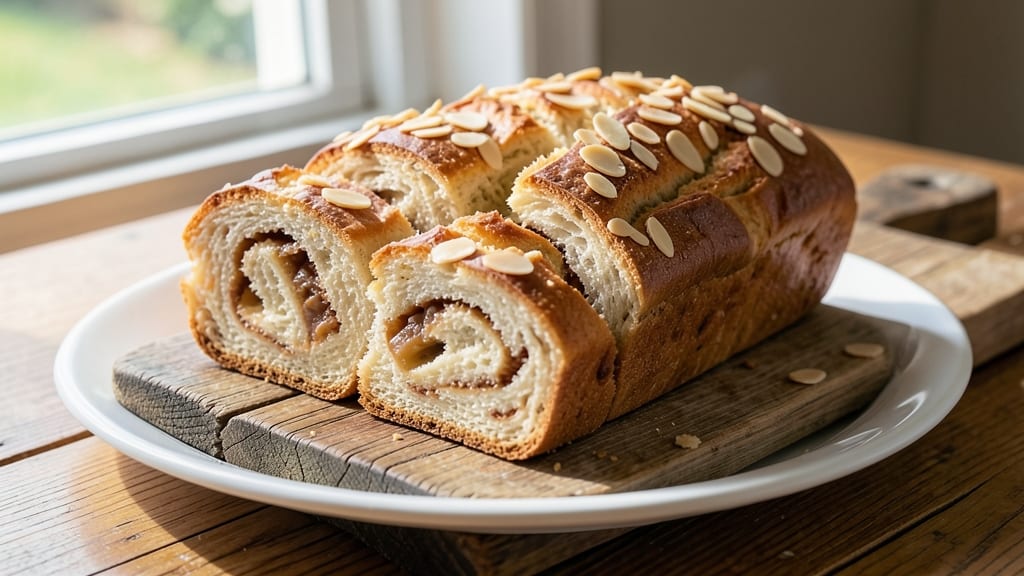
Amaretto bread transforms ordinary loaves into a luxurious dessert with its signature nutty vanilla swirls and buttery layers—this recipe delivers bakery-quality results at home. The secret lies in a yeast-based dough infused with amaretto extract (never raw alcohol) and folded with almond paste for that signature flavor. I've perfected this technique over years of baking, ensuring tender crumb, golden crust, and layers of flavor that disappear faster than you can slice it.
This recipe balances tradition with simplicity: classic yeast dough gets enriched with butter and eggs for richness, while the amaretto-infused filling creates those signature swirls that burst with vanilla-almond aroma. The dough rests twice—once to develop flavor, once to relax for easier shaping—so patience pays off in every tender bite.
For extra indulgence, brush the baked loaf with egg wash or drizzle with amaretto syrup while still warm.
What you'll end up with is a loaf that's soft yet sturdy, with layers of nutty almond paste peeking through buttery golden crust. The aroma alone will have everyone gathering in the kitchen, and each slice reveals that perfect balance of sweetness and nutty depth.
This bread shines as a dessert, breakfast treat, or even a sophisticated coffee accompaniment.
For variations, try adding lemon zest to the filling or topping with toasted sliced almonds before baking. The recipe scales perfectly for gifts or parties—just double the dough and bake in a larger pan. Let's get baking!
Ingredients for amaretto bread
Eight essential ingredients create bakery-quality amaretto bread with signature nutty swirls and golden crust.
| Ingredient | Amount | Notes |
|---|---|---|
| Active Dry Yeast 🍞 | 2 ¼ tsp | One packet for convenience |
| Granulated Sugar 🍚 | ½ cup | For yeast activation |
| Warm Whole Milk 🥛 | 1 ¼ cups | 110°F for yeast activation |
| Unsalted Butter 🧈 | ½ cup | Softened, not melted |
| Large Eggs 🥚 | 2 whole | Room temperature preferred |
| All-Purpose Flour 🌾 | 4 ½ cups | Plus extra for dusting |
| Salt 🧂 | ½ tsp | Diamond Crystal preferred |
| Amaretto Extract 🍒 | 1 tbsp | Not raw amaretto liquor |
| Almond Paste 🥜 | 1 cup | Smooth, not marzipan |
| Vanilla Extract 🌿 | 1 tsp | Pure vanilla preferred |
| Powdered Sugar 🍚 | ¼ cup | For egg wash |
| Toasted Sliced Almonds 🥜 | ¼ cup | Optional topping |
The yeast is the foundation, so King Arthur or Bob's Red Mill brands work best—they activate reliably. Warm the milk to 110°F (just warm to touch) to avoid killing the yeast. For butter, Land O'Lakes unsalted is my go-to, but any brand works. The almond paste should be smooth, not grainy—Ghirardelli or store-brand tubs are perfect. If you can't find amaretto extract, amaretto-flavored liqueur at half the amount works in a pinch, but the extract gives cleaner flavor. Measure flour by scooping and leveling—never packing—to avoid dense bread.
Substitutions are easy: no almond paste? Almond flour plus a splash of almond extract mimics the texture. Running short on vanilla? Double the almond extract for depth. For a richer dough, replace half the milk with heavy cream. The egg wash can be skipped if you prefer a simpler finish, but it adds that signature gloss. If your almonds burn easily, toast them in the oven at 350°F for 5 minutes instead of the stovetop. For extra indulgence, brush the baked loaf with an extra tablespoon of amaretto extract mixed with powdered sugar while still warm.
Store the bread in an airtight container at room temperature for 2-3 days—it keeps best at slightly cooler temps. For longer storage, freeze slices wrapped in plastic for up to 3 months. Reheat slices in a 350°F oven for 5-7 minutes to restore freshness. The dough can be made a day ahead and refrigerated—just let it sit at room temperature for 1 hour before shaping. This bread freezes beautifully too: wrap the baked loaf tightly in foil and freeze for up to 2 months. Thaw overnight at room temperature.
Why You'll Love This Recipe
- No-Knead Magic: I swear by this dough—just mix, let it rise once, and bake. The yeast and warm milk do all the heavy lifting while you sip your morning coffee.
- Almond-Kissed Comfort: That amaretto swirl? It’s like a grown-up dessert hiding in your breakfast bread. The sugar and butter make every bite rich, but the almond flavor keeps it sophisticated.
- Brunch or Snack Star: Toss a slice in the toaster for a quick breakfast, or serve it warm with jam at a weekend brunch. Even my picky teen grabs seconds—no joke.
- Leftovers? More Like Leftovers: This loaf keeps beautifully for days, and slices freeze like a dream. Honestly, I often bake two loaves because it’s just that good—and so easy to reheat.
Step-by-step instructions for amaretto bread
Here's how to create rich, nutty layers with perfect swirls and golden crust.
Activate the Yeast and Mix the Dough
In a large mixing bowl, combine the 1.25 cups warm whole milk (should feel warm to touch but not hot) with the 0.5 cup granulated sugar and 2.25 tsp active dry yeast. Let this sit for 5-10 minutes until it becomes frothy and bubbly—this confirms the yeast is active. If it doesn't bubble, your yeast may be dead, and you'll need to start over.
Once bubbly, add the 0.5 cup softened unsalted butter, 2 whole large eggs, 1 tbsp amaretto extract, and 1 tsp vanilla extract. Mix until the butter is fully incorporated and the mixture is smooth. In a separate bowl, whisk together the 4.5 cups all-purpose flour and 0.5 tsp salt. Gradually add the dry ingredients to the wet mixture, stirring just until combined. The dough will be sticky but shouldn't require extra flour—this is normal for a rich, flavorful bread.
Knead the Dough and Prepare the Almond Paste Filling
Turn the dough onto a lightly floured surface and knead for 5-7 minutes until smooth and elastic. You'll know it's ready when it springs back when pressed gently. If it feels too sticky, wet your hands slightly to prevent sticking. Shape the dough into a rectangle about 12x8 inches and roll it out to a ¼-inch thickness.
In a small bowl, mix the 1 cup almond paste with 2 tablespoons of the reserved flour (from dusting) to make it easier to handle. Spread this mixture evenly over the rolled-out dough, leaving a ½-inch border around the edges. This will create beautiful swirls when rolled. Starting from the long side, tightly roll the dough into a log, pinching the seam to seal.
First Rise and Shape the Loaf
Place the sealed dough log seam-side down in a greased 9x5-inch loaf pan. Cover the pan loosely with plastic wrap and let it rise in a warm place for 1-1.5 hours, or until it has nearly doubled in size. The dough should look puffy and feel springy when pressed lightly with a finger. If it doesn't rise well, your kitchen may be too cold—try placing the pan near a warm oven with the light on.
Once risen, preheat your oven to 350°F. In a small bowl, whisk together the 0.25 cup powdered sugar with 1 tablespoon warm water to create an egg wash substitute. Brush this lightly over the top of the dough. Sprinkle the 0.25 cup toasted sliced almonds evenly over the top if using. Bake for 45-50 minutes until the bread is golden brown and sounds hollow when tapped on the bottom.
Cool and Slice for Maximum Flavor
Remove the bread from the oven and let it cool in the pan for 10 minutes. Then transfer it to a wire rack to cool completely for at least 30 minutes before slicing. This resting time ensures the layers stay intact and the flavors meld together. The bread will be moist and tender with a delicate crumb, and the amaretto-almond aroma will be intoxicating.
Slice the bread into ½-inch thick pieces for serving. The swirls should be visible and the texture rich, with a slight chew from the almond paste. Store any leftovers in an airtight container at room temperature for up to 3 days, or freeze for up to 3 months. For best results, reheat slices in the oven at 300°F for 5-10 minutes to restore freshness.
Pro Tips For Making Amaretto Bread
- Bloom the Yeast First: Skip mixing yeast with dry ingredients—dissolve it in the warm milk first with a pinch of sugar. This guarantees it’s active before you commit to the dough, and you’ll spot trouble (like slow bubbles) right away.
- Use Room-Temp Eggs: Cold eggs shock the dough and slow fermentation. Let them sit out for 30 minutes before cracking—your bread will rise faster and develop that signature tender crumb.
- Don’t Overwork the Dough: Once the dough comes together, stop kneading when it’s just shy of smooth. Overmixing develops gluten too much, and your bread turns out dense instead of light and airy.
- Proof in a Warm Spot: Place the dough in a slightly warm oven (turned off with the light on) for the final rise. This mimics a proofing box and cuts rise time by 20–30 minutes—no fancy equipment needed.
Common mistakes when making your amaretto bread
Over-Kneading the Dough
I've made this mistake more times than I'd admit—over-kneading turns your tender amaretto bread into a tough, chewy brick. The dough should be smooth and elastic after 5-7 minutes of kneading, not rock-hard. Test it by pressing gently: if it springs back immediately, it's perfect.
If it resists or feels dense, you've gone too far. The sticky texture is normal for this rich dough, so resist the urge to add extra flour during kneading.
To fix it, if your dough feels overworked, let it rest for 15-20 minutes before shaping. This relaxation period helps the gluten relax slightly. For next time, set a timer and focus on gentle, rhythmic kneading—this bread rewards patience over brute force. 💪
Skipping the First Rise
Rushing the 1-1.5 hour first rise is a surefire way to end up with dense, flavorless bread. This step isn't just about rising—it's where the yeast develops those signature flavors that make amaretto bread special.
If your kitchen is cold, place the dough near a warm oven with the light on to create a cozy environment. Never skip this step, even if you're eager to bake!
If your dough doesn't rise well, check your yeast first—it might be expired. Also, make sure your milk is truly warm (110°F) and your sugar is fully dissolved.
For future bakes, I recommend using a proofing box or even your oven with the light on to maintain consistent warmth. Trust me, the wait is worth it for that perfect rise. ✨
Uneven Almond Paste Distribution
The magic of amaretto bread lies in those beautiful swirls of almond paste, but uneven distribution can ruin the effect. Spread the almond paste mixture thinly and evenly, leaving that ½-inch border around the edges.
If you pile it in the center, you'll get thick, uneven layers when rolled. For a professional look, use a spatula to smooth the paste to an even ¼-inch thickness.
If your swirls look lumpy after rolling, don't panic—just gently press down on any thick spots before sealing the log. For extra precision, chill the dough for 15 minutes before rolling to make it easier to handle. The result should be consistent, eye-catching swirls throughout every slice. 🌟
Baking at Wrong Temperature
Baking at 350°F is crucial—any hotter and your bread will brown too quickly before cooking through, while cooler temps leave it dense. Use an oven thermometer to verify your oven's accuracy, as many run hot or cold.
Place the loaf on the middle rack for even heat distribution, and avoid opening the oven door during baking to prevent temperature fluctuations.
If your bread comes out pale or underbaked, increase the temperature to 375°F next time and check for doneness at 40 minutes. For a darker crust, try 325°F with a broiler finish in the last 2 minutes. The internal temperature should reach 190-200°F for perfect doneness. 🌡️
Underestimating Cooling Time
I can't tell you how many times I've sliced bread too soon, only to have it fall apart or lose its shape. Amaretto bread needs that full 30-minute cooling time on a wire rack to set properly.
The layers need time to firm up, and the flavors need to meld. If you're impatient, at least wait 15 minutes before slicing—trust me, it makes all the difference.
For even better results, let the bread cool completely before storing. If you're in a hurry, wrap it in a clean kitchen towel while it cools to maintain moisture. The first slice after proper cooling will be your reward—perfect layers, tender crumb, and that irresistible amaretto-almond aroma. 💛
Nutrition facts
Frequently asked questions
Can I substitute amaretto extract with actual amaretto liqueur?
Yes, but use caution! Replace the 1 tablespoon extract with 1 teaspoon amaretto liqueur—the alcohol content is much stronger. For best results, let the dough rest 15 minutes after adding it to allow the alcohol to evaporate slightly. This prevents a harsh flavor.
Why does my almond paste filling look too thick?
Almond paste can be stubborn! Mix it with 1-2 tablespoons flour (as shown in the recipe) to make it spreadable. If it's still too thick, add ½ teaspoon almond extract to help it glide smoothly. Keep it thin—thick paste creates uneven swirls.
How do I make this bread without a loaf pan?
Shape the dough into a round or oval instead of a log. Place it on a parchment-lined baking sheet and bake at 350°F for 40-45 minutes. For a rustic look, brush with egg wash and sprinkle with almonds before baking. The texture will be slightly denser but still delicious!
Can I add chocolate chips to this recipe?
Fold in ½ cup chocolate chips with the almond paste filling or sprinkle them on top before baking. Dark chocolate pairs beautifully with the nutty flavors. For a decadent twist, use white chocolate chips with orange zest.
How do I store leftovers to keep them fresh?
Wrap individual slices in plastic wrap and store in an airtight container at room temperature for 2-3 days. For longer storage, freeze slices for up to 3 months. Reheat in a 300°F oven for 5-7 minutes to restore softness. The bread freezes beautifully too—wrap the whole loaf tightly in foil.