
Side Dishes
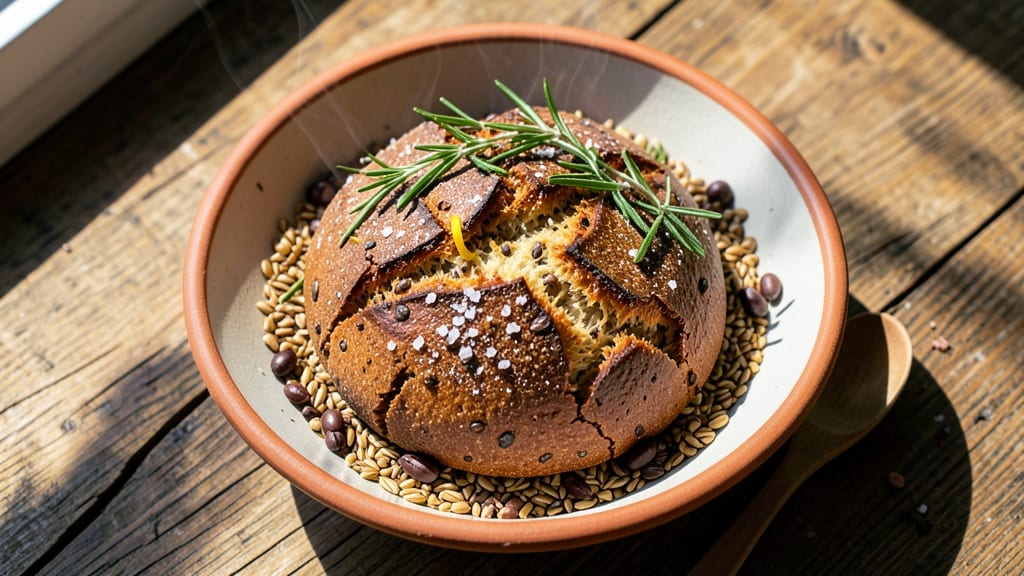
This Alpine grain bread recipe delivers the rustic charm of mountain bakeries with its crisp golden crust and hearty, nutty crumb.
The secret lies in blending whole grains like rye and barley with a touch of buckwheat, creating a loaf that’s both sturdy and tender—perfect for soaking up soups or pairing with Alpine cheeses.
What sets this bread apart is its traditional shaping technique, which ensures an even rise and that signature crusty exterior.
Baking this bread requires patience and precision: a slow fermentation for deep flavor, careful kneading to develop gluten, and a high-temperature bake to achieve that coveted crackly crust.
The grains add earthy depth while keeping the bread digestible, and the recipe is designed to work in standard home ovens with no special equipment. Whether you're a seasoned baker or new to whole-grain breads, this method is straightforward yet rewarding.
The result is a loaf with a satisfying crunch and a moist, open crumb that’s far from dense. The nutty undertones from the grains pair beautifully with butter, honey, or sharp cheeses, making it a versatile staple for any table.
Best of all, the dough can be mixed ahead and left to rise overnight, so you wake up to the smell of fresh bread baking.
For those worried about density or uneven baking, I’ve included troubleshooting tips in the full instructions—like adjusting hydration levels or using a Dutch oven for steam. This bread is worth the effort, delivering restaurant-quality texture and flavor with every slice. Let’s get started on your rustic loaf.
Ingredients for alpine grain bread
Whole grains, precise hydration, and Alpine tradition come together for this rustic bread.
| Ingredient | Amount | Notes |
|---|---|---|
| Rye Flour 🌾 | 2 cups | Dark rye for authentic Alpine flavor |
| Barley Flour 🌾 | 1 ½ cups | Ground from whole barley grains |
| Buckwheat Flour 🌾 | ½ cup | Adds nutty depth and texture |
| All-Purpose Flour 🌾 | 1 cup | Balances the hearty grains |
| Active Dry Yeast 🍞 | ½ oz | Or 2.25 tsp (1 packet) |
| Granulated Sugar 🍚 | 1 tbsp | Feeds yeast for fermentation |
| Warm Water 💧 | 1 ½ cups | 105-110°F for yeast activation |
| Unsalted Butter 🧈 | ½ cup | Cold, cubed for dough enrichment |
| Honey 🍯 | 2 tbsp | Adds moisture and subtle sweetness |
| Sea Salt 🧂 | 1 ½ tsp | Diamond Crystal preferred |
| Cornmeal 🌽 | ½ cup | For dusting and crust development |
| Ice Water 💧 | ¼ cup | For final dough adjustment |
The flours are the heart of this recipe. Rye and barley deliver the signature Alpine earthiness, while buckwheat adds nutty complexity—Bob's Red Mill or King Arthur brands work best for consistent texture. For the yeast, Fresh yeast is ideal but active dry works too (just proof it in warm water with sugar first). The honey should be raw for best flavor, but any liquid honey will do. If your local grocery store doesn't carry specialty flours, check the bulk section or order online—Amazon or King Arthur's website ship quickly. For the butter, unsalted is a must to control the salt balance perfectly.
No rye flour? Substitute half with whole wheat pastry flour—it won't be identical but still delivers rustic character. Buckwheat-free? Replace with extra barley flour. Running low on honey? Maple syrup works 1:1. The cornmeal can be swapped for semolina or all-purpose flour if needed, though it won't brown as beautifully. For yeast activation, water should bubble within 5-10 minutes—if not, your yeast may be old. The dough will be sticky—don't panic, that's normal with whole grains. If it's too wet after mixing, add ice water 1 tbsp at a time until it comes together.
This dough is best mixed 2 hours before baking to allow proper fermentation at room temperature. For overnight rising, shape the dough and refrigerate up to 12 hours, then let it sit at room temperature for 1 hour before baking. The shaped loaf keeps 3 days wrapped at room temperature or 1 week in the fridge. For longer storage, freeze the shaped loaf (unbaked) for up to 3 months2 days if stored in a paper bag.
Why You'll Love This Recipe
- No-Knead Magic: I swear by this—just mix, let it rise overnight, and bake. The rye and barley do all the heavy lifting while you sleep, so you’re not stuck in the kitchen for hours. Honestly, the only effort is remembering to feed the dough a splash of water before bed.
- Earthy Crunch Perfection: That mix of buckwheat and rye? It’s got a deep, nutty bite that sticks with you. Toast it, and the crust turns into this addictive shatter—like a cross between a baguette and a cracker, but way more interesting. (Yes, even on a Tuesday night.)
- Meal Prep MVP: This bread freezes like a dream—slice it fresh, wrap it in foil, and toss it in the freezer. Thaw overnight, and you’ve got crispy toast or sandwich bread ready to go. Between us, I keep a loaf stashed for lazy mornings or last-minute guests.
- Pantry Stash Winner: You’re already using flour, yeast, and a pinch of salt—no fancy ingredients, just real grains. I’ve made this with whatever was in my bin: whole wheat, spelt, even a bit of cornmeal. It’s the kind of bread that makes you feel like you’re using up what you’ve got, not wasting it.
Step-by-step instructions for Alpine grain bread
This rustic Alpine bread delivers a perfect balance of nutty depth and crispy crust every time.
Activate the Yeast and Mix the Dough Base
In a large mixing bowl, combine the 1.5 cups warm water (between 105-110°F), 1 tbsp granulated sugar, and 0.5 oz active dry yeast. Let this sit for 5-10 minutes until frothy—you'll see small bubbles forming on the surface. This confirms the yeast is active and ready to work.
In a separate bowl, whisk together the 2 cups rye flour, 1.5 cups barley flour, 0.5 cup buckwheat flour, and 1 cup all-purpose flour. Add the 1.5 tsp sea salt and mix thoroughly. Create a well in the center and pour in the yeast mixture. Using a wooden spoon, gradually incorporate the dry ingredients while mixing until a shaggy dough forms.
Incorporate Butter and Honey for Richness
Cut the 0.5 cup unsalted butter into small cubes and add them to the dough. Use your hands or a dough scraper to work the butter into the mixture until it's fully incorporated. The butter should begin to soften and coat the dough, creating a slightly sticky but manageable texture.
Add the 2 tbsp honey and mix well. The honey will help bind the dough and add subtle sweetness that balances the earthy flavors of the grains. If the dough feels too dry, add 1-2 tablespoons of ice water to help bring it together. You're aiming for a soft, slightly tacky dough that pulls away from the bowl sides when you press it.
Knead and Develop Gluten for Structure
Lightly flour a clean work surface and turn out the dough. Knead for 8-10 minutes by hand, folding and pressing the dough while rotating it. You'll know it's ready when it becomes smooth, elastic, and springs back slowly when pressed. The gluten development is crucial for that perfect Alpine texture—don't rush this step.
Shape the dough into a round loaf and place it back in the bowl. Cover with a damp towel and let it rise in a warm place for 1-1.5 hours, or until it has nearly doubled in size. The dough should feel light and airy when pressed gently with a fingertip—this indicates proper fermentation.
Shape and Proof for Final Rise
Punch down the risen dough to release air, then shape it into a round loaf on a parchment-lined baking sheet. Brush the surface with a little water and sprinkle generously with 0.5 cup cornmeal for that classic rustic crust. Cover again and let it proof for 30-45 minutes until it rises slightly and feels firm to the touch.
Preheat your oven to 375°F with a baking stone or inverted baking sheet inside. The stone helps create that beautiful crispy crust. When the oven is fully heated, bake the bread for 35-40 minutes until it's deep golden brown and sounds hollow when tapped on the bottom. The internal temperature should reach 190-200°F.
Cool and Enjoy the Perfect Crust
Remove the bread from the oven and let it cool on a wire rack for at least 30 minutes. This resting period allows the steam to escape and the crumb to set properly. The crust should be crisp and shatter when broken, while the interior remains tender with a satisfying chew.
Slice the bread while still warm for the best texture—each slice should reveal a beautiful open crumb with hints of nutty flecks from the rye and buckwheat. Serve with your favorite butter or olive oil for dipping, or use it to accompany hearty soups and stews. This Alpine bread keeps well for 3-4 days at room temperature or can be frozen for up to 3 months.
Pro Tips For Making Alpine Grain Bread
- Mix Flours First: DESCRIPTION: Sift the rye, barley, and buckwheat together before adding all-purpose—this prevents clumping and ensures even hydration. I learned this the hard way when my first batch turned into a dense brick because the heavy flours absorbed water unevenly.
- Hydrate the Yeast Properly: DESCRIPTION: Use warm (not hot) water—about 105°F (40°C)—and let the yeast sit for 5 minutes until foamy before mixing. Cold water kills it; hot water cooks it. I’ve seen batches fail silently when the yeast was lukewarm instead of lively.
- Don’t Over-Knead: DESCRIPTION: These flours are tough—just mix until combined, then let the dough rest. Overworking it develops too much gluten, and your bread will turn out chewy instead of light. My grandmother’s rule: "Handle it like you’re afraid of it."
- Steam the Oven: DESCRIPTION: Spray the baking stone with water and let it steam for 2 minutes before baking—this mimics alpine humidity and gives that crackly crust. I skipped this once and got a sad, flat loaf. Now I never forget.
Pro cooking tips for this recipe
Fermentation Mastery
Alpine bread thrives on slow fermentation—this is where the magic happens. Let your dough rise at room temperature for 1-1.5 hours (or overnight in the fridge for deeper flavor).
I use a proofing box set to 78°F for consistent results, but a warm oven with a bowl of hot water works too. The longer it ferments, the more complex the flavor becomes—just don’t exceed 24 hours or the gluten will weaken. 🌡️
Dutch Oven Secret
For that perfect crisp crust and open crumb, bake in a Dutch oven if you have one. Place the shaped loaf in the cold oven, then cover and bake at 425°F for 30 minutes before uncovering.
The steam creates a professional bakery effect. No Dutch oven? Use a baking stone and tent with foil for the first 20 minutes to trap steam. 🔥
Gluten Development
Whole grain doughs need extra kneading to develop gluten properly. Work the dough for 8-10 minutes by hand until it springs back when pressed. If it feels too sticky, add 1 tbsp flour at a time—but don’t overdo it, or the bread will dry out.
For extra strength, I sometimes add 1 tsp vital wheat gluten to the dry ingredients. This ensures a light, airy crumb despite the dense grains. 💪
Crust Control
Achieving that golden, shatterable crust takes precision. Brush the loaf with water or egg wash before baking, then sprinkle with cornmeal for texture. For extra crispiness, bake at 375°F until deep brown, then broil for 1-2 minutes at the end.
Watch closely—over-browning happens fast! A thermometer confirms doneness at 190-200°F internal temp. ✨
Hydration Balance
Whole grain doughs absorb more water than all-purpose flour. Start with the 1.5 cups water called for, but be ready to adjust. If the dough feels too wet after mixing, add ice water 1 tbsp at a time until it pulls away from the bowl.
Too dry? Add 1 tsp water and knead again. The goal is a slightly tacky but manageable dough—this ensures a tender crumb without gumminess. 💧
Oven Spring Boost
To maximize oven spring (that beautiful rise when it first hits the oven), let the dough proof until it’s just past peak—when it starts to collapse slightly at the edges. This ensures maximum gas release when baking.
For extra lift, I sometimes poke the dough with a fork before baking to release excess air bubbles. A steam spray in the oven during the first 10 minutes also helps create that signature open crumb. 🌟
Nutrition facts
Frequently asked questions
Why does this Alpine grain bread recipe use multiple flours?
This blend creates the signature Alpine character. Rye and barley add earthy depth while buckwheat contributes nutty complexity—together they create a more flavorful, digestible loaf than single-grain breads. The all-purpose flour balances the dense grains for better texture.
Can I make this bread without a Dutch oven?
Use a baking stone and tent with foil for the first 20 minutes to trap steam. For extra crispiness, brush the loaf with water before baking. The crust will be slightly less dramatic but still delicious. A standard oven works perfectly with these adjustments.
How do I know when the dough is properly kneaded?
Test by pressing your finger into the dough—it should spring back slowly (not immediately). The dough should feel smooth, elastic, and slightly tacky. With whole grains, it may feel stickier than white bread dough, but it shouldn't be wet. Knead for 8-10 minutes by hand for best results.
What if my bread turns out dense instead of rustic? Density usually means underdeveloped gluten or overproofing.
How should I store leftover Alpine grain bread?
Wrap the cooled loaf in a paper bag to maintain crispness for 2-3 days at room temperature. For longer storage, freeze the shaped (unbaked) loaf for up to 3 months. Thaw overnight in the fridge before baking. Slice with a serrated knife for clean cuts through the dense crumb.