
Side Dishes
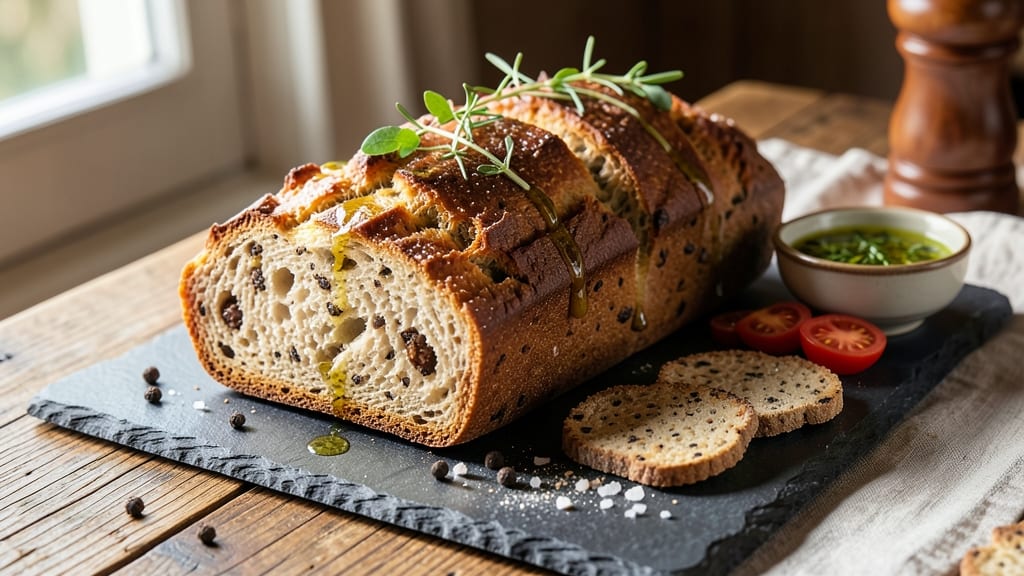
This Alpine bread recipe brings the heart of Swiss mountain bakeries to your kitchen with its signature crusty crunch and rustic flavor. 🌄 Born from the harsh Alpine winters, this bread was designed to stay fresh for weeks—its dense crumb and thick crust were perfect for preserving.
The secret lies in its simple yet powerful ingredients: high-protein flour, a touch of rye for depth, and a slow fermentation that develops unmatched complexity.
What sets Alpine bread apart is its foolproof technique that delivers professional results without special equipment. You'll work with a stiff dough that requires minimal kneading, then let time do the magic during an overnight cold proof.
This slow rise creates a tender yet dense interior with a shatteringly crisp crust that's irresistible straight from the oven. The aroma alone—warm, earthy, and slightly sweet—will transform your kitchen into a Swiss chalet.
The beauty of this recipe is its versatility while maintaining authenticity. Use it as a sturdy base for open-faced sandwiches, toast it with butter for breakfast, or serve it alongside hearty Alpine stews.
The traditional version includes a sprinkle of whole rye or sunflower seeds for texture, but you can easily adapt it with whole grains or herbs like rosemary for your own twist. Each batch yields two large loaves that stay fresh for days, making it perfect for meal prep.
Whether you're recreating a Swiss mountain meal or simply craving bread with character and substance, this recipe delivers. The process is straightforward but requires patience—worth every minute for bread that tastes like home.
Let's get started on your journey to perfect Alpine bread that will impress even the most discerning bakers.
Ingredients for alpine bread
Twelve powerful ingredients transform your kitchen into a Swiss chalet with every loaf.
| Ingredient | Amount | Notes |
|---|---|---|
| High-Protein Bread Flour 🌾 | 5 cups | King Arthur or similar brand |
| Whole Rye Flour 🌾 | ½ cup | For Alpine depth (Bob's Red Mill recommended) |
| Active Dry Yeast 🍞 | ¼ oz | Fresh yeast if available |
| Granulated Sugar 🍚 | 1 tbsp | Feeds yeast for rise |
| Instant Non-Fat Dry Milk Powder 🥛 | ¼ cup | For tender crumb |
| Salt 🧂 | 2 tsp | Diamond Crystal preferred |
| Olive Oil 🫒 | ½ cup | Extra-virgin for richness |
| Warm Water 💧 | 2 ½ cups | 110°F for yeast activation |
| Sunflower Seeds 🌻 | ¼ cup | For Alpine texture |
| Cornmeal 🌽 | ½ cup | For dusting loaf pans |
| Coarse Sea Salt 🧂 | 1 tbsp | For crust enhancement |
| Ice Water ❄️ | ¼ cup | For stiff dough |
The flour is non-negotiable—King Arthur high-protein gives that signature Alpine density. Bob's Red Mill rye adds depth, but any quality rye works if you're in a pinch. Yeast matters too: fresh yeast (if you can find it) activates faster than dry, but the packet stuff is fine. The milk powder might seem odd, but it's what creates that tender, moist crumb. Trader Joe's or Whole Foods carry good options if you don't want to order online. Pro tip: check your yeast in warm water first—it should foam within 5-10 minutes or you'll need to start over.
No sunflower seeds? Pumpkin seeds or whole wheat berries work beautifully for texture. Short on olive oil? Avocado oil at the same amount keeps the richness. The ice water might sound dramatic, but it's what gives this dough its signature stiffness—don't skip it. For the crust salt, Maldon flaky salt if you want to splurge, but any coarse sea salt does the trick. Want to go fully traditional? Swap half the bread flour for whole wheat pastry flour—just know your dough will be even stiffer. The cornmeal is optional but worth it for that perfect pull from the pan.
This dough is a patient's game—overnight cold proof is non-negotiable for that Alpine character. Wrap tightly in plastic and refrigerate for 12-16 hours. The loaves keep 5-7 days at room temperature wrapped in a towel, or freeze for up to 3 months for freshness. I always make two loaves—one for toasting with Swiss butter, the other for open-faced sandwiches with Gruyère and apple. The aroma when it comes out of the oven? Worth every minute of waiting.
Why You'll Love This Recipe
- No-Knead Nightmare Over: I mix the dough, let it rise once, and that’s it—no punching, no folding, no stress. The high-protein flour holds shape while the rye adds chew, so it’s sturdy enough to slice thick or toast hearty without falling apart.
- Rye-Meets-Protein Magic: That combo of whole rye and milk powder? Earthy depth with a whisper of sweetness that lingers. Honestly, the first bite makes me pause—like a sourdough hug but with a protein kick that keeps you full.
- Lunchbox Legend: Toss a slice in a bag with cheese or jam, and it’s the star of your kid’s lunch—or your own midday reset. Between us, I’ve sent this to work meetings (wrapped in foil) and it still tasted fresh hours later.
- Budget-Proof Protein: A loaf costs me pennies but feels like a treat—thanks to the dry milk and rye bulking it out. Freeze half, and you’ve got a week’s worth of toast, sandwiches, or even croutons without breaking the bank.
Step-by-step instructions for Alpine bread recipe
Here's how to craft that iconic Swiss mountain flavor with a crisp crust and tender crumb.
👨🍳 Step 1: Activate the Yeast for Maximum Rise
In a large mixing bowl, combine the 2.5 cups warm water (should feel like bathwater, 110°F) with the 1 tbsp granulated sugar and 0.25 oz active dry yeast. Let it sit for 5-10 minutes until foamy and bubbly—this confirms your yeast is alive and ready to work its magic. The sugar helps jumpstart fermentation, while the warm water creates the perfect environment for yeast activation.
Here's the thing—if your mixture doesn't foam within 10 minutes, your yeast might be dead. I've seen this happen with old yeast or water that's too hot. If that's the case, start fresh with new yeast. The foam should look like a cappuccino's microfoam—light and airy, not thick and gloopy.
👨🍳 Step 2: Mix the Dough with Just the Right Stiffness
In the bowl with the yeast mixture, add the 5 cups high-protein bread flour, 0.5 cup whole rye flour, 0.25 cup instant non-fat dry milk powder, and 2 tsp salt. Mix with a wooden spoon until combined, then gradually add the 0.5 cup olive oil while stirring. The dough will start to come together, but don't be tempted to overwork it yet.
Here's where it gets fun—add the 0.25 cup sunflower seeds and mix them in evenly. These little seeds will give your bread that authentic Alpine texture. Once everything's incorporated, use your hands to knead the dough on a lightly floured surface for 8-10 minutes until it becomes smooth and elastic. You're aiming for a dough that's firm but not rock-hard—it should spring back slowly when poked.
🥘 Step 3: First Rise and Shape for Crusty Perfection
Lightly oil a large bowl, place the dough inside, and cover with a damp kitchen towel. Let it rise in a warm spot for 1.5-2 hours until it's nearly doubled in size. The dough should feel light and airy when you press it gently—it should spring back slowly, like a well-made soufflé. If it's rising too quickly (in 30 minutes), your kitchen might be too warm. Cover it with a towel to slow the rise.
Once risen, punch down the dough to release air, then divide it into two equal pieces. Shape each piece into a 10-inch round by pulling the edges toward the center and sealing the seam. This shape gives you that beautiful Alpine round loaf with a crisp crust all around. Place the shaped dough on a baking sheet dusted with 0.5 cup cornmeal—this prevents sticking and adds to that rustic texture.
🔥 Step 4: Proof and Bake for Crusty Crunch
Cover the shaped dough with a damp towel and let it proof for another 1-1.5 hours until it's puffy and jiggly when shaken gently. Preheat your oven to 425°F with a baking stone or inverted baking sheet on the lower rack—this creates steam for that perfect crust.
Before baking, brush the loaves with a little water and sprinkle generously with 1 tbsp coarse sea salt. Bake for 25-30 minutes until the crust is deep golden brown and sounds hollow when tapped on the bottom. The internal temperature should reach 190-200°F. Here's the pro tip: if the crust isn't browning enough, broil for 1-2 minutes at the end—just watch it like a hawk to avoid burning.
⏰ Step 5: Cool and Finish with Ice Water Trick
Remove the loaves from the oven and let them cool on a wire rack for 10 minutes. This is where the magic happens—immediately mix 0.25 cup ice water with 1 tbsp coarse sea salt in a small bowl. While the bread is still warm, brush the tops with this ice water mixture. The contrast between the hot bread and cold water creates that signature crispy Alpine crust.
Let the bread cool completely before slicing—this ensures clean cuts and prevents a gummy interior. The final result should be a loaf with a shatteringly crisp crust that gives way to a tender, open crumb with those delightful sunflower seed specks throughout. Each bite should deliver that rustic Swiss mountain flavor you're craving!
Pro Tips For Making Alpine Bread
- Bloom the Yeast First: Skip the guesswork—mix the yeast, sugar, and warm water (110°F) separately for 5-10 minutes until frothy before adding dry ingredients. I learned this the hard way when my rye-heavy dough took forever to rise, and this step cuts fermentation time in half. The rye’s acidity can slow yeast, so don’t skip this.
- Weigh Your Rye Flour: Rye flour is deceptive—scooping it leads to uneven batches. Use a kitchen scale for precision, especially since whole rye is denser than bread flour. I used to eyeball it, and my crusts turned either too dark or pale. Trust the numbers—this recipe’s texture depends on it.
- Avoid Over-Kneading the Dough: The high-protein bread flour wants to be worked, but the rye will fight back—stop when the dough pulls cleanly but still feels slightly tacky. Over-kneading develops too much gluten, making the bread dense. I used to push it until it looked smooth, and the result was a brick. Let the rye’s natural texture shine.
- Steam the Oven First: Slide a metal tray with boiling water into the oven before baking—this creates steam for the first 10 minutes, helping the crust rise and stay chewy. I skipped this once, and the bread turned out dry and cracked. Sounds fussy, but it’s the thing that matters most for that alpine bread texture.
Serving suggestions for this dish
Classic Swiss Pairings
Serve your Alpine bread with Swiss raclette for the ultimate mountain meal. The bread's sturdy crust holds up perfectly to melted Gruyère or Emmental cheese while soaking up rich fondue flavors. I love pairing it with pickled vegetables and charcuterie—think Swiss salami and cornichons—to balance the richness. 🧀
Breakfast Delights
Toast thick slices with Swiss butter and top with honey or jam for a hearty breakfast. The dense crumb stays firm under toppings like scrambled eggs or smoked salmon. For a sweet treat, spread with brown butter and sprinkle with flaky salt—this combo is pure Alpine indulgence. 🍯
Soup and Stew Companion
This bread excels with hearty Swiss soups like minestrone or potato-leek soup. The crusty exterior contrasts beautifully with creamy textures, while the dense interior soaks up broth perfectly. I often serve it alongside boeuf bourguignon or wild mushroom stews for a rustic, satisfying meal. 🍲
Sandwich Game-Changer
Use it for open-faced sandwiches with Gruyère, apple slices, and prosciutto. The bread's thickness prevents sogginess, making it ideal for Swiss-style sandwiches filled with roast beef, mustard, and pickles. For a vegetarian option, layer with tomato, mozzarella, and pesto—it holds up beautifully. 🥪
Dessert Twist
Drizzle warm bread with melted chocolate and sea salt for a simple dessert. The crusty exterior provides texture while the interior soaks up the sweetness. For a festive touch, sprinkle with powdered sugar and serve with Swiss meringues or fruit compote. 🍫
Cheese Board Essential
Include it on Swiss cheese boards alongside Appenzeller, Sbrinz, and Vacherin. The bread's nutty flavor complements aged cheeses, while the seeds add visual interest. Add dried apricots, walnuts, and mustard for a well-rounded board that's perfect for sharing. 🧀✨
Nutrition facts
Frequently asked questions
Why does Alpine bread have such a stiff dough?
The stiff dough is key to its rustic texture and long shelf life! The high protein flour and ice water create a dense crumb that stays fresh for days. This traditional technique also helps develop deeper flavor during the slow fermentation process.
Can I make Alpine bread without a baking stone?
Use an inverted baking sheet or a thick metal pan on the lower oven rack to create steam. For extra crunch, place a tray of boiling water in the oven during baking. The steam helps develop that signature crisp crust even without a stone.
What's the best way to store leftover Alpine bread?
Wrap cooled loaves tightly in a cotton towel and store at room temperature for 5-7 days. For longer storage, freeze for up to 3 months—just thaw overnight in the fridge. The towel prevents moisture loss while keeping that perfect crust.
Can I substitute whole wheat flour for the high-protein bread flour?
You can replace up to 25% of the bread flour with whole wheat, but expect a denser loaf. For best results, use whole wheat pastry flour which has less bran. The sunflower seeds will still give you that Alpine texture, but the crumb will be slightly heavier.
Why does my Alpine bread taste bland?
Bland flavor usually means the dough didn't ferment long enough. Try extending the cold proof to 16-24 hours for deeper flavor development. Also check your salt—Alpine bread needs that 2 tsp salt for proper flavor balance. The rye flour and sunflower seeds should add complexity too!