
Side Dishes
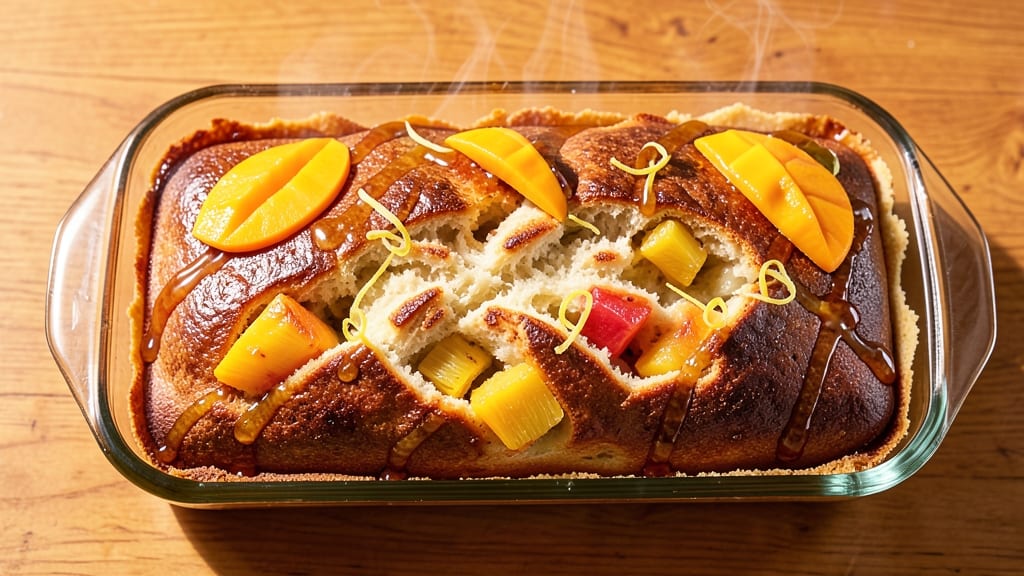
This aloha bread recipe transports you to Hawaii with every bite—a buttery, golden loaf stuffed with tropical fruit and baked to perfection. The secret lies in a rich, yeast-infused dough that yields a tender crumb and crisp crust, while the fruit filling adds bursts of juicy sweetness.
I've perfected this version after years of baking, ensuring the dough rises just right and the fruit stays tender without turning mushy.
The beauty of aloha bread is its versatility—whether you shape it into a traditional braided loaf or a round bouquet, the result is always impressive.
The dough requires patience (a slow rise and gentle kneading), but the reward is worth it: a loaf with a caramelized crust that cracks beautifully when sliced. The tropical fruit filling—often pineapple or mango—adds moisture and sweetness, balancing the buttery richness of the dough.
What sets this recipe apart is the balance of textures: the flaky crust, the soft yet slightly chewy interior, and the juicy fruit pockets that melt in your mouth. It's the kind of bread that disappears quickly, perfect for breakfast, dessert, or even as a showstopping centerpiece for brunch.
The aroma alone—warm, buttery, and fruity—will have everyone gathering around the table.
Once baked, dust with powdered sugar or drizzle with a simple glaze for extra elegance. This recipe delivers restaurant-quality results at home, with a method that's approachable yet impressive. Let's get started on creating your own tropical masterpiece.
Ingredients for aloha bread
Buttery dough and tropical fruit—this loaf brings Hawaii to your kitchen with minimal effort.
| Ingredient | Amount | Notes |
|---|---|---|
| All-Purpose Flour 🌾 | 4 cups | Spooned and leveled |
| Granulated Sugar 🍚 | ¼ cup | For dough sweetness |
| Active Dry Yeast 🍞 | 2 ¼ tsp | Or 1 packet instant yeast |
| Salt 🧂 | ½ tsp | Kosher or sea salt |
| Unsalted Butter 🧈 | ½ cup | Cold, cubed for dough |
| Large Eggs 🥚 | 1 whole | Room temperature |
| Whole Milk 🥛 | ½ cup | Warmed slightly |
| Pineapple Chunks 🍍 | 1 ½ cups | Fresh or canned, drained |
| Mango Chunks 🥭 | 1 cup | Fresh or frozen, thawed |
| Powdered Sugar 🍚 | 2 tbsp | For dusting and glaze |
| Vanilla Extract 🍯 | 1 tsp | Pure vanilla for flavor |
| Lemon Zest 🍋 | 1 tsp | Brightens the fruit |
| Honey 🍯 | 1 tbsp | For fruit filling |
| Cornstarch 🌾 | 1 tsp | For fruit filling |
The flour is your foundation, so grab King Arthur or Gold Medal for the best rise. Yeast is non-negotiable here—if it's past its expiration, toss it. For the butter, Land O'Lakes or Plugrá work perfectly, but avoid anything with salt added. The tropical fruit filling is what makes this special, so Trader Joe's has great pre-cut pineapple and mango if you're short on time. Fresh is ideal, but frozen works too—just thaw and drain well. I always double-check my fruit for any hard or mushy pieces, because nobody wants a bite of that.
No pineapple? Papaya or peaches work beautifully—just adjust the sweetness with a little more honey if needed. Fresh mango is best, but canned mango in juice (not syrup) is a decent backup. Running low on cornstarch? Arrowroot powder does the same job. The vanilla extract can be swapped for vanilla bean paste if you want extra depth. For the dough, if you don't have powdered sugar for dusting, a light coating of flour works too—just don't skip the glaze after baking. It's the finishing touch that makes this bread look like it came from a bakery.
The dough can be made a day ahead and kept in the fridge—just let it come to room temp before shaping. The fruit filling should be prepped right before assembling, so the bread stays moist. Once baked, let it cool completely before slicing—at least 2 hours. Store wrapped at room temp for 2 days or freeze the whole loaf for up to 3 months. I always slice mine and freeze portions for quick toast—nothing beats warm aloha bread straight from the freezer.
Why You'll Love This Recipe
- No-Knead Magic: I swear by this dough—just mix, let it rise, and bake. The yeast does all the work while I sip coffee, and that buttery aroma? It’s basically instant gratification.
- Sweet Butter Love: That softened butter folded into the dough? It melts into flaky layers that make every bite feel like a hug. Honestly, the sugar caramelizes just enough to give it this subtle, addictive sweetness without being cloying.
- Breakfast to Brunch: Toss it with jam for a lazy morning, toast it with cinnamon sugar for a quick dessert, or serve it warm with butter and honey—it’s my go-to for any meal where I need something reliable and crave-worthy.
- Budget-Friendly Staples: Flour, sugar, yeast, butter—these are pantry basics that stretch for days. I make a double batch, freeze half, and pull it out whenever I need a fast, filling loaf without breaking the bank.
Step-by-step instructions for tropical fruit-stuffed aloha bread
Here's how to make this showstopper loaf with a buttery crust and juicy fruit filling.
Prepare the Fruit Filling
In a medium bowl, combine the 1.5 cups pineapple chunks, 1 cup mango chunks, 1 tablespoon honey, 1 teaspoon vanilla extract, and 1 teaspoon lemon zest. This bright citrus flavor will make the tropical filling pop. Stir gently to coat the fruit evenly.
In a small bowl, whisk together 1 teaspoon cornstarch with 2 tablespoons powdered sugar. Sprinkle this mixture over the fruit and stir again. Let the filling sit for 10 minutes - this gives the cornstarch time to thicken slightly and prevents a watery filling in your bread.
Make the Dough
In a stand mixer fitted with the dough hook attachment, combine 4 cups all-purpose flour, 0.25 cup granulated sugar, 2.25 teaspoons active dry yeast, and 0.5 teaspoon salt. Mix on low speed for 30 seconds until everything is evenly distributed. The yeast should be fully incorporated into the flour.
Add the 0.5 cup cold cubed unsalted butter, 1 whole egg, and 0.5 cup warmed whole milk to the mixer. Mix on medium speed for 3-4 minutes until the dough comes together and pulls away from the sides of the bowl. You'll know it's ready when it forms a smooth, slightly tacky ball that doesn't stick to your fingers when you touch it.
Knead and First Rise
Continue kneading the dough on medium speed for an additional 5-7 minutes until it becomes smooth and elastic. The dough should pass the "windowpane test" - stretch a small piece until it's thin enough to see light through without tearing. This develops the gluten for a light, airy bread.
Shape the dough into a ball, place it in a lightly greased bowl, and cover with a damp towel. Let it rise in a warm place for 1-1.5 hours or until it has doubled in size. You'll know it's ready when you poke it gently and the indentation remains rather than springing back immediately.
Shape and Second Rise
Punch down the risen dough to release any air bubbles, then divide it into two equal pieces. Roll each piece into a rectangle about 12x8 inches on a lightly floured surface. Spread half of the fruit filling evenly over one rectangle, leaving a 1-inch border around the edges. Top with the second rectangle and seal the edges by pinching them together.
Shape the loaf into an oval or round form and place it seam-side down in a greased 9x5-inch loaf pan. Cover with a damp towel and let it rise for another 30-45 minutes until it has puffed up noticeably above the pan. The dough should feel springy when pressed gently with your finger.
Bake to Golden Perfection
Preheat your oven to 350°F. Brush the top of the loaf with a little melted butter or milk for that classic golden crust. Bake for 40-45 minutes until the bread is golden brown and sounds hollow when tapped on the bottom. The internal temperature should reach 190°F when measured with an instant-read thermometer.
Remove from the oven and let the bread cool in the pan for 10 minutes, then transfer to a wire rack. Brush the warm loaf with a little more melted butter if desired. Slice while still slightly warm for the juiciest fruit filling experience. This bread tastes best fresh from the oven but keeps well at room temperature for 2 days.
Pro Tips For Making Aloha Bread
- SOFTEN THE BUTTER FIRST: I learned this the hard way—trying to mix cold butter into the dough just makes it fight you. Cut the unsalted butter into small cubes and let it sit at room temperature for 30-45 minutes before mixing. It should be pliable but not greasy, or your bread will turn out dense instead of fluffy.
- WEIGH THE FLOUR: Scooping flour from the bag packs in too much air, and Aloha bread is sensitive to that. Use a kitchen scale for precision—aim for 4 cups (about 480g) of all-purpose flour, leveling it off with a straight edge. Overdoing it makes the dough tough, and you’ll end up with a dry, crumbly loaf.
- LET THE YEAST RISE TWICE: Skipping the second rise is where most people mess up. After the initial rise (when the dough doubles), punch it down and let it rise again—this time in a greased loaf pan. The second rise ensures even baking and that signature soft, pillowy texture. Trust me, the extra 20 minutes saves you from a brick-like loaf.
- BRUSH WITH MELTED BUTTER: The best Aloha bread isn’t just sweet—it’s got that buttery sheen. After baking, while the bread is still warm, brush the top with a mix of melted butter and a little sugar. It adds moisture and a glossy finish that makes it look (and taste) like it came from a bakery. Do it fast—before the bread cools completely.
Creative variations of this aloha bread
Hawaiian Braided Style
For an authentic touch, shape your aloha bread into a traditional Hawaiian braid using three equal pieces of dough. Roll each piece into a long rope about 12 inches long, then weave them together like a three-strand braid.
Place the braid seam-side down in a greased 9x5-inch loaf pan or on a baking sheet. This shape creates stunning visual appeal while keeping the fruit filling intact. 🌺
Mini Loaves
Make individual-sized loaves by dividing the dough into 6 equal pieces instead of 2. Roll each into a rectangle, add ¼ cup fruit filling to each, then seal and shape into small ovals.
Bake in mini loaf pans or on a baking sheet for 25-30 minutes at 350°F. These are perfect for gifts or portion control—everyone gets their own perfect slice!
Savory Twist
Swap the sweet fruit filling for a savory version using ½ cup diced ham, ¼ cup caramelized onions, and 2 tablespoons Dijon mustard. Mix with 1 tablespoon honey to balance the flavors.
This works beautifully for breakfast or as a side with roasted meats. The buttery dough still shines while the savory filling adds depth. 🍖
Gluten-Free Adaptation
Use a 1:1 gluten-free flour blend like King Arthur Measure for Measure instead of all-purpose flour. Add 1 teaspoon xanthan gum to help with elasticity. Reduce the milk to ¼ cup (gluten-free dough absorbs less liquid) and let the dough rest for 10 minutes after mixing.
Proofing time may extend to 2 hours, but the result is just as delicious—just slightly denser. 🌾
Coconut Crust
For a tropical upgrade, brush the baked loaf with a mix of 2 tablespoons melted butter and 1 tablespoon toasted coconut flakes. Sprinkle extra flakes on top before baking for a golden, nutty crust.
This adds texture and a subtle coconut aroma that pairs perfectly with the fruit filling. Store-bought unsweetened coconut flakes work best for even toasting. 🥥
Make-Ahead Freezer Loaf
Shape and proof the loaf as directed, then wrap tightly in plastic wrap and freeze for up to 3 months. When ready to bake, thaw overnight in the fridge, then bake as usual—no need to adjust time.
For a quick version, bake straight from frozen at 325°F for 50-55 minutes, covered with foil for the first 30 minutes. This is my go-to for lazy weekends! ❄️
Nutrition facts
Frequently asked questions
Can I make aloha bread without a stand mixer?
You can mix the dough by hand using a large bowl and a wooden spoon. Knead for 8-10 minutes until the dough becomes smooth and elastic. Just be prepared for more elbow grease—this bread benefits from proper gluten development for that light, airy texture.
What's the best way to store leftover aloha bread?
Wrap the cooled loaf tightly in plastic wrap or store it in an airtight container. It stays fresh at room temperature for 2 days. For longer storage, slice and freeze individual portions on a tray before transferring to a freezer bag. Toast frozen slices for 30-45 seconds for a warm, fresh-tasting treat.
Why did my aloha bread turn out dense?
Dense bread usually means either the yeast wasn't active or the dough didn't rise enough. Check your yeast expiration date and test it in warm water first—it should foam within 5-10 minutes. Also, ensure your kitchen is warm enough (ideally 75°F) for proper rising. If using a cold kitchen, try placing the dough bowl near a warm oven with the light on.
Can I substitute canned fruit for fresh in the filling?
Yes, but drain the fruit thoroughly to avoid a soggy loaf. Canned pineapple in juice works well—just pat it completely dry with a paper towel. For mango, choose canned versions in juice (not syrup) and drain well. The cornstarch in the filling helps absorb any excess moisture from canned fruit.
How do I know when the bread is fully baked?
Look for three signs: the crust should be golden brown, the internal temperature should reach 190°F (use an instant-read thermometer), and it should sound hollow when tapped on the bottom. If unsure, bake for 5 more minutes—underbaking is worse than overbaking for this recipe. Let it cool completely before slicing to prevent a gummy texture.