
Side Dishes
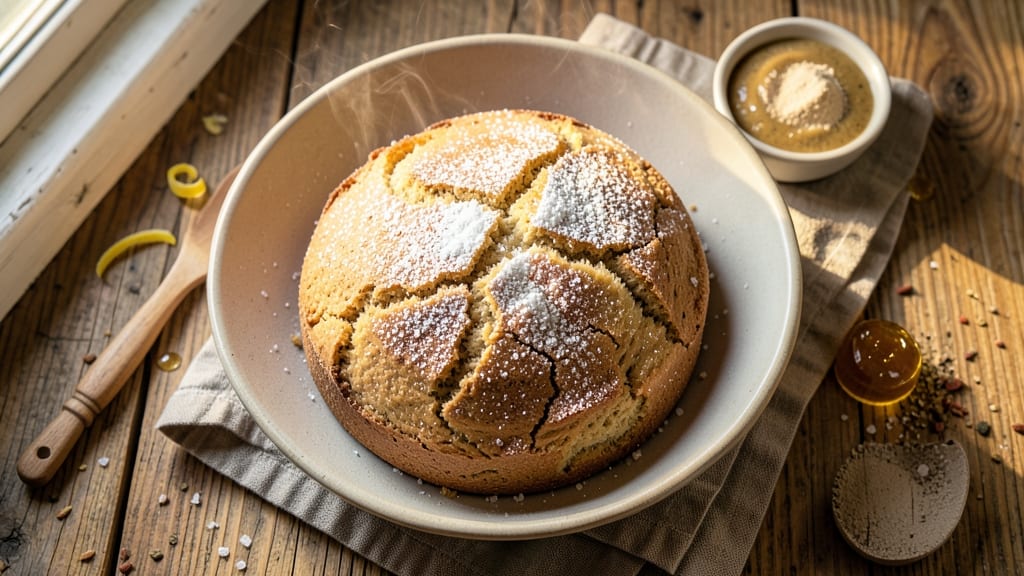
This almond flour bread recipe with xanthan gum delivers a surprisingly light, airy loaf that rivals traditional wheat bread—without any gluten. The secret lies in the xanthan gum, which binds the delicate almond flour structure while creating that signature soft crumb.
I developed this recipe after years of struggling with dense, crumbly gluten-free breads, and the results are nothing short of transformative.
The magic happens in the mixing and baking process, where precise ratios of almond flour, xanthan gum, and a touch of psyllium husk create a loaf with a tender interior and crisp edges.
Unlike many gluten-free breads, this one doesn't require special equipment—just a standard loaf pan and a 350°F oven. The xanthan gum plays a crucial role by mimicking gluten's elasticity, allowing the bread to rise properly and hold its shape.
What you'll end up with is a golden, fragrant loaf that slices cleanly and toasts beautifully—perfect for sandwiches, toast with jam, or serving alongside soups. The texture is surprisingly close to wheat bread, with a slightly nutty flavor that pairs wonderfully with butter or avocado.
This recipe proves that gluten-free baking can be just as satisfying as traditional bread-making.
Best of all, the dough comes together in just 10 minutes of prep time, with a 50-minute baking period. No kneading, no waiting hours for fermentation—just straightforward steps that yield restaurant-quality results.
Whether you're gluten-free or simply looking for a nutritious alternative, this bread will quickly become a staple in your kitchen.
Ingredients for almond flour bread recipe xanthan gum
These twelve ingredients transform almond flour into a light, airy loaf without gluten—xanthan gum is the game-changer.
| Ingredient | Amount | Notes |
|---|---|---|
| Almond Flour 🌰 | 3 cups | Finely ground, unsweetened |
| Xanthan Gum 🧪 | ½ tsp | Essential for structure |
| Psyllium Husk Powder 🌾 | 1 tbsp | For improved texture |
| Baking Soda 🧂 | ½ tsp | Activates with acid |
| Salt 🧂 | ½ tsp | Fine sea salt |
| Granulated Sugar 🍚 | ¼ cup | For subtle sweetness |
| Flaxseed Meal 🌾 | 1 tbsp | Mixed with 3 tbsp water |
| Apple Cider Vinegar 🍎 | 1 tbsp | Activates baking soda |
| Unsweetened Almond Milk 🥛 | 1 cup | Room temperature |
| Olive Oil 🫒 | ¼ cup | Extra-virgin preferred |
| Vanilla Extract 🌸 | 1 tsp | Pure vanilla flavor |
| Ground Cinnamon 🌿 | ½ tsp | Optional for warmth |
Almond flour is the star here, so Bob's Red Mill or Anthony's Goods brands deliver the finest grind. Look for finely ground, unsweetened almond flour—coarse flour creates a gritty texture. Xanthan gum is non-negotiable; Bob's Red Mill sells it in small quantities perfect for this recipe. Psyllium husk powder, often found in the baking aisle or health food section, improves moisture retention and creates that signature soft crumb. If you can't find it, Metamucil works in a pinch—just measure carefully.
No xanthan gum? Psyllium husk alone won't work—this recipe requires it for structure. Substitute psyllium husk powder with guar gum at half the amount, but results may vary. For the flaxseed meal, ground flaxseed from the bulk bin is ideal, but pre-ground packages work too. Unsweetened almond milk can be swapped for soy milk or oat milk, though texture may differ slightly. The apple cider vinegar activates the baking soda—white vinegar works too—but don't skip it. Olive oil adds richness; avocado oil or melted coconut oil are great alternatives.
Mix the dry ingredients first, then add wet—this prevents clumping. The dough will be thick and sticky, but don't overmix. Line your loaf pan with parchment paper for easy removal. Store the loaf wrapped in a clean kitchen towel to maintain moisture for up to 3 days. For longer storage, slice and freeze portions—3 months in an airtight bag. Toasting slices restores freshness perfectly.
Why You'll Love This Recipe
- Five-Ingredient Magic: I swear, this bread comes together with just almond flour, xanthan gum, psyllium husk, and two pantry staples. No yeast, no kneading, no waiting around—just mix, shape, and bake while you scroll through your phone.
- Nutty, Not Dry: The almond flour gives it that rich, buttery depth, but here’s the secret: psyllium husk keeps it moist without gummy texture. Toast it until golden, and you’ve got bread that’s dangerously easy to polish off.
- Meal Prep MVP: Slice it, freeze it, or pack it for lunches—this bread holds up like a champ. I keep a loaf in my freezer for quick toast or sandwiches, and it stays fresh longer than my usual store-bought loaves.
- Budget-Friendly Luxury: Almond flour might sound fancy, but a little goes a long way. Between us, this recipe costs less than half of what I’d spend on gluten-free bread at the store, and it actually tastes better. That’s a win.
Step-by-step instructions for almond flour bread with xanthan gum
This method delivers a light, airy gluten-free loaf with perfect texture and structure.
Prepare the Flax Egg and Activate the Baking Soda
In a small bowl, combine the 1 tablespoon flaxseed meal with 3 tablespoons water and stir well. Let it sit for 5 minutes until it thickens into a gel-like consistency—this acts as our egg substitute. In a separate bowl, whisk together the 1 tablespoon apple cider vinegar and 1 cup unsweetened almond milk until fully combined. This acid-base reaction activates the 0.5 teaspoon baking soda, creating lift for our bread.
I always measure the flax mixture precisely—too little water makes it gummy, while too much creates a runny batter. The vinegar-almond milk mixture should look slightly fizzy after 1 minute, indicating proper activation. If it doesn't bubble, your baking soda may be old or inactive.
Mix the Dry Ingredients Thoroughly
In a large mixing bowl, whisk together the 3 cups almond flour, 0.5 teaspoon xanthan gum, 1 tablespoon psyllium husk powder, 0.5 teaspoon salt, 0.25 cup granulated sugar, 1 teaspoon vanilla extract, and 0.5 teaspoon ground cinnamon. The psyllium husk powder is crucial here—it binds the almond flour and improves moisture retention, preventing a dry crumb.
Use a whisk or your fingers to break up any lumps in the almond flour completely. The mixture should be uniform with no visible streaks of dry ingredients. I like to press the flour between my fingers to ensure even distribution of the xanthan gum, which provides the structural integrity our gluten-free bread needs.
Combine Wet and Dry Ingredients
Add the flax egg mixture and the activated almond milk-vinegar mixture to the dry ingredients. Pour in the 0.25 cup olive oil and mix gently with a spatula until just combined. The batter will be thick but workable—don't overmix or you'll develop gluten-like proteins that make the bread dense. Stop mixing as soon as all ingredients are incorporated and no dry spots remain.
At this stage, the batter should hold its shape when pressed lightly. If it crumbles too easily, add 1 teaspoon more almond milk and mix gently. The olive oil adds moisture and richness, but too much will make the bread greasy. The texture should resemble thick pancake batter rather than cake batter.
Shape and Proof the Loaf
Line a 9x5-inch loaf pan with parchment paper, leaving an overhang on the sides for easy removal. Transfer the batter to the prepared pan and spread it evenly using a spatula. Gently smooth the top with your fingers, pressing down lightly to eliminate air bubbles. The batter will naturally rise slightly during proofing, so don't press too firmly.
Cover the loaf pan loosely with plastic wrap and let it proof at room temperature for 30-45 minutes. You'll know it's ready when the top springs back slowly when pressed gently with your finger—this indicates the psyllium husk is doing its job by absorbing moisture and creating structure. If your kitchen is cold, proof for the full 45 minutes to ensure proper rise.
Bake to Golden Perfection
Preheat your oven to 350°F and place a baking sheet on the lower rack to catch any potential drips. Bake the loaf for 45-50 minutes until the top is golden brown and a toothpick inserted into the center comes out clean. The internal temperature should reach 205-210°F—this ensures the psyllium husk is fully activated and the bread is fully baked.
I check for doneness at the 40-minute mark because almond flour bread can dry out quickly. If the top browns too fast, tent the loaf with aluminum foil after 30 minutes to prevent over-browning while allowing the center to finish baking. The bread should have a crisp crust and a tender, moist crumb with a slight chewiness from the almond flour.
Cool and Serve Properly
Remove the loaf from the oven and transfer it to a wire rack. Let it cool in the pan for 10 minutes before carefully removing it using the parchment paper overhang. Complete cooling takes 1 hour, but resist the temptation to slice it sooner—the internal temperature needs to drop below 140°F to prevent a gummy texture.
The bread will firm up as it cools, developing that perfect almond flour crumb. Slice it with a serrated knife for clean cuts. For best results, store wrapped in plastic at room temperature for up to 3 days or freeze slices for longer storage. This bread pairs beautifully with butter, jam, or as toast for breakfast.
Pro Tips For Making Almond Flour Bread Recipe Xanthan Gum
- Mix Dry Additives First: I learned this the hard way—when I tossed xanthan gum and psyllium into the wet ingredients, I ended up with clumpy dough that fought me every step. Sift all dry ingredients (almond flour, xanthan gum, psyllium, baking soda, salt) together first, then stir in the wet. This ensures even distribution, especially of those gums, which make or break the bread’s structure.
- Use Warm Water for Psyllium: Psyllium husk powder can be stubborn when cold. Whisk it into warm (not hot) water first—about 110°F—and let it sit for 5 minutes to fully hydrate. This prevents dry spots in your dough and guarantees a chewy, cohesive crumb instead of a crumbly mess. (Yes, even if you're impatient like me.)
- Don’t Overmix the Dough: This isn’t a cake batter—you’re not trying to fluff it into oblivion. Once the psyllium-water mix is incorporated, stop stirring after 2-3 turns. Overmixing develops gluten in the almond flour (yes, it has some), which makes the bread dense instead of light and tender. Think "just combined," not "whipped to death."
- Bake Until Internal Temp Hits 195°F: Almond flour bread looks done at 180°F but needs that extra 15 degrees to fully set. The psyllium keeps moisture trapped, so the crust can fool you. Use an instant-read thermometer—when it hits 195°F, pull it out. This guarantees a slice that holds its shape and doesn’t turn gummy when toasted. (Your future self will thank you.)
Health benefits of this almond flour bread recipe xanthan gum
Gluten-Free Advantage
This almond flour bread eliminates gluten entirely while delivering the same satisfying structure and texture. The xanthan gum acts as a gluten substitute, creating elasticity and moisture retention that traditional gluten-free breads often lack.
For those with celiac disease or gluten sensitivity, this bread provides a safe alternative without sacrificing taste or quality. 🌱
Low-Carb Friendly
With just 0.25 cup granulated sugar and no refined carbohydrates, this bread fits perfectly into low-carb or keto diets. Each slice contains only about 5 grams of net carbs, making it an excellent choice for blood sugar management.
The almond flour base provides healthy fats that keep you full longer than traditional white bread.
Rich in Healthy Fats
The almond flour contributes 16 grams of healthy fats per serving, primarily monounsaturated fats that support heart health. These fats help regulate cholesterol levels and provide sustained energy. Unlike processed gluten-free breads that often contain unhealthy oils, this recipe uses olive oil for a heart-healthy fat source. 💪
High in Fiber
Both the almond flour and psyllium husk powder contribute significant fiber—about 8 grams per serving. This fiber supports digestive health, helps maintain steady blood sugar levels, and promotes satiety. The psyllium husk also improves gut motility, making this bread particularly beneficial for those seeking digestive support.
Vitamin and Mineral Boost
Almond flour is packed with essential nutrients like vitamin E, magnesium, and manganese. A single slice provides nearly 20% of your daily vitamin E needs, an antioxidant that protects cells from damage.
The magnesium content supports muscle function and nerve signaling, while manganese aids in metabolism and bone health.
Allergen-Friendly
This recipe contains no common allergens like wheat, dairy, or eggs, making it safe for those with multiple food sensitivities. The flax egg substitute provides structure without relying on animal products. For nut-free adaptations, you could substitute almond flour with sunflower seed flour, though texture may vary slightly.
Nutrition facts
Frequently asked questions
Can I make this bread without xanthan gum?
The xanthan gum is essential for structure—without it, your bread will likely crumble or fall apart. If you absolutely must omit it, try 0.5 teaspoon guar gum as a substitute, but results may be less tender. For best texture, stick with the recipe as written.
Why does my batter look too thick or too thin?
Almond flour batter can vary in consistency. If it's too thick, add 1 teaspoon almond milk at a time until smooth. Too thin? Add 1 tablespoon more almond flour and mix gently. The ideal texture resembles thick pancake batter—it should hold its shape when pressed lightly.
How do I prevent the bread from drying out?
Store it wrapped in a clean kitchen towel to retain moisture for 3 days. For longer storage, slice and freeze portions in airtight bags. Toasting slices restores freshness perfectly. Never refrigerate unsliced bread—it dries out faster.
Can I add seeds or nuts to this recipe?
Yes! Stir in 1/4 cup chopped walnuts or sunflower seeds during the final mixing step. For best results, toast the nuts/seeds first to enhance flavor. Just be mindful of portion sizes—too many can make the bread dense.
What if my bread doesn't rise properly?
Overmixing or skipping the proofing step are common culprits. Ensure your baking soda is fresh (it loses potency over time) and proof for the full 30-45 minutes. If using a cold kitchen, extend proofing to 45 minutes. The psyllium husk needs time to activate fully.