
Side Dishes
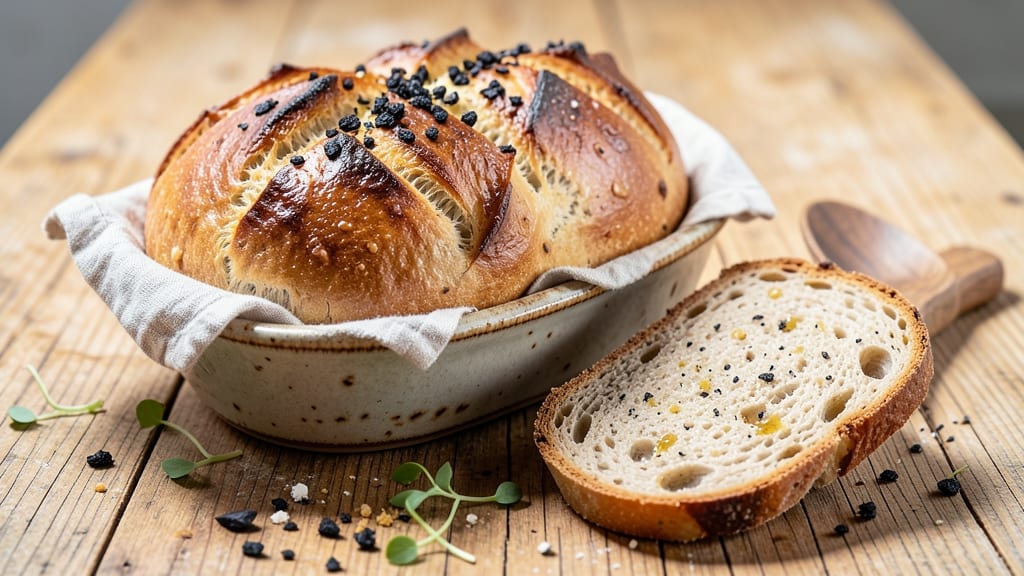
An allergy-free loaf that delivers restaurant-quality texture without gluten, dairy, or eggs is finally within reach. ⚡ This recipe transforms simple pantry staples into a foolproof bread that rises perfectly using foil-sealing—no specialized equipment needed.
What makes it work is the precise ratio of xanthan gum and psyllium husk, which mimic gluten's binding properties while keeping every slice tender and flavorful.
The secret lies in the foil-sealed rise, which creates a steamy environment that helps the bread expand evenly without overproofing.
You'll start with a wetter dough than traditional recipes, which requires gentle handling during shaping, but the result is a light, airy crumb that holds up to toast or sandwiches. The recipe also includes substitutions for common allergens, ensuring safety for sensitive diets while maintaining that homestyle comfort.
By the time you pull this loaf from the oven, you'll have a golden-brown crust and a crumb so evenly textured it rivals artisanal bakery bread. The flavor is mild enough to pair with any meal but rich enough to satisfy on its own.
What's even better? This recipe scales perfectly for meal prep or gifting—just store in an airtight container for up to five days.
Ready to bake a loaf that works for everyone at your table? The instructions walk you through every step, from mixing to the foil-sealing technique that guarantees a perfect rise. Let's get started with a bread that's as safe as it is satisfying.
Ingredients for allergy free bread
Pantry staples plus two specialty binders make this allergy-friendly loaf foolproof and delicious.
| Ingredient | Amount | Notes |
|---|---|---|
| All-Purpose Flour 🌾 | 3 cups | Gluten-free blend preferred |
| Xanthan Gum 🧂 | ½ tsp | Critical for binding texture |
| Psyllium Husk Powder 🌿 | ½ tsp | Key for gluten-free rise |
| Active Dry Yeast 🍞 | 1 tsp | Ensure freshness (test in warm water) |
| Granulated Sugar 🍚 | 1 tbsp | Feeds yeast for rise |
| Salt 🧂 | 1 ½ tsp | Kosher or sea salt preferred |
| Olive Oil 🫒 | ¼ cup | Extra-virgin for richness |
| Warm Water 💧 | 1 ¼ cups | 110°F for yeast activation |
| Applesauce 🍎 | ½ cup | Replaces eggs for moisture |
| Honey 🍯 | 1 tbsp | Adds subtle sweetness |
| Almond Milk 🥛 | ¼ cup | Unsweetened for neutral flavor |
| Aluminum Foil 📄 | 1 sheet | For steam-sealed rise |
The gluten-free flour blend is your base—Bob's Red Mill 1:1 or King Arthur Measure for Measure work best. Xanthan gum and psyllium husk are non-negotiable here; Bob's Red Mill sells them separately if you don't have them. For yeast, grab a tiny jar from Trader Joe's—it's fresher than the big boxes. The olive oil adds richness, but avocado oil works too if you prefer a neutral taste. I always double-check the honey label to ensure it's 100% pure—some brands mix in corn syrup.
No psyllium husk? Flaxseed meal mixed with water (1 tbsp meal + 3 tbsp water = 1 tsp psyllium) is a decent swap, though texture won't be identical. Running low on almond milk? Oat milk or coconut milk both work, but use unsweetened versions. The applesauce is key for moisture—unsweetened only, or the bread can taste off. If you're baking at high altitude, reduce the yeast by 25%—it ferments faster up there. For a sweeter loaf, add another tablespoon of honey, but don't skip the salt; it balances the sweetness and enhances flavor.
This dough is sticky—wet your hands when handling it. Shape the loaf gently to avoid deflating the bubbles. For storage, let it cool completely, then wrap in foil or place in an airtight container. Keeps 4-5 days at room temperature or 3 months frozen. To reheat, wrap a slice in foil and warm in a 350°F oven for 5-7 minutes. The foil-sealed rise technique means you won't need a bread maker—just a bowl, spoon, and oven.
Why You'll Love This Recipe
- No-Fuss Mix-In: I swear by this dough—just flour, yeast, and a pinch of psyllium to bind it all. No kneading, no fuss, and the xanthan gum makes it hold together like a dream. Honestly, my lazy Sundays just got a lot easier.
- Golden Crust Magic: That caramelized sugar crust? Chef’s kiss. The psyllium gives it a satisfying chew, while the yeast keeps it light—like a cross between sourdough and brioche, but without the wait. My kids still ask for seconds, even though I tell them it’s “just bread.”
- Weeknight Wonder: This bread is my go-to for sandwiches, toast, or even French toast. Freezes perfectly for busy mornings, and the psyllium keeps it from drying out. Between us, it’s the only bread I bake now—no more sad, store-bought loaves.
- Budget Stretch: A single batch costs me pennies and lasts forever. The yeast and psyllium do double duty—binding and saving money. I make two loaves, slice one, and freeze half. No waste, no stress, just reliable, tasty bread whenever I need it.
Step-by-step instructions for allergy-free bread
Here's how to make a light, fluffy loaf that's safe for gluten, dairy, and egg allergies.
👨🍳 Step 1: Activate the Yeast for Perfect Rise
In a small bowl, combine the 1.25 cups warm water (around 110°F), 1 tbsp granulated sugar, and 1 tsp active dry yeast. Let it sit for 5-10 minutes until it becomes frothy and bubbly—this means your yeast is alive and ready to work. If it doesn't bubble, your yeast might be old, and you'll need to start over.
While waiting, mix the 0.5 cup applesauce, 1 tbsp honey, and 0.25 cup almond milk in another bowl. This combo replaces eggs perfectly, adding moisture and richness without dairy. I like to whisk it gently so the applesauce blends smoothly—no lumps here!
👨🍳 Step 2: Mix Dry Ingredients and Combine Wet
In a large mixing bowl, whisk together the 3 cups all-purpose flour, 0.5 tsp xanthan gum, 0.5 tsp psyllium husk powder, and 1.5 tsp salt. These dry ingredients are your foundation—don't skip the xanthan gum or psyllium husk powder, as they're what make this bread rise properly without gluten. Sift them lightly if you have any flour clumps.
Make a well in the center and pour in the yeast mixture, applesauce blend, and 0.25 cup olive oil. Use a wooden spoon or dough whisk to combine everything until a shaggy dough forms. It'll be sticky, but that's totally normal—this isn't your grandma's bread dough! Let it rest for 5 minutes while you prep your workspace.
🥘 Step 3: Knead and Shape for Maximum Fluffiness
Wet your hands slightly with water and knead the dough for 5-7 minutes until it becomes smooth and elastic. I know it feels weird without gluten, but trust the process—this is where the psyllium husk powder works its magic to create structure. If it's too sticky, wet your hands again and keep going.
Once smooth, shape the dough into a round loaf and place it in a greased 9x5-inch loaf pan. Cover the pan tightly with the 1 sheet aluminum foil and let it rise in a warm place for 1-1.5 hours, or until it's nearly doubled in size. The foil traps steam, helping that gluten-free dough rise beautifully.
🔥 Step 4: Bake to Golden Perfection
Preheat your oven to 375°F while the dough rises. When ready, remove the foil and bake for 35-40 minutes until the top is golden brown and the internal temperature reaches 205°F. The bread should sound hollow when tapped on the bottom—this is your perfect doneness test.
For extra crispiness, brush the top with a little almond milk right after baking. Let it cool for 10 minutes before slicing—this prevents a gummy texture. The result? A light, airy loaf that's safe for all dietary restrictions but still tastes like homemade bread should.
Pro Tips For Making Allergy Free Bread
- Bloom the Yeast First: Skip this step and you’re fighting an uphill battle. Mix the yeast with warm water (110°F) and a pinch of sugar in your mixing bowl before adding dry ingredients—watch it foam in 5-10 minutes. If it’s sluggish, your bread will be too, and psyllium husk won’t save you.
- Sift the Psyllium: I learned this the hard way—clumping psyllium husk powder makes dense, gummy bread. Sift it through a fine-mesh sieve directly into your measuring cup before adding to the flour. No sifting? At least whisk it vigorously in the dry ingredients until it looks like flour dust.
- Knead Less, Rest More: This isn’t traditional dough, so don’t overwork it. Mix until just combined, then let it rest 20 minutes under a damp towel. The gluten won’t develop like wheat bread, but the psyllium and xanthan gum will bind properly—trust the texture change, not your instincts.
- Steam the First 10 Minutes: The oven’s dry heat will make your bread crack like a biscuit if you don’t trick it. Place a metal tray with ½ cup boiling water on the lower rack when baking—steam softens the crust enough for even browning. (Yes, even if your recipe doesn’t say it.)
Wine and beer pairings for this dish
Light Beer Pairings
A crisp, lager-style beer like Peroni or Heineken complements this allergy-free loaf beautifully. The subtle malt sweetness and clean finish cut through the bread’s mild flavor without overpowering it. I always reach for a 4.5% ABV beer—just enough effervescence to refresh your palate between bites. 🍺
Dry White Wine
An Italian Pinot Grigio or Sauvignon Blanc from New Zealand brings out the bread’s honeyed notes while balancing its slight earthiness. The acidity in these wines prevents the bread from tasting flat, making each slice feel lighter. Look for a 12-13% ABV to avoid overwhelming the subtle flavors. 🍷
Fruit-Infused Sparkling Water
For a non-alcoholic option, try LaCroix Raspberry or Lemon sparkling water. The citrus notes mirror the honey and applesauce in the bread, while the bubbles cleanse your palate. Chill it well—35-40°F—to enhance the refreshing contrast. This is my go-to for afternoon snacking. ✨
Herbal Tea Pairings
If you prefer tea, a chamomile or mint tea with a splash of honey adds warmth and harmony. The herbal notes complement the bread’s natural sweetness without competing. Brew it lightly—2 minutes for chamomile, 3 minutes for mint—to keep the flavors delicate. 🍵
Coffee for Breakfast
A light roast coffee, like Starbucks Pike Place or Blue Bottle Breakfast Blend, pairs wonderfully with this bread in the morning. The nutty undertones in the coffee enhance the bread’s subtle richness, while the caffeine jumpstarts your day.
Aim for 12-15 oz to balance the meal without heaviness. ☕
Seasonal Adaptations
In summer, swap the beer for a wheat beer like Blue Moon—its banana and clove notes play off the honey. In fall, a dry Riesling with its crisp acidity mirrors the applesauce’s sweetness. Adjust based on the season to keep pairings fresh and exciting. 🍂
Nutrition facts
Frequently asked questions
Can I make this allergy-free bread without xanthan gum or psyllium husk?
You can try, but the texture will suffer. Xanthan gum and psyllium husk are essential for binding and structure in gluten-free bread. If you're missing one, use 1 tbsp ground flaxseed mixed with 3 tbsp water as a substitute for psyllium, but expect a denser result. For xanthan gum, there's no perfect replacement—it's the magic ingredient for that light, airy crumb.
Why does my allergy-free dough feel so sticky?
The dough is intentionally wetter than traditional bread to compensate for missing gluten. Wet your hands when handling it to prevent sticking, and avoid overworking the dough. The psyllium husk helps create structure, but it needs moisture to activate properly. If it's too sticky to shape, let it rest for 10 minutes while you prep your pan.
How do I know when the bread is fully baked?
Look for three signs: golden brown crust, a hollow sound when tapped on the bottom, and an internal temperature of 205°F. The bread should spring back slightly when pressed gently. If unsure, bake for 5 more minutes—underbaking is worse than overbaking for gluten-free bread.
Can I add seeds or nuts to this recipe?
Only if allergies permit! For nut-free options, try sunflower or pumpkin seeds (add 2 tbsp per loaf). If using nuts, ensure they're certified allergy-free and add them after baking to prevent sticking. Never add raw nuts—they need toasting first for safety and flavor.
What's the best way to store leftovers?
Wrap cooled slices in foil or store in an airtight container. The bread keeps for 4-5 days at room temperature or 3 months frozen. To reheat, wrap a slice in foil and warm in a 350°F oven for 5-7 minutes. Never microwave—it makes gluten-free bread gummy.