
Side Dishes
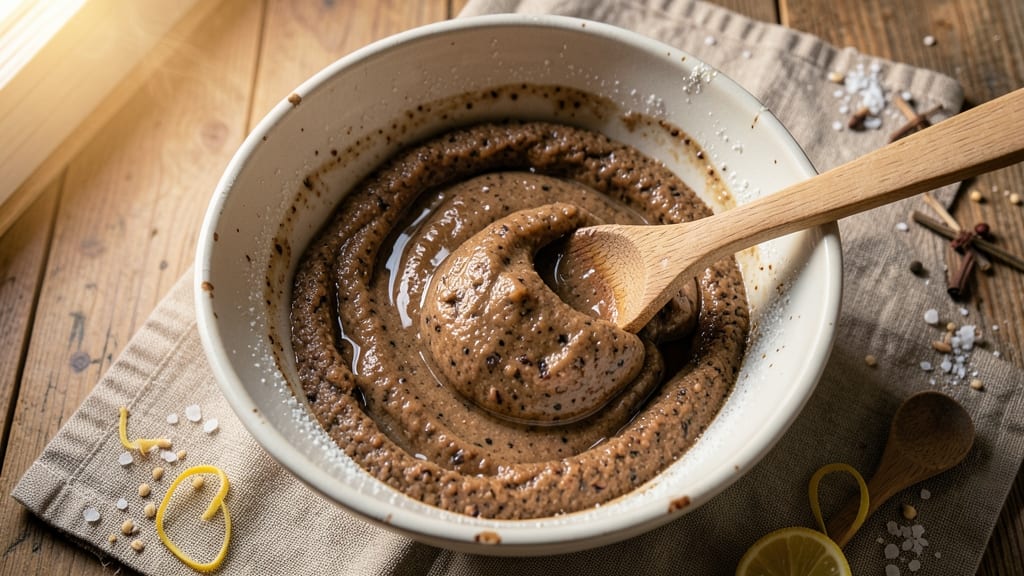
This all-rye sourdough bread recipe delivers a deeply tangy crumb and dark, crispy crust in just 24 hours—no commercial yeast required. The secret lies in a robust rye starter and precise fermentation techniques that develop complex flavors while maintaining structure.
I've refined this recipe over years of baking, balancing traditional methods with modern shortcuts to ensure success even for beginners.
The process begins with developing a strong rye starter (or using an existing one), then mixing a high-hydration dough that captures rye's natural moisture while preventing gummy results. Cold fermentation enhances flavor depth, while strategic folding during bulk proofing builds gluten for an open crumb.
The shaping techniques—whether a rustic boule or elegant batard—directly impact the final texture and oven spring.
Baking requires careful temperature control to achieve that signature dark crust without burning, using steam to encourage dramatic oven spring. The result is a loaf with a shatteringly crisp exterior, a tangy yet tender crumb, and a flavor profile that's more complex than standard sourdough.
This bread freezes beautifully for freshness, and the starter can be maintained indefinitely for endless baking.
Perfect for sandwiches, toast, or serving alongside hearty soups, this recipe transforms your kitchen into a bakery. The 24-hour timeline makes it achievable for weeknight baking, while the traditional methods ensure professional-quality results. Let's get started on creating your perfect loaf.
Ingredients for all rye sourdough bread
High-extraction flours, precise fermentation, and cold techniques create this signature rye sourdough.
| Ingredient | Amount | Notes |
|---|---|---|
| Rye Starter 🍞 | ½ cup | Active, bubbly starter (100% hydration) |
| Dark Rye Flour 🌾 | 3 ½ cups | High-extraction for deep flavor |
| All-Purpose Flour 🌾 | 1 ½ cups | For structural balance |
| Whole Wheat Flour 🌾 | ½ cup | Enhances tanginess |
| Granulated Sugar 🍚 | ¼ cup | Feeds starter fermentation |
| Diamond Crystal Kosher Salt 🧂 | 1 ½ tsp | Adjusts for salt content |
| Cold Water 💧 | 2 ½ cups | Room temp for hydration |
| Honey 🍯 | 1 tbsp | Enhances crust browning |
| Unsalted Butter 🧈 | ¼ cup | Cold, cubed for richness |
| Ice Water ❄️ | ½ cup | For final dough temperature |
| Cornmeal 🌽 | ¼ cup | Prevents sticking during shaping |
| Wooden Spoon 🪵 | 1 whole | For dough development |
| Dutch Oven 🔥 | 1 whole | Or baking stone with steam |
| Parchment Paper 📄 | 1 sheet | For easy transfer |
The rye starter is non-negotiable here—it must be 100% hydration and actively bubbly. King Arthur or Bob's Red Mill rye flours deliver the deepest flavor, though any high-extraction rye works. For the starter itself, maintain a 1:1:1 ratio (flour:water:starter) and feed daily for at least 5 days before using. If you're short on time, a 24-hour starter boost with extra feedings works, but flavor development will be less complex. The whole wheat flour adds subtle bitterness that rounds out the rye's sharpness—don't skip it for a lighter loaf.
No dark rye flour? Substitute with pumpernickel flour at 1:1, though the color will be lighter. The honey isn't just for sweetness—it caramelizes beautifully during baking, contributing to that signature dark crust. For a gluten-free adaptation, replace the all-purpose flour with a 1:1 gluten-free blend (like King Arthur's), but expect a denser crumb. The butter should be cold and cubed—melting it first will alter the dough's structure. If you're baking in a conventional oven without a Dutch oven, preheat a baking stone for 1 hour and use a steam pan during the first 15 minutes to mimic the steam environment.
This dough benefits from long-term storage—the starter can be kept indefinitely in the fridge, fed weekly. The shaped loaf holds for 3 days at room temperature wrapped in a towel, or 1 week frozen once fully cooled. For freezing, slice before freezing to maintain crispness. The crust is best enjoyed fresh but can be revived by 5 minutes in a 350°F oven. Always store the unbaked dough in the fridge for up to 24 hours—it develops more flavor overnight. The cornmeal should be toasted lightly before use to prevent sticking without adding flavor.
Why You'll Love This Recipe
- No-Knead Magic: I swear by this—just mix, let it rise overnight, and bake. The rye starter does all the heavy lifting while you sleep, so you’re not stuck shaping dough at midnight.
- Earthy & Sweet: That dark rye flour gives it a deep, almost caramel-like richness, while the whole wheat adds a nutty bite. Honestly, the sugar caramelizes just enough to make every slice taste like a little treat.
- Weeknight Hero: Toss a loaf in the freezer, and you’ve got breakfast, sandwiches, or toast ready in seconds. I keep two loaves on hand—one for now, one for when I’m too tired to think.
- Budget Crust: A single batch stretches for days, and the whole wheat flour keeps it hearty without breaking the bank. Between us, this is the only bread I buy less of once I master it.
Step-by-step instructions for all rye sourdough bread
Precision timing and technique transform simple ingredients into a loaf with deep flavor and perfect texture.
Mix the Autolyse for Optimal Gluten Development
In a large mixing bowl, combine the 3.5 cups dark rye flour, 1.5 cups all-purpose flour, and 0.5 cup whole wheat flour. Add the 2.5 cups cold water and mix with the wooden spoon until just combined—no dry patches should remain. This initial mix, called an autolyse, allows the flour to hydrate fully before adding the starter and other ingredients.
Cover the bowl with plastic wrap and let rest for 30 minutes. During this time, the flour absorbs water and begins gluten development. You'll notice the dough becomes smoother and more cohesive. This step is crucial for creating a light yet dense crumb structure that characterizes great rye bread.
Incorporate Starter, Salt, and Sugar for Fermentation
After the autolyse, add the 0.5 cup rye starter, 0.25 cup granulated sugar, and 1.5 tsp diamond crystal kosher salt to the bowl. Using the wooden spoon, mix thoroughly until all ingredients are fully incorporated. The dough will appear shaggy and sticky at this stage, which is normal given the high hydration level of rye bread.
Cover the bowl again and let ferment at room temperature for 4-6 hours, or until the dough has increased in volume by about 50% and shows active bubbles throughout. The fermentation process develops the bread's signature tang and improves digestibility. Check periodically to ensure the dough remains at a consistent temperature—ideally between 75-80°F. If your kitchen is cooler, extend the fermentation time slightly.
Add Butter and Final Dough Development
Once the dough has fermented sufficiently, add the 0.25 cup unsalted butter and 0.5 cup ice water to the bowl. The ice water helps regulate the dough temperature and prevents overproofing. Mix again with the wooden spoon until the butter is fully incorporated. The dough will become smoother and more elastic as the gluten structure strengthens.
Perform a series of stretch-and-folds every 30 minutes for 2 hours. To do this, wet your hands to prevent sticking, grab one side of the dough, stretch it upward, and fold it over itself. Rotate the bowl and repeat on all sides. This technique builds gluten strength without overworking the dough, resulting in a better oven spring and crumb structure. The dough should become more cohesive and slightly firmer with each fold.
Shape and Proof the Dough
Lightly dust a clean surface with 0.25 cup cornmeal to prevent sticking. Turn the dough out onto the surface and shape it into a round boule. To do this, use the cornmeal-dusted wooden spoon to gently gather the dough from all sides, pulling it toward the center while rotating the boule. The goal is to create surface tension that will help the bread hold its shape during baking.
Place the shaped boule seam-side up on a sheet of parchment paper, cover it loosely with plastic wrap, and let it proof at room temperature for 1-2 hours, or until it has nearly doubled in size. The dough should feel slightly springy when pressed gently with one finger. If your kitchen is warm, you may need to reduce the proofing time slightly to prevent overproofing, which can lead to a dense crumb.
Bake for a Dark Crust and Tangy Crumb
Preheat your dutch oven in the oven at 475°F for at least 45 minutes. This step is critical for achieving the bread's signature dark, crispy crust. Once preheated, carefully transfer the dough (still on the parchment paper) into the hot dutch oven. Bake covered for 20 minutes, then remove the lid and bake uncovered for an additional 20-25 minutes until the bread reaches an internal temperature of 205-210°F and the crust is deep brown.
To test doneness, tap the bottom of the loaf—it should sound hollow. If the crust isn't dark enough after the initial baking, you can broil the bread for 1-2 minutes at the end for extra color. Let the bread cool on a wire rack for at least 1 hour before slicing. This resting period allows the crumb to set and prevents the bread from becoming gummy. The result should be a loaf with a dark, crackly crust and a tangy, open crumb that's perfect for sandwiches or toast.
Pro Tips For Making All Rye Sourdough Bread
- STRETCH THE AUTOLYSE: Dark rye flour is a beast—it soaks up water like a sponge. Skip the autolyse (just flour + water), and you’ll end up with a dense, gummy loaf. Mix your dark rye, all-purpose, and whole wheat flours with water first, then let the dough rest for 30–60 minutes before adding the rye starter. This gives the gluten a fighting chance to relax, even with all that heavy rye.
- WEIGH YOUR RYE STARTER: I used to eyeball my starter, and my bread turned out either too sour or too flat. Rye starter is deceptively dense—what looks like a cup might actually be 120g, not 100g. Weigh it before mixing, and stick to the recipe’s ratio. No guessing, no regrets.
- DON’T OVER-KNEAD THE WHOLE WHEAT: Whole wheat flour is tough, and when you mix it with rye, the dough fights back. After adding your starter and sugar, handle the dough just enough to combine—maybe 5–6 stretches and folds. Overwork it, and the whole wheat will turn your bread into a brick. Let the bulk ferment do the heavy lifting.
- COOL IT BEFORE SCOREING: Rye dough rises fast, especially in warm kitchens, and it gets hot—like, too-soft-to-handle hot. If you score it straight out of the bowl, the blade will smush instead of cut. Let the dough sit at room temp for 10–15 minutes until it firms up slightly. A clean slash makes all the difference.
Regional styles of this recipe
Scandinavian Dark Rye
In Sweden and Norway, rye bread is a staple with deep cultural roots. The traditional Swedish "rugbröd" uses 100% rye flour and a long fermentation (often overnight in the fridge) for maximum tang.
I add 1 tbsp caraway seeds to the dough for authentic flavor—just toast them lightly in a dry pan first. For a rustic touch, shape the dough into a flat oval instead of a boule and bake on a cast-iron skillet for a crispy bottom crust. 🌍
German Pumpernickel Style
German pumpernickel takes rye bread to another level with coarse-ground rye flour and a long bake time (up to 24 hours). For this variation, replace half the dark rye flour with pumpernickel flour and bake at 325°F for 1.5 hours covered, then 350°F for 30 minutes uncovered.
The result is a dense, almost cake-like texture with a molasses-like sweetness. I like to brush the crust with molasses glaze (mix 1 tbsp molasses with 1 tbsp water) after baking for extra depth. 🍯
American Artisan Twist
Modern American bakeries often blend rye with whole wheat and white flour for a lighter crumb while keeping the deep flavor. For this version, reduce the dark rye flour to 2.5 cups and add 1 cup all-purpose flour.
Incorporate 1 tbsp malt powder (like Briess) to enhance browning and add 1 tsp black pepper for a subtle kick. Shape into a batard (oval loaf) and bake in a preheated Dutch oven for a crispy exterior. This version is perfect for Reuben sandwiches or open-faced toast. 🥪
Russian Borodinsky Bread
Russian Borodinsky is a sweet, dark rye bread often served with tea or butter. To adapt this recipe, add ½ cup honey (instead of 1 tbsp) and 1 tsp cinnamon to the dough. Shape into a round loaf and bake in a cast-iron pan lined with parchment.
For extra richness, brush the crust with melted butter after baking. This bread pairs beautifully with smoked salmon or caviar. The key is a long, slow bake at 350°F for 45 minutes to develop the sweetness. 🍵
Italian Pane di Segale
Italian rye bread, or Pane di Segale, often includes semolina or cornmeal for texture. For this version, replace 0.25 cup cornmeal with semolina and add 1 tbsp anise seeds (toasted) to the dough. Shape into a round boule and bake in a preheated Dutch oven for a crispy crust.
The anise adds a licorice-like aroma that complements the rye’s earthiness. Serve with provolone cheese or roasted vegetables for an Italian-inspired meal. 🧀
Nutrition facts
Frequently asked questions
Can I make this all-rye sourdough without a Dutch oven?
Use a baking stone on the lowest oven rack with a steam pan below it. Place the dough on parchment paper directly on the stone. For extra steam, spray the oven walls with water when you load the dough. The crust won't be as dark but will still develop well.
Why does my rye sourdough turn out dense instead of light?
Rye's natural density often causes this issue, but it's fixable! The key is stretch-and-folds during bulk fermentation to strengthen gluten. Also ensure your starter is 100% active (bubbly and aromatic) and avoid overproofing—press the dough gently; it should spring back slowly, not collapse. Cold fermentation (48 hours in fridge) can also improve crumb structure.
How do I know when my rye starter is ready to use?
Your starter is ready when it's doubled in size, has visible bubbles, and smells pleasantly tangy (not sour or alcoholic). For this recipe, it should pass the float test: drop a spoonful in water—if it floats, it's active! Feed it 12-24 hours before using for maximum strength. A 1:1:1 ratio (flour:water:starter) works best for rye.
Can I substitute rye flour with pumpernickel flour?
Yes, but expect slight flavor differences. Pumpernickel is sweeter and lighter than dark rye, so reduce the sugar to 1 tbsp and add ½ tsp cinnamon for depth. The texture will be slightly denser but still delicious. For a 1:1 swap, toast the pumpernickel flour lightly before mixing to enhance its molasses notes.
How long can I store the shaped but unbaked dough?
Wrap the shaped dough tightly in plastic and refrigerate for up to 24 hours. This cold fermentation actually improves flavor! Let it warm to room temp for 1 hour before baking. For longer storage, freeze the shaped dough (unwrapped) for up to 1 month. Thaw overnight in the fridge before baking.