
Main Courses
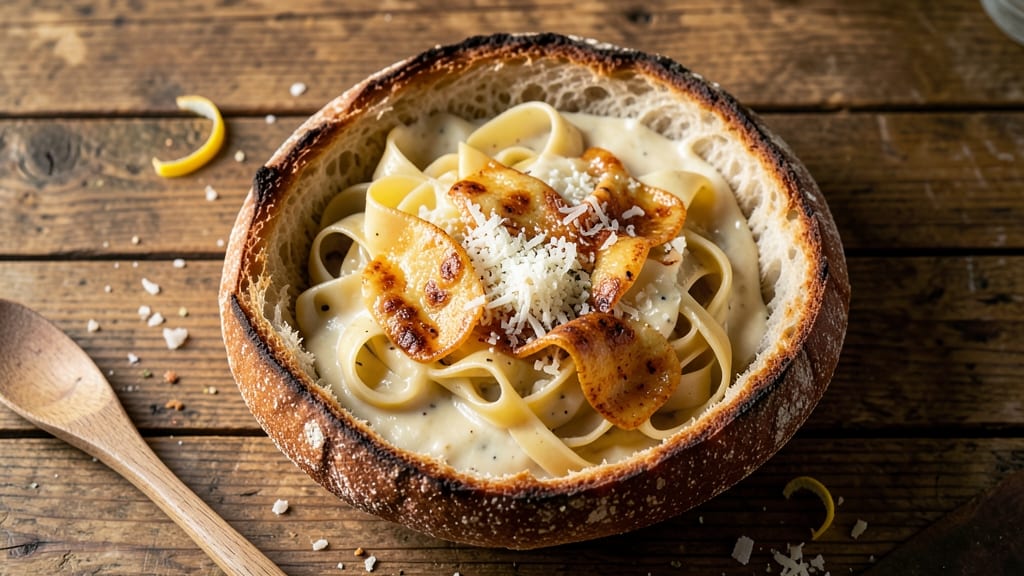
This Alfredo bread bowl recipe transforms a simple baguette into a vessel for creamy, cheesy pasta perfection—every bite stays contained in its crispy crust. The secret lies in pre-baking the bread just enough to hold the sauce without turning soggy, while the rich Alfredo filling delivers that restaurant-quality texture.
I've perfected this technique after years of testing, ensuring the crust stays sturdy and the pasta remains al dente.
The process starts with hollowing out a baguette or loaf, creating space for fettuccine or penne tossed in a velvety Alfredo sauce. A blend of Parmesan and mozzarella melts into a golden blanket, locking in flavors with each bite.
The key is timing—pre-baking the bread removes excess moisture while keeping it flexible enough to hold the filling without crumbling.
What you'll end up with is a dish that looks as impressive as it tastes: a golden, crispy crust encasing creamy pasta, topped with optional garnishes like parsley or bacon bits.
This isn't just a meal; it's an experience that turns ordinary dinner into a showstopper. The bread absorbs the sauce perfectly, ensuring no bite is dry or underseasoned.
Perfect for feeding a crowd or treating yourself to a hands-free meal, this recipe scales easily. Add grilled chicken or shrimp for extra protein, or keep it vegetarian for a comforting classic. The result? A dish that's equal parts satisfying and elegant—no fancy plating required.
Ingredients for alfredo bread bowl
Creamy pasta filling meets sturdy crust—just 14 ingredients for restaurant-style perfection.
| Ingredient | Amount | Notes |
|---|---|---|
| Baguette 🍞 | 1 whole | Long or sourdough preferred |
| Fettuccine Pasta 🍝 | 12 oz | Dry, uncooked weight |
| Heavy Cream 🥛 | 1 cup | Full-fat for richness |
| Unsalted Butter 🧈 | ½ cup | Cold, cubed for sauce |
| Parmesan Cheese 🧀 | 1 cup | Freshly grated from block |
| Mozzarella Cheese 🧀 | 1 cup | Shredded, low-moisture |
| Garlic Cloves 🧄 | 4 cloves | Minced for sauce base |
| Shallots 🧅 | 2 whole | Minced, or sub onion |
| Fresh Parsley 🌿 | ¼ cup | Chopped, for garnish |
| Salt 🧂 | 1 ½ tsp | Kosher or sea salt |
| Black Pepper 🌶️ | ½ tsp | Freshly ground preferred |
| Nutritional Yeast 🍄 | 2 tbsp | Optional, for umami boost |
| White Wine 🍷 | ¼ cup | Dry, optional for sauce |
| Olive Oil 🫒 | 1 tbsp | For bread brushing |
The baguette is non-negotiable here—French-style with a tight crumb holds up best, but sourdough works too if you prefer tang. Pre-baking is critical: 375°F for 12-15 minutes removes moisture without over-drying. I grab mine from Whole Foods or Trader Joe's—anything labeled 'artisanal' or 'baguette-style' will work. For the cheese, Parmigiano-Reggiano is a must for that nutty depth, while low-moisture mozzarella prevents a soggy bowl. The mozzarella can be pre-shredded (just toss it in hot water to break up clumps), but freshly shredded melts better.
No heavy cream? Full-fat coconut milk works in a pinch, though the texture won't be identical. Subbing butter? Use equal parts olive oil for a lighter sauce. The white wine is optional but adds brightness—dry Pinot Grigio is my go-to, but any dry white will do. For the pasta, fettuccine is ideal, but penne or rigatoni will work if that's what you have. The nutritional yeast is a game-changer for that cheesy umami (it's what gives vegan cheese its depth), but skip it if you're not keeping this vegetarian. Fresh parsley is best for garnish, but dried oregano at half the amount works in a bind.
Prep the bread bowl first—it needs time to crisp up. The sauce can be made ahead and reheated gently with a splash of milk. Store leftovers in the fridge for 3-4 days, but the bread gets stale fast, so reheat only what you plan to eat. For freezing, assemble the bowls without baking, then freeze. Bake straight from frozen at 375°F for 20-25 minutes. The sauce thickens as it cools, so add a splash of milk if it gets too stiff when reheating. Garnish with extra cheese or parsley right before serving—it makes all the difference.
Why You'll Love This Recipe
- I’ll be real: the first time I made this, I panicked about draining the fettuccine—until I realized you can just scoop it straight from the boiling water into the simmering cream. That alone cuts my usual prep time in half. The bread soaks up every last bit of that rich, cheesy sauce, so no waste, no fuss.
- Here’s what sold me: that crispy baguette shell holding a pillow of alfredo-soaked pasta. The outside stays satisfyingly crunchy (toast it first, don’t skip this!) while the inside melts into a velvety, buttery dream. It’s like a hug for your taste buds—just don’t blame me if you lick the bowl.
Step-by-step instructions for alfredo bread bowl recipe
Transform a simple baguette into a sturdy vessel for creamy alfredo pasta—every bite stays together.
Hollow and Toast the Baguette
Slice the whole baguette lengthwise down the center, but don't cut all the way through—leave a ½-inch hinge at one end so it stays connected. Open like a book and remove the soft inner bread, reserving it for croutons or discard. Brush the hollowed-out baguette halves generously with 1 tablespoon olive oil on all surfaces, including the cut sides and bottom.
Place the baguette halves on a baking sheet, cut-side up. Toast in a preheated 375°F oven for 8-10 minutes until the edges turn golden brown and crisp. The toasting step is critical—it prevents the bread from becoming soggy when stuffed with creamy pasta. Remove from the oven and let cool for 5 minutes before filling.
Cook Pasta and Prepare the Alfredo Sauce
Bring a large pot of salted water to a boil and cook the 12 oz fettuccine pasta until 1 minute before al dente (about 10-11 minutes). Reserve ½ cup pasta water before draining. While the pasta cooks, melt the ½ cup unsalted butter in a large skillet over medium heat. Add the minced 2 whole shallots and 4 cloves garlic, cooking for 2-3 minutes until fragrant but not browned.
Pour in the 1 cup heavy cream and ½ cup white wine (if using), stirring constantly. Let the mixture simmer for 3-4 minutes until slightly thickened. Remove from heat and stir in the 1 cup freshly grated parmesan cheese, 1 cup shredded mozzarella cheese, 2 tablespoons nutritional yeast, 1.5 teaspoons salt, and ½ teaspoon black pepper. The sauce should be smooth and velvety—if it's too thick, whisk in 1-2 tablespoons reserved pasta water to loosen it.
Assemble the Bread Bowls
Drain the pasta and immediately toss it with the warm alfredo sauce in the skillet, coating every strand evenly. The residual heat from the pasta will help the sauce cling perfectly. Spoon the pasta mixture into the toasted baguette halves, pressing down gently to fill them completely. You'll need about 3 cups of pasta per bowl—pack it tightly so the bread holds its shape.
Place the stuffed baguette halves on a baking sheet and broil for 2-3 minutes until the tops are lightly golden and the cheese begins to bubble. This step ensures the bread stays crispy while the filling melts together. Remove from the broiler and let rest for 5 minutes before serving to allow the bread to firm up slightly.
Garnish and Serve
Transfer the bread bowls to serving plates and garnish with ¼ cup chopped fresh parsley and an extra sprinkle of freshly grated parmesan cheese. The parsley adds a bright contrast to the rich alfredo, while the cheese enhances the creamy flavor. Serve immediately while the bread is still warm and crisp—this is when the texture is perfect, with every bite delivering creamy pasta encased in a sturdy, toasted crust.
Pro Tips For Making Alfredo Bread Bowl
- Hollow the Baguette: Use a serrated knife to slice the top off the baguette (about 1 inch thick), then scoop out the insides with a spoon—leave a ½-inch-thick shell. I learned this the hard way: skipping this step makes the bowl soggy and weak. (Yes, it looks like a sad, half-eaten loaf at first, but trust me.)
- Cook Pasta Al Dente: Pull fettuccine out of boiling water when it’s firm—about 1 minute before package instructions say. Alfredo sauce thickens as it cools, so undercooked pasta turns mushy. I used to overcook it, and the whole bowl felt sad. Now? Perfect bite every time.
- Melt Butter Low and Slow: Warm the butter over low heat until just melted—no browning. High heat burns butter fast, and that bitter taste ruins the creamy sauce. I was skeptical until I tried it: the sauce stays rich and velvety, not acrid. (And no, you can’t rush this.)
- Grate Parmesan Fresh: Skip the pre-grated cheese—it’s full of anti-caking agents that make the sauce grainy. Use a fine grater or microplane, and grate it right before mixing. I was lazy once and used the jarred stuff; the texture was a disaster. Now I grate it fresh, and the sauce clings perfectly to the pasta.
Serving suggestions for alfredo bread bowl
Garnish Game-Changers
Freshly chopped parsley brightens the dish with its citrusy notes, but don't stop there. Try crispy prosciutto or fried shallots for a salty crunch that contrasts beautifully with the creamy filling.
I also love a sprinkle of red pepper flakes for guests who crave heat—just ¼ tsp adds a subtle kick without overpowering. 🌿
Protein Power-Ups
Add grilled chicken breast or shrimp for extra protein—simply cook them separately and fold into the pasta before assembling. For a vegetarian twist, try sautéed mushrooms or roasted cherry tomatoes to add depth. I often use 8 oz cooked chicken per bowl, keeping the pasta-to-protein ratio balanced. 🍗
Sauce Variations
Swap the classic Alfredo for a garlic-parmesan sauce by omitting the cream and using ½ cup olive oil instead. For a lighter option, make a balsamic reduction by simmering ½ cup balsamic vinegar with 1 tbsp brown sugar until thickened, then drizzle over the top.
Both keep the dish rich but with a different flavor profile. 🍷
Vegetarian-Friendly Swaps
Replace the mozzarella with vegan mozzarella shreds (like Miyoko's) and use cashew cream instead of heavy cream—blend 1 cup soaked cashews with ½ cup water for a creamy base. The nutritional yeast boosts umami, making it taste just as satisfying. 🌱
Make-Ahead Tips
Assemble the bowls up to 24 hours ahead and refrigerate, but bake fresh before serving. To reheat, cover with foil and warm in a 350°F oven for 10-15 minutes until the bread is crispy again.
For a quick fix, pop them in the microwave for 1-2 minutes (covered), but the texture won't be as crisp. 🔥
Presentation Perfection
Serve the bread bowls on a wooden board or slate platter for a rustic touch. Add a side of arugula salad with lemon vinaigrette to cut through the richness, or offer warm garlic bread for dipping.
For a dramatic finish, drizzle extra sauce around the bowl and garnish with a sprinkle of crushed black pepper. ✨
Nutrition facts
Frequently asked questions
What's the best type of bread for an alfredo bread bowl?
A French baguette or sourdough loaf works best—their sturdy crusts hold up to the creamy filling without getting soggy. Look for a baguette with a thick crust and tight crumb for maximum structure. Pre-baking at 375°F for 12-15 minutes removes excess moisture while keeping it flexible enough to hold the pasta.
How do I keep the bread from getting soggy?
The secret is pre-baking! Toast the hollowed-out bread at 375°F for 8-10 minutes before adding the filling. Brush the inside with olive oil to create a moisture barrier. Also, use low-moisture mozzarella and avoid overcooking the pasta—it should be 1 minute before al dente so it absorbs sauce without releasing excess water.
Can I make this ahead of time?
Yes! Assemble the bowls up to 24 hours ahead and refrigerate. When ready to serve, bake at 375°F for 15-20 minutes until the bread is crispy again. For freezing, assemble without baking, then freeze. Bake straight from frozen at 375°F for 20-25 minutes. The sauce may thicken when chilled—add a splash of milk or pasta water when reheating if needed.
What can I add for extra protein?
Grilled chicken breast or shrimp work perfectly—cook them separately and fold into the pasta before assembling. For a vegetarian option, try sautéed mushrooms or roasted cherry tomatoes. Aim for 8 oz of protein per bowl to balance the creamy pasta. Just be sure to drain any excess liquid from the protein to avoid a watery filling.
How do I fix a bread bowl that's falling apart?
If the bread is crumbling, it likely wasn't pre-baked long enough. For a quick fix, brush the inside with egg wash (1 egg + 1 tbsp water) before adding the filling—it acts as a glue. If already assembled, place the bowl in a 350°F oven for 5-10 minutes to help the bread firm up. Avoid using too much sauce or wet ingredients in the filling to prevent future issues.