
Side Dishes
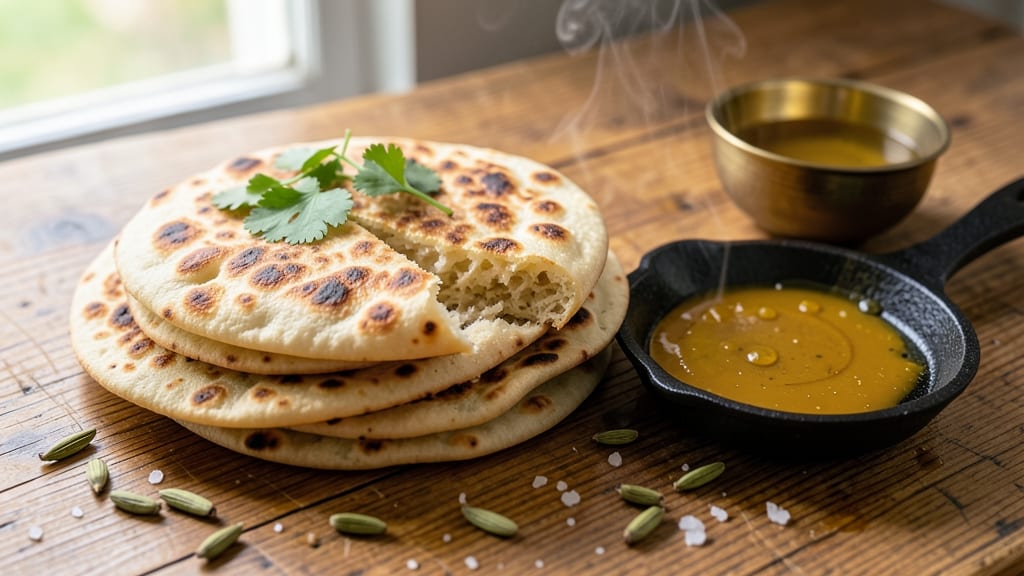
This African chapati bread recipe delivers the perfect balance of flaky layers and tender centers you crave in every bite. 🌟 What makes these different from traditional flatbreads is the secret technique of rolling the dough thinly and cooking it in batches for even browning, resulting in that signature crispy-edged, pillowy interior texture.
The dough comes together in just 15 minutes with simple ingredients—all-purpose flour, yeast, a touch of sugar, warm water, and a bit of oil—that transform into golden-brown chapati with minimal effort.
Unlike store-bought versions, these are made fresh, ensuring that each piece stays soft for hours while maintaining that irresistible crunch.
What you’ll end up with is a stack of perfectly cooked chapati that’s ideal for wrapping around curries, dipping into spicy chutneys, or simply enjoying with butter and honey. The aroma alone will have everyone gathering around the table, and the texture—crispy yet tender—makes every bite satisfying.
The beauty of this recipe lies in its versatility: serve with savory dishes for a hearty meal or pair with sweet spreads for breakfast. Once you try homemade, you’ll never go back to the store-bought versions again.
Ingredients for african chapati bread
Eight simple ingredients transform into golden, flaky chapati with perfect crispy edges and tender centers.
| Ingredient | Amount | Notes |
|---|---|---|
| All-Purpose Flour 🌾 | 4 cups | Sifted for lighter texture |
| Active Dry Yeast 🍞 | ¼ tsp | Ensure yeast is fresh |
| Granulated Sugar 🍚 | 1 tbsp | Activates yeast quickly |
| Unsalted Butter 🧈 | 2 tbsp | Cold for flaky layers |
| Warm Water 💧 | 1 ¼ cups | 105-110°F for activation |
| Salt 🧂 | ½ tsp | Kosher or sea salt |
| Vegetable Oil 🫒 | 1 tbsp | For smooth dough handling |
| Ghee or Butter 🧈 | 2 tbsp | For cooking chapati |
The all-purpose flour is your foundation—King Arthur or Bob's Red Mill brands yield the best texture. Fresh yeast is non-negotiable; if your packet is past its expiration, toss it. For the unsalted butter, grab Land O'Lakes or Plugrá for consistent quality. The warm water should feel like bathwater to your wrist—too hot kills yeast, too cool slows activation. Diamond Crystal kosher salt adds perfect seasoning without overpowering. Pro tip: If your kitchen runs warm, proof the yeast in a glass bowl—it rises faster and more visibly.
No active dry yeast? Instant yeast at half the amount works in a pinch. Substituting melted butter for ghee (or vice versa) changes flavor but maintains texture—just use equal parts. For a gluten-free version, swap flour for a 1:1 blend like Bob's Red Mill GF All-Purpose, but expect slightly denser chapati. The vegetable oil in the dough prevents sticking; avocado oil works too if you prefer a neutral taste. If your dough feels too sticky, add 1 tbsp more flour gradually until it's just pliable. For extra flakiness, chill the dough 30 minutes before rolling.
Store uncooked dough wrapped in plastic in the fridge for up to 24 hours—it actually develops more flavor. Cooked chapati stay fresh for 3 days at room temperature in an airtight container, stacked with parchment between layers. For longer storage, freeze batches between parchment sheets for up to 3 months. Reheat in a 350°F oven for 5 minutes to restore crispiness. Butter or honey pair perfectly—keep a small jar handy for serving. The ghee leftovers? Save for next time—it adds incredible richness to curries.
Why You'll Love This Recipe
- No Yeast Fuss: I swear by this dough—just flour, water, a pinch of sugar, and yeast. No kneading like sourdough, no waiting for hours. Toss it together, let it rise while you make dinner, and boom: golden, pillowy chapati ready in 15 minutes.
- Butter-Kissed Magic: That unsalted butter? Oh, it’s the star. The dough gets soft as a cloud, and when you fry them, the edges turn crisp while the inside stays tender. Slather it with jam, spread it with peanut butter—chef’s kiss—it’s always a win.
- Breakfast to Dinner: Honestly, I make these for everything. Warm them with honey for breakfast, tear them into curry for lunch, or serve with stew for dinner. They’re my go-to for lazy mornings or when I’m feeding a crowd—no one ever says no.
- Budget-Friendly Staple: Flour, yeast, sugar, butter—these are pantry basics. I batch-make a dozen, freeze half, and pull them out all week. No waste, no stress, and my wallet stays happy. Plus, they reheat like a dream straight from frozen.
Step-by-step instructions for African chapati bread
Master the art of creating delicate, flaky chapati with these precise techniques.
👨🍳 Step 1: Activate the Yeast for Perfect Rise
In a small bowl, combine the 1.25 cups warm water (between 105-110°F) with the 1 tbsp granulated sugar and 0.25 tsp active dry yeast. Let it sit for 5-10 minutes until frothy. You'll see bubbles forming—this confirms your yeast is alive and ready to work.
If no bubbles appear after 10 minutes, your yeast may be dead. Start fresh with a new packet. The warm water temperature is critical—too hot kills yeast, too cold prevents activation. Use a thermometer if possible for precision.
👨🍳 Step 2: Create the Dough with Cold Butter
In a large bowl, whisk together the 4 cups all-purpose flour and 0.5 tsp salt. Make a well in the center and pour in the yeast mixture along with the 1 tbsp vegetable oil. Using a wooden spoon, gradually mix until a shaggy dough forms.
Add the 2 tbsp cold unsalted butter, cut into small pieces, and work it into the dough. The cold butter creates those signature flaky layers. Knead on a lightly floured surface for 8-10 minutes until smooth and elastic. The dough should spring back when pressed gently.
🥘 Step 3: Rest the Dough for Optimal Texture
Shape the dough into a ball, place it in a lightly oiled bowl, cover with a damp towel, and let it rise in a warm place for 1-2 hours or until doubled in size. I like to place my bowl near the oven with the light on for consistent warmth.
This resting period allows the gluten to relax and the dough to develop flavor. For best results, let it rise until it reaches the top of the bowl—this indicates proper fermentation. If your kitchen is cold, extend the rising time to 2-3 hours.
🔥 Step 4: Divide and Roll with Precision
Punch down the risen dough and divide it into 8 equal balls (about 2.5 ounces each). Roll each ball between your palms to smooth the surface, then roll out on a floured surface to about ⅛-inch thickness. Keep the remaining dough covered to prevent drying.
I find using a rolling pin with ¼-inch thickness guides helps maintain consistency. The chapati should be thin enough to see light through the edges but not so thin it tears. Dust with flour as needed to prevent sticking during rolling.
🔥 Step 5: Cook to Golden Perfection
Heat a clean skillet or griddle over medium-high heat until hot. Cook each chapati for 1-2 minutes per side, using the 2 tbsp ghee or butter to baste the top side. You'll know it's ready when golden brown spots appear and the edges start to crisp.
For extra flakiness, I like to press down gently on the chapati during the first 30 seconds of cooking—this prevents it from curling and ensures even contact with the pan. Stack the cooked chapati on a plate covered with a clean towel to keep them soft.
Pro Tips For Making African Chapati Bread
- Test Yeast First: If your dough doesn’t rise, don’t blame the recipe—test your yeast. Mix 1 teaspoon yeast, 1 teaspoon sugar, and ¼ cup warm water (105-110°F) in a small bowl. Wait 5-10 minutes for bubbles. No bubbles? Your yeast is dead, and you’ll need fresh. (Yes, even if the package says "expires next month.")
- Stretch, Don’t Roll: African chapati needs that signature puff, not a flat pancake. After shaping, gently stretch the dough with your fingertips—no rolling pin—until it’s about ¼-inch thick and slightly thicker in the center. The uneven thickness creates those coveted air pockets when cooked. (I used to panic and roll it flat, then wondered why mine tasted dense.)
- Use Butter Like a Pro: Skip the melted butter shortcut—cold, cubed unsalted butter makes all the difference. Dot 1-2 tablespoons onto the dough before folding, then let it rest 10 minutes. The butter will soften just enough to create flaky layers without making the dough greasy. (I learned this after burning my fingers trying to fold sticky, oily dough.)
- Cook in Batches: Crowding your pan is how you end up with soggy, uneven chapati. Cook 1-2 at a time over medium-high heat until edges puff and golden brown spots appear—about 2-3 minutes per side. If you’re impatient like me, resist the urge to stack them; they’ll steam and turn into pancakes. (Your future self will thank you.)
Storing and reheating your african chapati bread
Room-Temp Freshness
Keep freshly made chapati in an airtight container with parchment paper between layers to maintain softness. At room temperature, they stay fresh for 3 days—perfect for meal prep. I like to stack them in a ceramic dish with a damp towel on top to prevent drying out.
For extra crispiness, reheat in a 350°F oven for 5 minutes before serving. 💫
Freezer Magic
Freeze uncooked dough balls between parchment sheets for up to 3 months. When ready to cook, thaw in the fridge overnight, then roll and cook as usual. For cooked chapati, wrap individually in plastic wrap and freeze—reheat in a 375°F oven for 3-4 minutes to restore that perfect texture.
I’ve found this method preserves flavor better than freezing cooked chapati directly.
Reheating Secrets
For stovetop reheating, place chapati in a dry skillet over medium heat for 20-30 seconds per side until warmed through. Avoid overcrowding the pan to prevent steam buildup, which makes them soggy.
A quick microwave zap (10 seconds) works in a pinch, but I prefer the stovetop for that crispy edge. 🔥
Storage Containers
Use glass containers with tight-sealing lids for refrigerated storage—they maintain moisture better than plastic. For freezer storage, opt for quart-sized freezer bags with the air squeezed out to prevent freezer burn.
Label bags with the date to track freshness. I keep a dedicated container just for chapati to avoid flavor transfer from other foods.
Butter vs. Ghee
Reheat chapati with ghee for a richer flavor or butter for a lighter taste. Brush a small amount on the surface before reheating to restore that golden sheen.
For extra indulgence, add a sprinkle of flaky sea salt after reheating. This simple step elevates the texture and makes chapati feel restaurant-quality. ✨
Nutrition facts
Frequently asked questions
Why does my African chapati dough feel too sticky?
Sticky dough happens when the gluten isn't fully developed or the moisture content is too high. Gradually add 1 tbsp more flour at a time while kneading until the dough becomes smooth but still slightly tacky to the touch. If it's extremely sticky, chill the dough for 15-20 minutes before rolling—this helps firm it up for easier handling.
Can I make African chapati without yeast?
Yes! For a quick version, replace the yeast with 1 tsp baking powder and 1 tsp baking soda in the dough. Skip the rising time and roll out the dough immediately—these will create a flatter, denser chapati with a slightly different texture. The result won't be as flaky but works well for a fast meal.
How do I prevent chapati from curling while cooking?
Curling happens when the edges cook too quickly. Press down gently on the chapati with a metal spatula during the first 30 seconds of cooking to flatten it. Also, ensure your pan isn't too hot—medium-high heat is ideal. If using ghee, add it gradually to prevent excess steam that causes curling.
What's the best way to serve African chapati?
These versatile flatbreads pair perfectly with curries, stews, or grilled meats. For a sweet touch, serve with honey, jam, or whipped butter. In East African cuisine, they're often used to scoop up nyama choma (grilled meat) or ugali (maize porridge). Warm chapati taste best—reheat briefly before serving for that crispy edge.