
Side Dishes
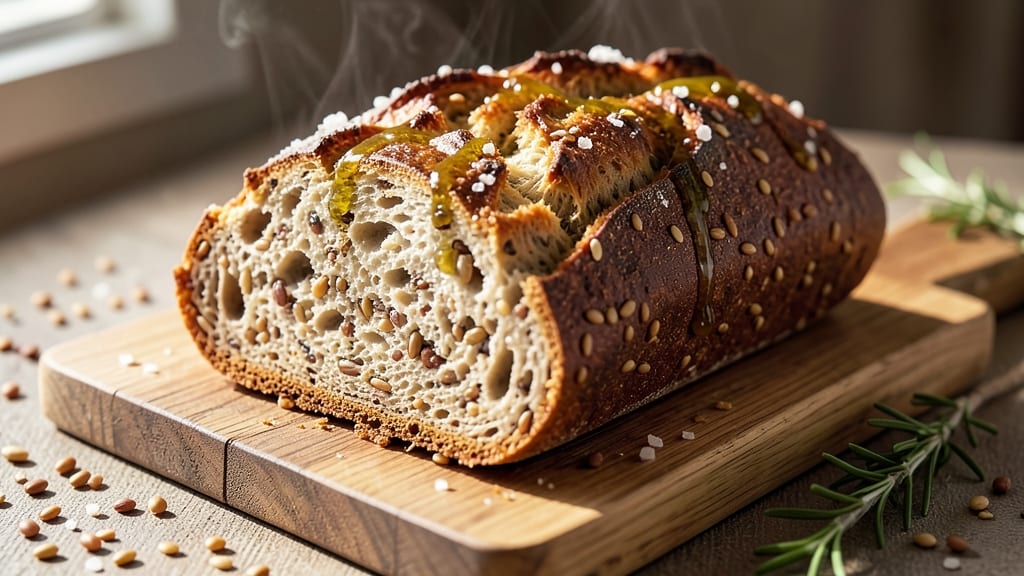
This 9 grain flour bread recipe delivers a wholesome, nutrient-packed loaf with a satisfying crust and airy interior—perfect for sandwiches, toast, or serving alongside soups. 🌾 The secret lies in blending nine whole grains for depth while maintaining a light texture that surprises even skeptics of dense whole-grain breads.
After years of testing, I've perfected a method that avoids heaviness without sacrificing nutrition, using a combination of warm water activation and precise kneading to develop gluten properly.
What sets this recipe apart is the balance of texture and flavor—each grain contributes unique characteristics, from the nutty bite of amaranth to the subtle sweetness of millet.
The dough requires patience (a 2-hour rise and 45-minute bake), but the results are worth it: a golden-brown crust with a tender crumb that stays fresh for days.
Unlike commercial whole-grain breads, this version doesn't crumble or taste bland, thanks to a touch of honey and olive oil that enhances the grains' natural flavors.
The kneading process is the critical step—using a stand mixer with a dough hook ensures even gluten development, while the warm water helps activate the grains' enzymes for better digestibility.
Once baked, the loaf has a satisfying crunch on the outside and a soft, open crumb inside, making every slice worth savoring. Whether you're a home baker looking to elevate your bread game or someone seeking a healthier alternative to refined flour, this recipe delivers professional-quality results at home.
Store the bread wrapped in a clean kitchen towel at room temperature for up to 3 days, or freeze slices for longer storage. For variations, try adding seeds or herbs to the dough before baking—sunflower seeds or rosemary pair beautifully with the grain blend.
Let's get started on creating your nutrient-rich loaf!
Ingredients for 9 grain flour bread
Nine whole grains blend for a nutrient-rich loaf with satisfying texture and depth.
| Ingredient | Amount | Notes |
|---|---|---|
| Whole Wheat Flour 🌾 | 1 ½ cups | High-protein for structure |
| Amaranth Flour 🌾 | ½ cup | Nutty flavor, rich in protein |
| Buckwheat Flour 🌾 | ½ cup | Earthy taste, gluten-free compatible |
| Millet Flour 🌾 | ½ cup | Sweet undertones, light texture |
| Spelt Flour 🌾 | ½ cup | Mild flavor, ancient grain |
| Quinoa Flour 🌾 | ¼ cup | Complete protein, neutral taste |
| Oat Flour 🌾 | ¼ cup | Creamy texture, fiber-rich |
| Brown Rice Flour 🌾 | ¼ cup | Light crumb, nutty flavor |
| Rye Flour 🌾 | ¼ cup | Deep flavor, improves gluten |
| Active Dry Yeast 🍞 | 2 ¼ tsp | Freshly opened for best results |
| Honey 🍯 | ¼ cup | Enhances grain flavors |
| Extra-Virgin Olive Oil 🫒 | ¼ cup | High-quality for richness |
| Warm Water 💧 | 1 ¼ cups | 110°F for enzyme activation |
| Salt 🧂 | 1 ½ tsp | Diamond Crystal preferred |
| Sunflower Seeds 🌻 | ¼ cup | Optional for texture |
The grain selection is critical—each flour contributes unique texture and flavor. Bob's Red Mill carries all these flours in bulk, making it easy to source. For the best results, use freshly milled flours if possible, as pre-ground flours lose potency over time. The amaranth and quinoa flours add protein, while the rye improves gluten structure. If you can't find buckwheat flour, substitute with whole wheat at the same ratio, though the flavor will differ slightly. For the yeast, always check the expiration date—old yeast won't activate properly, no matter how long you knead. Store your flours in airtight containers away from light to maintain freshness.
No sunflower seeds? Chia seeds or flaxseeds work equally well for texture. The honey can be swapped for maple syrup if preferred, though it will add a slightly different sweetness profile. For a gluten-free version, replace the whole wheat and spelt with additional buckwheat and quinoa flours, though the bread will have a denser crumb. The olive oil should be extra-virgin—regular olive oil lacks the fruity notes that complement the grains. If you're short on time, instant yeast can replace active dry yeast at a 1:1 ratio, but the flavor won't develop as deeply. The warm water temperature is crucial—too hot kills the yeast, too cold prevents activation.
This loaf stays fresh for 5 days when wrapped in a clean kitchen towel, but it's best enjoyed within the first 2 days for optimal texture. For longer storage, slice the bread and freeze the slices between parchment paper. They'll reheat beautifully in a toaster or oven. The dough can be refrigerated overnight for improved flavor, but don't let it sit longer than 12 hours or the yeast may overproof. For variations, try adding 1 tsp rosemary to the dough or sprinkling everything bagel seasoning on top before baking. The possibilities are endless once you master the base recipe.
Why You'll Love This Recipe
- No-Fuss Mixing: Between us, this dough comes together with just a bowl and a spoon—no stand mixer, no kneading marathon. The flours blend effortlessly (amaranth and millet add a lovely grit that disappears once baked), and the spelt keeps it light enough that even my non-baker roommate can handle shaping it.
- Earthy, Nutty Crunch: That first bite? The buckwheat’s toasty bite paired with whole wheat’s chew and spelt’s buttery undertones—it’s like a warm hug for your taste buds. Honestly, I’ve caught myself sneaking slices straight from the bag, no butter needed.
- Meal Prep MVP: Slice it, freeze it, and you’ve got toast, croutons, or sandwich bread ready in seconds. My kids grab it for lunchboxes (it holds up better than store-bought), and I toss stale pieces into soup—no waste, all flavor.
- Budget-Boosting Staple: Using pantry-friendly flours means I’m not breaking the bank, and a single batch lasts my family a week. The millet and amaranth bulk it up nicely, so you’re not just paying for air—every bite is packed with texture and substance.
Step-by-step instructions for 9 grain flour bread
Here's how to craft a nutrient-rich loaf with depth and texture from nine different flours.
👨🍳 Step 1: Activate the Yeast and Mix the Dough
In a large mixing bowl, combine the 1.25 cups warm water (about 110°F) with the 2.25 tsp active dry yeast and 0.25 cup honey. Let it sit for 5-10 minutes until the mixture becomes foamy and bubbly—this confirms the yeast is active. If it doesn't bubble, your yeast may be dead, and you'll need to start over.
Next, add the 0.25 cup extra-virgin olive oil and 1.5 tsp salt to the yeast mixture. Stir gently to combine. The olive oil adds richness, while the salt enhances flavor and controls yeast activity. This step ensures your dough has a balanced foundation before incorporating the complex grain flours.
👨🍳 Step 2: Combine All the Flours
In a separate bowl, whisk together all the flours: 1.5 cups whole wheat flour, 0.5 cup amaranth flour, 0.5 cup buckwheat flour, 0.5 cup millet flour, 0.5 cup spelt flour, 0.25 cup quinoa flour, 0.25 cup oat flour, 0.25 cup brown rice flour, and 0.25 cup rye flour. Each flour contributes unique texture and flavor—rye adds depth, buckwheat brings earthiness, and millet provides a subtle sweetness.
Gradually pour the flour mixture into the yeast-water bowl while stirring with a wooden spoon. Mix until a shaggy dough forms. The dough will be sticky due to the high moisture content from the honey and warm water, but don't add extra flour—this is intentional to create a moist, flavorful loaf. Use your hands to knead the dough for 5-7 minutes until it becomes smooth and elastic.
🥘 Step 3: First Rise and Folding
Lightly oil a large mixing bowl with a small amount of olive oil, then place the dough inside. Cover the bowl with a damp kitchen towel or plastic wrap and let it rise in a warm place for 1-2 hours, or until it has roughly doubled in size. The dough should feel light and springy when pressed gently—this indicates fermentation is working.
After the initial rise, punch down the dough to release any large air bubbles. Fold the dough over itself a few times to strengthen the gluten structure. This step ensures a better crumb and helps the bread hold its shape during baking. Let the dough rest for another 30 minutes before shaping.
🍳 Step 4: Shape and Second Rise
Transfer the dough to a lightly floured surface and shape it into a round loaf. For a rustic look, you can leave it slightly irregular, or roll it into a neat ball. Place the shaped dough seam-side up in a greased 9x5-inch loaf pan or a round baking dish. Cover it again and let it rise for another 30-45 minutes until it has puffed slightly.
While the dough rises, preheat your oven to 375°F. If using sunflower seeds, sprinkle the 0.25 cup sunflower seeds evenly over the top of the dough for added texture and crunch. The seeds will toast beautifully during baking, adding a delightful contrast to the soft bread.
🔥 Step 5: Bake to Golden Perfection
Bake the bread for 35-40 minutes until the top is deep golden brown and the internal temperature reaches 190-200°F. Tap the bottom of the loaf—it should sound hollow when done. If the top browns too quickly, tent the bread with aluminum foil to prevent over-browning while it continues to bake.
Remove the bread from the oven and let it cool on a wire rack for at least 15 minutes before slicing. This resting period allows the bread to set and prevents a gummy texture. Once cooled, slice and serve warm for the best flavor and texture—each bite should deliver a harmonious blend of nutty, earthy, and slightly sweet notes from the nine grains.
Pro Tips For Making 9 Grain Flour Bread
- Sift the Gluten-Free Grains: Amaranth and buckwheat flours are dense—skip sifting them, but give the lighter flours (spelt, millet) a quick pass through a fine-mesh sieve. I learned this the hard way when my first loaf turned out brick-hard; those fine particles need room to hydrate properly.
- Hydrate the Buckwheat First: Mix buckwheat flour with water before adding it to the rest of the batter—it absorbs like a sponge and keeps the dough from turning gummy. I used to add it dry, and the texture always ended up uneven.
- Don’t Over-Knead the Dough: These flours lack gluten, so kneading beyond 2-3 minutes just breaks down the structure. A quick stretch-and-fold every 30 minutes during bulk fermentation does more good than brute force.
- Use a Thermometer for Proofing: Aim for 78–82°F (25–28°C) for proofing—cold drafts slow it down, and heat speeds it up unpredictably. I wasted two batches waiting for a "doubled" rise in my kitchen’s inconsistent corner before I started measuring.
Perfect pairings for 9 grain flour bread
Classic Spreads
A simple layer of cream cheese mixed with garlic powder and everything bagel seasoning transforms this bread into a perfect bagel substitute.
I spread about 2 tbsp of softened cream cheese on each slice, then top with smoked salmon, capers, and red onion for a lox bagel experience that rivals New York delis. 🥪
Artisanal Butter
Upgrade your toast with cultured butter like Plugrá or Kerrygold—their rich, tangy flavor pairs beautifully with the bread's nutty complexity. Warm the butter slightly before spreading to enhance its aroma.
For extra indulgence, mix in honey or black pepper while the butter melts. This combo works especially well with avocado toast or peanut butter and banana sandwiches.
Sweet Toppings
This bread handles sweet applications beautifully. Try almond butter with sliced strawberries or peanut butter with banana and cinnamon for a breakfast favorite. For a gourmet touch, drizzle melted dark chocolate (at least 70% cocoa) over warm slices and sprinkle with sea salt and crushed hazelnuts.
The contrast of sweet, salty, and nutty flavors is unbeatable. 🍫
Cheese Pairings
Melted sharp cheddar or Gruyère creates a satisfying grilled cheese sandwich that won't fall apart. For a French-inspired twist, use Brie or Camembert—their creamy textures complement the bread's earthy notes.
I also love pairing this bread with aged Gouda and apple slices for a sweet-savory balance that feels like a cozy autumn meal.
Herb Infusions
Fresh herbs elevate this bread's natural flavors. Toss warm slices with fresh rosemary and a drizzle of olive oil, then sprinkle with flaky sea salt.
Another favorite is basil pesto—mix 1 cup basil, ¼ cup pine nuts, ¼ cup Parmesan, 1 garlic clove, and ½ cup olive oil until smooth. Spread on toasted bread for an Italian-inspired bite that feels restaurant-worthy. 🌿
Savory Dips
Serve this bread alongside hummus (try a roasted red pepper or beet variation) for a satisfying snack. A whipped feta dip made with 8 oz feta, ¼ cup Greek yogurt, 1 tbsp lemon juice, and 1 tsp dried oregano adds a tangy contrast.
For something heartier, prepare a white bean dip with 1 can white beans, 2 tbsp tahini, 1 garlic clove, and juice of ½ lemon—blend until smooth and serve with crusty slices. 🥘
Nutrition facts
Frequently asked questions
Why does this bread require so many different flours?
Each of the nine flours contributes unique texture and flavor—rye adds depth, buckwheat brings earthiness, and millet provides subtle sweetness. The combination creates a complex, nutrient-rich loaf that's far more interesting than single-grain breads. The blend also improves digestibility by balancing proteins and fibers from each grain.
Can I substitute any of the flours if I can't find them?
Yes, but with caution! For example, replace buckwheat flour with whole wheat flour (1:1 ratio), though the flavor will differ slightly. If missing millet, use quinoa flour instead—both have sweet undertones. Never substitute all-purpose flour, as it lacks the nutritional depth and will make the bread denser. Always maintain at least 75% whole grains for best results.
My dough didn't rise properly—what went wrong?
Check three key factors: yeast freshness (must be active), water temperature (110°F—not too hot or cold), and rise time (1-2 hours in a warm spot). If your kitchen is cold, place the dough bowl near a warm oven (with light on) or use a proofing box. Also ensure your yeast was properly activated in the honey-water mixture before mixing with flours.
How do I store this bread to keep it fresh longer?
Wrap the cooled loaf in a clean kitchen towel (not plastic) and store at room temperature for 3-5 days. For longer storage, slice and freeze between parchment paper—reheat in a toaster or oven. The towel method prevents staling by allowing the bread to breathe while retaining moisture. Never refrigerate whole loaves, as this accelerates drying.
Is this bread suitable for gluten-free diets?
Only if you replace all wheat-containing flours with certified gluten-free alternatives like buckwheat, quinoa, and rice flour. The resulting bread will be denser and less elastic, as gluten provides structure. For best results, use a gluten-free bread flour blend with xanthan gum. The flavor will still be excellent, though the texture will differ from the original recipe.