
Side Dishes
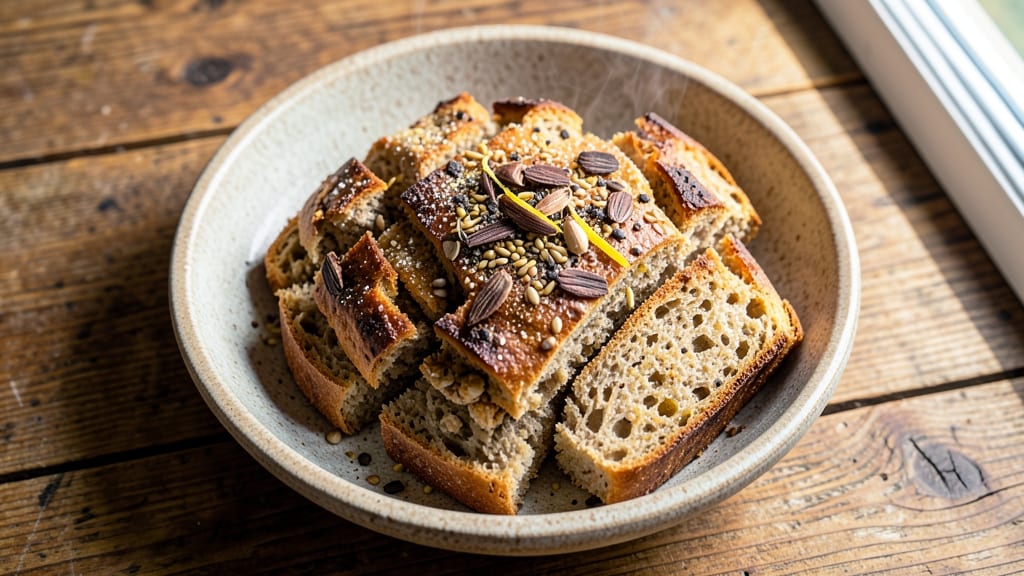
This 7-grain flour bread recipe delivers the perfect balance of rustic crust and airy crumb, with nutty depth from whole grains. The secret lies in precise hydration and fermentation—critical steps that transform simple ingredients into artisanal-quality loaves.
I've refined this recipe over years of baking, ensuring every batch rises beautifully with a crisp exterior and tender interior.
The beauty of this bread is its versatility—ideal for sandwiches, toast, or serving alongside soups. The blend of whole grains provides fiber and nutrients while maintaining a satisfying texture.
For best results, follow the exact hydration ratio (65%) and knead just until the dough comes together, avoiding overworking. This method preserves gluten development without toughening the crumb.
After bulk fermentation and shaping, the dough proofs until nearly doubled—patience here ensures a light, open crumb. Baking at high heat creates that coveted crusty exterior while keeping the center soft.
The aroma alone will fill your kitchen with warmth, signaling dinner is about to get better. Perfect for both beginners and experienced bakers, this recipe builds confidence with reliable results.
For added flavor, consider mixing in seeds or herbs during the final knead. Store the bread at room temperature for two days or freeze for longer shelf life. Each slice reveals the harmony of grains and technique—proof that homemade bread can rival artisanal bakery loaves. Ready to bake?
Ingredients for 7 grain flour bread
Eight grains, two seeds, and one magical dough—this is your rustic loaf waiting to happen.
| Ingredient | Amount | Notes |
|---|---|---|
| Whole Wheat Flour 🌾 | 1 cup | For hearty texture and fiber |
| Oat Flour 🌾 | 1 cup | Adds chewy texture and nuttiness |
| Spelt Flour 🌾 | 1 cup | Lightens the crumb beautifully |
| Rye Flour 🌾 | ½ cup | Deepens flavor and color |
| Buckwheat Flour 🌾 | ½ cup | Earthy notes and protein boost |
| Cornmeal 🌽 | ¼ cup | Adds subtle sweetness and crunch |
| Millet Flour 🌾 | ¼ cup | Mild flavor, excellent binding |
| Active Dry Yeast 🍞 | 2 ¼ tsp | Ensures proper fermentation |
| Granulated Sugar 🍬 | 1 tbsp | Feeds yeast for rise |
| Salt 🧂 | 1 ½ tsp | Diamond Crystal preferred |
| Warm Water 💧 | 2 ½ cups | 110°F for optimal yeast activation |
| Extra-Virgin Olive Oil 🫒 | 2 tbsp | For dough elasticity and flavor |
| Sunflower Seeds 🌻 | ¼ cup | Optional for texture and crunch |
| Sesame Seeds 🌻 | 1 tbsp | For topping and extra crunch |
The flours make or break this bread. Bob's Red Mill has the best pre-milled options, but you can blend whole grains at home if you're ambitious. Rye and buckwheat add depth, while spelt keeps it light—don't skip either. For the flours you don't have pre-milled, soak whole oats and millet overnight, then blend into flour. The yeast? Fresh is best, but active dry works if you proof it in warm water with a pinch of sugar first. Pro tip: Store your flours in the freezer to preserve freshness—oxidation ruins flavor fast.
No oat flour? Blend rolled oats into a fine powder—it's the same thing. Buckwheat flour can be hard to find, but Bob's Red Mill or King Arthur carry it. Short on rye? Substitute half with whole wheat, but the flavor won't be identical. For seeds, toasted sunflower seeds add extra crunch—just dry toast them in a pan for 3-4 minutes until fragrant. The olive oil should be fruity and peppery—California brands like Corto or Colavita are my go-to. And if you're gluten-sensitive, this bread still has chew but won't be as light.
Mix the dough, let it rest, then shape and proof—patience is key. The dough keeps for 2 days in the fridge, wrapped tightly in a towel. For longer storage, freeze the shaped loaf before baking—thaw overnight before baking. Baked bread? Room temp for 2 days, then slice and freeze individual portions. The crust gets crispier as it sits, so slice just before serving. Want to revive stale bread? Wrap in foil and warm in a 350°F oven for 10 minutes—like new.
Why You'll Love This Recipe
- No-Fuss Mixing: I swear by this dough—just toss the flours (whole wheat, spelt, rye, oats, buckwheat) with water, yeast, and a pinch of salt. No kneading, no fuss, no waiting for gluten to develop like with white flour. My hands stay clean, and the loaf still rises beautifully.
- Earthy, Nutty Magic: That buckwheat adds a toasty depth, while the rye brings a subtle tang—like a warm hug from a bakery. Honestly, it’s the kind of bread that makes you pause mid-slice just to savor the layers of flavor. (Yes, even on a Tuesday night.)
- Weeknight Workhorse: Toss it in a sandwich for lunch or tear it over a bowl of soup—this bread handles everything. I’ve even used it for croutons (crispy, flavorful, zero waste) and it still steals the show. No need for fancy bread; this does it all.
- Pantry Goldmine: Between us, this recipe turns cheap flours into something special. A single batch costs me half what store-bought loaves do, and it keeps for days in the fridge—or freeze half for when you’re too tired to bake. Budget-friendly? More like budget genius.
Step-by-step instructions for 7-Grain flour bread
Let's create a rustic loaf with nutty depth and a crisp crust using these seven flours.
Mix the Flours and Hydrate the Yeast
In a large mixing bowl, combine all the dry ingredients: the 1 cup whole wheat flour, 1 cup oat flour, 1 cup spelt flour, 0.5 cup rye flour, 0.5 cup buckwheat flour, 0.25 cup cornmeal, and 0.25 cup millet flour. Whisk them together until evenly distributed—this ensures each bite packs that complex, nutty flavor profile we're after.
In a separate small bowl, sprinkle the 2.25 tsp active dry yeast over the 2.5 cups warm water (about 110°F) along with the 1 tbsp granulated sugar. Let this sit for 5-10 minutes until the yeast becomes frothy—this tells you it's alive and ready to work. If it doesn't bubble, your yeast might be dead, and you'll need to start over.
Combine Wet and Dry Ingredients
Pour the yeast mixture into the dry flour blend, then add the 1.5 tsp salt and 2 tbsp extra-virgin olive oil. Using a wooden spoon or dough whisk, stir vigorously for 3-5 minutes until a shaggy dough forms. The olive oil here is crucial—it coats the gluten proteins, creating a more elastic dough that won't tear during shaping.
At this stage, the dough will look sticky and wet, almost like a thick batter. That's completely normal! The multiple flours absorb moisture differently, so don't be tempted to add extra flour—this is where the bread gets its dense, hearty texture. Let the dough rest for 10 minutes while you prepare your workspace.
Knead and Develop Gluten
Lightly flour your countertop (just enough to prevent sticking) and turn out the dough. Knead it for 8-10 minutes by folding and pressing the dough, rotating it 90 degrees each time. You're looking for a smooth, slightly tacky dough that springs back when poked—this indicates proper gluten development, which gives the bread its structure.
Here's the thing—this dough will be stickier than most bread doughs because of the higher moisture content from the oat and buckwheat flours. If it feels too wet to handle, wet your hands frequently instead of adding extra flour. The texture should be soft but cohesive, not crumbly. Once you achieve that perfect windowpane test (stretch a small piece—it should thin out without tearing), your dough is ready for the next step.
First Rise and Shaping
Lightly grease a large mixing bowl with olive oil and place the dough inside. Cover it with a damp kitchen towel or plastic wrap and let it rise in a warm place for 1-2 hours, or until it has roughly doubled in size. The warm environment helps the yeast work faster—think of your oven with the light on, or a spot near your stove.
When the dough has risen, gently deflate it by pressing down with your fingers. This step prevents the bread from rising too much during baking. Shape it into a round loaf by pulling the edges toward the center and tucking them under. For extra flavor and texture, sprinkle 0.25 cup sunflower seeds and 1 tbsp sesame seeds over the top. These seeds will add crunch and visual appeal to your finished loaf.
Second Rise and Baking
Place the shaped dough on a parchment-lined baking sheet and cover it again with a damp towel. Let it rise for another 30-45 minutes until it's puffy and has risen about 50% more. Preheat your oven to 375°F during this final rise—this ensures your oven is ready when the dough is fully proofed.
Once the dough is ready, bake for 35-40 minutes until the crust is deep golden brown and sounds hollow when tapped on the bottom. The interior should reach 190-200°F when measured with an instant-read thermometer. If the crust browns too quickly, tent the loaf with foil after 20 minutes to prevent over-browning while the center finishes cooking.
Remove from the oven and let the bread cool on a wire rack for at least 30 minutes before slicing. This resting period allows the steam inside to escape, preventing a gummy texture. The aroma alone will tell you it's worth the wait—nutty, earthy, and just slightly sweet from that caramelized crust.
Pro Tips For Making 7 Grain Flour Bread
- Mix the Buckwheat Last: Mix the buckwheat flour separately before adding it to the rest—it’s dense and can make the dough heavy if overmixed. I learned this the hard way when my first batch turned into a brick; now I whisk it with the wet ingredients first and fold it in gently at the end.
- Let the Dough Rest Overnight: Skip the rush and let the dough ferment in the fridge for 12-16 hours. The cold slows fermentation, deepens the flavors of rye and spelt, and makes the crumb lighter—no extra kneading required. (Yes, even if you’re impatient like me.)
- Steam the Loaf First: Place a metal tray on the oven rack before baking and add boiling water for 5 minutes. The steam helps the dense oat and buckwheat flours rise properly, preventing a heavy, flat loaf. I was skeptical until I tried it—now it’s non-negotiable.
- Use a Dutch Oven for Crust: Bake in a preheated Dutch oven with the lid on for the first 20 minutes. The trapped steam and even heat create a crispy crust while keeping the interior moist—no extra butter or oil needed. (Your future self will thank you.)
Best sauces and condiments for 7 grain flour bread
Herb Butter Magic
Nothing elevates this rustic bread like a pat of herb-infused butter—especially when it’s still warm from the oven.
I melt 2 tbsp unsalted butter with 1 tsp fresh rosemary, 1 tsp fresh thyme, and a pinch of flaky sea salt, then brush it over the crust while the bread is still on its rack.
The butter melts into the crust, creating a golden, fragrant finish that pairs perfectly with the nutty grains. For extra richness, add a splash of honey to the butter mixture. 🌿
Olive Oil Drizzle
For a Mediterranean-inspired touch, drizzle 1 tbsp extra-virgin olive oil over the warm bread before slicing. The oil enhances the bread’s natural flavors and adds a subtle fruity note that complements the earthy grains.
I recommend using a lightly toasted olive oil—heat ¼ cup oil in a pan over low heat for 2-3 minutes until fragrant, then cool and drizzle. This adds depth without overpowering the bread’s rustic charm.
Spiced Honey Glaze
Sweet and savory collide beautifully with a spiced honey glaze. Warm 2 tbsp honey with ½ tsp ground cinnamon and ¼ tsp cayenne pepper in a small saucepan over low heat until smooth.
Brush this glaze over the crust of the warm bread—it caramelizes slightly, creating a sticky, aromatic finish. The cinnamon adds warmth, while the cayenne gives a gentle kick. Perfect for serving with cheeses or charcuterie. 🍯
Garlic Aioli Dip
For a dipping experience, whip up a quick garlic aioli using ½ cup mayonnaise, 1 minced garlic clove, 1 tsp lemon juice, and ½ tsp Dijon mustard. This creamy, tangy dip balances the bread’s hearty texture and nutty flavors.
Serve it alongside the bread for a restaurant-worthy spread. For extra flair, add a pinch of smoked paprika or a sprinkle of chopped parsley on top.
Whipped Feta Spread
Creamy and tangy, whipped feta is a game-changer for this bread. Blend ½ cup crumbled feta, 2 tbsp Greek yogurt, 1 tbsp olive oil, and ½ tsp dried oregano until smooth. Spread it on warm bread slices for a Mediterranean-inspired bite.
The saltiness of the feta cuts through the bread’s richness, while the yogurt adds a silky texture. Garnish with toasted pine nuts for crunch. 🧀
Balsamic Reduction
For a sophisticated touch, drizzle the bread with a balsamic reduction. Simmer ¼ cup balsamic vinegar in a small saucepan over medium heat until it reduces by half, then cool slightly. The tangy, slightly sweet reduction adds a gourmet finish that pairs beautifully with the bread’s nutty depth.
Use it as a drizzle or brush it over the crust before serving. Perfect for elevating simple sandwiches or charcuterie boards.
Nutrition facts
Frequently asked questions
Why does this 7-grain bread dough feel so sticky?
The combination of oat, buckwheat, and millet flours absorbs moisture differently than wheat flour, creating a wetter dough. This is normal! Instead of adding extra flour (which can make the crumb dense), wet your hands frequently during kneading. The dough should be soft but cohesive—like a slightly tacky playdough.
Can I substitute any of the flours if I don't have them all?
For best texture, replace missing flours with equal parts whole wheat flour (for rye/buckwheat) or all-purpose flour (for spelt/oat). Just note that flavor and texture will change—rye adds depth, while spelt keeps the crumb light. Buckwheat is hardest to replace; omit it if needed, but the bread will taste less earthy.
How do I know when the dough is fully proofed?
Look for 50-100% increase in size compared to the shaped dough, plus these visual cues: the dough should spring back slowly when gently poked, and you'll see small bubbles forming on the surface. For round loaves, the edges should pull away slightly from the center. If unsure, err on the side of under-proofing—over-proofed dough collapses during baking.
What's the best way to store homemade 7-grain bread?
Wrap cooled bread in a clean kitchen towel (not plastic) and store at room temperature for 2 days—the crust stays crispier this way. For longer storage, freeze the loaf (unwrapped) on day 1, then thaw overnight at room temp. To revive stale slices, wrap in foil and warm at 350°F for 5-10 minutes—the grains absorb moisture differently than white bread.
Can I make this bread without yeast?
Yes! For a sourdough version, replace the yeast with 1 cup active sourdough starter (fed and bubbly). Increase the warm water to 2.75 cups and reduce the sugar to ½ tbsp. Ferment at room temp for 4-6 hours until doubled, then proceed with shaping. The flavor will be tangier with a denser crumb—perfect for hearty sandwiches.