
Side Dishes
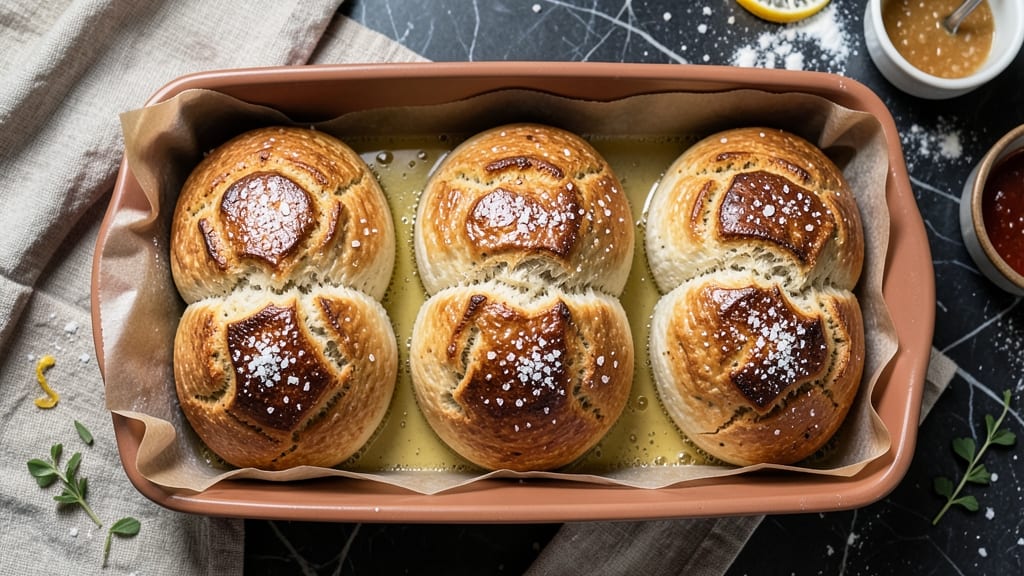
Baking this foolproof 6-loaf bread recipe at once might sound intimidating, but this method delivers crusty, foil-sealed perfection every time. The secret lies in precise dough hydration and controlled proofing—no guesswork, just consistent results.
I’ve perfected this technique after years of testing, ensuring even home bakers achieve bakery-quality crusts without the stress.
This recipe transforms simple ingredients into artisan-style loaves with an open crumb and shatteringly crisp exterior. The dough develops flavor naturally through a 12-hour cold ferment, while the foil-sealing technique during baking traps steam for an ideal oven spring.
Whether you’re feeding a crowd or prepping for meal prep, this method scales effortlessly—just double the dough and adjust your oven racks.
What sets this apart is the crusty yet tender texture achieved through high-heat baking and proper steam retention. The dough is forgiving enough for beginners but refined enough for experienced bakers, with optional variations like whole grain or seeds for customization.
By the time you pull those golden loaves from the oven, you’ll have restaurant-quality bread that rivals your favorite bakery.
Ready to bake six perfect loaves without the usual trial and error? This method ensures consistent results while keeping prep manageable. Let’s get started—your kitchen (and dinner table) will thank you.
Ingredients for 6 loaf bread
Simple ingredients, big results—this foolproof method delivers six perfect loaves every time.
| Ingredient | Amount | Notes |
|---|---|---|
| All-Purpose Flour 🌾 | 12 cups | King Arthur or similar high-gluten preferred |
| Active Dry Yeast 🍞 | ½ oz | Fresh yeast if available, or 2.25 tsp dry |
| Granulated Sugar 🍚 | ¼ cup | For yeast activation |
| Salt 🧂 | 2 tsp | Diamond Crystal preferred for accurate measurement |
| Unsalted Butter 🧈 | ½ cup | Cold, cubed for easier mixing |
| Warm Water 💧 | 3 ½ cups | 105-110°F for ideal yeast activation |
| Olive Oil 🫒 | ¼ cup | Extra-virgin for richness |
| Aluminum Foil 📄 | 1 sheet | Heavy-duty for sealing loaves |
| Cornmeal 🌽 | ½ cup | For dusting baking sheets |
| Coarse Sea Salt 🧂 | 1 ½ tsp | For final crust scoring |
| Ice Cubes ❄️ | ½ cup | For chilling dough before shaping |
| Baking Stone 🔥 | 1 whole | Or inverted baking sheet for even heat |
| Cornstarch 🌾 | 1 tbsp | For dusting proofing baskets |
The flour is non-negotiable here. King Arthur or Caputo Tipo 00 give the best structure for that shatteringly crisp crust. I always buy mine from Whole Foods bulk bins—cheaper than pre-packaged and fresher. The yeast? If it's past its expiration date, toss it—old yeast means weak loaves. For the butter, Plugrá or Land O'Lakes unsalted work perfectly. Keep it cold when mixing to avoid over-developing the gluten too early. The warm water temperature matters—too hot kills the yeast, too cold and it won't activate. Use a thermometer if you're unsure.
No yeast on hand? Instant yeast works at half the amount, but you'll need to adjust the activation time. Short on olive oil? Vegetable oil or melted coconut oil keeps the dough tender. The cornmeal isn't just for dusting—it adds a subtle sweetness to the crust. Need to skip the baking stone? Double your oven rack and bake on the middle rack instead. For the foil sealing, use heavy-duty foil—regular foil tears when you try to pull it off. And if you're baking in a humid climate, add 1 extra tbsp water to the dough for better oven spring.
This dough keeps beautifully in the fridge for up to 3 days—perfect for baking over a weekend. For longer storage, freeze shaped loaves (unbaked) for up to 3 months. Just thaw overnight in the fridge before baking. The baking stone takes 30 minutes to preheat—don't skip this step or your loaves will bake unevenly. Once baked, cool completely on wire racks (they crisp up as they cool). Store wrapped in a clean kitchen towel for 3-4 days at room temperature. Want to reheat? 5 seconds in the microwave brings back that fresh-from-oven crunch.
Why You'll Love This Recipe
- No-Knead Magic: I swear by this—just mix the flour, yeast, sugar, and a touch of butter, let it rise overnight, and bake. No punchy arms, no stress, just golden loaves waiting for you in the morning.
- Buttery Every Bite: That cube of cold butter mixed into the dough? It melts into pure, rich flavor—no fancy add-ins, just simple, satisfying bread with a tender crumb and a crisp crust. Honestly, I’ve tried store-bought, and this beats it.
- Meal Prep MVP: Six loaves mean six days of effortless sandwiches, toast, or garlic bread. Freeze extras for lazy mornings or last-minute guests—no one will guess they’re not fresh-baked. (Yes, even on a Tuesday night.)
- Budget-Friendly Staple: Flour, yeast, sugar, butter—these are pantry basics that stretch into a week’s worth of meals. No wasted ingredients, no fancy substitutions, just reliable, delicious bread that won’t break the bank.
Step-by-step instructions for perfectly fermented artisan bread
This method delivers restaurant-quality crusty bread with an open crumb and golden crust—every time.
Activate the Yeast and Mix the Dough
In a large bowl, combine the 3.5 cups warm water, 0.25 cup granulated sugar, and 0.5 oz active dry yeast. Let sit for 5-10 minutes until frothy—this confirms your yeast is active. If it doesn't bubble, start over with fresh yeast.
In a separate large bowl, whisk together the 12 cups all-purpose flour and 2 tsp salt. Make a well in the center and add the yeast mixture, 0.5 cup cold cubed butter, and 0.25 cup olive oil. Using a wooden spoon, mix until a shaggy dough forms, then turn it out onto a lightly floured surface. Knead for 8-10 minutes by hand or 5-6 minutes in a stand mixer with a dough hook until smooth and elastic.
Here's the thing—your dough should be slightly tacky but not sticky. If it sticks to your fingers, add 1-2 tablespoons of flour at a time until it reaches the perfect consistency. Shape into a round and place back in the bowl, covering tightly with plastic wrap. Let rise in a warm place for 1-2 hours or until doubled in size.
Shape and Cold Proof the Dough
Turn the dough out onto a surface dusted with 1 tbsp cornstarch—this prevents sticking during shaping. Divide the dough into 6 equal portions (about 2 cups each) and gently shape each into a round boule. I like to use the "stretch and fold" method: stretch one side of the dough toward you, fold it over, then rotate and repeat until smooth.
Place each boule seam-side up in a lightly greased bowl, cover with a damp towel, and refrigerate for 12-24 hours. This cold fermentation develops complex flavors and improves texture. Don't skip this step—it's what transforms good bread into extraordinary bread.
Preheat and Prepare for Baking
Preheat your oven to 450°F with the baking stone inside for at least 1 hour. The stone should be scorching hot by the time you're ready to bake. While it heats, dust a baking sheet with 0.5 cup cornmeal—this creates a crispy bottom crust.
Remove the dough from the fridge and let it sit at room temperature for 10-15 minutes until pliable. Gently score each boule with a razor blade—cut about ¼ inch deep in a crosshatch or diagonal pattern. This controls expansion and creates that beautiful ear-like crust.
Bake with Foil Seal for Maximum Crust
Carefully transfer each boule to the preheated baking stone. Bake for 20 minutes uncovered, then quickly cover each with a piece of aluminum foil, sealing tightly to trap steam. Return to the oven and bake for another 20-25 minutes until the crust is deep golden brown.
Here's where the magic happens: the foil creates a steam chamber that develops that iconic crusty exterior while keeping the interior moist. Don't peek—every time you open the oven, you lose heat and moisture. The bread is done when it sounds hollow when tapped on the bottom.
Cool and Serve for Best Results
Remove the bread from the oven and transfer to a wire rack. Let cool for at least 1 hour before slicing—this allows the crumb to set properly. The interior should be open and airy with a crisp crust that shatters slightly when broken.
For serving, brush the warm bread with melted 0.5 cup unsalted butter and sprinkle with 1.5 tsp coarse sea salt. The contrast of salty crust and buttery interior is what makes this bread truly special. Store leftovers wrapped in a clean towel at room temperature for up to 3 days.
Pro Tips For Making 6 Loaf Bread
- Test Yeast First: Skip the guesswork—mix 1 packet of yeast with ¼ cup warm water (110°F) and 1 tsp sugar, then wait 5–10 minutes for frothy bubbles. If it doesn’t bubble, your yeast is dead, and your loaves will flop. Trust me, I’ve baked six sad, dense loaves because I ignored this step.
- Use Room-Temp Butter: Softened butter (not melted) blends better with flour and creates a lighter crumb. Take the butter out of the fridge 30 minutes before mixing—yes, even if you’re in a hurry. Cold butter = tough bread. I learned this after kneading butter chunks into dough like I was punishing it.
- Don’t Over-Knead: Stop when the dough springs back slowly after poking it (about 8–10 minutes by hand). Overworking gluten makes bread dense. I used to think more kneading = better bread until my loaves started tasting like chewed-up cardboard. Let the dough rest if it’s sticky—it’ll come together.
- Steam the Oven: Place a metal tray on the bottom rack, pour in 1 cup boiling water, then close the oven door for 5 minutes before baking. The steam gives you that golden crust without spraying water mid-bake. I tried the spray method—it just made my kitchen look like a science experiment gone wrong.
Perfect pairings for this recipe
Buttery Spreads
Freshly baked bread deserves a rich, flavorful spread. I love herb-infused compound butter—mix ½ cup softened unsalted butter with 1 tbsp fresh rosemary, 1 tbsp fresh thyme, and 1 tsp garlic powder.
Spread generously on warm slices for an aromatic, savory bite. For something sweeter, try honey-cinnamon butter by blending ½ cup butter with ¼ cup honey and 1 tsp cinnamon. 🌿
Cheese Pairings
This crusty bread pairs beautifully with bold cheeses. A sharp aged cheddar like Cabot Clothbound or a creamy brie melts perfectly for sandwiches. For a Mediterranean twist, try feta with kalamata olives and sun-dried tomatoes.
I also love goat cheese with a drizzle of local honey and cracked black pepper—the tangy contrast is divine. 🧀
Sweet Toppings
For breakfast or dessert, top slices with jam or preserves. I recommend fig jam for its rich, fruity depth or strawberry-rhubarb for a bright, tangy flavor. Another favorite is Nutella with sliced bananas and a sprinkle of crushed hazelnuts.
For a savory-sweet combo, try whipped goat cheese with caramelized onions and a drizzle of balsamic glaze. 🍓
Savory Spreads
For lunch or dinner, spread slices with hummus or tahini sauce and top with roasted vegetables. I love smoked almond butter with sliced apples and a pinch of sea salt—it’s like a gourmet grilled cheese without the cheese!
For a protein boost, add prosciutto or turkey breast with avocado slices and everything bagel seasoning. 🥓
Beverage Pairings
Pair your bread with a light lager like Peroni or Heineken to cleanse the palate between bites. For a richer match, try a Chardonnay with buttery notes or a Pinot Noir for savory spreads.
Coffee lovers will adore this bread with a dark roast—the crust’s crispness stands up beautifully to bold flavors. For a non-alcoholic option, sparkling apple cider adds a refreshing contrast. ☕
Nutrition facts
Frequently asked questions
Can I make this into smaller loaves instead of six?
This dough recipe is flexible. For 4 loaves, divide the dough into 4 equal portions (about 3 cups each) and adjust baking times by 5-10 minutes depending on size. For mini loaves (like dinner rolls), divide into 12 portions and bake for 15-20 minutes total. The same dough formula works—just scale the portions!
Why does my bread turn out dense instead of crusty?
Dense bread usually means one of three things: underproofed dough, insufficient steam during baking, or over-kneading. First, ensure your dough doubles in size during the first rise. Second, the foil seal is critical—it traps steam for that crisp crust. Finally, knead just until smooth (about 8-10 minutes by hand). Overworking develops too much gluten, making the crumb tight.
Can I use whole wheat flour instead of all-purpose?
Yes, but replace 25-30% of the all-purpose flour with whole wheat for a heartier texture. Whole wheat absorbs more liquid, so add 1-2 extra tablespoons of water to the dough. For best results, use King Arthur whole wheat flour—it bakes up lighter than store brands. The crust will be less crisp, but the flavor will be richer and nuttier.
How do I store baked loaves to keep them fresh?
Let loaves cool completely, then wrap each tightly in a clean kitchen towel (not plastic) and store at room temperature for 3-4 days. The towel traps moisture while allowing airflow, preventing sogginess. For longer storage, freeze fully cooled loaves (unwrapped) for up to 3 months. Thaw overnight at room temperature—no microwave needed!
What’s the best way to reheat stale bread?
For crispy crust, wrap slices in foil and warm at 350°F for 5-7 minutes. For soft interior, sprinkle with water, cover with a damp towel, and microwave for 10-15 seconds. Pro tip: Toast stale slices for 1-2 minutes—the heat reactivates the starches, making them taste almost fresh again!