
Side Dishes
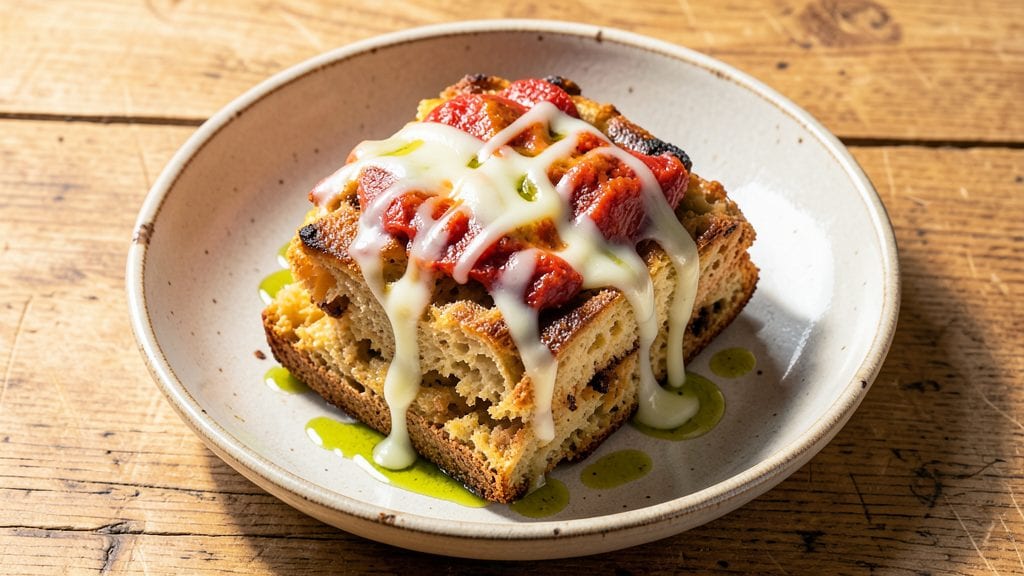
This Turano bread recipe brings Sicilian tradition to your kitchen with its signature crispy cheese crust and rivers of melted mozzarella. The technique balances art and science—fermenting the dough just right creates that signature airy texture, while the cheese topping transforms into a golden, crackling blanket when baked.
I first tried this recipe during a visit to a family-run trattoria in Palermo, where the owner swore by the 48-hour cold fermentation as the secret to perfect results.
The magic happens in the layers: a simple dough infused with olive oil and flour, topped with mozzarella that stretches into glossy rivers during baking. While traditional versions use only mozzarella, I've found adding a touch of parmesan to the crust creates extra depth of flavor.
The dough requires patience—letting it rest in the refrigerator for two days develops complex flavors that no shortcut can replicate, but the payoff is worth every minute of waiting.
What you'll end up with is a loaf that looks like it belongs in a rustic Italian bakery: a golden, crackling crust that gives way to tender, airy bread beneath, all punctuated by pools of melted mozzarella.
The aroma alone will have everyone gathering around your table, and each bite delivers that perfect contrast between crispy cheese crust and soft, pillowy bread. This is bread that makes guests ask for seconds—and then thirds.
While the traditional version serves as a simple side to hearty Sicilian meals, you can easily adapt it for modern tastes by adding herbs to the dough or sprinkling crushed red pepper over the cheese topping.
The recipe scales beautifully for gatherings, and leftovers reheat perfectly in the oven. Let's get started on creating this Italian classic in your own kitchen.
Ingredients for turano bread
Four cups flour, a splash of olive oil, and patience—this is all you need for Sicilian magic.
| Ingredient | Amount | Notes |
|---|---|---|
| All-Purpose Flour 🌾 | 4 cups | High-protein preferred for chewiness |
| Extra-Virgin Olive Oil 🫒 | ¾ cup | Italian variety for authentic flavor |
| Active Dry Yeast 🍞 | ¼ oz | Fresh yeast at 1/4 oz equivalent |
| Granulated Sugar 🍚 | 1 tbsp | Feeds yeast for activation |
| Warm Water 💧 | 1 ¼ cups | 110°F for yeast activation |
| Mozzarella Cheese 🧀 | 16 oz | Fresh, low-moisture preferred |
| Parmesan Cheese 🧀 | ½ cup | Freshly grated from block |
| Diamond Crystal Kosher Salt 🧂 | 2 tsp | Adjust to taste |
| Garlic Cloves 🧄 | 2 cloves | Minced for dough flavor |
| Fresh Basil Leaves 🌿 | ¼ cup | Optional, finely chopped |
| Crushed Red Pepper Flakes 🌶️ | ½ tsp | Optional, for heat |
| Cornmeal 🌽 | ¼ cup | For dusting baking sheet |
The flour is non-negotiable here. King Arthur or Caputo Tipo 00 if you can find it—both give that signature chew. The olive oil should be Italian, fruity, and preferably from a dark glass bottle at Trader Joe's or Whole Foods. Fresh yeast is ideal, but the packet stuff works fine if it's not expired. For the cheese, fresh mozzarella is a must—the pre-shredded kind won't melt right. I grab mine at Whole Foods or the Italian market, where they cut it fresh. The Parmesan? Grate it yourself from a wedge—pre-grated tastes like sawdust in comparison. And if you're adding basil, farmers market basil has more punch than the sad plastic containers at the grocery store.
No mozzarella? Fontina or provolone melts beautifully as a substitute. Short on Parmesan? Pecorino Romano works in a pinch. The dough can handle a pinch of dried oregano instead of fresh basil if that's all you've got. For the red pepper flakes, crushed dried chili is a decent swap, but it won't have the same smoky depth. The yeast is the trickiest part—if your water gets too hot, it'll kill it. 110°F is perfect—just warm it until it feels like bathwater. And if you're short on time, you can do a 24-hour cold ferment instead of 48, though it won't be quite as flavorful.
This dough is a beast, so plan ahead. It needs two full days in the fridge for that signature flavor. Once baked, the crust stays crisp for 2 days at room temperature, but it reheats beautifully in a 350°F oven for 5 minutes. I always make a double batch—one for dinner, one for lunch the next day. Store leftovers wrapped in a clean kitchen towel to keep them soft. And if you're making it ahead for a party, freeze the unbaked loaves—they thaw overnight and bake just like fresh.
Why You'll Love This Recipe
- Four-Ingredient Magic: I swear, this bread only needs flour, olive oil, yeast, and water—and somehow, it still tastes like I slaved over it. No fancy starters, no kneading until my arms give out.
- Crusty Yet Soft: That golden, crackly crust gives way to a pillowy inside, and honestly? It’s the kind of texture that makes you pause mid-bite. The olive oil keeps it rich without being heavy.
- Weeknight Hero: Toss a loaf in the oven while you prep dinner—it’ll be done by the time your pasta boils. Between us, this is the bread that saves my sanity on Tuesdays.
- Budget-Friendly Staple: A single batch costs pennies but feeds the whole family. Freeze slices for toast later or stash dough scraps for quick garlic knots—no waste, all flavor.
Step-by-step instructions for Turano bread
This method delivers that perfect crispy cheese crust with gooey mozzarella rivers inside—every time.
Activate the Yeast and Mix the Dough
In a small bowl, combine the 1.25 cups warm water, 1 tablespoon granulated sugar, and 0.25 oz active dry yeast. Let it sit for 5-10 minutes until it becomes frothy and bubbly—this means the yeast is alive and ready to work. If it doesn't bubble, your yeast might be old, and you'll need to start over.
In a large bowl, whisk together the 4 cups all-purpose flour and 2 teaspoons diamond crystal kosher salt. Create a well in the center and pour in the yeast mixture along with the 0.75 cup extra-virgin olive oil. Using a wooden spoon or your hands, mix until a shaggy dough forms. Here's the thing—this dough will be sticky, but that's normal. Once it comes together, knead it on a lightly floured surface for 5-7 minutes until smooth and elastic. If it feels too sticky, wet your hands slightly to help handle it without adding extra flour.
Let the Dough Rest and Shape the Loaves
Place the dough back in the bowl, cover it with a damp towel, and let it rise in a warm place for 1-2 hours or until it doubles in size. You'll know it's ready when you poke it gently and it springs back slowly. This resting period allows the gluten to relax, making the dough easier to shape later.
While the dough rises, preheat your oven to 375°F. Once the dough has doubled, punch it down to release the air and divide it into 4 equal portions. Roll each portion into a 12-inch log, about 2 inches thick. Here's where the magic starts—place each log on a baking sheet dusted with 0.25 cup cornmeal to prevent sticking. The cornmeal also adds a subtle crunch to the crust.
Create the Cheese Topping and Bake
In a small bowl, combine the 16 oz mozzarella cheese, 0.5 cup freshly grated parmesan cheese, 2 cloves minced garlic, 0.25 cup finely chopped fresh basil leaves, and 0.5 teaspoon crushed red pepper flakes. Mix well to distribute the flavors evenly. This topping is what gives Turano bread its signature crispy crust and gooey interior.
Spread the cheese mixture evenly over the top of each dough log, creating a thick layer. Bake in the preheated oven for 25-30 minutes until the cheese is bubbling and golden brown on top. The edges should be crispy, and the cheese should pull away slightly from the crust when you gently tug at it. If the cheese isn't bubbling after 25 minutes, cover the baking sheet loosely with foil and bake for another 5 minutes to prevent burning.
Rest and Serve for Maximum Flavor
Remove the bread from the oven and let it rest on the baking sheet for 5 minutes. This brief rest allows the cheese to set slightly, making it easier to slice without losing all the gooey goodness inside. Serve warm, straight from the oven, for the best experience—each slice should have that perfect contrast of crispy crust and molten cheese.
For extra flavor, sprinkle additional crushed red pepper flakes or fresh basil leaves on top before serving. Store any leftovers in an airtight container, but honestly, this bread is best enjoyed fresh while the cheese is still warm and stretchy.
Pro Tips For Making Turano Bread
- Test Yeast First: Mix 1 teaspoon of yeast with ¼ cup warm water and ½ teaspoon sugar, then wait 5–10 minutes for bubbles. If nothing happens, your yeast is dead—start over with fresh. I learned this the hard way after baking a flat, dense loaf because I assumed the packet was fine.
- Oil the Bowl Properly: Coat your mixing bowl thoroughly with olive oil—inside and out—before adding the dough. A lightly oiled bowl means dough sticks, and you’ll waste time scraping it off. Use about 1 tablespoon; you want it slick, not drowning.
- Don’t Over-Knead: Stop kneading when the dough springs back slowly after pressing it (about 8–10 minutes by hand). Overworking it makes turano bread tough. I used to think more kneading = better rise, but the texture suffers—especially with this recipe’s olive oil richness.
- Shape Loosely, Rise Longer: Form the dough into a loose, slightly irregular round—don’t stress perfect symmetry. Let it proof in a warm spot (like a turned-off oven with a bowl of hot water) for 1.5–2 hours until nearly doubled. Rushing this step ruins the airy crumb. (Yes, even if you’re impatient like me.)
Wine and beer pairings for this turano bread
Italian White Wine
For Turano bread, I always reach for a crisp, medium-bodied Italian white like Vermentino from Sardinia or Greco di Tufo from Campania. These wines have bright citrus and mineral notes that cut through the richness of the melted mozzarella while complementing the bread's olive oil and garlic flavors.
Serve slightly chilled—around 50°F—to enhance their refreshing acidity. A glass of Pinot Grigio also works beautifully if you prefer something lighter and more approachable. 🍷
Sicilian Red Wine
If you prefer red, a young Nero d'Avola from Sicily delivers the perfect balance. Its juicy dark fruit flavors and subtle earthiness stand up to the bread's bold cheese crust without overpowering it.
Look for a bottle with 12-14% alcohol and minimal oak aging to keep the focus on freshness. Serve at 60-62°F to let its vibrant acidity shine alongside the bread's crispy edges.
Italian Craft Beer
A crisp Italian lager like Peroni or Birra del Borgo is my go-to beer pairing. The clean, slightly malty profile cleanses your palate between bites, letting the bread's flavors stand out.
For something more adventurous, try a Sicilian-style bitter—these beers often feature orange peel and citrus notes that mirror the bread's garlic and basil. Serve at 45-50°F to preserve their refreshing qualities.
Regional Beer Twist
If you're feeling experimental, pair with a Belgian witbier like Hoegaarden. The coriander and orange peel notes create an unexpected but delightful contrast with the bread's rich cheese and savory dough. The effervescence also helps cut through the fat, making each bite feel lighter.
For a local twist, try a Sicilian-style amber ale—these often have a touch of honey or citrus that pairs surprisingly well with the melted mozzarella.
Non-Alcoholic Options
For a refreshing non-alcoholic pairing, serve with a sparkling blood orange soda like San Pellegrino Aranciata Rossa. The citrusy fizz complements the garlic and basil in the bread while balancing the richness of the cheese.
Alternatively, a cucumber-mint infused water with a squeeze of lemon adds a crisp, cooling contrast that lets the bread's flavors truly shine. 💧
After-Dinner Digestif
Finish your meal with a small glass of Limoncello or Amaretto to cleanse your palate. The bright citrus in Limoncello echoes the lemon notes in the bread's dough, while the almond sweetness of Amaretto pairs beautifully with the caramelized cheese.
Serve these chilled in tiny glasses to savor their flavors without overwhelming the meal's final impression.
Nutrition facts
Frequently asked questions
Can I make Turano bread without the 48-hour cold fermentation?
The 48-hour cold ferment is key for that signature flavor, but you can do a 24-hour version in a pinch. The dough will still develop flavor, though it won't be as complex. For best results, use the full time—it's what makes this bread taste authentically Sicilian!
What's the best way to store leftover Turano bread?
Store in an airtight container at room temperature for up to 2 days. For longer storage, freeze the baked loaves for up to 1 month. The cheese stays gooey when reheated in a 350°F oven for 5-7 minutes—just wrap in foil to prevent drying.
Can I substitute mozzarella with another cheese?
Yes! Fontina or provolone work well as substitutes—they melt beautifully. For extra richness, try a mix of mozzarella and fontina. Avoid pre-shredded cheese (it contains anti-caking agents that prevent proper melting). Freshly grated cheese is a must for that authentic stretchy texture!
Why did my cheese crust turn out rubbery instead of crispy?
Rubbery crusts usually happen from overmixing the dough or baking at too low a temperature. Make sure your oven is at 375°F and the cheese topping is thick enough. Also, don't open the oven door during baking—heat loss causes uneven cooking. The cheese should bubble and turn golden brown for that perfect crisp!
How do I know when the dough is fully risen?
Gently press two fingers into the dough—if it springs back slowly (not immediately), it's ready. The dough should also look puffy and have doubled in size. For extra accuracy, use a kitchen scale: the dough should weigh about 25% more than when you started. Patience here ensures that perfect airy texture!