
Side Dishes
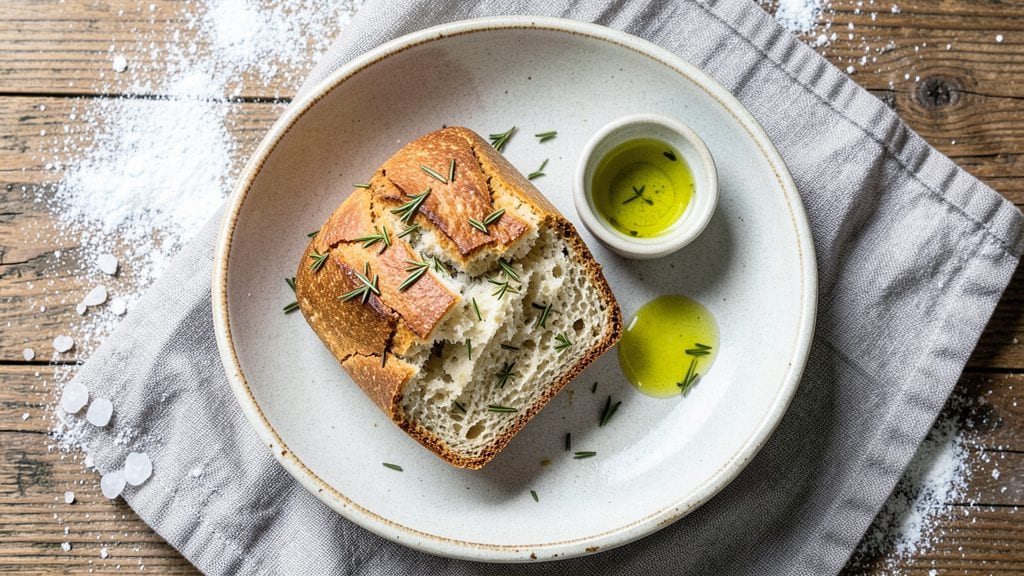
This no-knead rosemary bread recipe transforms your kitchen into a rustic bakery with just five ingredients and an overnight rise. Standing on a step stool in my grandmother's kitchen in Sicily, I first learned how flour, water, yeast, and time create magic—no kneading required.
The rosemary infuses every bite with that fresh, piney aroma that makes this bread unforgettable.
The beauty of this method is its simplicity: mix, rest, bake. While you sleep, the dough develops flavor and structure, waking up to a crusty exterior and tender crumb.
I've baked dozens of loaves, and this version consistently delivers that perfect balance between crispy crust and soft interior, with rosemary needles popping like edible confetti.
By morning, you'll have golden loaves with an irresistible crackle and an aroma that fills your home. The crust stays crisp for days, while the interior remains soft enough to soak up soups or spread with butter.
This is the kind of bread that makes you feel like you've earned a reward for waiting—because you absolutely have.
Perfect for Sunday dinners, charcuterie boards, or just because. Once you try this no-knead method, you'll never go back to fussing with dough again. Let's get baking!
Ingredients for no knead rosemary bread
Five simple ingredients transform your kitchen into a rustic bakery overnight—no kneading required!
| Ingredient | Amount | Notes |
|---|---|---|
| All-Purpose Flour 🌾 | 4 cups | Unbleached preferred for better flavor |
| Instant Yeast 🍞 | ½ tsp | Active dry works too |
| Fine Sea Salt 🧂 | 1 ½ tsp | Kosher or table salt works |
| Fresh Rosemary 🌿 | ¼ cup | Finely chopped stems included |
| Extra-Virgin Olive Oil 🫒 | ½ cup | High quality for best flavor |
| Warm Water 💧 | 1 ¾ cups | 110°F for optimal yeast activation |
| Cornmeal 🌽 | ¼ cup | For dusting baking surface |
Flour is the foundation, so King Arthur or Caputo Tipo 00 make all the difference if you want that Italian-style crumb. I always grab unbleached flour from Whole Foods—it's got that subtle sweetness that pairs perfectly with rosemary. The yeast? Active dry or instant both work, but instant dissolves faster in the water. Rosemary is a game-changer—fresh from the farmers market has the best aroma, but dried works in a pinch (use half the amount). The olive oil should be fruity and peppery—California Extra Virgin from Trader Joe's is my go-to for this recipe.
No instant yeast? Active dry works fine—just let it proof in warm water for 5 minutes first. Short on rosemary? Thyme or oregano add a nice twist, though nothing beats that piney freshness. The water temperature matters—too hot kills yeast, too cold slows it down. Use a thermometer if you're unsure. For the olive oil, avocado oil is a decent swap if you're out, but it lacks that fruity depth. And if you can't find cornmeal, semolina or flour works too—just don't skip dusting your baking surface!
This dough is forgiving—let it rest at room temp for 1-2 hours before baking if you're in a rush, though overnight is ideal. Store baked loaves wrapped in a clean kitchen towel for 3-4 days at room temp, or freeze for up to 3 months. I like to slice mine fresh and toast it—nothing beats warm bread straight from the oven with a pat of butter. The crust stays crisp for days, while the interior stays soft enough to soak up soups or spread with that same olive oil you used in the dough!
Why You'll Love This Recipe
- Zero-Knead Magic: I’ll admit, I was skeptical about no-knead bread—until I mixed flour, yeast, olive oil, and rosemary in a bowl, let it rest overnight, and woke up to a loaf with that perfect crackly crust and airy crumb. No standing at the counter, no sore arms, just pure satisfaction.
- Rosemary’s Secret Weapon: That fresh rosemary isn’t just for garnish—it infuses the dough with a bright, piney aroma that makes every bite feel like a little holiday. (Between us, I’ve been known to sneak extra sprigs in for good measure.)
- Weeknight Hero: Slice it warm with dinner, toast it for breakfast, or pack it in lunches—this bread handles it all. It even freezes beautifully, so I bake a double batch and thank myself later when I’m short on time.
- Pantry-Friendly Luxury: Five ingredients, one bowl, no fancy tools. The olive oil keeps it rich without butter, and the salt-rosemary combo makes it taste like a bakery loaf without the price tag. Honestly, it’s my go-to for when I want to feel fancy but don’t want to spend all day in the kitchen.
Step-by-step instructions for no-knead rosemary bread
This method transforms simple ingredients into a fragrant, crusty loaf with minimal effort.
Mix the Dough with Olive Oil and Rosemary
In a large bowl, combine the 4 cups all-purpose flour and 0.5 teaspoon instant yeast. Stir in the 1.5 teaspoons fine sea salt and 0.25 cup finely chopped fresh rosemary, making sure the rosemary is evenly distributed throughout the flour. This aromatic herb will infuse every bite with its piney, citrusy notes.
Create a well in the center and add the 0.5 cup extra-virgin olive oil and 1.75 cups warm water (about 110°F). Using a wooden spoon or your hands, gently mix the ingredients until a shaggy dough forms. The dough will be sticky—this is completely normal for no-knead bread. Avoid overmixing, as this can develop gluten prematurely and affect texture.
Let the Dough Rest and Hydrate Overnight
Cover the bowl with plastic wrap or a damp kitchen towel and let the dough rest at room temperature for 12-18 hours. This slow fermentation allows the yeast to work gradually, creating deep flavor and a light, airy crumb. I like to place the bowl in a slightly warm spot, like near the oven with the pilot light on, to encourage gentle activity.
After resting, the dough should have nearly doubled in size and look slightly puffy. If it hasn't risen much, don't worry—just give it a few more hours. The key is patience; rushing this step can result in a dense loaf. Gently stir the dough with a spoon to redistribute any settled ingredients, then cover it again and let it rest for another 30 minutes before shaping.
Shape and Score the Dough
Lightly dust a clean work surface with 0.25 cup cornmeal to prevent sticking. Turn the dough out onto the surface and gently shape it into a round loaf by folding the edges toward the center. The dough will still be sticky, so use wet hands to handle it if needed. Place the shaped loaf on a parchment-lined baking sheet, seam-side up.
Using a sharp razor blade or serrated knife, score the top of the loaf in a simple pattern—like a cross or a few diagonal lines. This step isn't just decorative; it controls where the bread expands during baking, preventing cracks and creating an appealing crust. The rosemary will rise to the surface slightly as the dough proofs, adding visual appeal and fragrance.
Bake for a Crusty, Aromatic Loaf
Preheat your oven to 450°F for at least 30 minutes. The high heat is crucial for achieving that signature crusty exterior. Once preheated, place the baking sheet with the loaf on the middle rack. Bake for 30-35 minutes until the bread is deep golden brown and sounds hollow when tapped on the bottom.
If the top browns too quickly, tent the loaf with foil after 20 minutes to prevent over-browning while still allowing the crust to develop. The interior should register 190-200°F on an instant-read thermometer. Remove the bread from the oven and let it cool on a wire rack for at least 30 minutes before slicing. This resting period ensures the crumb sets properly and the flavors meld.
Pro Tips For Making No Knead Rosemary Bread
- STEAM THE DUTCH OVEN: The first 20 minutes are about steam—don’t skip it. Place a metal bowl filled with boiling water on the lower oven rack when you bake; it’ll give that rosemary bread a crisp crust without drying it out. (Yes, even if you’re impatient to dig in.)
- CHOP ROSEMARY FINE: Fresh rosemary needs to be finely minced, not just torn—think confetti, not confetti with stems. A sharp knife and a cutting board work better than your hands, and it’ll distribute flavor evenly instead of hiding in clumps. (I learned this after pulling out a loaf that smelled amazing but tasted like a rosemary-free zone.)
- DON’T OVERMIX THE DOUGH: Stir just until the flour is mostly incorporated—lumps are fine. Overworking the dough activates the gluten too early, and that’s how you end up with a dense, chewy loaf instead of an airy, open crumb. (I used to think more mixing = better bread. Wrong.)
- USE COLD OIL FOR FLAVOR: Mix the olive oil into the dough cold—straight from the fridge. Warm oil speeds up yeast activity and can make the bread rise too fast, but cold oil keeps the herbs bright and the crust rich. (Trust me, your bread will taste like it’s been kissed by the Mediterranean.)
Creative variations of this no knead rosemary bread
Herb Swaps & Twists
Rosemary shines bright, but don’t be afraid to experiment! Swap in 1 tbsp fresh thyme or 1 tsp dried oregano for a Mediterranean twist. I once added ½ tsp crushed fennel seeds to the dough for a subtle anise note—it paired beautifully with the rosemary’s piney aroma.
For a bolder flavor, try 1 tbsp finely chopped sage or even ½ tsp red pepper flakes for a hint of heat. 🌿
Sweet & Savory Fusion
Add 2 tbsp honey or 1 tbsp maple syrup to the dough for a sweet-savory balance. This works surprisingly well—think of it like a rosemary brioche! I’ve also made a version with ½ cup dried cherries or cranberries folded into the dough before baking.
The tartness cuts through the richness of the olive oil, and the rosemary’s aroma makes every bite feel festive. 🍯
Whole Grain Boost
Replace 1 cup all-purpose flour with whole wheat flour or spelt flour for a nuttier, heartier loaf. The texture will be denser but still tender, and the extra fiber adds staying power.
I like toasting the whole grains first to enhance their flavor—just spread them on a baking sheet at 350°F for 10 minutes before mixing into the dough. 🌾
Cheesy Rosemary Loaf
Fold ½ cup shredded pecorino or Parmesan into the dough for a salty, umami depth. The cheese melts slightly during baking, creating pockets of gooey goodness. I’ve also tried adding ¼ cup crumbled feta for a tangy contrast—both versions make incredible charcuterie board stars.
Just be sure to let the dough rest an extra 30 minutes after adding cheese to help it hydrate. 🧀
Seeded & Nutty Crunch
Stir in 2 tbsp toasted sesame seeds, 1 tbsp chopped walnuts, or 1 tbsp flaxseeds for texture. These add a satisfying crunch that contrasts the bread’s soft interior. I like toasting the nuts and seeds in a dry pan until fragrant before mixing them into the dough.
For extra richness, drizzle 1 tbsp melted butter over the seeds before baking. 🌰
Global Flavors
Turn this into a French fougasse by shaping the dough into an oval and dimpling the top with your fingers. Add 1 tsp dried lavender for a Provencal touch, or swap rosemary for 1 tsp za’atar for a Middle Eastern twist.
For a Latin American version, mix in ½ tsp ground cumin and top with sesame seeds before baking. Each variation keeps the no-knead simplicity while exploring new flavors. 🗺️
Nutrition facts
Frequently asked questions
Why does this no-knead method work so well with rosemary?
The slow fermentation of no-knead bread allows the rosemary's essential oils to infuse deeply into the dough. The overnight rise creates a light, airy crumb that lets the herb's piney aroma shine through without overpowering. Plus, the high heat of baking brings those aromatic compounds to the surface, making every bite fragrant and flavorful.
Can I make this bread without a stand mixer or food processor?
This recipe requires no special equipment beyond a large bowl and a wooden spoon. The no-knead method is designed to be hands-off—just mix, rest, and bake. Even the shaping is minimal, requiring only gentle folds. My grandmother used this same technique in Sicily with just her hands and a wooden spoon.
What if my dough doesn't rise much overnight?
Don't worry—this happens more often than you'd think! If your dough hasn't doubled, try these fixes: place the bowl in a slightly warmer spot (like near the oven with the light on), cover it more tightly with plastic wrap, or let it rest an extra 2-4 hours. If it's still flat, it might need more yeast (try 0.75 tsp next time) or warmer water (115°F instead of 110°F).
How do I store this bread to keep it fresh?
Wrap cooled loaves in a clean kitchen towel and store at room temperature for 3-4 days—the towel helps maintain moisture. For longer storage, freeze the bread (unwrapped) for up to 3 months. To revive, warm slices in a 350°F oven for 5-10 minutes or toast in a dry pan. The crust stays crispy, while the interior stays soft when properly stored.
Can I use dried rosemary instead of fresh?
Yes, but adjust the amount—use 1 teaspoon dried rosemary for every 0.25 cup fresh. Crush the dried leaves between your fingers before adding to release the oils. Fresh rosemary gives the best aroma, but dried works in a pinch, especially if you're making this ahead of time. The flavor will be more concentrated, so start with half the fresh amount.