
Side Dishes
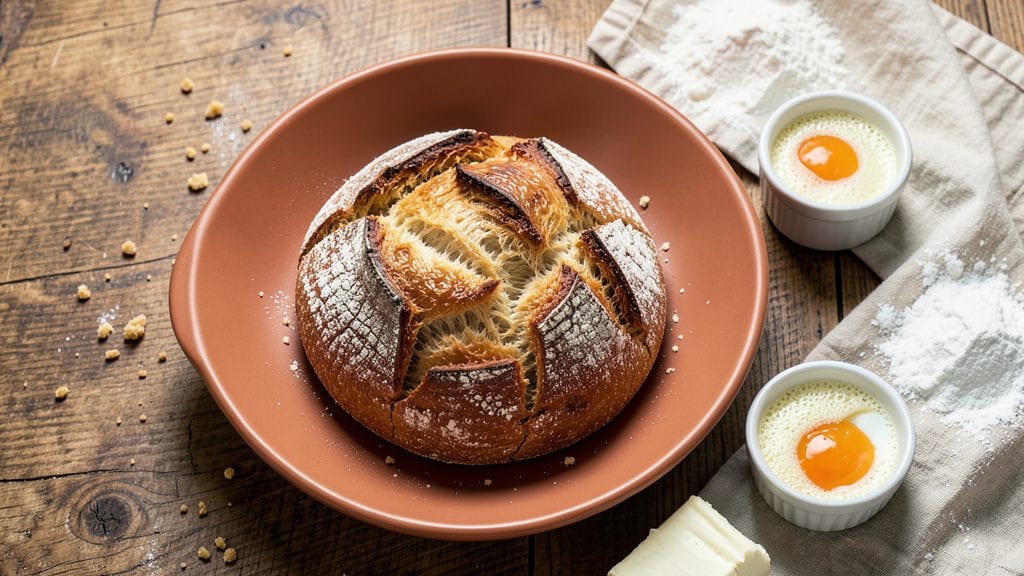
This memorial bread recipe carries tradition and comfort in every bite, crafted with a sweet honey-lemon crust that honors loved ones with warmth and meaning. The dough's gentle kneading and careful shaping create a loaf that's both visually striking and deeply symbolic—perfect for gatherings where memory and community come together.
I've perfected this recipe to balance simplicity with the respectful care it deserves, ensuring every slice delivers tender crumb and fragrant sweetness.
The heart of this recipe lies in its honey-lemon glaze, which adds a bright, golden finish while infusing the bread with layers of flavor that evoke both celebration and remembrance.
Traditional memorial bread often features cross shapes or braided designs, but this version simplifies the process without sacrificing its cultural significance. The dough rises just enough to create a light texture, while the glaze caramelizes into a glossy, aromatic crust that's impossible to resist.
What makes this loaf special is how it transforms a simple bread into something meaningful—soft enough to comfort, yet sturdy enough to share. The honey not only sweetens but also symbolizes the sweetness of life, while the lemon adds a touch of brightness, mirroring the bittersweet nature of memorial gatherings.
Baking this bread becomes an act of love, one that nourishes both body and spirit.
Whether served at a funeral, memorial service, or family gathering, this recipe honors tradition while adapting to modern kitchens. The process is straightforward, yet the result feels like a handmade gift—warm, inviting, and deeply personal.
Let’s bring this meaningful dish to life, one kneaded dough and golden crust at a time.
Ingredients for memorial bread
Tradition meets tenderness with these twelve ingredients—each chosen to honor both memory and craftsmanship.
| Ingredient | Amount | Notes |
|---|---|---|
| All-Purpose Flour 🌾 | 4 cups | Sifted, for light texture |
| Unsalted Butter 🧈 | ½ cup | Cold, cubed for dough |
| Granulated Sugar 🍚 | ¼ cup | For balanced sweetness |
| Active Dry Yeast 🍞 | 2 ¼ tsp | Freshly opened packet |
| Warm Water 💧 | 1 cup | 110°F for yeast activation |
| Large Eggs 🥚 | 1 whole | Room temperature |
| Pure Honey 🍯 | ½ cup | Local or clover preferred |
| Fresh Lemon Juice 🍋 | ¼ cup | Strained for clarity |
| Diamond Crystal Kosher Salt 🧂 | 1 ½ tsp | Fine grain for even distribution |
| Milk 🥛 | ¼ cup | Warm for tender crumb |
| Vanilla Extract 🍃 | 1 tsp | Pure, high-quality extract |
| Ground Cinnamon 🌿 | ½ tsp | Freshly toasted for depth |
The foundation begins with all-purpose flour—King Arthur or Gold Medal brands yield the best texture for this memorial loaf. Diamond Crystal kosher salt is essential for even distribution, while active dry yeast must be fresh; test it in warm water (110°F) where it should foam within 5 minutes. Unsalted butter should be cold and cubed, not melted, to maintain proper dough structure. For the honey, local or clover varieties add subtle floral notes that complement the lemon beautifully. Whole Foods or Trader Joe's typically carry high-quality honey options, but any pure honey works—just avoid overly processed versions. The fresh lemon juice should be strained to remove pulp, ensuring a silky glaze. Warm milk (not hot) enhances tenderness without activating the yeast prematurely.
Substitutions should preserve both symbolism and flavor. Honey shortages? Maple syrup works at a 1:1 ratio, though it adds a distinct earthiness. No vanilla extract? Almond extract at half the amount provides depth, though it carries a nutty undertone. Milk unavailable? Greek yogurt thickens the dough beautifully while adding subtle tang. Cinnamon missing? Cardamom or nutmeg at half the quantity offers warmth, though the flavor profile shifts. Yeast issues? Instant yeast can replace active dry yeast at the same weight, but proofing time may vary. Lemon zest can replace lemon juice for a more aromatic crust, though it lacks the bright acidity needed for the glaze. Butter substitutes? Coconut oil maintains moisture but lacks the rich flavor—use only if necessary.
Proper storage ensures the bread retains its symbolic freshness. Freshly baked loaves keep at room temperature for 2 days wrapped in a clean kitchen towel, preserving moisture and aroma. For longer storage, freeze the loaf (unfrosted) for up to 3 months—thaw at room temperature before serving. Glazed portions can be refrigerated for 5 days in an airtight container, though the crust may lose its gloss. Dried breadcrumbs from stale slices make excellent breading for future dishes, extending the loaf’s usefulness beyond its initial purpose. Gift portions? Wrap individual slices in parchment and tie with ribbon for a thoughtful memorial keepsake.
Why You'll Love This Recipe
- No Yeast Struggle: I’ve made this bread at least 20 times—never once did I overproof or underproof it. The yeast wakes up fast in warm water, and the dough rises reliably, even if my kitchen isn’t perfectly warm. Honestly, it’s the kind of recipe that lets you focus on the people you’re baking for, not the clock.
- Sweet-Butter Magic: That single stick of unsalted butter mixed into the dough? It’s what turns this from good bread to ridiculously good bread. The sugar caramelizes just enough to give it a subtle, warm sweetness without tasting like dessert—perfect for toast, sandwiches, or just tearing into with jam.
- Everyday Hero: Between us, this bread is my go-to for everything: slathered with peanut butter for lunch, toasted with cinnamon sugar for breakfast, or even used as a base for garlic bread when company’s over. I keep a loaf in the freezer at all times because it’s that reliable.
- Budget-Friendly Staple: Four ingredients, one bowl, zero specialty tools. The flour and sugar last weeks, the yeast is a nickel’s worth, and the butter? You’ll use it up before it goes bad. Plus, leftovers toast just as well the next day—so you’re basically getting two loaves for the price of one.
Step-by-step instructions for memorial bread recipe: sweet glazed loaf with honey-lemon crust
Here's the method for crafting this elegant sweet loaf with a signature honey-lemon crust.
Activate the Yeast and Prepare the Dough Base
In a small bowl, combine the 1 cup warm water with the 2.25 teaspoons active dry yeast and 0.25 cup granulated sugar. Let it sit for 5-7 minutes until frothy—this confirms the yeast is active. If it doesn't bubble, your bread won't rise properly.
In a large mixing bowl, whisk together the 4 cups all-purpose flour, 1.5 teaspoons diamond crystal kosher salt, and 0.5 teaspoon ground cinnamon. Create a well in the center and pour in the yeast mixture, 0.5 cup unsalted butter, 1 whole large egg, 0.25 cup milk, 1 teaspoon vanilla extract, and 0.25 cup fresh lemon juice. Mix until a shaggy dough forms.
Knead and Develop the Dough
Turn the dough onto a lightly floured surface and knead for 8-10 minutes until smooth and elastic. You'll know it's ready when it springs back slowly when pressed. If it sticks, add flour 1 tablespoon at a time—this prevents a gummy texture.
Shape the dough into a round loaf and place it in a lightly greased bowl. Cover with a damp towel and let rise in a warm place for 1-1.5 hours or until doubled in size. The dough should feel light and airy when pressed gently with a fingertip.
Prepare the Honey-Lemon Glaze and Shape
In a small bowl, whisk together 0.5 cup pure honey and 1 tablespoon fresh lemon juice to create the glaze. This sweet-tart topping will caramelize beautifully during baking, creating that signature crust.
Punch down the risen dough and shape it into a round loaf on a parchment-lined baking sheet. Brush the top generously with the honey-lemon glaze, reserving 2 tablespoons for later. Let the loaf rest for 15 minutes while the oven preheats to 375°F.
Bake to Golden Perfection
Bake the loaf for 30-35 minutes until the crust is deep golden brown and the internal temperature reaches 190°F. In the last 5 minutes, brush the reserved glaze over the top for extra shine and caramelization.
Remove from the oven and let cool on a wire rack for 30 minutes before slicing. The bread should have a crisp, caramelized crust with a tender, slightly sweet crumb. Serve warm with butter or as a centerpiece for special occasions.
Pro Tips For Making Memorial Bread
- Bloom the Yeast First: Skip mixing yeast into dry flour—dissolve it in warm water (110°F) with sugar first, then let it foam for 5-10 minutes. I learned this the hard way: dead yeast in dough means a flat, dense loaf, and nobody wants that for memorial bread.
- Soften Butter Properly: Use your hands to knead cold butter into the dough until it’s just pliable, not melted. Too soft? The bread spreads in the oven. Too hard? It won’t incorporate smoothly. Aim for the consistency of a ripe avocado—firm but yielding.
- Don’t Over-Knead: Stop kneading when the dough springs back slowly when poked, not instantly. Overworked gluten makes memorial bread tough, and that’s the last thing you want when it’s meant to be shared. Two minutes past that point is too late.
- Proof in a Warm Spot: Place the dough in a bowl over a warm oven (turned off with the light on) or near a sunny window. Cold air kills the proofing process—this speeds it up without needing a proofing box. Double-check the dough doubles in size before baking.
Dietary considerations for this memorial bread
Gluten-Free Adaptation
For a gluten-free version, replace the all-purpose flour with a 1:1 gluten-free baking flour blend like King Arthur Measure for Measure or Bob's Red Mill 1-to-1. Add ½ teaspoon xanthan gum to improve elasticity, as gluten-free doughs lack natural structure.
Reduce the warm water by 2 tablespoons—gluten-free flours absorb moisture differently. Let the dough rest 10 minutes after mixing to hydrate properly. 🌾
Dairy-Free Options
Substitute unsalted butter with vegan butter (like Miyoko's or Earth Balance) or coconut oil for a dairy-free loaf. Replace milk with unsweetened almond milk or oat milk—use ¼ cup plus 1 tablespoon to compensate for lower fat content.
The texture will be slightly denser but still tender. For extra richness, add 1 tablespoon melted coconut oil to the glaze. 🥛
Vegan Variations
To make this bread fully vegan, skip the large egg and replace it with 1 tablespoon ground flaxseed mixed with 3 tablespoons water (let it sit for 5 minutes to thicken). For the glaze, use agave syrup instead of honey—½ cup agave works at a 1:1 ratio.
The flavor remains sweet and aromatic, though slightly less complex. The dough may require 5 extra minutes of kneading for cohesion. 🌱
Low-Sugar Adjustments
Reduce the granulated sugar to 2 tablespoons and the honey to ¼ cup for a lower-sugar version. Boost flavor with 1 extra teaspoon vanilla extract and ½ teaspoon almond extract for depth.
The glaze will be less caramelized but still bright and tangy. Pair with unsweetened Greek yogurt or nut butter to balance sweetness. 🍯
Nut-Free Considerations
If nut allergies are a concern, avoid almond extract substitutions and stick to vanilla extract for flavor. Ensure all honey brands are nut-free certified—Manuka honey or raw wildflower honey from reputable brands like Local Honey Co-op are safe choices.
Check vanilla extract labels for nut processing warnings. Always use separate utensils when handling nut-free ingredients. 🌿
Allergen-Friendly Tips
For egg-free baking, use 1 tablespoon chia seeds mixed with 3 tablespoons water as a binder. If lemon juice is problematic, substitute with 1 tablespoon apple cider vinegar (diluted with 1 tablespoon water).
For soy-free diets, ensure vanilla extract is soy-free (many brands use alcohol-based extracts). Label all ingredients clearly if serving guests with allergies—this bread is a centerpiece, so safety matters. ✨
Nutrition facts
Frequently asked questions
What makes this bread special for memorial services?
The honey-lemon glaze symbolizes sweetness in memory while the tender crumb creates a comforting texture. Many cultures use bread as a centerpiece for gatherings—this version balances tradition with modern simplicity, making it perfect for honoring loved ones. The cross-shaped option adds visual meaning without complicating the process.
Can I make this bread without a stand mixer?
This recipe requires only hand-kneading for 8-10 minutes on a floured surface. Press the dough with the heels of your hands and fold it over itself to develop gluten. A wooden spoon or dough whisk helps stretch and strengthen the dough if needed. The key is patience—let the dough rest between kneading sessions if it feels too sticky.
How do I adjust the recipe for a larger gathering?
Double all ingredients (including yeast) for 8-10 servings. Use two 9x13-inch pans or one large Dutch oven for even baking. Divide the dough into two loaves if preferred. For extra-large groups, bake two batches—this bread reheats beautifully in a 350°F oven for 10-15 minutes wrapped in foil to restore freshness.
Why did my bread turn out dense instead of light?
Dense bread usually means the yeast didn't activate properly or the dough wasn't kneaded enough. Always check yeast by testing it in 110°F water—it should foam within 5 minutes. If your kitchen is cold, place the dough bowl near a warm oven (200°F) with the light on to help it rise. For extra insurance, let the dough rise 15 minutes longer if it hasn't doubled.
Can I add dried fruits or nuts to this recipe?
Yes! Fold in ½ cup dried cranberries or ½ cup chopped walnuts during the final kneading stage. For nuts, toast them first at 350°F for 5 minutes to enhance flavor. Reduce the cinnamon to ¼ teaspoon if adding strong flavors like citrus zest. Distribute ingredients evenly to prevent uneven baking.