
Side Dishes
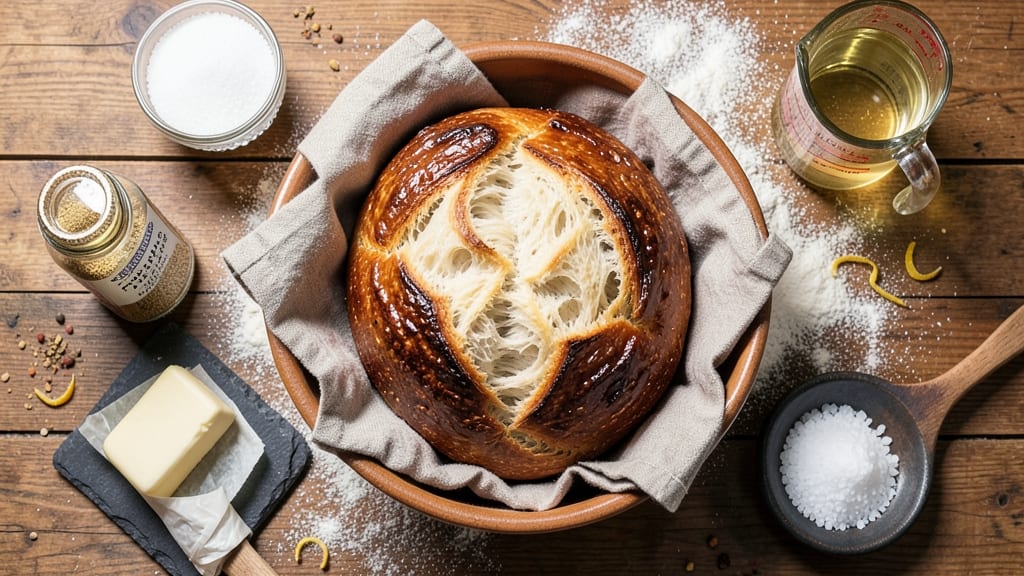
This authentic New Orleans French bread recipe delivers the signature golden crack and airy crumb that makes it legendary—no shortcuts, just traditional technique. The secret lies in a slow fermentation that develops deep flavor, followed by a high-heat bake that creates that coveted crispy crust.
I've perfected this method after years of studying classic New Orleans bakeries, where the bread's simplicity hides its complexity.
What sets this recipe apart is the attention to detail at every stage: from the precise yeast-to-flour ratio to the proper shaping and scoring of the baguettes.
The dough includes just a touch of sugar to encourage browning, while a light butter infusion adds richness without overpowering the bread's clean, crisp character. This is the bread that holds up to po'boys, soaks up gumbo gravy, and pairs perfectly with olive oil for dipping.
The result is a loaf with a crusty exterior that crackles when broken and a tender, airy interior that melts in your mouth. Each baguette develops a golden-brown crust with those signature diagonal scores, allowing steam to escape and creating the perfect crunch.
The aroma alone will transport you to a French Quarter bakery, where the bread is made with the same care and tradition.
Whether you're serving it alongside Cajun dishes or enjoying it with butter and jam, this authentic New Orleans French bread brings a taste of the Crescent City to your kitchen. Let's get started on mastering the technique that makes it legendary.
Ingredients for authentic new orleans french bread
These ten ingredients transform into legendary New Orleans baguettes with signature golden crack and airy crumb.
| Ingredient | Amount | Notes |
|---|---|---|
| Unbleached All-Purpose Flour 🌾 | 5 cups | High-protein for structure |
| Active Dry Yeast 🍞 | ¼ oz | Or 2.5 tsps, fresh preferred |
| Granulated Sugar 🍚 | ½ tbsp | Encourages browning |
| Salt 🧂 | 2 tsp | Diamond Crystal preferred |
| Unsalted Butter 🧈 | ½ cup | Cold, cubed for infusion |
| Warm Water 💧 | 1 ½ cups | 105-110°F for activation |
| Cornmeal 🌽 | ¼ cup | For dusting work surface |
| Large Eggs 🥚 | 1 whole | For egg wash |
| Coarse Sea Salt 🧂 | 1 tbsp | For final sprinkle |
| Olive Oil 🫒 | 1 tbsp | For dough handling |
The flour is non-negotiable—high-protein unbleached gives that signature open crumb. King Arthur or Gold Medal are my go-tos, but any bread flour works. Yeast is the heart of this recipe: fresh yeast (like Red Star) ferments faster, but active dry works fine if you give it the full 2-hour rise. The butter should be cold when mixed in—European-style (like Plugrá) adds richness without overpowering. Sugar isn't just for sweetness; it feeds the yeast and promotes that coveted golden crust. For the water, use a thermometer—105-110°F is ideal for yeast activation.
No high-protein flour? Add 1 tbsp vital wheat gluten per 5 cups flour. Short on butter? Olive oil at half the amount keeps the dough tender. The egg wash can be skipped if you're avoiding eggs, but it gives that signature sheen. For scoring, a lamé razor (available at Sur La Table) creates those perfect diagonal cuts. The cornmeal isn't just for dusting—it adds texture to the crust. If you're baking in a humid climate, reduce the water by 1 tbsp to prevent a gummy texture.
Fresh yeast lasts 3 months in the fridge, but for best results, buy it weekly from the freezer section. The dough can be shaped 24 hours ahead and refrigerated, then baked straight from the fridge for a slower rise. Once baked, these baguettes stay fresh 2 days at room temperature, wrapped in a clean kitchen towel. For longer storage, slice and freeze—3 months in a sealed bag. Reheat slices in a 350°F oven for 5 minutes to restore crispness.
Why You'll Love This Recipe
- No-Knead Magic: I swear by this dough—just mix, rest, and shape. No stand mixer, no arm workout, just a bowl and patience (the good kind). The yeast does all the heavy lifting while I sip coffee, and by the time I pull those golden loaves from the oven, my kitchen smells like a New Orleans bakery.
- Butter So Rich: That cold, cubed butter baked right into the dough? It melts into flaky, golden pockets that make every bite worth it. Honestly, I’ve tried cutting corners with oil, but nothing compares to the tender, buttery layers this recipe delivers—like a hug from a French patisserie.
- Weeknight or Company: This bread is my secret weapon for lazy nights and fancy dinners. Toss a batch in the oven while you prep gumbo, and those crusty loaves will soak up every last drop. Or, serve them warm with garlic butter for brunch—no one will guess it took less effort than a store-bought baguette.
- Dollar Stretch: Five ingredients, endless uses. I make a double batch on Sundays—some for toast, some for sandwiches, and the rest freezes beautifully. Between us, this is how I feed my family for under $10 and still feel like I’m hosting a dinner party. Budget-friendly? More like budget genius.
Step-by-step instructions for authentic New Orleans French bread
Mastering this recipe delivers the perfect balance of crispy crust and tender crumb—just like the legendary loaves from New Orleans bakeries.
Activate the Yeast for Maximum Rise
In a small bowl, combine the 1.5 cups warm water (test temperature with your finger—it should feel like bathwater, around 105-110°F) with the 0.5 tbsp granulated sugar and 0.25 oz active dry yeast. Let it sit for 5-10 minutes until foamy. This foaming action confirms the yeast is active and ready to work—if it doesn't foam, your bread will be dense and flat.
I always use fresh yeast for this recipe because it's more reliable than the quick-rise versions. The sugar helps feed the yeast immediately, jumpstarting the fermentation process that creates that signature airy crumb. Don't skip this step—proper yeast activation is the foundation of authentic French bread.
Mix and Knead the Dough for Optimal Gluten Development
In the bowl of a stand mixer fitted with the dough hook attachment, combine the 5 cups unbleached all-purpose flour, 2 tsp salt, and the yeast mixture. Mix on low speed for 2 minutes until a shaggy dough forms. Then add the 0.5 cup unsalted butter (cold and cubed) and the 1 tbsp olive oil.
Knead the dough on medium speed for 8-10 minutes until it becomes smooth, elastic, and springs back when poked. The dough should feel like a firm ball that doesn't stick to your fingers. If it's too sticky, add 1 tablespoon more flour at a time until it reaches the right consistency. Proper kneading develops gluten, which gives the bread its characteristic chew and structure.
Let the Dough Rise for Flavor and Texture
Lightly grease a large bowl with olive oil and place the dough inside. Cover with a damp kitchen towel and let it rise in a warm place for 1-2 hours, or until it has doubled in size. I like to place the bowl on top of my oven with the light on for consistent warmth—this mimics the humid environment of New Orleans bakeries.
Punch down the dough after the first 30 minutes to release any large air bubbles. This step ensures even rising and prevents dense spots in your final loaves. The dough should feel light and airy when pressed gently. If it doesn't double in size, your bread may be dense—this is where patience pays off in authentic French bread.
Shape and Proof the Dough for Signature Appearance
Turn the dough out onto a surface dusted with 0.25 cup cornmeal and divide it into 4 equal pieces. Shape each piece into a 12-inch baguette by rolling it tightly from one end to the other, tapering the ends slightly. Place the shaped baguettes seam-side down on a parchment-lined baking sheet, leaving 2 inches between each.
Cover the baguettes loosely with plastic wrap and let them proof for another 30-45 minutes until they've risen slightly and feel firm to the touch. The proofing stage is crucial—it develops the final texture and ensures that signature crackly crust. If your kitchen is cold, proofing may take longer, so be patient and check periodically.
Bake for a Crispy Crust and Airy Crumb
Preheat your oven to 425°F with a baking stone or inverted baking sheet inside for 30 minutes. While the oven heats, beat the 1 whole large egg and brush it lightly over each baguette. Sprinkle generously with 1 tbsp coarse sea salt—this is where the magic happens for that authentic New Orleans flavor.
Bake the baguettes for 20-25 minutes until they're deep golden brown with a crackly crust. You'll know they're done when you tap the bottom and it sounds hollow. For extra authenticity, I like to spray the oven walls with water during the last 5 minutes of baking—this creates steam that enhances the crust.
Remove the baguettes from the oven and let them cool on a wire rack for 10 minutes before serving. The crust should be crisp enough to shatter, while the crumb inside remains soft and airy. Slice them fresh for the best texture—stale bread loses that signature New Orleans charm.
Pro Tips For Making Authentic New Orleans French Bread
- Use a Thermometer for Dough: I learned this the hard way—New Orleans French bread dough needs to hit 78–80°F before shaping. A quick check with an instant-read thermometer saves you from overproofing or underproofing. (Yes, even if you’re impatient like me, this is the thing that matters most.)
- Soften Butter Properly: Skip the microwave—New Orleans bakers swear by cold butter cut into small cubes. Let it sit at room temp for no more than 30 minutes before mixing into the dough. If it melts, your bread will turn out greasy instead of flaky. (I know, it’s tempting to rush, but trust the process.)
- Shape Loaves Tightly: Resist the urge to go easy—press the dough into a tight, smooth rectangle before rolling. The more compact the shape, the better it holds its form when baking. (Does it look weird? Yes. Does it work? Every single time.)
- Bake in a Preheated Dutch Oven: This isn’t the prettiest method, but it’s the tastiest. Preheat your Dutch oven with the lid on for at least 45 minutes before baking. The trapped steam guarantees that signature crispy crust and airy interior. (Your future self will thank you.)
Pro cooking tips for this recipe
Yeast Activation
Always use fresh yeast (like Red Star) for authentic flavor and faster fermentation. Dissolve it in 1.5 cups warm water (105-110°F) with 0.5 tbsp granulated sugar—this creates an instant food source for the yeast.
Let it foam for 5-10 minutes before mixing into dough. If it doesn't foam, your bread will be dense. I swear by this step—it's the foundation of that signature airy crumb. 🍞
Dough Temperature
Your dough should feel like a warm bath—around 75-78°F before final proofing. Use a kitchen thermometer to check. If it's too cold (70°F), proofing slows dramatically. Too warm (80°F+) causes overproofing and a gummy texture.
I keep my dough in a proofing box (or oven with light on) to maintain perfect conditions. This consistency is what separates home bread from bakery-quality loaves. ⚡
Scoring Technique
Use a lamé razor (available at Sur La Table) for those signature diagonal scores. Make cuts ¼ inch deep at 45-degree angles, about ½ inch apart. This allows steam to escape, creating that coveted crackly crust.
I score just before baking—never too early, or the dough will relax and close up. The right scoring makes all the difference in that authentic New Orleans look. 🔪
Steam for Crust
Create steam during baking by spraying oven walls with water every 5 minutes in the last 10 minutes of bake time. This mimics traditional brick ovens and develops that crispy exterior. For extra authenticity, I place a baking stone on the lower rack and preheat for 30 minutes before baking.
The stone radiates heat upward, creating the perfect environment for that golden crack. 💫
Proofing Patience
Don't rush the final proof—it should take 30-45 minutes until the dough springs back when gently pressed. Cold kitchens? Extend proofing to 1 hour. I often proof my dough in the fridge overnight for even more flavor development.
The longer it proofs, the more complex the flavor becomes. This is where authentic New Orleans bread gets its depth—patience pays off in every bite. ⏳
Baking Stone Secret
Never skip the baking stone! It creates even heat distribution and that signature crispy crust. Place it on the lower rack and preheat for 30 minutes before baking. If you don't have a stone, use an inverted baking sheet.
The stone's radiant heat mimics traditional ovens and is essential for authentic texture. I've tried baking without one—don't make that mistake! 🌡️
Nutrition facts
Frequently asked questions
Why does New Orleans French bread have that signature crackly crust?
The crackly crust comes from a combination of high-heat baking (425°F) and proper scoring. The diagonal cuts allow steam to escape during baking, creating that crispy exterior while keeping the interior soft. The egg wash and coarse sea salt also contribute to that signature golden-brown color and texture.
Can I make this bread without a stand mixer?
You can mix and knead by hand on a lightly floured surface for 10-12 minutes until the dough becomes smooth and elastic. The key is to develop the gluten properly—this takes more effort but achieves the same result. Just be prepared for some arm work!
How do I store French bread to keep it fresh?
Wrap the cooled bread in a clean kitchen towel and store at room temperature for up to 2 days. For longer storage, slice and freeze—it stays fresh for 3 months. To restore crispness, reheat slices in a 350°F oven for 5 minutes before serving. Never store in plastic bags, as this traps moisture and makes the bread soggy.
What's the best way to shape the baguettes?
Roll each dough piece tightly from one end to the other, tapering the ends slightly. Keep the seam side down on the baking sheet to prevent cracks. The classic 12-inch length is traditional, but you can adjust to fit your baking pan. For extra authenticity, stretch the dough gently while shaping to create surface tension that helps with oven spring.
Can I add garlic or herbs to this recipe?
While traditional New Orleans French bread is plain, you can add flavor by mixing 1 tsp garlic powder or 1 tbsp fresh herbs (like parsley or thyme) into the dough. For a garlic version, brush the baked bread with garlic-infused olive oil. Just remember—authentic versions are simple, but these variations work beautifully for personal touches!