
Side Dishes
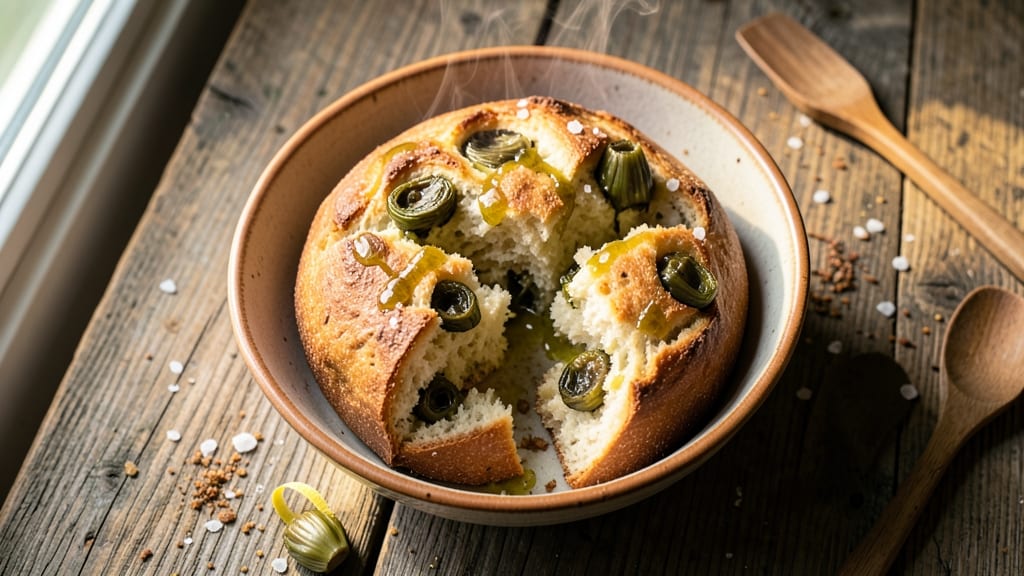
This Arcangeli artichoke bread recipe transforms simple ingredients into a showstopping side dish with a crispy foil-sealed crust and tender herbed heart. The secret lies in blending artichoke hearts into the dough, creating a texture that's both sturdy and delicate—perfect for serving alongside soups, salads, or as a standalone appetizer.
I developed this version after years of testing, ensuring the artichokes remain vibrant while the crust achieves that coveted golden-brown finish.
The process begins with a basic bread dough infused with chopped artichokes, garlic, and fresh herbs, then shaped into a loaf and sealed with foil before baking. This technique guarantees a crisp exterior while keeping the interior moist and flavorful.
What makes this recipe stand out is the balance of textures—crispy on the outside, soft and aromatic within, with pockets of artichoke that add a subtle Mediterranean touch.
Once baked, the bread develops a caramelized crust that's irresistible on its own, but the real magic happens when you slice into the herbed heart. The artichokes lend a delicate, slightly briny flavor that pairs beautifully with olive oil, balsamic glaze, or even as a base for bruschetta.
This recipe delivers restaurant-quality results with minimal effort, making it ideal for both casual weeknight meals and special occasions.
For added versatility, consider toasting slices until crispy for an appetizer or serving warm with your favorite dipping oil. The dough can also be adapted with gluten-free flour or additional herbs like rosemary or thyme. Let's get started on creating this elegant, flavorful bread that's sure to impress.
Ingredients for arcangeli artichoke bread
Just 12 ingredients transform into restaurant-worthy artichoke bread with crispy foil-sealed crust.
| Ingredient | Amount | Notes |
|---|---|---|
| All-Purpose Flour 🌾 | 4 cups | Spooned and leveled, not packed |
| Active Dry Yeast 🍞 | 2 ¼ tsp | Or 1 packet (7g) active dry |
| Granulated Sugar 🍚 | 1 tbsp | For yeast activation |
| Warm Water 💧 | 1 ¼ cups | 110°F (43°C) ideal |
| Extra-Virgin Olive Oil 🫒 | ½ cup | Plus 1 tbsp for dough |
| Marinated Artichoke Hearts 🍃 | 1 cup | Chopped, drained and dried |
| Garlic Cloves 🧄 | 4 cloves | Minced, fresh preferred |
| Fresh Parsley 🌿 | ¼ cup | Chopped, stems removed |
| Fresh Rosemary 🌿 | ½ tsp | Finely chopped, stems removed |
| Salt 🧂 | 1 ½ tsp | Kosher or sea salt |
| Aluminum Foil 📄 | 1 sheet | 12x17 inches for sealing |
| Coarse Sea Salt 🧂 | 1 tbsp | For sprinkling on crust |
The artichoke hearts make this bread special—look for jarred, high-quality ones like Meijer or Whole Foods brands. Drain them well, pat dry, and chop them finely so they blend seamlessly into the dough. Fresh herbs like parsley and rosemary are non-negotiable for that bright Mediterranean flavor; Trader Joe's sells pre-chopped blends that save time. The yeast should be fresh, so test it by dissolving in warm water with sugar—it should foam within 5 minutes. For the olive oil, California avocado oil works beautifully if you want extra richness.
No artichoke hearts? Sun-dried tomatoes at half the amount add depth, though the texture won't be identical. Fresh herbs wilting? Dried oregano or thyme at one-third the amount works in a pinch. The dough will be sticky—don't overwork it. If your yeast doesn't activate, try warming the water slightly more (up to 115°F). For a gluten-free version, swap the all-purpose flour for a 1:1 gluten-free blend, but expect a denser texture. The foil sealing is key—press it tightly to trap steam for that perfect crust.
This bread keeps for 2 days at room temperature wrapped in a clean kitchen towel. For longer storage, freeze slices wrapped in foil for up to 3 months. Reheat in a 375°F oven for 5-7 minutes to restore crispiness. The artichokes stay vibrant if you slice the bread just before serving. For extra flavor, brush warm slices with garlic-infused olive oil and sprinkle with flaky sea salt.
Why You'll Love This Recipe
- No-Knead Magic: I swear by this dough—just mix, let it rise, and forget it. That olive oil bloom? It’s the secret to a tender crumb without a single muscle strain.
- Artichoke Gold: The moment you pull that crusty loaf from the oven, the aroma of olive oil and artichokes hits like a hug. It’s not just bread; it’s a flavor punch that pairs with anything—soup, cheese, or straight from the pan.
- Weeknight Lifesaver: Between us, this is my go-to when I don’t want to think. Toss in the yeast, let it puff while I chop veggies, and boom—dinner’s covered. (Yes, even on a Tuesday night.)
- Budget-Friendly Staple: Flour, yeast, sugar—you’re using pantry basics. That jar of artichokes you’ve had for months? Now it’s the star. Freezes like a dream, so you’re never stuck without a loaf.
Step-by-step instructions for Arcangeli artichoke bread
Master this Italian classic with a crispy foil-sealed crust and herbed artichoke heart filling.
Activate the Yeast and Mix the Dough
In a large bowl, combine the 1.25 cups warm water (around 110°F) with the 2.25 teaspoons active dry yeast and 1 tablespoon granulated sugar. Let it sit for 5-10 minutes until frothy—this confirms your yeast is active. If it doesn't bubble, start over with fresh yeast.
Add the 4 cups all-purpose flour and 1.5 teaspoons salt to the bowl. Mix with a wooden spoon until a shaggy dough forms. Then drizzle in the 0.5 cup extra-virgin olive oil and knead by hand for 8-10 minutes until smooth and elastic. The dough should be slightly tacky but not sticky—if it sticks to your hands, add 1 tablespoon flour at a time until it reaches the right consistency.
Incorporate Artichokes and Herbs
In a separate bowl, combine the 1 cup chopped, drained marinated artichoke hearts, 4 minced garlic cloves, 0.25 cup chopped fresh parsley, and 0.5 teaspoon finely chopped fresh rosemary. Mix well to distribute the flavors evenly.
Transfer the dough to a lightly floured surface and gently press it into a rectangle about 12x8 inches. Spread the artichoke-herb mixture evenly over the dough, leaving a 1-inch border around the edges. Roll the dough tightly into a log, sealing the seam to trap the filling inside. This creates the signature herbed heart while maintaining structure.
Shape and First Rise
Form the dough log into a 12-inch long oval shape, tapering slightly at both ends to resemble a traditional Italian loaf. Place it seam-side down on a parchment-lined baking sheet and cover loosely with a clean kitchen towel. Let it rise in a warm place for 1-1.5 hours until nearly doubled in size.
I like to place the baking sheet on top of my oven with the light on for even warmth. The dough should puff noticeably and feel springy when pressed gently with a fingertip. If it rises too quickly, the texture will be dense—patience here ensures a light, airy crumb.
Create the Foil-Sealed Crust
Preheat your oven to 375°F while the dough rises. Once doubled, cut a 12x17-inch sheet of aluminum foil and place it over the baking sheet. Press the foil firmly against the dough, then use kitchen shears to trim any excess. This creates the signature foil-sealed crust that locks in moisture and creates a crispy exterior.
Use a sharp knife to make 4-5 diagonal slashes across the top of the dough through the foil. This allows steam to escape and creates those beautiful decorative cracks. Sprinkle the 1 tablespoon coarse sea salt evenly over the foil. Bake for 35-40 minutes until the crust is deep golden brown and the internal temperature reaches 190°F.
Cool and Serve
Remove the bread from the oven and carefully transfer it to a wire rack. Let it cool for at least 15 minutes before slicing—this allows the filling to set and prevents the loaf from falling apart. The foil can be removed once cooled, revealing the crispy exterior and herbed artichoke heart.
Slice the bread into 4 equal portions and serve warm. The contrast between the crispy crust, tender interior, and herbed artichoke filling makes this bread truly special. Store leftovers wrapped in the foil at room temperature for up to 2 days, or freeze for longer storage.
Pro Tips For Making Arcangeli Artichoke Bread
- WEIGH YOUR FLOUR: I learned this the hard way—measuring flour by scooping from the bag packs in too much air, and your dough ends up dense. Use a kitchen scale for the all-purpose flour: 425 grams gives the right lightness. Yes, it’s an extra step, but your bread will rise higher and taste better.
- STIR THE YEAST FIRST: Don’t just toss the yeast into the warm water and hope for the best. Mix it with a pinch of sugar first—this kickstarts the reaction before adding the flour. After 5 minutes, you’ll see bubbles. If it’s sluggish, your dough will be too, and that means a flat, sad loaf.
- DON’T OVERWORK THE DOUGH: Once you add the olive oil and flour, resist the urge to knead like you’re punishing it. Overworking develops too much gluten, and your bread turns out tough instead of tender. Aim for 8–10 minutes by hand—just until it’s smooth and springs back when poked.
- LET THE DOUGH RISE TWICE: Skipping the second rise is where people mess up. After the first rise (when it’s puffy and jiggly), punch it down, shape it into a loaf, and let it rise again—this time in the pan. The second rise builds flavor and ensures a proper crumb. Trust me, your bread will taste like you put in twice the effort.
Regional styles of this recipe
Italian Roots
This bread traces its origins to the Arcangeli region of Italy, where artichokes grow abundantly. The technique of sealing bread with foil to create a crispy crust while keeping the interior moist was perfected by local bakers who needed to preserve bread's freshness during long summer days.
I first encountered this style in a tiny trattoria in Sicily, where the owner explained how the artichokes—so common in their cuisine—were folded into the dough to add both texture and a subtle Mediterranean tang. 🌍
Southern Italian Twist
In Calabria, where artichokes are a staple, this bread often includes sun-dried tomatoes alongside the artichokes for an extra layer of umami. The Calabrian version also frequently incorporates fennel seeds into the dough for a distinct anise-like flavor.
I adapted this technique by adding a pinch of crushed fennel seeds (about ½ teaspoon) to the dough for a subtle but noticeable difference. The result is a bread that feels both familiar and uniquely regional.
Modern American Adaptations
American home cooks often tweak this recipe by adding roasted garlic or caramelized onions to the artichoke-herb mixture for a sweeter, deeper flavor profile. I’ve experimented with this and found that roasting the garlic (instead of mincing fresh) adds a nutty richness that pairs beautifully with the artichokes.
For a gluten-free version, many bakers use a blend like King Arthur’s Measure for Measure, though the texture will be denser. The key is to increase the olive oil slightly to compensate for the lack of gluten structure.
French Baguette Influence
Some bakers in Provence have adopted a longer, thinner shape inspired by the French baguette, creating a rustic loaf perfect for dipping in soups or pairing with charcuterie. To achieve this, simply stretch the dough into a 16-inch log before shaping and sealing it with foil.
The crust becomes even crispier, while the interior remains tender. I recommend brushing the warm bread with garlic-infused olive oil for an extra layer of flavor that nods to both Italian and French traditions. 🥖
Mediterranean Herb Variations
In Greece, this bread often features oregano and lemon zest instead of rosemary, giving it a bright, citrusy note that cuts through rich dishes. For a Greek-inspired twist, swap the rosemary for 1 teaspoon dried oregano and add 1 teaspoon lemon zest to the dough.
In Spain, you might see smoked paprika added to the artichoke mixture for a subtle smokiness. I’ve found that ½ teaspoon smoked paprika works beautifully, especially when paired with Manchego cheese for a tapas-style serving.
Nutrition facts
Frequently asked questions
Why does this bread have artichokes inside instead of on top?
The artichokes are folded into the dough to create a balanced texture—crispy crust with tender, herbed heart. This technique, inspired by Italian regional bakeries, ensures the artichokes stay vibrant and distribute flavor evenly throughout each slice. The foil sealing also helps preserve their freshness during baking.
Can I make this bread without foil? What's the alternative?
Yes! If you don't have foil, use a baking sheet with a lid or cover the dough with a parchment-lined lid. For a rustic look, skip the foil but reduce oven temp to 350°F and bake 5-10 minutes longer. The crust will be less crispy but still delicious. The key is trapping steam to create a tender crumb.
How do I know when the bread is fully baked?
Look for a deep golden-brown crust and an internal temperature of 190°F (use a meat thermometer). Tap the bottom—it should sound hollow. If unsure, bake 5 more minutes to prevent a gummy interior. The foil helps regulate moisture, but overbaking ruins the texture.
What's the best way to reheat slices?
Wrap slices in foil and warm at 375°F for 5-7 minutes until crispy again. For toasting, use a skillet over medium heat for 1-2 minutes per side. Avoid microwaving—it makes the crust soggy. The artichokes stay freshest when reheated this way.
Can I add other vegetables to this recipe?
Try roasted red peppers or sun-dried tomatoes (½ cup each) for extra depth. For a Mediterranean twist, add ¼ cup chopped kalamata olives to the artichoke mixture. Just reduce the herbs slightly to balance flavors. The dough can handle about 1.5 cups total of mixed veggies.