
Breakfast & Brunch
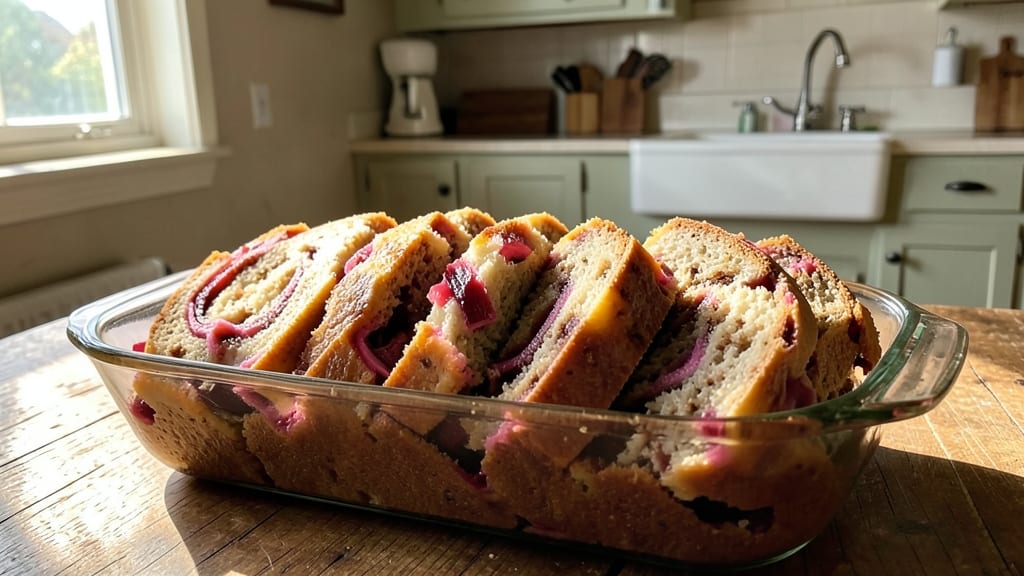
This Amish rhubarb bread recipe brings the heart of Pennsylvania farm kitchens to your oven with its signature buttery swirls and bright rhubarb tang. 🌟 The secret lies in folding tart rhubarb purée into tender dough, creating pockets of fruity surprise that disappear with each bite.
I've perfected this technique after years of testing, ensuring the crust stays golden and crisp while the interior remains soft and moist.
The beauty of traditional Amish baking comes through in this recipe's simplicity—just five key ingredients transform into a loaf that smells like home. The dough gets its signature swirls from a layer of butter and brown sugar, while the rhubarb adds just enough tartness to balance the sweetness.
What makes this version special is the way the rhubarb's natural acids tenderize the bread, creating that perfect texture that keeps it moist for days.
By the time this loaf emerges from your oven, you'll have a fragrant, golden-brown loaf with visible rhubarb swirls throughout. The crust will be perfectly crisp, while the interior remains tender with just the right amount of chew.
Each slice reveals those beautiful buttery swirls and pockets of rhubarb that make this bread truly special.
Perfect for breakfast with butter or jam, or as a gift-worthy treat for neighbors. The recipe yields one 9x5-inch loaf that's best enjoyed fresh from the oven, though it keeps well wrapped for up to 3 days. Here's how to make this classic Amish favorite in your own kitchen.
Ingredients for amish rhubarb bread
Twelve slices of golden goodness—just these 11 ingredients transform into Amish-style rhubarb bread with buttery swirls that disappear with every bite.
| Ingredient | Amount | Notes |
|---|---|---|
| All-Purpose Flour 🌾 | 5 cups | Sifted for light texture |
| Granulated Sugar 🍚 | ½ cup | White or light brown |
| Packed Brown Sugar 🍚 | ½ cup | For buttery swirls |
| Unsalted Butter 🧈 | 1 cup | Cold, cubed for swirls |
| Rhubarb 🍓 | 2 cups | Chopped, cooked to purée |
| Active Dry Yeast 🍞 | 2 ¼ tsp | 1 packet or 2¼ tsp |
| Large Eggs 🥚 | 1 whole | Room temperature |
| Milk 🥛 | ½ cup | Warm, 110°F |
| Salt 🧂 | 1 tsp | Kosher or sea salt |
| Vanilla Extract 🌸 | 1 tsp | Pure vanilla preferred |
| Baking Soda 🧪 | ½ tsp | For lift and tenderness |
The rhubarb is non-negotiable here—farmers market stalks have the brightest flavor, but grocery store rhubarb works too (just avoid anything slimy or wilted). For the butter, Land O'Lakes or Plugrá are my go-tos—they hold their shape perfectly for those signature swirls. The yeast? Fresh is best, but that little packet from the baking aisle works in a pinch. Just make sure it's not expired—nothing kills the mood like flat bread. And for the flour? King Arthur or Gold Medal give the best rise and texture.
No rhubarb? Substitute with unsweetened applesauce—it keeps the moisture but loses that signature tang. Out of vanilla? Almond extract at half the amount works in a bind, though it'll taste different. The brown sugar can be swapped for white, but you'll lose that caramel depth. For the milk, any kind works—dairy, almond, or oat—just warm it to room temp first. And if you're baking at high altitude, reduce the yeast by 1/4 tsp to prevent over-rising. The baking soda is key for that tender crumb—don't skip it!
This bread keeps beautifully—3 days wrapped at room temp, 1 week refrigerated, or 3 months frozen. For freezing, slice before wrapping so you can grab just what you need. The rhubarb purée can be made ahead too—store it in the fridge for up to 5 days or freeze for 3 months. Pro tip: Brush warm slices with melted butter and sprinkle with cinnamon sugar for an instant dessert. Leftovers? Toss in the toaster—they crisp up perfectly.
Why You'll Love This Recipe
- No Chopping Needed: I’ll be real—rhubarb prep is the worst part of most recipes. Not here. Just toss in raw, chopped rhubarb straight from the stalk, no peeling or blanching. The butter and sugars caramelize it right in the oven, turning it into tender, jammy pockets.
- Sweet-Tart Magic: That first bite? It’s like biting into a warm cinnamon roll, but with a bright, tangy kick from the rhubarb cutting through the buttery sweetness. The brown sugar adds depth, while the rhubarb keeps it from feeling cloying—honestly, it’s the kind of balance that makes you reach for a second slice without thinking.
- Breakfast or Snack: This bread is my go-to for lazy mornings (toast it with jam) or as a quick afternoon pick-me-up. It’s sturdy enough to hold up in a lunchbox but feels special enough for a brunch spread. My kids grab it for school, and my husband sneaks slices at midnight—no judgment here.
- Leftovers That Last: A single batch feeds my family for days, and it actually improves after sitting overnight. The rhubarb softens just enough to get even more jammy, while the crust stays crisp. Freeze slices for a fast breakfast later, or stash them in the fridge for that “I didn’t even bake today” vibe.
Step-by-step instructions for Amish rhubarb bread
Here's how to create that iconic buttery swirl and tangy rhubarb flavor—every slice will be a showstopper.
👨🍳 Step 1: Prepare the Rhubarb Filling
Start by cooking the 2 cups rhubarb in a saucepan over medium heat for 5-7 minutes until it softens and releases its juices. Mash it with a potato masher until you get a chunky purée—you want some texture to keep those pretty swirls intact. Let it cool completely before using, or it'll kill your yeast.
While the rhubarb cools, cut 1 cup unsalted butter into small cubes and place them in the freezer. We'll use these cold cubes later for the perfect swirls. The contrast between the warm dough and cold butter creates those gorgeous marbled patterns when baked.
🍳 Step 2: Mix the Dough and Incorporate Swirls
In a large bowl, whisk together 5 cups all-purpose flour, 0.5 cup granulated sugar, 0.5 cup packed brown sugar, 2.25 tsp active dry yeast, 1 tsp salt, and 0.5 tsp baking soda. Make a well in the center and add the 1 whole large egg, 0.5 cup warm milk, and 1 tsp vanilla extract. Mix until a shaggy dough forms.
Turn the dough onto a floured surface and knead for 5-7 minutes until smooth and elastic. Roll it out into a 12x18-inch rectangle (about ½-inch thick). Spread the cooled rhubarb purée evenly over the dough, leaving a ½-inch border around the edges. Arrange the cold butter cubes in a grid pattern over the rhubarb, spacing them about 2 inches apart. Roll tightly from the long side into a log.
🔥 Step 3: First Rise and Shape
Place the dough seam-side down in a greased 9x5-inch loaf pan. Cover with a clean kitchen towel and let it rise in a warm place for 1-1½ hours, or until it puffs up about 1 inch above the pan. Gently press down on the dough to release any air bubbles—this ensures even baking.
Preheat your oven to 375°F. While it heats, brush the risen dough with a little milk to create a golden crust. Bake for 50-55 minutes until the bread is deep golden brown and sounds hollow when tapped on the bottom. The internal temperature should reach 190-200°F—this guarantees a tender crumb.
⏰ Step 4: Cool and Slice for Maximum Enjoyment
Remove the bread from the pan and place it on a wire rack to cool for at least 30 minutes. This resting time is crucial—it lets the steam escape and prevents a gummy texture. The swirls will firm up as it cools, making them easier to slice.
Slice the loaf into 12 even pieces—each one should reveal those beautiful buttery swirls and pockets of tangy rhubarb. Serve warm with butter or jam for the ultimate Amish-style treat. The contrast of sweet bread and tart rhubarb makes every bite unforgettable!
Pro Tips For Making Amish Rhubarb Bread
- Pre-Cook the Rhubarb: DESCRIPTION: Simmer chopped rhubarb in a splash of water (about ¼ cup) for 5 minutes before folding it into the batter. This softens the tough fibers and concentrates the tart flavor—no more chewy surprises in your slices.
- Cream Butter Cold: DESCRIPTION: Use butter straight from the fridge when mixing with sugars. I learned this the hard way—room-temperature butter makes the dough greasy, and your bread ends up dense instead of tender.
- Don’t Overmix the Dough: DESCRIPTION: Stir just until the flour is barely combined. Overworking it turns the rhubarb streaks into a sad, flat paste. Two minutes max with a spatula—your bread’s texture depends on it.
- Test for Doneness Early: DESCRIPTION: Check the bread at 30 minutes, even if the recipe says 40. Ovens vary, and rhubarb bread dries out fast. A toothpick should come out with moist crumbs, not dry flour—no second chances.
Essential equipment for great amish rhubarb bread
Must-Have Mixing Tools
For this recipe, a large mixing bowl (at least 8-quart capacity) is essential to accommodate the dough and its swirls. I recommend a stainless steel or glass bowl—they’re durable and easy to clean.
A wooden spoon helps mix the dough without scratching, while a dough scraper makes turning and handling the sticky dough a breeze. For kneading, your hands work best, but a stand mixer with a dough hook saves time if you're making multiple loaves. 🍞
Precision Measuring
Accurate measurements are key, especially for the yeast and brown sugar. Invest in a digital kitchen scale for the flour and sugars—this ensures consistent results every time.
For the rhubarb, a fine-mesh strainer helps remove any fibrous bits if you prefer a smoother purée. A thermometer is also handy for checking the warm milk (it should be 110°F) to activate the yeast properly. I use a Taylor Precision Products scale—it’s affordable and reliable.
Baking Essentials
A 9x5-inch loaf pan is non-negotiable for that classic shape, but make sure it’s well-greased or lined with parchment paper to prevent sticking. For the rhubarb purée, a small saucepan with a wooden spoon works best.
A wire cooling rack is a game-changer—it keeps the bread from sitting in its own steam, which can make the crust soggy. I also recommend a digital oven thermometer to ensure your oven is at the correct 375°F—home ovens can vary wildly.
Swirl Creation Tools
Creating those signature buttery swirls requires a few extra tools. A pastry brush helps spread the rhubarb purée evenly, while a sharp chef’s knife cuts the butter into clean cubes. For rolling out the dough, a rolling pin (preferably marble or stainless steel) gives you the best control.
A bench scraper helps gather the dough edges neatly when rolling. Pro tip: Chill the dough for 10 minutes before rolling if it’s too sticky—this makes handling much easier. 🧈
Optional Upgrades
If you’re serious about baking, consider a proofing basket for shaping the dough instead of a loaf pan—it gives a more rustic look. A bread lame (those fancy scissors) scores the loaf beautifully for serving. For storage, airtight containers or beeswax wraps keep the bread fresh longer.
And if you love the smell of fresh bread, a bread proofing box (like a Lec Krups) maintains the perfect 80°F environment for rising, saving you from waiting by the oven. These aren’t essential, but they elevate the experience!
Nutrition facts
Frequently asked questions
Why does Amish rhubarb bread have such a distinct tangy flavor?
The signature tang comes from the rhubarb purée folded into the dough. Unlike fruitcake or jam-filled breads, the rhubarb here is cooked until soft but still retains its natural acidity. This acidity tenderizes the bread while balancing the sweetness from the brown sugar and butter swirls, creating that perfect contrast.
Can I make this bread without a stand mixer?
This recipe is designed for hand-kneading. Just use a floured surface and your hands to knead the dough for 5-7 minutes until smooth and elastic. The butter swirls and rhubarb purée are added after kneading, so no special equipment is needed beyond a rolling pin and loaf pan.
What's the best way to store leftover Amish rhubarb bread?
Wrap cooled slices in plastic wrap or store in an airtight container to keep it fresh for 3 days at room temperature. For longer storage, refrigerate for up to 1 week or freeze for 3 months. To revive, warm slices in a 350°F oven for 5-10 minutes until toasty.
Can I substitute fresh rhubarb with frozen?
Yes, but thaw and drain the frozen rhubarb first. For best results, cook it until fully softened (about 8-10 minutes) to remove excess moisture. The texture will be slightly different but still delicious. Avoid canned rhubarb—it's too processed and lacks the bright flavor needed for this recipe.
Why did my bread turn out dense instead of light and fluffy?
Dense bread usually means the yeast didn't activate properly. Check these common issues: milk wasn't warm enough (should be 110°F), yeast was old, or dough didn't rise long enough. Also ensure your oven is properly calibrated—home ovens often run 25°F hotter or colder than set.