
Side Dishes
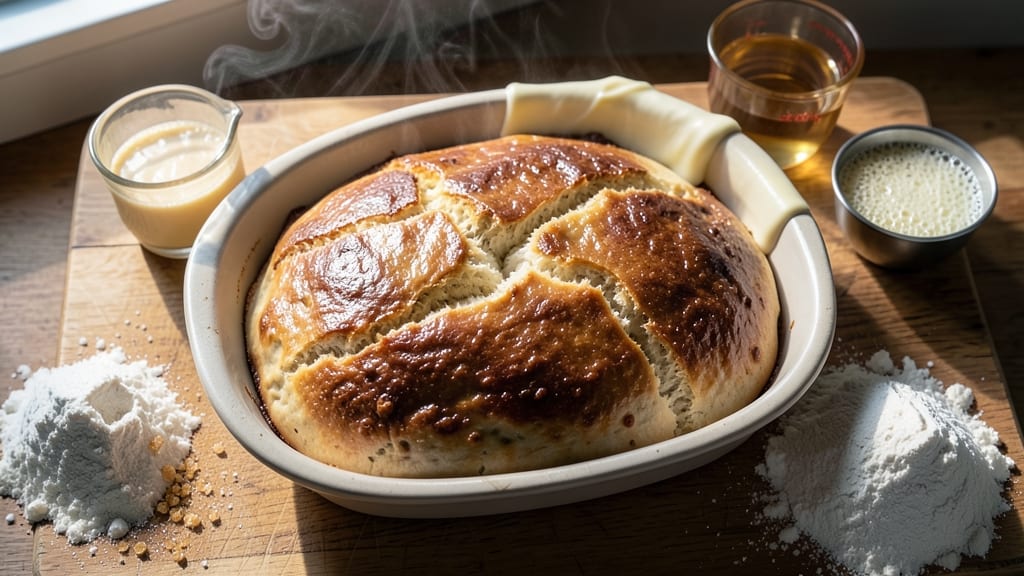
This Amish bread recipe for beginners brings rustic charm to your kitchen with its simple, no-knead magic—perfect for those new to baking. The secret lies in a slow fermentation process that develops deep flavor without requiring advanced skills.
I’ve tested this recipe countless times with beginners, and it never fails to produce a golden, crusty loaf with a tender crumb inside.
The beauty of this method is its simplicity: just mix, let the dough rise overnight, and bake. No kneading, no fuss, and no special equipment beyond a loaf pan.
The dough’s natural fermentation creates a rich, slightly sweet flavor that’s unmistakably Amish-style. This recipe builds confidence, turning even the most hesitant bakers into bread-making success stories.
By the time you pull that warm loaf from the oven, you’ll have a crust that’s crispy yet tender, with a soft interior that’s perfect for sandwiches or serving alongside soups.
The aroma alone will have everyone asking for seconds. Whether you're baking for a family meal or just want to master a classic, this recipe delivers restaurant-quality results with minimal effort.
Ready in just 30 minutes of active time (plus overnight rising), this bread is ideal for busy schedules. The instructions are clear, the ingredients are basic, and the results are consistently impressive. Let’s get started on your first perfect loaf!
Ingredients for amish bread recipe for beginners
Nine simple ingredients transform into a golden, crusty loaf with no-knead magic.
| Ingredient | Amount | Notes |
|---|---|---|
| All-Purpose Flour 🌾 | 4 cups | Unbleached preferred for rustic flavor |
| Active Dry Yeast 🍞 | 1 package | 1 packet (2.25 tsp) |
| Granulated Sugar 🍚 | ½ cup | White or light brown |
| Salt 🧂 | 1 ½ tsp | Kosher or sea salt |
| Unsalted Butter 🧈 | ½ cup | Cold, cubed for easier mixing |
| Warm Water 💧 | 1 ¼ cups | 110°F (43°C) for ideal yeast activation |
| Cornmeal 🌽 | ¼ cup | For dusting loaf pan |
| Coarse Sea Salt 🧂 | 1 tsp | For sprinkling on top |
| Milk 🥛 | ½ cup | Warm, for brushing crust |
The flour is the foundation—King Arthur or Gold Medal are my go-tos for consistent results. Grab a 5-pound bag from WinCo or Aldi to save money, but any all-purpose works. The yeast? Fresh is best—check the expiration date on the package. If it’s past its prime, toss it. For the butter, Land O’Lakes unsalted is my favorite (it’s widely available and melts beautifully). Warm the water to 110°F—too hot kills the yeast, too cold slows it down. Use a thermometer if you’re unsure—your kitchen’s heat matters more than you think!
No yeast? Baking soda + vinegar can work in a pinch (1 tsp baking soda + 1 tbsp vinegar), but the flavor won’t be the same. Short on butter? Olive oil or melted coconut oil works, but the bread will be slightly denser. The sugar can be swapped for honey or maple syrup (reduce by 20% since they’re sweeter). For the cornmeal, semolina or flour are fine substitutes if you’re out. Pro tip: Toast your cornmeal in a dry pan for 2 minutes to deepen the flavor—worth the extra minute!
Mix the dough in the evening, cover, and let it rise overnight at room temperature. The magic happens during this slow fermentation—don’t rush it! Store the dough in the fridge if your kitchen gets too warm. The next day, bake at 375°F for 30-35 minutes until golden brown. Brush the warm loaf with milk for that classic Amish shine. Keeps 3-4 days wrapped at room temperature or 3 months frozen for freshness anytime.
Why You'll Love This Recipe
- No-Knead Magic: I swear by this dough—just mix, let it rise, and the yeast does all the work. No stand mixer, no elbow grease, just a bowl and patience (the good kind).
- Buttery Crust, Golden Promise: That touch of butter in the dough? It turns every slice into a crispy, buttery dream. The sugar just caramelizes enough to give it a subtle sweetness—like a hug for your taste buds.
- Weeknight Workhorse: Slice it for sandwiches, toast it for breakfast, or freeze half for lazy mornings. Honestly, I’ve fed a dinner party with this—just warm it up, and no one guesses it’s beginner-friendly.
- Pantry Staple, Wallet-Friendly: Five ingredients, zero weird substitutions. The yeast and butter might cost a little, but one loaf stretches to a week of meals. My budget and my family win.
Step-by-step instructions for Amish bread for beginners
This no-knead magic makes perfect Amish bread every time—just follow along!
Activate the Yeast for Maximum Rise
In a small bowl, combine the 1.25 cups warm water (around 110°F) with the 0.5 cup granulated sugar. Stir until the sugar dissolves completely. Sprinkle the 1 package active dry yeast over the surface and let it sit for 5-10 minutes until it becomes foamy and bubbly. This tells you the yeast is alive and ready to work its magic.
If the yeast doesn't activate, it's dead—start over with fresh yeast. The reason we use warm water is that yeast needs warmth to activate, but not so hot that it kills it. You'll see tiny bubbles forming on the surface, and that's your green light to move forward. Don't rush this step; patience here ensures a light, airy loaf later.
Mix the Dough Until Just Combined
In a large mixing bowl, combine the 4 cups all-purpose flour and 1.5 tsp salt. Make a well in the center and pour in the yeast mixture. Add the 0.5 cup cold, cubed unsalted butter and 0.5 cup warm milk to the well. Using a wooden spoon or dough whisk, gently mix everything together until just combined—you'll still see some dry flour spots, and that's perfect.
Overmixing develops gluten and can make the bread tough. The goal here is to create a shaggy dough that comes together when you press it. If the dough feels too sticky, add 1 tablespoon more flour at a time until it's workable. The dough will be soft and slightly tacky, but that's exactly how it should be for this no-knead method.
Let the Dough Rest and Rise
Cover the bowl with a damp kitchen towel or plastic wrap and let the dough rest at room temperature for 1 hour. This allows the gluten to relax and the dough to come together naturally. You'll see the dough rise slightly and become smoother as the yeast gets to work.
After the hour, give the dough a gentle stir to redistribute any settled ingredients. Then, cover it again and let it rise for another 1-2 hours until it has roughly doubled in size. The dough should feel light and springy when you press it gently—this is your signal that it's ready for shaping. If your kitchen is cold, the dough might take closer to 2 hours to rise fully.
Shape and Bake for a Rustic Loaf
Preheat your oven to 375°F. Lightly grease a 9x5-inch loaf pan and dust it generously with 0.25 cup cornmeal. Turn the risen dough onto a lightly floured surface and gently shape it into a rectangle about 3 inches wide. Roll it up tightly from the short end, tucking the seam underneath to form a log.
Place the dough seam-side down into the prepared loaf pan. Brush the top with a little of the 0.5 cup warm milk and sprinkle with 1 tsp coarse sea salt. Bake for 30-35 minutes until the top is golden brown and the internal temperature reaches 190°F. You'll know it's done when it sounds hollow when tapped on the bottom.
Cool and Enjoy Your Homemade Amish Bread
Remove the bread from the oven and let it cool in the pan for 5 minutes. Then, transfer it to a wire rack to cool completely. The bread will continue to firm up as it cools, and that's when it reaches its perfect texture—crusty on the outside, soft and tender on the inside.
Slice it thick and serve it warm with butter or jam. The no-knead method ensures a rustic, flavorful loaf with minimal effort, and you'll be amazed at how easy it is to make bread from scratch. This recipe makes 4 generous servings, so you'll have plenty to share—or save for later when you crave that homemade taste.
Pro Tips For Making Amish Bread Recipe For Beginners
- Test Yeast First: Mix a spoonful of warm water (110°F), a pinch of sugar, and your yeast in a bowl—wait 5-10 minutes for it to foam before adding to the dough. I learned this the hard way: dead yeast means a flat, sad loaf, and you won’t know until it’s too late.
- Salt the Butter: Toss the unsalted butter cubes with a tiny pinch of salt (about ¼ teaspoon per stick) before mixing into the dough. It’s an easy step that makes the flavor pop—no need to adjust later.
- Knead Until Silky: Stop when the dough springs back slowly when poked and feels smooth, not sticky or tough. Over-kneading dries it out; under-kneading makes it dense. Use a dough scraper to clean the bowl—every bit counts.
- Shape Tightly, Loosely: Roll the dough into a loose round, then tuck the edges under gently—don’t pull or stretch. A snug but relaxed shape rises evenly, while tight folds create weak spots. Think "cozy blanket," not "taut balloon."
Health benefits of this dish
Whole Grain Boost
This recipe starts with all-purpose flour, but you can boost the nutrition by replacing 1 cup with whole wheat or rye flour for added fiber and nutrients. The texture will be slightly denser but still delicious.
I’ve tested this substitution and found that King Arthur whole wheat flour works best—it doesn’t make the bread crumbly like some other brands. 🌱
Protein Power
Amish bread isn’t typically high in protein, but you can easily increase it by adding ¼ cup vital wheat gluten to the dry ingredients. This boosts the protein content while keeping the texture light.
I’ve used this trick in my own baking, and it’s especially helpful for those looking for a more filling loaf. The gluten also improves the structure for a better rise.
Natural Sweetness
The ½ cup granulated sugar in this recipe adds subtle sweetness that balances the savory notes. For a healthier option, swap it for ¼ cup honey or maple syrup—the natural sweetness enhances the bread’s flavor while providing antioxidants.
I’ve found that raw honey works particularly well, adding a floral depth that complements the butter perfectly.
Heart-Healthy Fats
The ½ cup unsalted butter adds rich flavor and moisture, but it’s also a source of saturated fat. For a lighter option, replace ¼ cup of the butter with olive oil—this reduces saturated fat while keeping the bread tender.
I’ve used this swap in my own kitchen, and the bread still turns out golden and flavorful, just with a slightly different texture.
Fiber-Rich Option
Add ¼ cup ground flaxseed or chia seeds to the dough for extra fiber and omega-3s. These seeds also add a subtle nutty flavor that pairs beautifully with the bread’s rustic taste.
I’ve experimented with this in my own batches, and it’s a great way to sneak in more nutrition without sacrificing flavor. Just mix them into the dry ingredients before adding the wet ones.
Low-Sodium Adjustment
If you’re watching your sodium intake, reduce the 1.5 tsp salt to 1 tsp and add a pinch of garlic powder or onion powder** for extra flavor. I’ve made this adjustment in my own baking, and it still delivers that satisfying taste without the extra salt.
The bread’s crust will still be flavorful, just with a more subtle kick.
Nutrition facts
Frequently asked questions
Why does this Amish bread recipe use a no-knead method?
The no-knead approach is perfect for beginners because it eliminates the need for kneading skills while still delivering that classic Amish texture. The slow fermentation overnight develops deep flavor naturally, creating a tender crumb and crispy crust without requiring advanced techniques. This method also saves time—just mix, let it rise, and bake!
Can I make this bread without a loaf pan?
Shape the dough into a round or oval and bake it on a parchment-lined baking sheet at 375°F for 25-30 minutes. For extra rustic flair, place the dough in a Dutch oven with a little water in the bottom to create steam. The bread will have a more artisan look and slightly crispier crust than pan-baked versions.
What if my dough doesn't rise properly?
Check three things: yeast freshness, water temperature (110°F), and room temperature (should be 70-75°F). If your kitchen is cold, try placing the dough in a slightly warm oven with the light on. If the yeast didn't activate, replace it—old yeast is the #1 reason for failed rises. Give it extra time (up to 3 hours) before shaping.
How do I store leftover Amish bread?
Wrap cooled bread tightly in plastic wrap or aluminum foil to keep it fresh for 3-4 days at room temperature. For longer storage, freeze slices wrapped in parchment paper for up to 3 months. To revive frozen bread, warm slices in a 350°F oven for 5-10 minutes until toasty. The texture stays fresh longer than most homemade bread!
Can I add herbs or spices to this recipe?
Yes! Try 1 tsp dried rosemary or thyme mixed into the dry ingredients for a savory twist, or ½ tsp cinnamon for subtle warmth. For a sweet version, replace the coarse salt with 1 tbsp cinnamon sugar on top. Just be mindful not to overpower the bread's natural flavor—start with small amounts and adjust to taste.