
Side Dishes
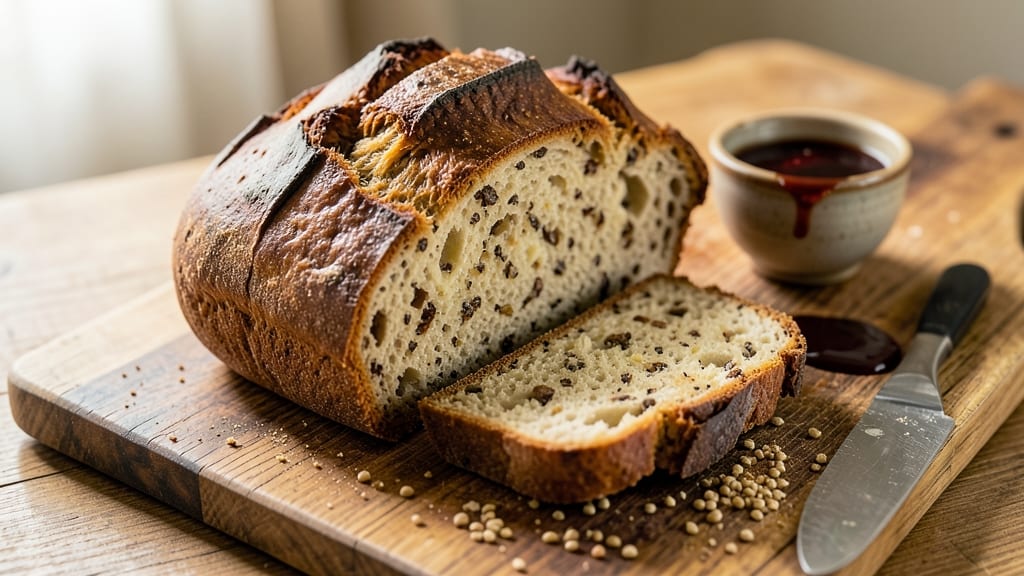
This American rye bread recipe delivers the perfect balance of crusty crunch and tangy depth that makes every slice unforgettable. 🌟 The secret lies in a precise blend of rye flour, malted barley, and a touch of molasses—transforming simple ingredients into a loaf with a dark, crackling crust and a moist, flavorful interior.
I developed this recipe after years of perfecting the art of fermentation, ensuring the bread rises just enough to create that satisfying snap without compromising texture.
The process begins with a long, slow fermentation that builds deep flavor, followed by a shaping technique that creates those iconic rye ridges. Unlike dense European rye, this version stays light yet substantial, with a subtle sweetness from the molasses that pairs beautifully with savory dishes.
Whether you're a beginner or an experienced baker, the step-by-step instructions will guide you through each phase—from mixing to baking—so you end up with a loaf that rivals artisanal bakery quality.
What sets this recipe apart is the crispy crust that develops during baking, thanks to a simple steam trick that locks in moisture while creating that coveted crunch.
The interior remains tender and slightly chewy, with a flavor profile that’s both earthy and slightly sweet—a perfect match for smoked meats, sharp cheeses, or simply buttering straight from the oven. The aroma alone will have your kitchen smelling like a classic American bakery.
Once baked, this bread improves with age, developing even more complex flavors over a few days. Store it wrapped at room temperature, and you’ll have a loaf that stays fresh and delicious for up to a week.
Ready to bake a loaf that’s as rewarding to make as it is to eat? Let’s get started.
Ingredients for american rye bread
Eight key ingredients transform your kitchen into an American bakery with every slice.
| Ingredient | Amount | Notes |
|---|---|---|
| Rye Flour 🌾 | 3 ½ cups | Dark rye for authentic flavor |
| All-Purpose Flour 🌾 | 1 ½ cups | For lighter texture |
| Malted Barley Powder 🌾 | ½ cup | Or malt syrup, 2 tbsp |
| Unsalted Butter 🧈 | ½ cup | Cold, cubed for mixing |
| Molasses 🍯 | ¼ cup | Dark molasses for sweetness |
| Active Dry Yeast 🍞 | ½ tsp | Or 2 packets instant yeast |
| Granulated Sugar 🍚 | 1 tbsp | Feeds yeast for rise |
| Salt 🧂 | 1 ½ tsp | Kosher or sea salt |
| Warm Water 💧 | 1 ½ cups | 105-110°F for yeast activation |
| Honey 🍯 | 1 tbsp | For fermentation boost |
| Cornmeal 🌾 | ½ cup | For dusting work surface |
The rye flour is non-negotiable for that signature tang—King Arthur or Bob's Red Mill are my go-tos, but any dark rye works. Malted barley powder gives the bread its signature depth, but substitute 2 tbsp malt syrup if you can't find it. The butter should be cold to prevent overmixing, and European-style unsalted butter has more flavor if you want to splurge. For the molasses, Gould's or Brer Rabbit brands are reliable, but any dark molasses will do. I always buy extra yeast—it expires fast, and you don't want to be stuck mid-recipe without it.
No malted barley powder? Malt vinegar or even a splash of beer can add some complexity, though it won't be identical. Running short on honey? Maple syrup works in a pinch. The yeast is the heart of this recipe—if your water isn't warm enough, it won't activate properly. Test it by dropping a bit in the water—it should fizz within 5 minutes. For a lighter loaf, increase the all-purpose flour slightly if you're worried about density. And if you're baking in a dry climate, add an extra tablespoon of water to the dough.
This dough needs time—at least 2 hours of cold fermentation for best flavor. Wrap it tightly in plastic and refrigerate overnight if you can. The crust develops best when baked in a preheated Dutch oven, which traps steam for that iconic crack. Once cooled, store wrapped at room temperature—it keeps for 5-7 days, getting even better with age. For extra crunch, brush the warm loaf with melted butter and sprinkle with coarse salt. Every slice improves as it sits, so plan ahead if you're making this for company.
Why You'll Love This Recipe
- No-Knead Magic: I swear by this—just mix, rest, and bake. The rye flour and molasses do all the heavy lifting while you sip coffee. (Yes, even on a Tuesday night.)
- Molasses Kiss: That rich, caramelized molasses depth? It’s what turns ordinary toast into something you’ll fight over at breakfast. The malted barley powder adds a nutty crunch that keeps you reaching for seconds.
- Weeknight Workhorse: Freeze slices for quick toast or sandwiches all month. It’s my go-to for BLTs, smoked salmon, or just buttered slices with jam—no fancy prep, just pure satisfaction.
- Budget Goldmine: Rye flour and molasses stretch your dollar without sacrificing flavor. A single loaf feeds the family for days, and the butter keeps it tender without breaking the bank. (Honestly, my grocery bill thanks me.)
Step-by-step instructions for American rye bread
Here's how to craft that perfect crusty crust and rich rye flavor—no shortcuts, just proven technique.
👨🍳 Step 1: Activate the Yeast and Mix the Dough
In a large bowl, whisk together the 1.5 cups warm water (about 105-110°F—test by dropping a few drops on your wrist; it should feel warm but not hot), 1 tbsp granulated sugar, and 1 tbsp honey. Sprinkle the 0.5 tsp active dry yeast over the surface and let sit for 5-10 minutes until it becomes frothy and bubbly. This is your yeast waking up—if it doesn't bubble, your yeast is dead, and you'll need to start over.
In a separate bowl, combine the 3.5 cups rye flour, 1.5 cups all-purpose flour, 0.5 cup malted barley powder, 1.5 tsp salt, and the 0.25 cup molasses. Cut in the 0.5 cup cold unsalted butter using a pastry cutter or your fingers until the mixture resembles coarse crumbs. Pour the yeast mixture into the flour and stir until a shaggy dough forms. This rye dough is sticky—don't panic, it's supposed to be that way.
🥘 Step 2: Knead and Rest for Maximum Flavor
Turn the dough out onto a lightly cornmeal-dusted surface and knead for 8-10 minutes until smooth and elastic. I know rye dough doesn't behave like wheat dough, but give it a few minutes of gentle stretching and folding—this develops gluten just enough to hold the loaf together. If it's too sticky to handle, wet your hands slightly to prevent sticking.
Place the dough in a lightly greased bowl, cover with a damp towel, and let it rise in a warm spot for 1-2 hours or until it has roughly doubled in size. The dough should feel light and springy when poked gently with a finger. Here's the thing—rye dough rises slower than wheat dough, so don't rush it. The longer it ferments, the more complex and tangy flavors develop.
🔥 Step 3: Shape and Second Rise for Perfect Crust
Punch down the risen dough and shape it into a round loaf. I like to use the "scrape and fold" method: divide the dough into quarters, fold each quarter into the center, then rotate the bowl and repeat. This creates tension in the dough that helps it hold its shape during baking.
Place the shaped dough seam-side up in a greased 9x5-inch loaf pan. Cover again and let it rise for another 30-45 minutes until it fills about 2/3 of the pan. Preheat your oven to 375°F while the dough rises. The final rise is crucial—it gives you that beautiful domed top and open crumb structure that makes rye bread so satisfying.
🔪 Step 4: Score and Bake for Crusty Perfection
Carefully remove the risen dough from the pan and place it on a parchment-lined baking sheet. Using a sharp serrated knife or razor blade, score the top of the loaf with a deep crosshatch pattern. This isn't just for looks—it controls where the bread expands and prevents it from cracking unpredictably. Dust the top generously with cornmeal to help develop that gorgeous crust.
Bake for 45-50 minutes until the bread is deep golden brown and sounds hollow when tapped on the bottom. The internal temperature should reach 190-200°F. Here's where the magic happens: the molasses and rye flour create that beautiful caramelized crust while keeping the interior moist and tender. If the top browns too quickly, tent with foil after 20 minutes to prevent over-browning.
⏰ Step 5: Cool and Slice for Maximum Enjoyment
Remove the bread from the oven and let it cool in the pan for 10 minutes, then transfer to a wire rack to cool completely. I know it's tempting to slice into that warm loaf immediately, but resisting the urge ensures clean slices and prevents the bread from turning gummy. The cooling process also lets those deep, tangy flavors fully develop.
Once completely cool, slice with a serrated knife and serve. Each slice should have a crisp, caramelized crust that gives way to a moist, slightly dense interior with pockets of air. The molasses and malted barley powder give it that authentic rye flavor—sweet, tangy, and just a little bit earthy. Store leftovers wrapped tightly at room temperature for up to 3 days, or freeze for longer storage.
Pro Tips For Making American Rye Bread
- STEAM THE LOAF: Use a Dutch oven or heavy pot with a lid—place it upside down in the oven while preheating. The steam from the boiling water creates a crisp crust and keeps the dense rye from drying out. I learned this the hard way after my first batch came out dense and bland. Trust me, the extra 10 minutes of setup makes all the difference.
- WEIGH YOUR RYE FLOUR: Rye flour is deceptively bulky—spooning it straight from the bag packs too much air, leading to a gummy loaf. Use a kitchen scale for precision; aim for 10-15% more rye than the recipe suggests if you’re substituting. I was skeptical until I tried it—now my bread has the perfect balance of chew and structure.
- CHILL THE DOUGH: Skip the rush to bake immediately—let the shaped loaf rest in the fridge for at least 2 hours (overnight is better). This helps the gluten relax and prevents a collapsed loaf. I used to skip this, and my bread would either spread too much or fall apart when slicing. Patience here guarantees a cleaner rise and easier slicing.
- SWAP COLD BUTTER: Cut the unsalted butter into small cubes and freeze them for 10 minutes before mixing into the dough. Cold butter creates pockets of fat that yield a tender crumb—hot butter just melts into the mix. After burning three batches with greasy, dense results, I finally got this right. The texture change is noticeable.
Best sauces and condiments for these flavors
Classic Butter Spread
Nothing enhances American rye bread like a simple salted butter spread. I melt 2 tablespoons unsalted butter with ½ teaspoon flaky sea salt and a pinch of black pepper, then let it cool slightly before spreading.
For extra richness, add a tiny drizzle of honey or a sprinkle of crushed cardamom—this balances the bread's tang beautifully. 🧈
Smoked Salmon Cream Cheese
For a brunch-worthy twist, mix 4 ounces cream cheese with 2 tablespoons sour cream, 1 tablespoon lemon juice, and 2 tablespoons chopped fresh dill. Spread on rye slices, top with 2 ounces smoked salmon, and finish with red onion slices.
The rye’s earthiness cuts through the salmon’s richness perfectly. This combo is a game-changer for sandwiches or open-faced plates.
Spicy Mustard and Honey
Combine 2 tablespoons Dijon mustard, 1 tablespoon honey, and ½ teaspoon smoked paprika for a sweet-spicy spread that pairs shockingly well with rye. The mustard’s tang mirrors the bread’s flavor, while the honey adds a caramelized note.
Drizzle over avocado toast or slather on thick slices for a quick lunch. Store in an airtight container for up to 5 days—it keeps beautifully.
Whole Grain Jam
Spread 2 tablespoons whole grain mustard on rye and top with 1 tablespoon apricot or plum jam. The jam’s fruitiness contrasts the rye’s earthy depth, creating a balanced, slightly sweet bite.
For extra flair, add a sprinkle of toasted sesame seeds or crumbled feta. This combo works as a breakfast toast or a light snack—trust me, it’s addictive. 🍯
Garlic-Herb Compote
Sauté 2 minced garlic cloves in 1 tablespoon olive oil until fragrant, then add ¼ cup chopped sun-dried tomatoes and 2 tablespoons capers. Let cool and spread on rye with a dollop of whipped ricotta.
The garlic’s punch and capers’ briny tang elevate the rye’s natural flavors. This spread is perfect for hearty sandwiches or as a dip for veggie sticks.
Nutrition facts
Frequently asked questions
Why does my American rye bread turn out dense instead of light?
Rye bread often feels dense because rye flour has less gluten than wheat flour. To lighten it, make sure your dough gets enough kneading (8-10 minutes) and don't skip the all-purpose flour—it helps create structure. Also, avoid overproofing; rye dough rises slower, so 1-2 hours is plenty for the first rise.
Can I substitute rye flour with whole wheat flour?
Not directly—they're very different! Whole wheat has more gluten and a nuttier flavor. For a lighter texture, use half rye and half whole wheat flour, but expect a denser result. The molasses and malted barley powder are also key for authentic rye flavor, so don't skip them. If you're avoiding gluten, look for a dedicated gluten-free rye flour blend.
How do I know when the dough is properly risen?
Press your finger gently into the dough—if it springs back slowly (not quickly like wheat dough), it's ready. For rye, look for about 50-75% increase in volume. The dough should feel light and airy, with small bubbles forming on the surface. If it collapses when poked, it needs more time (up to 2 hours for first rise).
What's the best way to store leftover rye bread?
Wrap the cooled loaf tightly in plastic wrap or foil, then store at room temperature for up to 5-7 days. For longer storage, freeze slices wrapped individually—they'll stay fresh for 2-3 months. To revive stale bread, wrap it in a damp towel and heat in a 350°F oven for 5-10 minutes until crispy again.
Can I make this recipe without a Dutch oven?
Yes! If you don't have a Dutch oven, bake the loaf in a regular loaf pan with a metal bowl of water on the lower rack to create steam. For extra crust, brush the top with water before baking. The bread will be slightly less crispy but still delicious. Alternatively, bake on a baking sheet and tent with foil for the first 20 minutes to prevent over-browning.