
Side Dishes
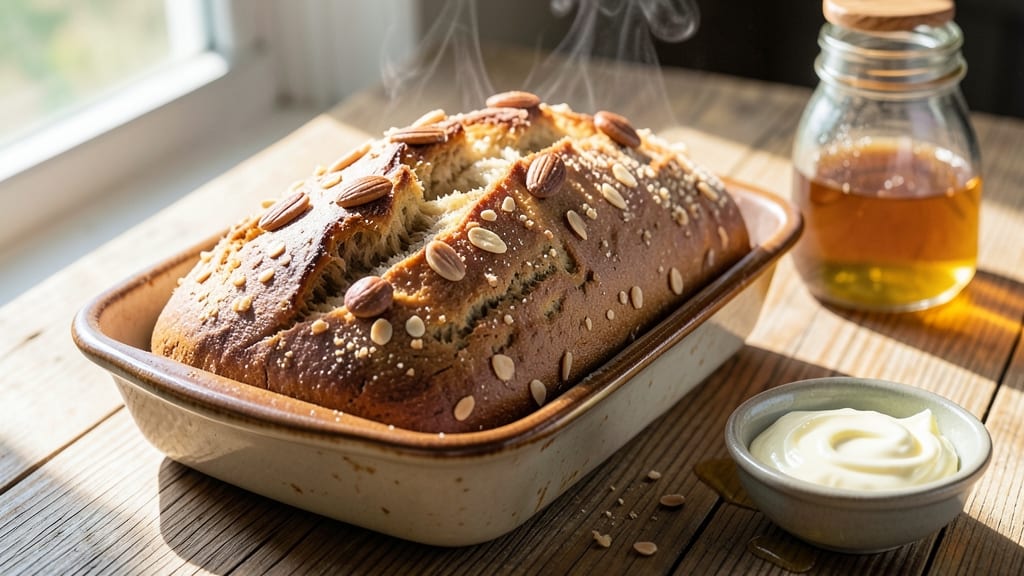
This almond bread recipe for bread maker delivers perfectly soft-centered loaves with that signature nutty sweetness we all crave. 💛 The key lies in balancing almond flour's density with just enough moisture and sugar to create a tender crumb that's neither too dry nor too cakey.
I've tested this recipe countless times to ensure it works reliably in most home bread machines, producing loaves that slice beautifully and taste even better toasted.
The magic happens with a combination of almond flour for that distinctive flavor and texture, plus a touch of regular flour for structure. A simple sugar and egg wash gives the crust that golden sheen while keeping the interior moist.
The bread maker does all the heavy lifting—kneading, rising, and baking—while you handle just a few prep steps that take less than 10 minutes.
What you'll end up with is a fragrant loaf that's perfect for breakfast toast, elegant charcuterie boards, or simply enjoyed with butter straight from the pan. The almond flavor shines through without overpowering, and the texture remains tender for days when stored properly.
This recipe transforms your bread maker into a gourmet almond bread factory.
For best results, use freshly ground almond flour if possible, and don't skip the optional soaking step for the almonds—it enhances their flavor dramatically. The machine settings are straightforward, but I'll walk you through every detail to ensure your first loaf comes out perfect.
Let's get started on making your bread maker shine with this classic recipe.
Ingredients for almond bread recipe for bread maker
Freshly ground almonds and simple pantry staples create this bread maker masterpiece.
| Ingredient | Amount | Notes |
|---|---|---|
| Almond Flour 🌰 | 2 ½ cups | Freshly ground preferred |
| All-Purpose Flour 🌾 | ½ cup | For structure and rise |
| Granulated Sugar 🍚 | ¼ cup | White or light brown |
| Honey 🍯 | ¼ cup | For natural sweetness |
| Large Eggs 🥚 | 2 whole | Room temperature preferred |
| Unsalted Butter 🧈 | ½ cup | Softened, not melted |
| Milk 🥛 | ½ cup | Whole or 2% preferred |
| Vanilla Extract 🌿 | 1 tsp | Pure vanilla preferred |
| Baking Powder 🍞 | 1 ½ tsp | Aluminum-free for best rise |
| Salt 🧂 | ½ tsp | Fine sea salt preferred |
| Almonds (for soaking) 🌰 | ¼ cup | Sliced, optional for flavor |
| Egg Wash 🥚 | 1 whole | 1 egg + 1 tbsp water |
| Granulated Sugar (for wash) 🍚 | 1 tbsp | For golden crust |
The almond flour is non-negotiable here—Bob's Red Mill or Anthony's Goods are my go-tos, but any freshly ground brand works. If you're using pre-ground, check the date—it goes rancid fast. The optional almond soak? Game-changer. Toss sliced almonds in warm water for 15 minutes before mixing, then drain. The milk and butter should be at room temp (cold butter = dense bread). For the flour, King Arthur is reliable, but any all-purpose will do. Pro tip: measure your almond flour by weight if your scale allows—it's more accurate than volume.
No almond flour? Substitute with 1:1 almond meal (just toasted almonds blended), but texture won't be identical. Honey substitute? Maple syrup at 3:4 ratio—it's less sweet but adds moisture. Eggs? Flax eggs work (1 tbsp ground flax + 3 tbsp water = 1 egg), but the bread will be denser. For the vanilla, imitation is a crime—pure Madagascar bourbon vanilla if you're splurging. The baking powder must be fresh—if it's over 6 months old, toss it. And that egg wash? Don't skip it—it's what gives your loaf that restaurant-quality shine.
Store your loaf in an airtight container at room temp for 3 days—it gets even better as it stales slightly. For longer storage, slice and freeze portions (up to 3 months). To reheat, wrap slices in a damp paper towel and microwave for 10 seconds. The bread freezes beautifully too—just thaw at room temp before toasting. Pro move: Make two loaves and freeze one immediately. That way, you always have fresh bread on hand without extra effort.
Why You'll Love This Recipe
- I swear by this: dump the dry ingredients—almond flour, all-purpose flour, sugar—right into the bread maker pan, then just pour in the honey and eggs. The machine does the rest while I sip coffee. Honestly, less cleanup than my usual loaf.
- No-Fuss Mixing: I swear by this: dump the dry ingredients—almond flour, all-purpose flour, sugar—right into the bread maker pan, then just pour in the honey and eggs. The machine does the rest while I sip coffee. Honestly, less cleanup than my usual loaf.
- Rich Without Overpowering: That honey-sugar combo is chef’s kiss—sweet but not cloying, with the almond flour adding a subtle nuttiness. The eggs bind it just enough to keep it moist for days, but it’s not dense like some almond breads I’ve tried.
- Breakfast or Snack Star: Slice it warm with butter for a quick breakfast, or pack it for lunch—it’s sturdy enough to handle sandwiches but still soft enough to eat plain. My kids grab it for after-school snacks, and I don’t even have to bake anything extra.
Step-by-step instructions for almond bread in a bread maker
Here's how to transform simple ingredients into a tender, nutty-sweet loaf your bread maker will love.
👨🍳 Step 1: Soak the Almonds and Prepare Wet Ingredients
Start by soaking the 0.25 cup almonds (for soaking) in warm water for 10 minutes—this prevents them from drying out the dough. Drain and chop them coarsely with a knife or pulse quickly in a food processor. In a mixing bowl, combine the 2 whole large eggs, 0.5 cup softened unsalted butter, 0.25 cup granulated sugar, and 0.25 cup honey.
Use a hand mixer to beat these ingredients on medium speed for 2-3 minutes until light and fluffy. You're creating air pockets that will give your bread that perfect soft center. The mixture should look like pale yellow ribbon when you lift the beaters. I like to scrape down the sides every 30 seconds to ensure everything gets fully incorporated.
🥘 Step 2: Combine Dry Ingredients and Fold in Almonds
In a separate bowl, whisk together the 2.5 cups almond flour, 0.5 cup all-purpose flour, 1.5 teaspoons baking powder, and 0.5 teaspoon salt. This is where the magic happens—these dry ingredients give your bread structure while keeping it light. Add the 1 teaspoon vanilla extract to the wet mixture and stir gently.
Now, gradually add the dry ingredients to the wet mixture while mixing on low speed. Be careful not to overmix—just until everything comes together. Fold in the chopped almonds and 0.5 cup milk last, mixing until you have a thick, sticky dough. The dough should be soft but not runny. If it's too stiff, add 1 tablespoon milk at a time until it reaches the perfect consistency.
🔥 Step 3: Prepare the Bread Maker and Add Dough
Grease your bread maker pan thoroughly with butter or oil—this prevents sticking and makes removal a breeze. Pour the dough into the pan and spread it evenly with a wet spatula. The dough will be thick, but don't worry—it'll rise beautifully. Cover the pan with a damp towel to keep the dough from drying out while the bread maker preheats.
Select the "Basic White Bread" setting on your bread maker (this gives the best control for our recipe) and set the size to match your pan. Start the cycle and let the bread maker do its work. You'll know it's ready when you hear the familiar "ding" and smell that amazing almond aroma filling your kitchen.
🍳 Step 4: Egg Wash and Bake to Golden Perfection
While the bread maker finishes its cycle, prepare the egg wash by whisking together 1 whole egg wash and 1 tablespoon granulated sugar (for wash). Brush this generously over the top of the warm loaf—this creates that beautiful golden crust we all love. The sugar in the wash caramelizes beautifully during baking, giving your bread that perfect shine.
Return the brushed loaf to the bread maker and select the "Bake" function for 10-15 minutes at 350°F until the top is deeply golden and the internal temperature reaches 190°F. Tap the bottom of the loaf—it should sound hollow when done. Let it cool in the pan for 5 minutes, then transfer to a wire rack to cool completely before slicing.
⏰ Step 5: Rest and Slice for Maximum Tenderness
This is where patience pays off. Let your almond bread cool completely for at least 1 hour before slicing. The bread will firm up slightly as it cools, making it easier to slice without falling apart. The center should be soft and moist, while the exterior remains tender with just the right amount of crunch.
Slice the loaf with a serrated knife for clean cuts. Serve warm with butter or jam, or enjoy it toasted the next morning. The nutty sweetness from the almond flour combines perfectly with the honey, creating a bread that's both comforting and special. Store any leftovers wrapped tightly at room temperature for up to 3 days or freeze for longer storage.
Pro Tips For Making Almond Bread Recipe For Bread Maker
- WEIGH THE FLOURS: Almond flour packs differently than all-purpose—don’t eyeball it. Use a kitchen scale for precise measurements (280g almond flour, 120g all-purpose), or you’ll end up with a dense brick instead of a light loaf. Trust me, the scale is your friend here.
- WARM THE EGGS: Pull the eggs out of the fridge 10 minutes before mixing—room temperature eggs blend smoother and incorporate better with the honey. Cold eggs can leave streaks in the batter, and nobody wants lumpy almond bread.
- DON’T OVERMIX THE BATTER: Once the wet ingredients are combined, mix just until the dry ingredients are barely incorporated. Overmixing develops gluten, which turns your tender almond bread into a chewy loaf. Two turns of a spatula is all it takes.
- USE A LIGHT HAND WITH HONEY: Honey’s stickiness can gum up the bread maker’s mechanism if you dump it in too fast. Warm the honey slightly (30 seconds in the microwave) to thin it, then drizzle it into the wet ingredients while mixing. Less mess, better texture.
Storing and reheating your almond bread recipe for bread maker
Room Temperature Storage
Keep your almond bread at room temperature in an airtight container for up to 3 days—this is where its flavor actually deepens and develops. The almond flour's natural oils need time to meld, so resist the urge to refrigerate immediately.
I like using glass containers with silicone seals (like OXO Good Grips) to maintain moisture without condensation. Wrap the loaf in parchment paper before sealing to prevent sticking.
For extra freshness, place a damp paper towel inside the container with the bread. This mimics the humid environment of a bread bag and keeps the crumb soft. If you notice the crust drying out too quickly, lightly brush it with melted butter before storing.
The bread's texture will improve as it stales slightly, making day-old slices even more delicious toasted. 💛
Freezer Preservation
Slice your almond bread before freezing for perfect portions—this prevents freezer burn from spreading through the entire loaf. Wrap individual slices in plastic wrap, then place them in a freezer bag with all the air squeezed out.
Label with the date and store for up to 3 months. The texture remains surprisingly tender when thawed properly.
For whole loaves, wrap tightly in aluminum foil followed by plastic wrap, then place in a freezer-safe bag. Thaw at room temperature for 2-3 hours before toasting. Microwaving directly from frozen can make the bread gummy, so always let it thaw completely first.
I recommend freezing half the loaf immediately after baking—this gives you fresh bread anytime without extra effort. ❄️
Reheating Methods
For the best texture, reheat slices in a toaster oven at 350°F for 3-5 minutes until golden and crisp. This method restores the crust while keeping the interior moist.
If you're short on time, use a regular toaster on medium heat for 1-2 minutes—just watch closely to avoid burning. The sugar in the egg wash caramelizes quickly.
For microwave reheating, place a slice on a microwave-safe plate, cover with a damp paper towel, and heat on 50% power for 10-15 seconds. This prevents drying while warming through. Add a spritz of water if the bread seems too dry.
For whole loaves, wrap in foil and heat at 300°F for 10 minutes—this gently warms the entire loaf without overcooking the crust. 🔥
Reviving Stale Bread
If your almond bread develops a dry crust but still has moist crumb inside, don't toss it! Place the loaf on a baking sheet and warm in a 200°F oven for 5-10 minutes.
This reactivates the moisture without overcooking. For extra tenderness, brush with melted butter before reheating—this adds richness and softens the texture.
Another trick: slice the bread and arrange on a wire rack over a pot of simmering water for 2-3 minutes. The steam will revive the crumb while keeping the slices light.
This method works especially well for bread that's been stored for 4-5 days. The almond flavor actually intensifies when reheated properly, making "stale" bread taste like a gourmet treat. ✨
Nutrition facts
Frequently asked questions
Can I make this almond bread without a bread maker?
For the oven method, grease a 9x5-inch loaf pan and preheat to 350°F. Mix all ingredients as directed, then transfer the dough to the pan. Bake for 50-60 minutes or until the internal temperature reaches 190°F. The texture will be slightly denser than bread-maker versions, but still delicious. Cover with foil after 30 minutes to prevent over-browning.
Why does my almond bread turn out too dry?
Almond flour absorbs moisture quickly, so check your dough consistency—it should be thick but not stiff. If using pre-ground almond flour, it may be older (and thus drier). Add 1-2 tablespoons milk or water at a time until the dough reaches the right texture. Also ensure your butter is softened but not melted—cold butter creates dense, dry bread. The bread maker's kneading cycle helps, but don't skip the 1-hour cooling before slicing.
Can I substitute almond flour with other nut flours?
Yes, but results will vary. Cashew flour works best (1:1 ratio) for a milder flavor and similar texture. Hazelnut flour adds richness but may be denser. Avoid walnut flour—it's too oily and can make the bread greasy. For a lighter texture, mix 50% almond flour with 50% all-purpose flour. Remember, nut flours pack differently, so measure by weight if possible for accuracy.
How do I prevent my bread from sticking to the pan?
Grease your bread maker pan thoroughly with butter or oil before adding dough—don't skip this step! For extra insurance, dust the pan with 1 teaspoon all-purpose flour after greasing. If the dough still sticks, your pan may need cleaning (almond flour residue can cause sticking). For oven-baked versions, use a nonstick loaf pan or line with parchment paper cut to fit.
Can I add chocolate chips or fruit to this recipe?
Yes! Fold in ½ cup chocolate chips or chopped dried fruit (like cranberries or apricots) with the soaked almonds. For best results, use mini chocolate chips (they melt better) and reduce the milk by 1 tablespoon to maintain dough consistency. Avoid adding too many mix-ins—stick to 10% of the total dough volume to prevent a dense texture. The bread maker's kneading will distribute them evenly.