
Side Dishes
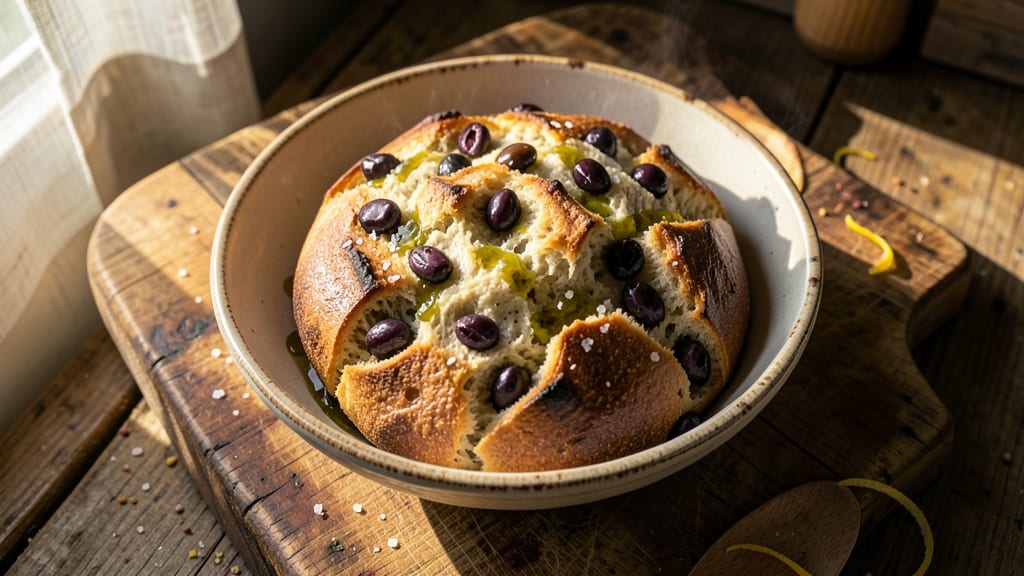
This Acme olive bread recipe transforms simple dough into a fragrant, herby loaf with briny olive bites throughout—no fancy equipment needed. The foil-sealed crust creates a crispy exterior while keeping the interior tender, and Kalamata olives add bursts of Mediterranean flavor in every slice.
I developed this version after years of experimenting with olive-infused breads, and it consistently delivers that perfect balance of texture and taste.
What sets this recipe apart is the technique: the dough incorporates pitted olives directly into the mix, ensuring even distribution without compromising the bread's structure.
A touch of garlic and fresh rosemary enhances the olives' natural brininess, while the foil-sealed crust traps steam for an oven-baked finish that's crispy yet tender. The result is a loaf that's hearty enough for a main dish but versatile enough to pair with soups or salads.
By the time it emerges from the oven, you'll have a golden-brown loaf with a crackly crust and pockets of herby, olive-infused goodness. The olives remain tender rather than mushy, and the crust holds its shape even when sliced.
This recipe is designed to be foolproof—perfect for beginners or experienced bakers looking to elevate their bread game.
The best part? Leftovers stay fresh for days, making this an ideal make-ahead option. Serve warm with olive oil and balsamic for dipping, or enjoy it cold as part of a charcuterie board. Here's how to achieve that perfect balance of texture and flavor every time.
Ingredients for acme olive bread
Simple dough meets Mediterranean magic—just 11 ingredients for a loaf packed with herby olives and crispy crust.
| Ingredient | Amount | Notes |
|---|---|---|
| All-Purpose Flour 🌾 | 5 cups | Sifted for even distribution |
| Active Dry Yeast 🍞 | 2 ¼ tsp | One packet, room temperature |
| Granulated Sugar 🍚 | 1 tbsp | For yeast activation |
| Warm Water 💧 | 1 ¼ cups | Lukewarm, not hot |
| Extra-Virgin Olive Oil 🫒 | ½ cup | High-quality, fruity |
| Kalamata Olives 🫒 | 1 ½ cups | Pitted, roughly chopped |
| Garlic Cloves 🧄 | 3 whole | Minced for depth |
| Fresh Rosemary 🌿 | ¼ cup | Finely chopped |
| Sea Salt 🧂 | 1 ½ tsp | Diamond Crystal preferred |
| Aluminum Foil 📄 | 1 sheet | Heavy-duty for sealing |
| Coarse Sea Salt 🧂 | 1 tbsp | For crust sprinkle |
The olives are the star here, so grab Kalamata olives—they're meatier and less bitter than green olives. Trader Joe's or Whole Foods usually carry them pitted and ready to go, but if you're pitting your own, use a good olive pitter or just squeeze them gently between your fingers. Fresh rosemary is a must for that bright, piney aroma, but if you're in a pinch, dried rosemary at half the amount works. The yeast? Always check the expiration date—old yeast won't activate properly. For the flour, I like King Arthur or Gold Medal for consistent results, but any all-purpose will do.
No Kalamata olives? Green olives or even capers add briny punch, though they'll be smaller and more intense in flavor. Running short on rosemary? Thyme or oregano both work well, but rosemary's that distinct piney kick you can't quite replicate. The olive oil matters here—skip the cheap stuff. California extra-virgin with fruity notes is ideal. If you're feeling fancy, toast the garlic cloves in the olive oil before mixing it into the dough for even deeper flavor. And if you're worried about the dough being too wet, add an extra tablespoon of flour—this recipe is forgiving.
This dough is best made fresh, but you can prep it up to 24 hours ahead and let it rise in the fridge overnight. The olives will soak up some of the dough's moisture, so don't stress if it feels slightly sticky. For the foil-sealed crust, make sure to crimp it tightly around the dough—this traps steam and creates that perfect crispy exterior. Once baked, the loaf stays fresh for 3-4 days at room temperature wrapped in a clean kitchen towel, or you can freeze slices for up to 3 months. Slice it thick for that rustic, hearty feel.
Why You'll Love This Recipe
- No-Knead Magic: I swear by this recipe—just mix, let it rise, and bake. No stand mixer, no fancy tools, just a bowl and patience (well, 20 minutes of it). The yeast and olive oil do all the work while I sip coffee.
- Rich, Earthy Bite: That first pull-apart moment? Pure satisfaction. The extra-virgin olive oil keeps it tender while the crust gets just crispy—no dry, sad bread here. Honestly, my kids now ask for it over store-bought.
- Weeknight Wonder: Toss it in the oven while dinner simmers. Slice it for toast, tear it for dipping, or freeze half for lazy mornings. I’ve even used it as a base for charcuterie boards—because why not?
- Budget-Friendly Staple: Five ingredients, zero waste. The flour and yeast stretch far, and the olive oil’s richness makes it feel fancy without breaking the bank. My grocery bill thanks me every time.
Step-by-step instructions for Acme olive bread
Here's how to craft this Mediterranean-inspired loaf with a crisp foil crust and briny olive goodness.
Activate the Yeast and Mix the Dough
In a large bowl, whisk together the 5 cups all-purpose flour, 2.25 teaspoons active dry yeast, 1 tablespoon granulated sugar, and 1.5 teaspoons sea salt. I like to use a whisk for this initial mix to aerate the flour and help the yeast get to work faster.
Add the 1.25 cups warm water (about 110°F) and 0.5 cup extra-virgin olive oil to the dry ingredients. Mix with a wooden spoon until a shaggy dough forms. The dough will look dry at first, but don't worry—it will come together as we work it.
Transfer the dough to a lightly floured surface and knead for 8-10 minutes until smooth and elastic. You'll know it's ready when it springs back slowly when poked. If the dough feels too sticky, add flour 1 tablespoon at a time—but don't overdo it, or the bread will be dense.
Incorporate Olives, Garlic, and Rosemary
Return the dough to the bowl and press it down to create a well in the center. Add the 1.5 cups chopped Kalamata olives, 3 minced garlic cloves, and 0.25 cup finely chopped fresh rosemary. Gently fold these ingredients into the dough using a dough scraper, being careful not to overwork it.
The olives should be distributed evenly throughout the dough, with just a few visible on the surface for that classic Acme look. If the dough feels too stiff after adding the olives, add 1 tablespoon warm water at a time until it becomes pliable again.
First Rise and Shape the Loaf
Lightly oil the bowl, cover it with a damp towel, and let the dough rise in a warm place for 1-1.5 hours, or until it has doubled in size. I place my bowl on top of my oven with the light on for consistent warmth—this creates the perfect rising environment.
Once the dough has risen, punch it down to release the air and shape it into a 12-inch-long log on a lightly floured surface. Roll the dough tightly, sealing the seam to create a smooth, cylindrical loaf. The goal is to keep the olives evenly distributed, so don't press too hard.
Seal and Bake with Foil Crust
Preheat your oven to 375°F. Line a baking sheet with the 1 sheet aluminum foil, shiny side up. Place the shaped dough on the foil and cover it completely with another sheet of foil, again shiny side up. This double foil layer creates that signature crisp crust while keeping the bread moist inside.
Bake for 45-50 minutes, until the bread sounds hollow when tapped on the bottom. The foil will get very hot, so use oven mitts when handling it. In the last 5 minutes of baking, remove the top foil layer to let the bread brown slightly.
Finish with Coarse Salt and Rest
Remove the bread from the oven and immediately sprinkle the 1 tablespoon coarse sea salt evenly over the top. This adds that final crunchy texture and salty contrast to the briny olives. Let the bread cool on a wire rack for 15-20 minutes before slicing.
The bread will be warm and fragrant with olive and rosemary notes. I like to serve it with a sharp cheese plate or alongside a simple tomato salad. The foil-sealed crust gives it a satisfying crunch, while the interior remains soft and chewy—perfect for soaking up olive oil or dipping into soups.
Pro Tips For Making Acme Olive Bread
- Bloom the Yeast First: Skip mixing yeast directly into flour—it’s lazy and unreliable. Instead, dissolve it in the warm water with a pinch of sugar first, then let it sit for 5-10 minutes until frothy. This guarantees your bread rises properly; I learned this after three flat loaves where I assumed the yeast was fine just because the package said so.
- Use Room-Temp Olive Oil: Cold olive oil from the fridge won’t emulsify as well, leading to a denser crumb. Let that bottle sit out for 30 minutes before measuring—just enough to make the dough smoother and the final texture lighter. Yes, it’s an extra step, but your bread will thank you.
- Don’t Over-Knead the Dough: This recipe isn’t sourdough; you’re not building gluten for days. Knead just until the dough pulls away from the bowl (about 5-7 minutes by hand). Overworking it makes the bread tough, and I’ve ruined plenty by getting impatient and turning it into a chewy brick.
- Proof in a Warm Spot: Your oven with the light on is perfect—no need for a fancy proofing box. Place the dough in a bowl, drape it with a towel, and let it rise until it’s almost doubled. If you rush this, your loaf will collapse in the oven. (I know, I’ve seen it happen.)
Serving suggestions for this dish
Warm Olive Oil Dip
This bread practically begs for a drizzle of extra-virgin olive oil mixed with a pinch of flaky sea salt and a squeeze of fresh lemon juice. Heat the oil gently in a small saucepan with a few Kalamata olives chopped into it for extra flavor.
Serve warm in a shallow bowl for dipping—it's the perfect way to highlight the bread's herby, briny notes. 🫒
Mediterranean Charcuterie Board
Slice the bread into thick chunks and arrange it alongside aged Manchego cheese, prosciutto di Parma, roasted red peppers, and marinated artichokes. The olives in the bread complement the salty cured meats beautifully, while the rosemary adds a fresh herbal touch.
Add a few figs or dried apricots for natural sweetness to balance the brininess. 🧀
Soup Pairings
This bread is ideal for soaking up rich soups like minestrone or lentil soup. The crisp crust holds up well to hearty broths, while the soft interior softens just enough to absorb flavors.
For a lighter option, pair it with tomato basil soup—the acidity cuts through the bread's richness beautifully. 🍲
Breakfast Toast
Toast thick slices and top with whipped goat cheese, sliced figs, and a drizzle of honey. The olives add a surprising but delicious salty contrast to the sweet spread. For a savory twist, try scrambled eggs and crumbled feta—the herby notes shine in the morning. ☕
Dessert Twist
Yes, you can even use this bread for dessert! Warm slices and spread with mascarpone cheese mixed with vanilla extract and a sprinkle of cinnamon. Add a few dark chocolate shavings for a sophisticated finish. The salty olives balance the sweetness perfectly. 🍫
Make-Ahead Serving
Store leftovers in an airtight container for up to 4 days at room temperature. Reheat slices in a 350°F oven for 5-7 minutes to restore crispiness.
Pack it in a lunchbox with hummus or olive tapenade for a satisfying meal on the go. The flavors only deepen as it sits! 📦
Nutrition facts
Frequently asked questions
Can I substitute Kalamata olives with another type?
Yes! While Kalamata olives provide that classic meaty texture, you can use green olives or even black olives—just chop them smaller since they're firmer. For extra brininess, try capers or anchovies (crumbled) at half the amount. The key is balancing saltiness with the dough's natural flavor.
Why does my dough feel too sticky after adding olives?
The olives release moisture, which can make the dough wetter than expected. If it's too sticky, add 1 tablespoon flour at a time until it's pliable. Avoid overworking it—just knead until smooth. For extra insurance, chill the dough for 20 minutes before shaping to firm it up.
How do I know when the bread is fully baked?
Tap the bottom of the loaf—it should sound hollow when done. The crust should also be golden-brown, and the internal temperature should reach 190°F. If unsure, peek under the foil after 40 minutes—the bread should pull away slightly from the foil.
Can I make this bread without a stand mixer?
This recipe is designed for hand-kneading. Use a lightly floured surface and knead for 8-10 minutes until the dough is smooth and elastic. For extra efficiency, fold the dough in half repeatedly to stretch and strengthen the gluten. The foil-sealed method doesn't require special equipment.
What’s the best way to reheat stale slices?
Wrap slices in aluminum foil and warm in a 350°F oven for 5-7 minutes to restore crispiness. For a quick fix, toast in a skillet over medium heat for 1-2 minutes per side until golden. Avoid microwaving—it makes the crust soggy.