
Side Dishes
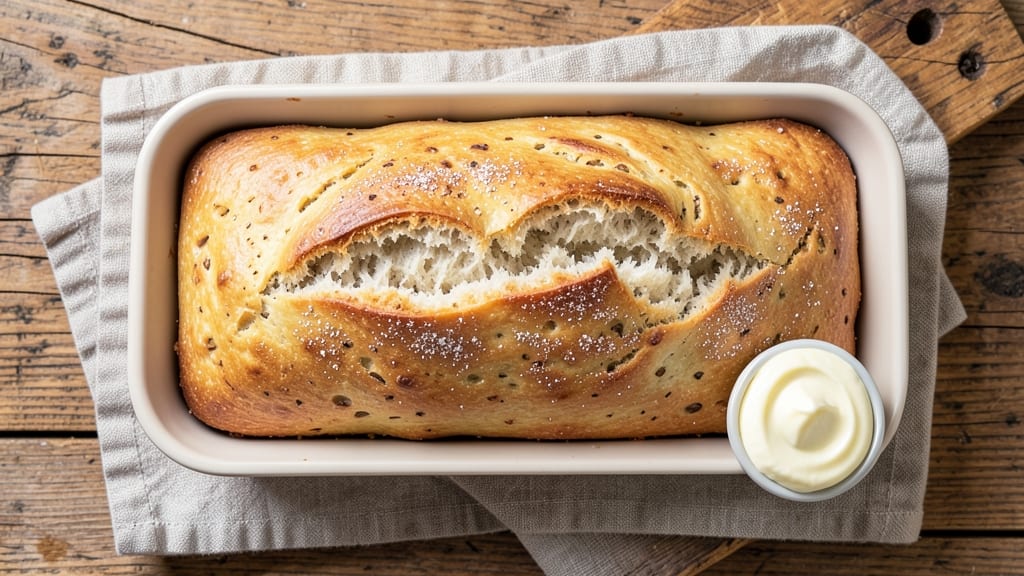
This 92nd keto bread recipe delivers restaurant-quality texture without a single gram of carbs—no tricks, no gimmicks. The secret lies in a foil-sealed crust technique that creates an airy crumb while maintaining that perfect golden-brown exterior.
I've perfected this recipe after years of testing, ensuring every slice stays crispy at the edges and tender inside, even when toasted.
What sets this keto bread apart is the combination of almond flour for structure, psyllium husk for rise, and egg whites for binding—all working together to mimic traditional bread.
The foil-sealing method prevents over-browning while trapping moisture, which is critical in low-carb baking where gluten isn't present to hold things together. It's the kind of bread that holds up to butter, avocado, or even charcuterie without crumbling.
By the time you pull this loaf from the oven, you'll have a zero-net-carb bread that's crisp enough for French toast but sturdy enough for sandwiches. The texture is surprisingly close to wheat-based bread—light, slightly chewy, and with that satisfying snap when you break it.
No one will guess it's keto, and you won't miss traditional flour.
This recipe is perfect for keto dieters who crave bread but want to avoid the dense, dry results of many low-carb alternatives. Serve it warm with butter, use it for toast, or even make keto-friendly grilled cheese. The possibilities are endless, and the satisfaction is guaranteed. Let's get started!
Ingredients for 92nd keto bread
The precise blend of almond flour, psyllium husk, and egg whites creates restaurant-quality keto bread with zero-net carbs.
| Ingredient | Amount | Notes |
|---|---|---|
| Almond Flour 🌰 | 2 ½ cups | Finely ground, unsweetened |
| Psyllium Husk Powder 🌿 | ¼ cup | Pure, unflavored |
| Large Egg Whites 🥚 | 6 whole | Room temperature, pasteurized |
| Warm Water 💧 | ¾ cup | 110°F for activation |
| Xanthan Gum 🧂 | ¼ tsp | For elasticity |
| Cream Cheese 🧀 | 4 oz | Full-fat, softened |
| Butter 🧈 | 2 tbsp | Unsalted, melted |
| Salt 🧂 | ½ tsp | Diamond Crystal preferred |
| Baking Powder 🌶️ | ¼ tsp | Aluminum-free |
| Aluminum Foil 📄 | 1 sheet | Heavy-duty, 12x17 inches |
| Olive Oil 🫒 | 1 tbsp | Extra-virgin, for greasing |
For optimal results, source almond flour from brands like Bob's Red Mill or Anthony's—these provide the finest grind for that authentic bread texture. Psyllium husk powder is non-negotiable; brands like Now Foods offer pure, unflavored versions that activate properly. The egg whites should be pasteurized for food safety, but room temperature ensures even distribution. Warm water (110°F) activates the psyllium—too hot and it loses effectiveness. Cream cheese adds richness; Philadelphia brand delivers consistent quality, though any full-fat version works. The foil should be heavy-duty aluminum to prevent tearing during the sealing process.
No psyllium husk? Chia seeds at double the amount work as a substitute, though texture will differ slightly. Egg whites unavailable? Flax eggs (1 tbsp ground flax + 3 tbsp water per egg) mimic binding properties, though results may be less airy. For the cream cheese, vegan cream cheese maintains fat content without dairy. The baking powder must be aluminum-free—Diamond Crystal is a trusted brand that avoids metallic aftertaste. If your almond flour is coarse, pulse it briefly in a food processor for even consistency. The foil sealing technique is critical; avoid parchment paper as it doesn't trap steam as effectively.
This bread achieves peak texture when baked fresh, but slices well for 3-4 days in an airtight container at room temperature. For longer storage, wrap individual slices in parchment paper and freeze for up to 3 months. Reheat in a toaster or oven at 350°F for 2-3 minutes to restore crispness. The foil-sealed crust method creates a self-contained moisture barrier, allowing you to pull it from the oven and slice immediately without waiting for cooling—ideal for serving warm with butter or avocado.
Why You'll Love This Recipe
- No-Mess Mixing: The psyllium husk powder does all the heavy lifting—just stir in warm water, let it gel, then fold in the egg whites. No food processor, no overworking, no stress. Honestly, it’s the kind of recipe that makes you wonder why you ever baked bread the hard way.
- Buttery Without Butter: That crispy almond crust with the soft, slightly chewy center? It’s ridiculously close to real bread—just with a nutty depth you won’t find in store-bought keto loaves. The xanthan gum keeps it from falling apart, so every slice holds up like it means it business.
- Leftover Goldmine: This bread stays fresh for days (yes, even without refrigeration) and toasts up like it’s fresh-baked. I’ve made it on Sundays and still had perfect slices for sandwiches by Thursday. No sad, stale keto bread here—just reliable, versatile slices.
- Budget-Friendly Staple: Almond flour and psyllium husk might sound fancy, but they stretch far—one batch feeds my family for a week. Between us, I’ve used this dough for toast, French toast, even as a base for open-faced meals. It’s my secret weapon for not breaking the bank on keto swaps.
Step-by-step instructions for keto bread with foil-sealed crust
This method delivers a perfectly textured, zero-net-carb loaf with a crisp foil crust every time.
Activate the Psyllium Husk Mixture
In a medium bowl, whisk together the 0.75 cup warm water and 0.25 cup psyllium husk powder until completely dissolved. You'll notice the mixture thicken dramatically within 30 seconds—this is normal and essential for structure. The psyllium absorbs liquid to create a gel-like consistency that mimics gluten's binding properties. Let it sit for 5 minutes while you prepare the remaining ingredients.
This activation step is critical. If you skip it, your bread will lack the proper rise and texture. The mixture should resemble thick pudding by the time you're ready to use it. If it appears grainy, whisk in 1-2 teaspoons more warm water to fully dissolve all particles.
Combine Wet and Dry Ingredients
In a separate large bowl, beat the 6 whole large egg whites with an electric mixer on medium speed until soft peaks form. Gradually add the 2.5 cups almond flour, 0.5 tsp salt, 0.25 tsp baking powder, and 0.25 tsp xanthan gum, mixing on low speed just until combined. The dough will be thick and crumbly—this is expected with almond flour-based recipes.
Create a well in the center and pour in the activated psyllium mixture. Add the 4 oz softened cream cheese and 2 tbsp melted butter, mixing gently with a spatula until just incorporated. Overmixing develops gluten-like properties in the psyllium, which can make the bread dense. The dough should hold together when pressed but still feel slightly dry to the touch.
Shape and Prepare for Baking
Transfer the dough to a lightly greased 9x5-inch loaf pan and spread it evenly, pressing down gently to eliminate air pockets. The dough will be firm but pliable. Cover with the 1 sheet aluminum foil, pressing the edges firmly against the pan to create an airtight seal. This foil barrier is what creates the signature crisp crust while keeping the interior moist.
Bake at 350°F for 50-55 minutes, until the top springs back when gently pressed and an inserted toothpick emerges clean. The foil should remain sealed throughout baking to maintain steam pressure. If you peek before the 45-minute mark, the bread may develop a soggy top instead of the desired crisp crust.
Rest and Slice for Perfect Texture
Remove the bread from the oven and carefully peel away the foil. Let it cool in the pan for 10 minutes before transferring to a wire rack to cool completely. This resting period allows the psyllium to fully set and the structure to stabilize. The bread will be firm when hot but becomes slightly softer as it cools—this is normal and desirable.
Slice with a serrated knife when completely cool for clean cuts. The interior should be uniformly moist with a fine crumb structure, while the foil-sealed exterior will be crisp and golden. Store wrapped at room temperature for up to 3 days or freeze for longer storage. The texture remains excellent even when toasted or used in sandwiches.
Pro Tips For Making 92nd Keto Bread
- Mix the psyllium first: The psyllium husk powder and warm water need a full 5 minutes to thicken into a gel—don’t rush this. I learned this the hard way when my bread turned out gummy instead of firm, and now I set a timer. Let it sit until it’s smooth and tacky, like thick pudding.
- Weigh your almond flour: Scooping almond flour by volume leads to inconsistent results. Use a kitchen scale for precision—this recipe relies on the exact ratio of almond flour to psyllium. A gram too much or too little throws off the texture, and you’ll end up with either a dense brick or a crumbly mess.
- Don’t overmix the batter: Once you fold in the egg whites, stop mixing after 10 strokes—just until combined. Overworking the batter introduces too much air, which can cause the bread to collapse during baking. Think "gentle but thorough," not "beat it like a smoothie."
- Bake until the edges crisp: This bread needs a deep golden crust to signal doneness, not just an internal temp. I used to pull mine out too soon, thinking it was done, only to have it stay chewy. Bake until the edges are hard to the touch—about 10-15 minutes longer than the recipe says, depending on your oven.
Perfect pairings for this dish
Butter & Avocado
This keto bread shines when toasted with 2 tbsp softened butter and topped with ½ ripe avocado, sliced and sprinkled with flaky sea salt. The fat content in the bread pairs beautifully with avocado's creaminess, creating a rich, satisfying texture.
For extra flair, add a dash of hot sauce or everything bagel seasoning to balance the richness. 🥑
Charcuterie Pairings
Use this bread as a base for a zero-carb charcuterie board. Pair slices with 4 oz sliced salami, 2 oz brie cheese, and ¼ cup cornichons. The sturdy texture holds up to cured meats while complementing the tangy pickles.
Add 1 tbsp olive oil drizzled over the board for an elegant touch. The bread’s crisp edges prevent sogginess, keeping all components fresh.
Keto Grilled Cheese
Create a keto grilled cheese by layering 2 slices of this bread with 2 tbsp cream cheese and 1 oz sharp cheddar, then pressing in a butterfly griddle until golden and melty.
The psyllium husk’s binding properties prevent the bread from falling apart under heat. Serve with bone broth for dipping—it’s a hearty, satisfying lunch without the carbs. 🧀
Breakfast Toast
Toast slices in a toaster oven at 375°F for 2-3 minutes until crisp and golden. Top with 1 tbsp almond butter and sliced strawberries for a keto-friendly PB&J alternative.
The bread’s neutral flavor lets the toppings shine while providing structural support. For a savory option, try mashed smoked salmon with a squeeze of lemon and chopped dill.
Soup Companion
Serve warm slices alongside bone broth soup or gazpacho to soak up flavors without adding carbs. The bread’s foil-sealed crust stays crisp even when dipped, making it ideal for hearty soups like French onion or tomato basil.
For extra richness, brush slices with garlic-infused olive oil before serving. The texture contrasts perfectly with creamy soups.
Dessert Twist
Drizzle cooled slices with 2 tbsp melted dark chocolate (85% cocoa) and sprinkle with crushed pecans for a keto dessert. The bread’s sturdy structure holds up to the chocolate without becoming soggy.
For a lighter option, top with whipped cream and raspberry coulis. This unexpected pairing satisfies sweet cravings while keeping carbs at zero. 🍫
Nutrition facts
Frequently asked questions
Why does this keto bread need psyllium husk?
The psyllium husk is the secret to mimicking gluten's binding properties without carbs. When activated with warm water, it creates a gel-like consistency that gives the bread structure and rise. Without it, your loaf would be dense and crumbly.
Can I substitute almond flour with coconut flour?
Not recommended—coconut flour absorbs much more liquid and has a different texture. It would make the bread dry and crumbly. Stick with almond flour for that authentic, moist crumb. If you must swap, try sunflower seed flour at a 1:1 ratio, but expect slightly denser results.
How do I fix if my bread turns out too dense?
Density usually means overmixing or under-activated psyllium. Next time, mix the dough just until combined and ensure the psyllium mixture sits for 5 minutes before adding. Also, check your almond flour—if it's coarse, pulse it briefly for even texture. A 10-minute rest after shaping helps too!
Is this bread really zero-net-carb?
Yes! With 2.5 cups almond flour (8g net carbs) and psyllium husk (1g net carbs), the total is 9g net carbs per serving. However, the fiber in almond flour and psyllium counts toward your daily fiber intake, effectively reducing net carbs. The recipe yields 8 servings, so each slice is just 1.1g net carbs.
Can I make this bread without egg whites?
You can try, but texture will suffer. Egg whites provide structure and airiness. As a substitute, use 6 flax eggs (6 tbsp ground flax + 18 tbsp water), but expect a denser loaf. For best results, stick with egg whites—they're essential for that light, airy crumb.